
Introduction, or “is it safe in the woods at night?”
If you are planning to spend your first night in the woods, you may well be a tiny bit scared and not quite sure what to expect. A whole heap of films has been made on the subject, mostly horror films. Hardly any of them ends well.
As a rule, somebody hears a noise and “goes to check it out”. Alone. With a broken torch. The ones left behind are almost always a teenage couple who seize the moment and immediately start having sex. Those are the rules of 90s horror films, there is nothing you can do about it. All you can do is watch and wonder - what on earth goes on in these people’s heads?
After that all you hear is a scream of agony and the panic sets in. On top of that - however big the group, sooner or later everybody splits up, even though the obvious tactic in situations like this is to stick together.
It may be more funny than frightening, but believe me - even the worst C-grade horror film looks a lot scarier in your memory when you are alone in the woods, the sun has already set and your only source of light is a small head torch. Oh, and you have just remembered that you have no spare batteries for it, and the ones in the torch are about to run out. Blimey. What now?
There is also an interesting “philosophical” dilemma: when you switch on your torch, you can see what is happening right in front of you, but you are also visible, and from a long way off. Every zombie or vampire that is no doubt lurking behind a tree, just beyond the beam, can see you as clear as day.
When you switch the torch off, maybe nobody can see you (with the stress on “maybe”, because, as everyone knows full well, vampires and werewolves have extremely sharp senses ;), but you cannot see anything either.
And however often you look over your shoulder, there is always some “behind you” that you currently have your back to.
The atmosphere changes beyond recognition
After dark the forest seems to come alive and a concert of strange sounds begins. Well, the sounds are perfectly normal, and during the day you probably would not even notice them, but at night the very same noises have your head spinning round on your neck like a big, frightened owl’s. You can forget about sleeping. Scared yet?
If you are still reading, you must be a real tough nut 😉
Seriously though, the fact that you are still reading means you probably want to prepare properly for your first night in the woods, and that in turn says good things about your instincts.
On every night-time trip your priority is, and always should be, safety. Night trips into the woods can carry plenty of dangers, such as the risk of an accident, encounters with wild animals and the chance of getting lost. In my view, though, it is exactly that little taste of risk that makes it so much fun 🙂
In this article you will learn how to prepare well for a night-time trip, whether you just want to spend a night out in nature or go on an unforgettable night hike. You will also find out what rules apply to this in Poland and abroad. With good preparation, a trip or a night in the wild will be a pleasure and a great adventure for you.
Where can you legally spend the night in the forest? The “Zanocuj w lesie” programme step by step
Before you start packing your rucksack, let’s get one thing straight: where you are actually allowed to sleep. In Poland, camping in the forest outside places designated by the forest owner or the forest district manager is prohibited (Article 30(1)(10) of the Forests Act). Fortunately, since May 2021 the State Forests (Lasy Państwowe, which manage Poland’s state-owned forests) have been running their “Zanocuj w lesie” (Spend the night in the forest) programme on a permanent basis. In the forest districts that have marked out programme areas, you can spend the night “in the wild” legally and free of charge, with no campsite and no neighbour with a barbecue on the other side of your tent wall 😉 Today the areas cover about 643,000 hectares in total, from 250 ha in the Żagań Forest District to 5,830 ha in the Świdwin Forest District.
What is and isn’t allowed in the programme areas?
- You sleep wherever you like within the area, but no more than 9 people in one spot and no more than 2 nights in a row. Within those limits you do not have to report anything (although the forest district will appreciate it if you write to say you are coming).
- A hammock or a bivvy bag is the option foresters openly prefer. A tent is allowed too, just pitch it on a durable surface, without raking away the forest litter and without damaging the plants on the forest floor. No piece of kit may damage trees or shrubs.
- Campfires only in places designated by the forest district manager, and you bring the firewood with you. You may not gather wood or any other material in the areas, not even to build camp structures. (Once you do find such a place, you will find the article on how to light a campfire in almost any conditions useful, along with the overview of popular types of campfires.)
- A gas stove only where the forest district allows it (you will find this on its website), only under constant supervision and never at fire danger level 3, the “red” one. Check the fire danger twice a day, because it is updated at 10:00 and 14:00 (in the BDL, the Forest Data Bank: “Mapa zagrożenia pożarowego”, the fire danger map). You also do not use a stove on peat soils, in young stands, in stands where the tree crowns come lower than 5 m above the ground, or in tall grass and heather.
- No cars or campervans. Driving a motor vehicle into the forest is prohibited, so you leave the car in a forest car park.
- No facilities. There are no benches, shelters or bins, so bring a rubbish bag and take everything away with you. Do not leave food scraps behind either (I explain why below, in the part about wild boar).
- Dogs on a lead only.
- Forest plantations and wildlife refuges within the area are permanently closed to the public. You do not camp there.
How do you find an area on the map?
- Open the Forest Data Bank (BDL) map.
- In the bottom menu choose “Mapy BDL” (BDL maps) and then “Mapa zagospodarowania turystycznego” (tourist facilities map).
- Untick the “Infrastruktura turystyczna” (tourist infrastructure) and “Ścieżki dydaktyczne” (nature trails) layers, and only the programme areas will remain. You can also go straight to the map showing only the “Zanocuj w lesie” areas.
- Use the “i” tool (the information tool in the top left corner) to click on an area and read its description.
- On the website of the forest district you have chosen, under the “Turystyka” (Tourism) tab, you will find the area’s rules and the contact details of the programme coordinator. That is also where you can check where the designated fire sites are and whether stoves are allowed.
Out in the forest, the boundaries of the areas are not marked by any signs. In the lowlands the forest compartment posts will help you; in the mountains, only a map will. So before you set off, install the mBDL app: once you have downloaded the data in advance, it also works offline and will show you whether you are already inside a programme area. And one more thing: on the day you set off, check the BDL map of temporary bans on entering the forest. When the fire danger is high or forestry work is under way, an area may be temporarily closed, and then you have to choose another place.
When do you have to report your stay?
Only when you go over the limit, that is when you camp in a group of more than 9 people or for more than 2 nights in a row (or both). In that case:
- You download the notification form from the forest district’s website.
- You email it to the forest district no later than 2 working days before the planned night. In it you give your name and surname, phone number, email address, the dates and number of nights, the number of people and the planned camping spot.
- You wait for an email confirmation from the forest district. That confirmation is your permission; without it, a larger group or a longer stay is out of the question.
You do not need to carry any special documents in case of a check. Foresters do, however, advise taking a document that will let rescuers contact your loved ones if something happens.
National parks, nature reserves and private forests
The programme runs in the State Forests. In national parks and nature reserves separate and stricter bans apply under the Nature Conservation Act (Article 15(1)). You may camp there only in places designated by the park director (in a reserve, by the regional director for environmental protection), you do not light fires (or smoke cigarettes), and outside designated places you do not use light sources with an open flame, such as a candle or a paraffin lamp, and you may walk only on marked trails. If you are planning a night in a national park, start with the rules and the website of that particular park.
A private forest, on the other hand, is a matter for its owner. The ban on camping outside places designated by the forest owner applies there in just the same way (it is the same Article 30 of the Forests Act), while “Zanocuj w lesie” is a State Forests programme: the areas where you can legally spend the night are designated by its forest districts. If you want to spend the night in a private forest, ask the owner for permission. You can check whether a forest is state-owned or private in the BDL or in the mBDL app, on the map of ownership types.
A night in the woods - the basics
Before you decide
If you have never slept out in the open before, it is best to choose a place you know well for your first outing, ideally somewhere you can get home from quickly and easily if you need to. That lets you get used to the outdoors in new, night-time conditions gradually and in a controlled way.
Before you spend your first night in the woods, you can even have a go in your back garden or on your allotment. There you can test your kit without any stress and find out first-hand what spending a night under the open sky is like. If you make a “blunder”, such as bringing a sleeping bag that is not right for the conditions, it is very easy to put right, even if that means going back home in the middle of the night, a little wiser than before. If the same thing happens to you deep in some remote stretch of forest, though, you will have to improvise, and you may well end up with a sleepless night.
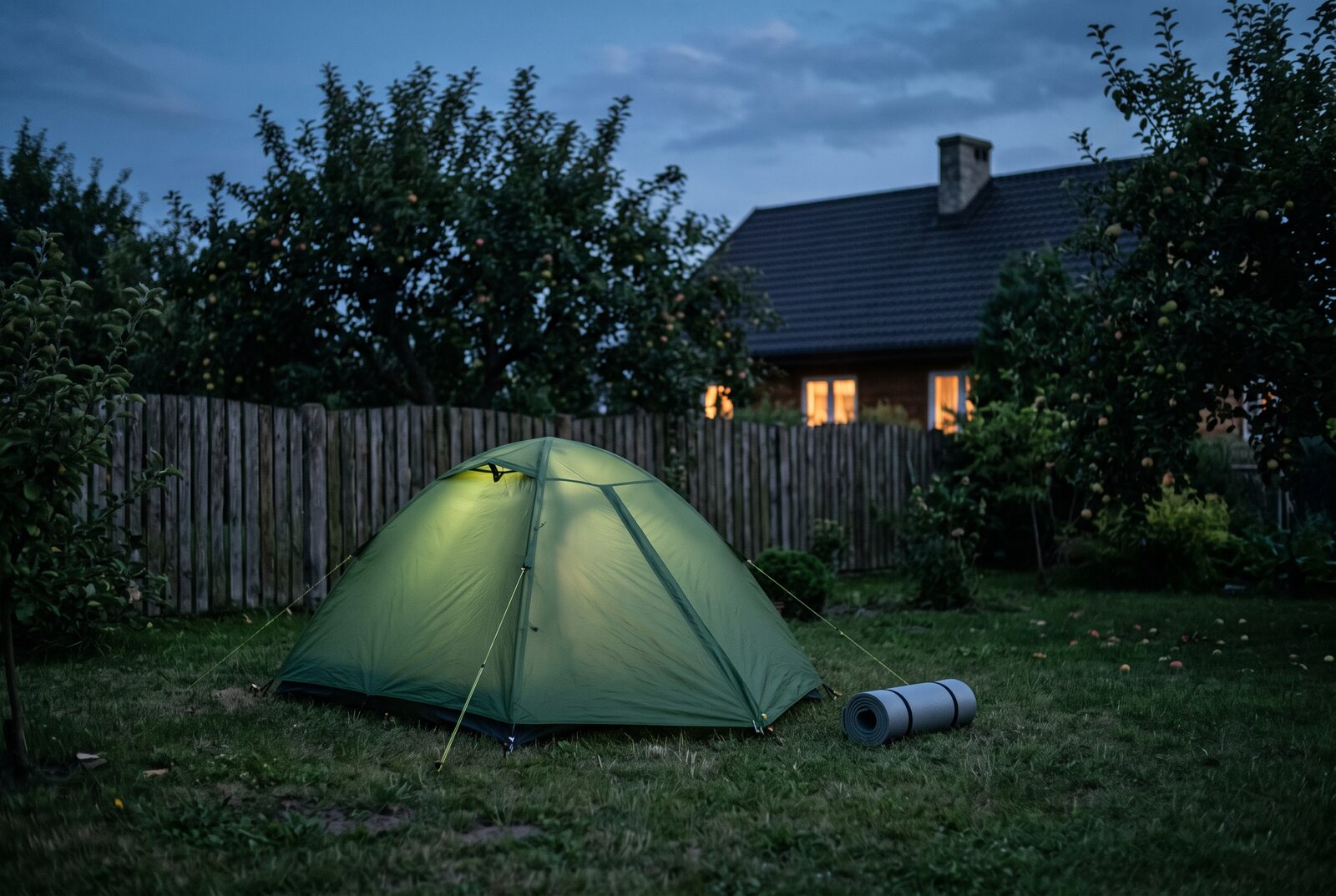
Another good idea for a first trip is to go with a few people, or at least with one companion. It will certainly make it a lot easier to sleep, and no, I do not mean cuddling up 😉 I mean simply how hard it is to fall asleep in unfamiliar woodland.
On my own first night in the woods, I did not sleep a wink. First a dog started barking somewhere nearby (probably a few kilometres away, but at night sound carries much further and more easily than during the day). Then something started rummaging in the nearby bushes. Then a branch snapped somewhere deep in the forest. And so on, all night long. I think I would have found it much easier to fall asleep with someone nearby whom I knew and could rely on.
What makes all that noise in the woods at night?
If you too are facing a night with your ear pressed to the wall of your tent, you should know that the forest does not sleep at night at all. Many animals spend the day in their hiding places and come out to feed at night5. The good news is that most of these noises have a very down-to-earth source. The ones you are most likely to hear are:
- wild boar - they rummage through the forest floor looking for food, and a whole sounder can make quite a racket5
- a roe deer - when it senses danger, it can let out a bark that sounds a lot like a dog’s6. Usually that danger is simply you.
- a tawny owl - the most common owl in Poland, and one that calls often and in a rather peculiar way. Someone once compared its mating call to the noise a person makes when they have just put their feet into icy water. Owls in general call most often in spring, especially around the full moon7
- red deer - in the second half of September the rut begins and lasts for about 4 weeks. Then, all night long, you can hear the deep bellowing of the stags, drawn-out groaning and even antlers knocking against trees8
And if you do actually bump into somebody, it will most likely be a hedgehog, because apparently that is the animal you are most likely to meet at night5. There are no werewolves on this list, and not by oversight 😉
Safety at night in a Polish forest
You are unlikely to meet vampires and werewolves in Polish forests 😉 The real dangers are far less cinematic: falling branches, wild boar, hunters and plain mistakes in the dark. Here is what I think you should watch out for most.
Where to pitch camp, or look up first
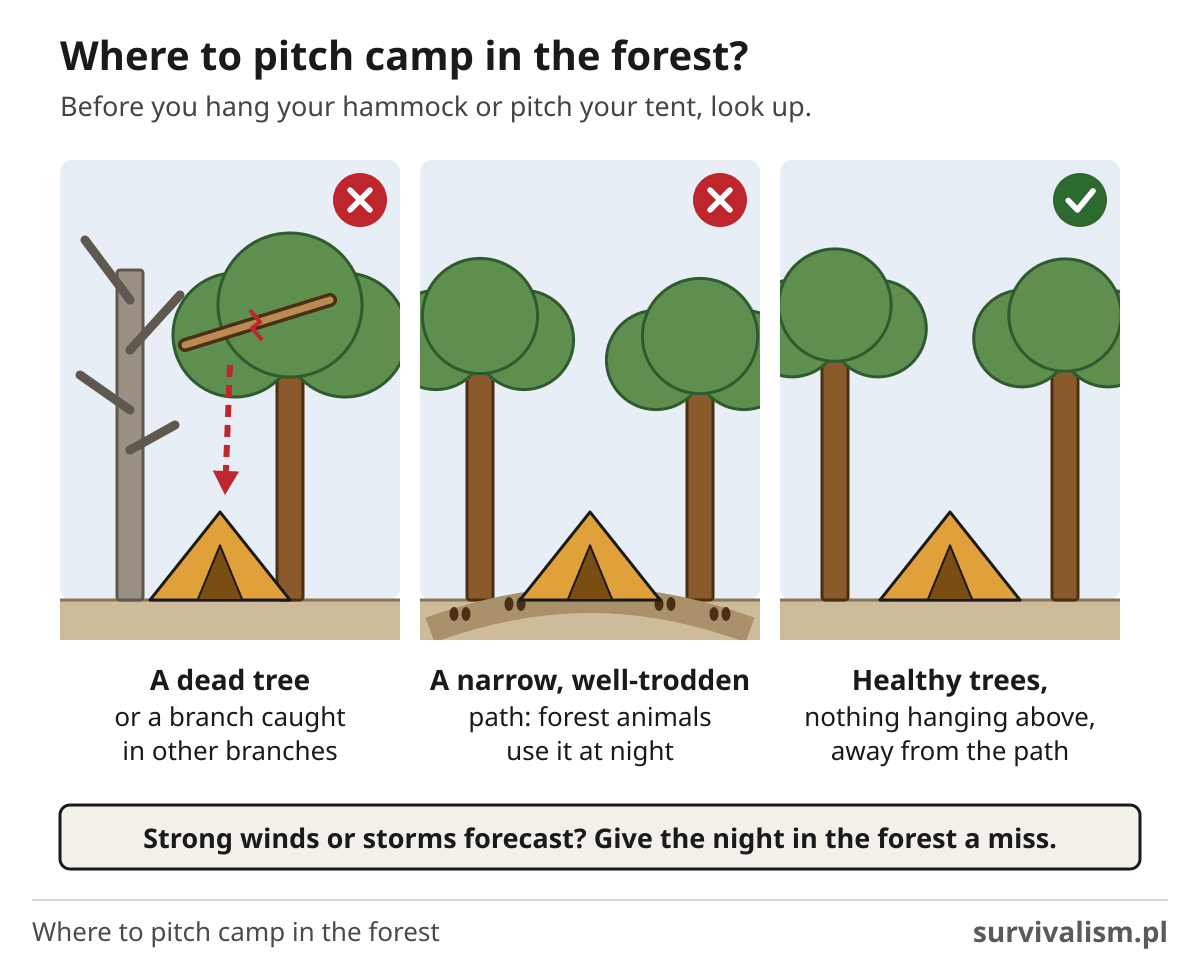
Before you hang your hammock or pitch your tent, look up. Dead trees and broken branches caught in other branches are the worst neighbours you can have at camp. English speakers have a telling name for them: widowmakers, and it says it all. In the forest a branch can break and a tree can fall, especially in strong winds, during a storm and right after one. So check the forecast before you set off, and if there are warnings of strong winds and storms, give the night in the forest a miss. That is what the foresters themselves advise, and I fully agree with them.
Do not pitch camp on narrow, well-trodden paths either. These are the routes forest animals use at night, and you do not really want to be lying in their way.
Wild boar
Running into a wild boar is rare, because the animals usually sense you first and move away. Trouble starts when you surprise a boar at close range or come across a sow with her young. A worried sow may attack, and you must never touch the piglets or take them out of the forest.
What should you do? Do not make any sudden movements, do not try to scare it off, do not panic, and calmly move away. If a boar runs towards you, get out of its way: wild boar are not very agile and have to slow down before they can turn round. Be careful about escaping up a tree, because a boar runs very fast and can scramble up a leaning trunk after you.
Food is a separate matter. Wild boar have a good sense of smell, and near people they readily help themselves to easily available rubbish and scraps. So do not leave food scraps behind and do not feed the animals (foresters point out that scraps like these also harm the animals themselves). In my opinion the most sensible thing is not to keep food in your tent or hammock, but to pack it tightly and put it down a little way from where you sleep.
Wolves
There are more and more wolves in Poland, but running into one is very rare, because wolves are naturally afraid of people. If you do see a wolf watching you for a good while, though, that does not have to mean anything yet, because every wild animal does that9.
It is worse when a wolf comes closer than 30 m, stares at you for too long or growls. Then raise your arms and wave them so that your outline can be seen, and shout loudly in a sharp voice or whistle. If it still keeps coming closer, throw whatever you have to hand at it, ideally clods of earth. Back away calmly and only speed up once the wolf is far away and has lost interest in you9. With food, do the same as with wild boar, which means no feeding and no scraps left behind. And if you are walking with a dog, keep it on a lead, because a dog running loose in the forest can quickly get into trouble.
Hunting, or don’t pretend to be a wild boar
Remember that at night you are not the only one using the forest. Wild boar are hunted at night as well (the rules allow night-vision and thermal-imaging scopes for this), and in autumn and winter there are also hunts with dogs or with beaters: the rules allow them from 1 October to 31 January. There are exceptions. Birds and predators may be hunted with dogs or beaters outside that period too, and wild boar may be hunted with a dog individually, in daylight, from as early as 15 August.
How can you check whether a group hunt is being planned in the area? The leaseholder or manager of the hunting district (for example a hunting club) must give the date, times and place of the hunt to the head of the municipality (the wójt, the mayor or the city president) and to the forest district manager at least 14 days in advance. The municipality then has 5 days to make it public: in the customary way, by public notice and on the council’s website (Article 42ab of the Hunting Act). So look for notices about group hunts on the website or in the BIP (Biuletyn Informacji Publicznej, the official public information bulletin) of the municipality where you want to spend the night. Some forest districts also publish group hunt schedules on their own websites. No earlier than 24 hours before a hunt, yellow signs with a red border saying “UWAGA POLOWANIE” (Caution: hunt in progress) appear by forest car parks and trails. If you see a sign like that, look for another place to spend the night.
In fairness, this system can be full of holes. The Polish Ombudsman (Rzecznik Praw Obywatelskich) has pointed out that not every club reports its hunts and not every municipality publishes the information, and there is no nationwide map or app with hunt dates yet (the Ministry of Climate and Environment has only announced one so far). So at night make yourself visible: a brightly coloured item of clothing or kit and a light left on for the night, visible from a distance, is advice straight from the rules of the “Zanocuj w lesie” programme. Yes, I know, in the introduction I was worried that a torch gives you away to vampires. To vampires, maybe, but a hunter is exactly who you want to be seen by 😉
A hammock as a shelter
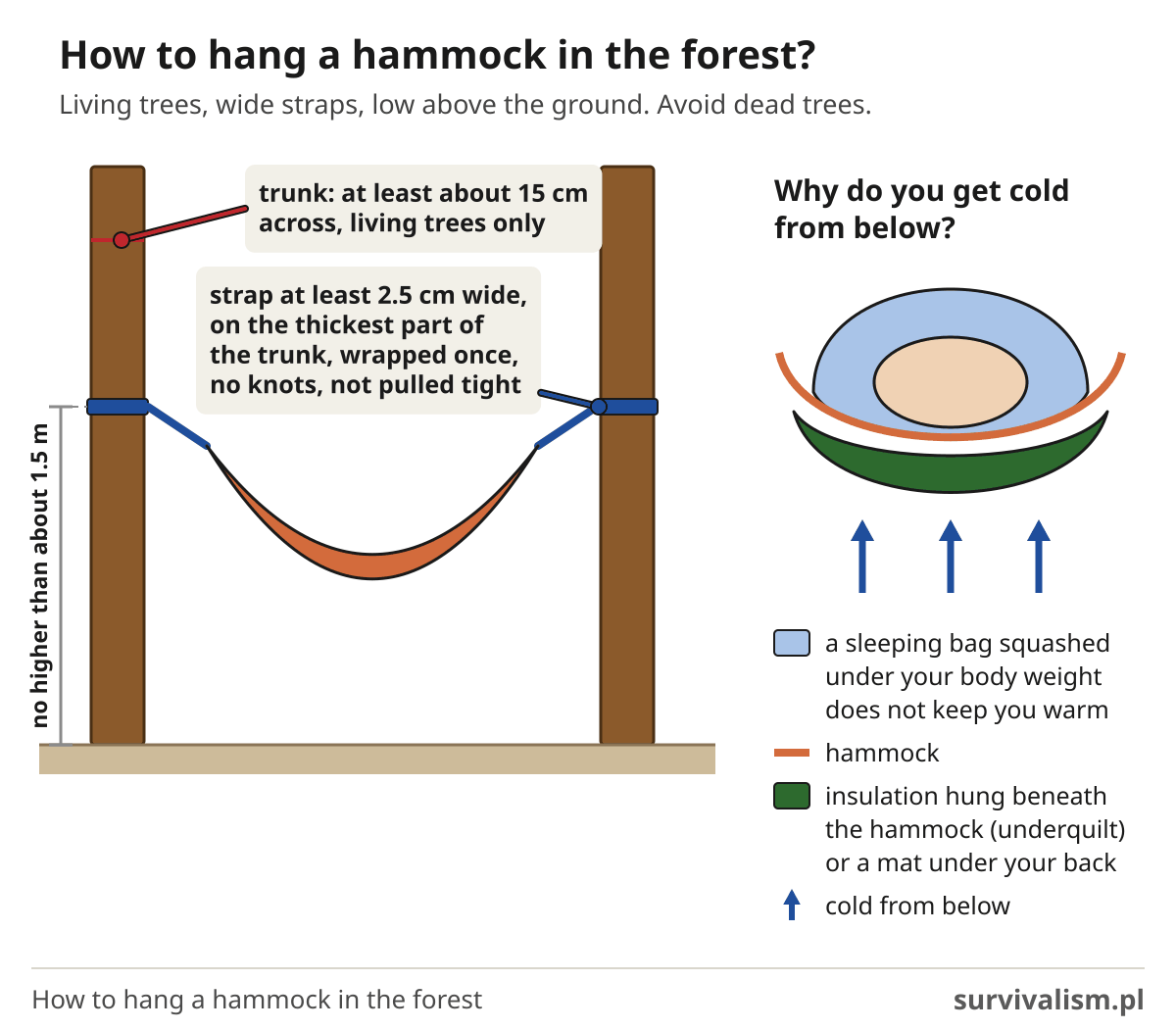
In the programme areas, foresters openly prefer hammocks. A hammock needs no levelling of the ground, no digging and no tent pegs, so it leaves very little trace. The programme rules do, however, require that your kit does not damage trees, so when you hang it, stick to the guidelines that the Leave No Trace organisation has written for hammock campers. Hang your hammock only on living trees at least about 15 cm in diameter, on the thickest part of the trunk. Use straps at least 2.5 cm wide instead of cord, and wrap them round the trunk once, with no knots and without pulling them very tight. Hang the hammock no higher than about 1.5 m above the ground. Avoid dead trees, and before you lie down, look up to check that there is no dead branch hanging above you (see above).
Remember too that in a hammock you get cold from below. A sleeping bag squashed under your body weight does not keep you very warm, so you will want a sleeping mat under your back or insulation hung beneath the hammock (a so-called underquilt).
When something goes wrong: 112 and the Ratunek app
In an ordinary lowland forest you call for help on 112. Foresters suggest a simple way to say where you are: find the nearest forest compartment post and read out to the dispatcher the numbers you can see on it. In the mountains, where there may not be a post, describe some distinctive landmark around you.
If you are spending the night in the mountains or near water, install the free Ratunek (Rescue) app beforehand. It is the only app accepted by the Polish mountain and water rescue services: it connects you to the mountain rescue number (601 100 300) or the water rescue number (601 100 100) and, during the call, sends the rescuers your location by text message. It needs mobile coverage, and your call for help only counts once you have actually spoken to a rescuer.
Kit
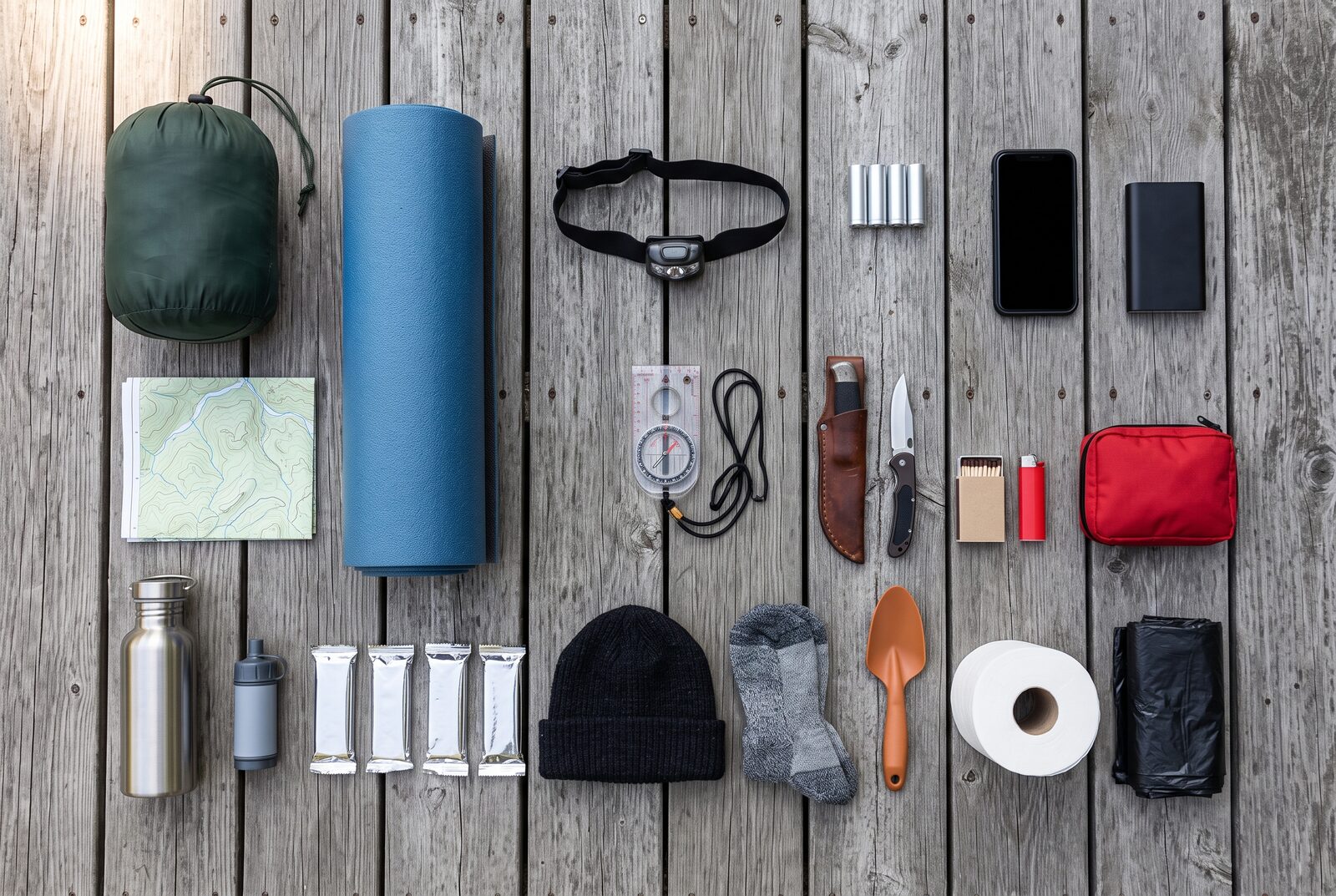
What should you take with you to spend your first night in the woods in comfort? Here is a checklist you can tick off as you pack:
- shelter: a tent, a tarp, a hammock with a tarp or a poncho shelter, plus a mosquito net in summer
- a sleeping bag suited to the temperature you expect at night, and a sleeping mat (with a repair kit if it is inflatable)
- a head torch and spare batteries (remember the introduction? 😉
- a charged phone with an offline map downloaded, and a power bank
- a paper map and a compass
- a knife, ideally two (the second can be a small penknife)
- two ways of making fire, e.g. matches and a lighter
- a first aid kit and tick repellent
- water, and a filter or a stove to boil it on
- food, preferably high in calories
- a warm layer for the night, a hat, a spare T-shirt and socks to sleep in
- a toothbrush and soap
- a small trowel and toilet paper (I explain why below, under Leave No Trace)
- a rubbish bag
- a document that will let rescuers contact your loved ones
- where bears live: bear spray
This list is my own suggestion, not an exhaustive one. Many of these things overlap with what I described in my article on how to pack a bug-out bag. Below are a few words about the things that are really worth focusing on.
A tent or some other temporary shelter
Sleeping under an open sky full of stars can be a wonderful adventure, but it is not a good idea in every kind of weather. It is a good habit to check the weather forecast before every trip into the wild. If showers are forecast where you are going, it is worth taking a rain poncho. On the other hand, in a dry spell that poncho will just take up space in your rucksack.
The same goes for shelter and the kind you choose. The simplest and most obvious solution is, of course, a tent. If you are looking for a tent, be sure to read the test of the seven best lightweight one-person tents. But it is not the only option. You can use a poncho shelter, a tarp, a hammock (more about it above, in the part on safety), a blanket, or even build yourself a shelter out of branches. If you are torn between a tent, a tarp and a bivvy bag, I compared them in the article one-person tent, tarp or bivy. It all depends on how big an adventure you are after 🙂
A tarp has one more advantage over a tent: you can keep an eye on the area around you, which makes you feel more comfortable and safer. It is usually lighter too, although it takes a bit of practice to pitch.
If you are heading out in summer, it is also worth thinking about a mosquito net. Mosquitoes and other creepy-crawlies can really ruin your mood. (And ticks can even ruin your health, because they carry Lyme disease and tick-borne encephalitis - use a repellent, and in the morning and once you are back home, check your whole body carefully.)
Sleeping bag and sleeping mat
Here too - just as with the tent - you have a few options to choose from. Choosing a sleeping bag is a big enough subject to deserve an article of its own. The most important thing is that it suits the conditions and the temperature.
Do not be fooled by a warm day. At night the temperature can drop to a level that is hard to bear without extra cover (in a hot desert, even below freezing). So check the forecast for the night and use it to decide whether a blanket or a light sleeping bag will do, or whether you need a proper winter sleeping bag.
As for the sleeping mat, you can choose between the simplest foam roll mat, which is light, tough and tried and tested in battle many times over, though not very comfortable, and an inflatable mattress: more comfortable and smaller when packed, but more expensive and usually heavier. Then again, if it gets damaged and you have not brought a repair kit, you will have to make yourself a mat out of leaves and branches 😉
Other important things
It is worth doubling up on the important items from the list above. Above all the knife, one of the most useful pieces of kit, so carry a second one, even just a small penknife. The same goes for a way to make fire. On my trips I usually carry at least matches and a lighter. They weigh next to nothing, and if one fails, I can use the other.
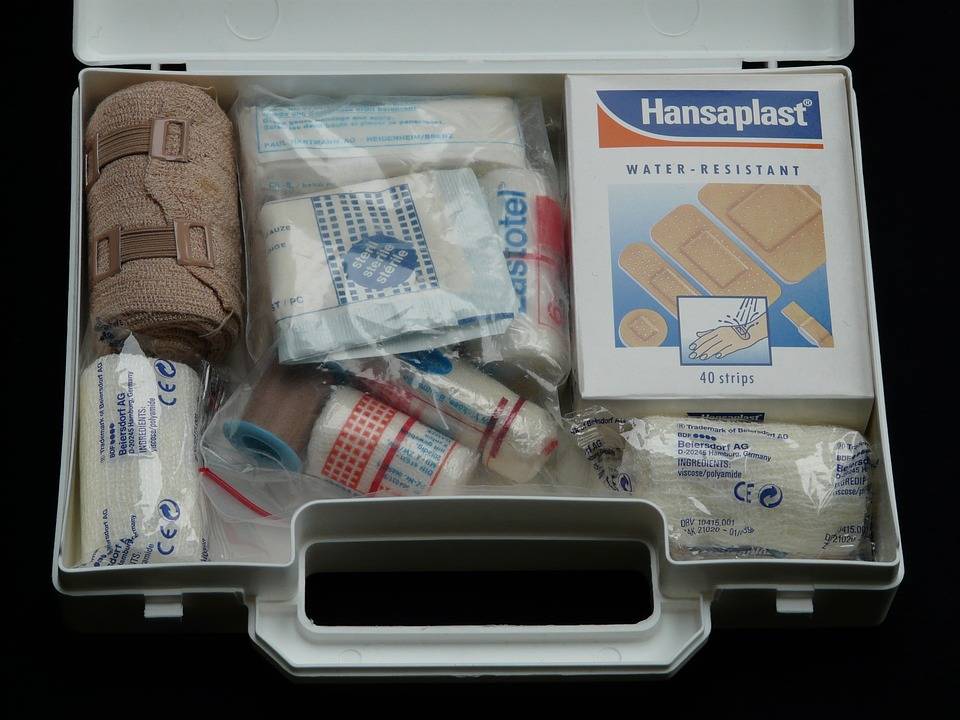
Of course, nobody sets off on a trip expecting something bad to happen. Unfortunately, accidents do happen, which is why a basic first aid kit is a must. It will help you with a small cut, a graze or a headache.
If you are heading into areas with wild animals, bears for instance, but also feral dogs, take bear spray with you. It is a very effective defence against bears, and it will probably deter other wild animals too (including the two-legged kind, although with people it becomes a question of self-defence). Studies from Alaska1 found that the spray stopped a bear’s dangerous behaviour in 92% of cases, and a later study by the same team showed that firearms did worse when a wild animal had to be put off attacking.
Food
Here too you have to decide for yourself whether dry rations and snacks will do, or whether you would rather eat something more substantial. In the first case, anything high in calories is a good idea: chocolate, snack bars and so on. When you are walking you burn a lot of calories and need more energy and strength. Carbohydrates provide a lot of energy in a relatively short time. I went into this in more detail in the article food in the mountains.
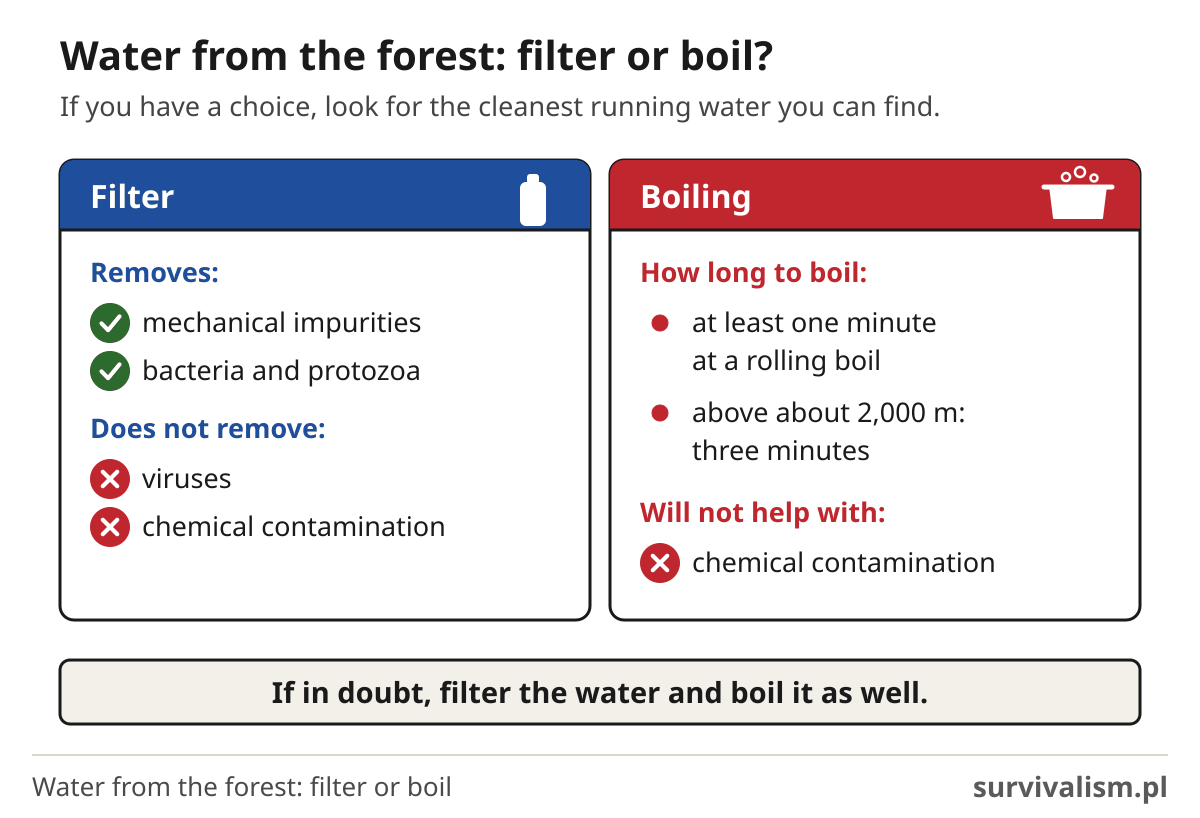
Do not forget water either, or some other drink to quench your thirst. Liquids are generally quite heavy for their volume, and every extra gram matters enormously on a hike. That is why I recommend the LifeStraw, which lets you drink water even from a puddle (that is a last resort, though: if you have a choice, look for the cleanest running water you can find, and if in doubt, boil it as well). The LifeStraw is cheap and very effective. It filters out all mechanical impurities, and even bacteria and protozoa. Just remember that it does not remove viruses or chemical contamination, so be careful.
You can also try drinking water straight from forest streams or from melted snow, but in that case you absolutely must boil the water before drinking it and let it boil properly - at least one minute at a rolling boil, and high in the mountains, above about 2,000 m, three minutes2. After that, the water should be reasonably safe to drink, as long as it is not chemically contaminated. I described how to recognise that your body is starting to run short of water in the article on the symptoms of dehydration.
Light source
I hardly need to convince anyone how useful a torch is at night, so unless you have the eyes of a cat, you need to think about one. A head torch works best, because it leaves your hands free. The most important features are battery life, durability and a reliable build, while a red light or a flashing mode are just the icing on the cake.
If you are only going out for one night on a trail you know well, you probably do not need anything fancy. A cheap (but good quality) head torch will do the job perfectly well. If, however, you fancy climbing Mount Everest, it is worth investing in proper kit. And above all, take spare batteries with you. The scenario from the introduction, with a dying torch and a vampire behind a tree, really is no fun 😉
Clothing
I hardly need to convince anyone how important clothing is on any trip. At best, the wrong clothes can mean the adventure is not as satisfying as it could have been. Numb hands or soaked feet will very quickly become problem number one, and instead of enjoying the trip, all you will think about is that you could have brought those gloves after all, the ones you were sure you would not need.
At worst, it can even lead to your death, which of course nobody wants. Let’s face it - that kind of fame is something most people would rather do without. So think carefully about what to wear.
One of the most important items of clothing is your boots. You probably will not sleep in them, but you still have to get to your night-time camp somehow, and sometimes walk at night too. Boots are not the place to save money: good ones will serve you for many, many years, while poor ones can easily put you off future trips and even cause an injury. Choosing footwear is a big subject, so I covered it separately in the guide on which trekking boots to choose. Here is one important tip: do not take new, just-bought boots on a night trip. Your steps need to be sure and steady, and night-time is no time to test your kit.
Another important item of clothing is something to cover your head. In a cold climate it protects you from losing heat. Your head does not actually lose more heat than other parts of your body (that is a popular myth), but it is the part most often left uncovered, so a hat really does make a difference. In a warm climate, on the other hand, a good hat protects you from the sun, and you will usually get to your spot while it is still light. A hood can be a good addition to a cap or hat, as an extra layer of protection.
The general rule is that the air temperature usually drops at night, whatever the latitude or longitude. What is more, once you lie down to sleep, you will feel the cold much more than you would on the march, because you are not moving. So take warm clothes - just in case. You will find plenty of tips on how not to get cold in the article mountains in winter, or how not to freeze on the trail, and many of them will also come in handy on a chilly night in the woods.
Underwear is an important part of your clothing too, and I recommend taking a change - at least a T-shirt and socks that you put on to sleep in. Settling down for the night in a vest that reeks of sweat is not much fun.
Don’t forget your… mobile phone
You may be surprised, but in my experience the most important thing you can take on any trip, whether to the mountains or to the woods, by day or by night, is a mobile phone. Your phone is your information centre, sat nav, messenger, media player and torch, and in extreme situations it can even be used to light a fire (that is a last-resort trick, though: it only makes sense with a phone that is broken and no longer good for anything else, because a working phone is your link to 112. A punctured or short-circuited lithium battery catches fire violently, can explode and gives off toxic gases, so keep your face and hands as far away as possible).
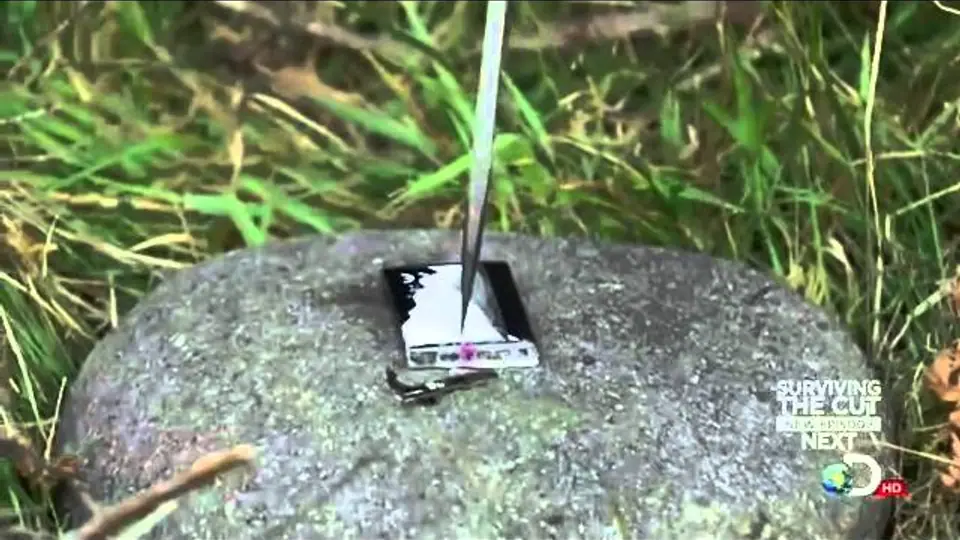
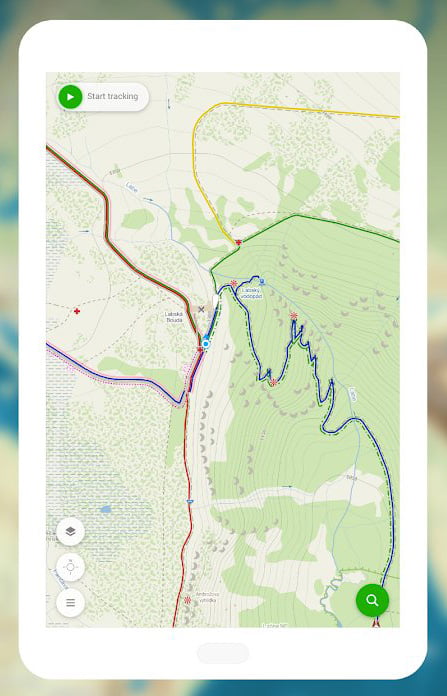
In normal conditions you will use it as a map, with the GPS function. There are lots of interesting apps you can use as a hiker or a prepper. The most important of them are maps. Just make sure first that the maps work offline, because in many remote places there is no internet access, especially in the mountains.
The most popular maps on smartphones are Google Maps. They are not the best choice for a hiker, though. You can download them for offline use, but without the internet they will not plan a walking route for you. So for navigating on foot I suggest the Mapy.com app (formerly Mapy.cz), which is available free of charge for Android and iPhone.
The basic version of the app does not cost a penny (you can download an offline map of one country for free; more countries offline require the paid Premium version), it is updated often and it shows even very narrow paths that you will look for in vain on other maps, even military ones. With it you can leave the main trail without any stress, because it will lead you straight to your destination.
True, we all carry a smartphone with maps and a compass, but it is still good to have a traditional compass and a paper map to hand. Electronics are wonderful and I am genuinely fascinated by them, but they have a habit of giving up at the worst possible moment. If your phone fails for whatever reason, you need a backup way of finding your bearings, and while you are at it, you can practise walking on a bearing. I give some tips on which map to choose in the article on types of maps, and on how to find north and what a bearing is in the article on the cardinal directions.
If you are going on a longer trip, think about taking a power bank, so you can charge your smartphone in any conditions, even far away from civilisation.
The rules on camping in Polish forests
Unfortunately, when it comes to the rules, Polish forests are not very friendly to anyone who would like to camp “in the wild”. Not exactly encouraging.
So what are you allowed to do, if nothing is allowed?
At first glance the Polish rules on camping in forests are not very inviting, but there are still a few loopholes we can use if we want to spend a night in the woods. Firstly, many forests have designated camping spots and campsites. Unfortunately, these are usually not wild places, and camping there costs money. So the most interesting part of a night in the woods - the spontaneous adventure - goes out of the window.
At designated camping spots and campsites we will most likely have to deal with neighbours, their children and barking dogs. So you can forget about rest and adventure, unless you count dressing the burns of a neighbour who “had a few too many” and fell into the campfire as an adventure. I would not recommend it.
Camping in the forest outside places designated by the forest owner or the forest district manager is prohibited (Article 30(1) of the Forests Act), but the law does not define what does and does not count as camping. So if you pitch a tent in the forest “in the wild”, you cannot be sure whether you are within the rules or not, although if you are checked, you will almost certainly get a fine in that situation, because it is a fairly clear-cut case. But is sleeping under the stars on a mat in the forest already camping? The lawmakers do not say.
So if you have a taste for risk and do not mind losing a few hundred złoty on a possible fine, you can try your luck. Besides, the mathematical chance of running into a forester somewhere deep in the woods is close to zero. Just remember to show a minimum of decency and good manners. Do not leave litter, do not damage nature and be careful with open fires, in other words:
Leave No Trace
On your trips, follow the Leave No Trace principle - in other words, leave nothing behind that shows you were ever there. Here are the basic principles of this philosophy:
- Plan ahead and prepare
- Travel and camp on durable surfaces
- Dispose of waste properly
- Leave what you find
- Minimise campfire impacts
- Respect wildlife
- Be considerate of other visitors
Going to the toilet in the woods, or Leave No Trace in practice
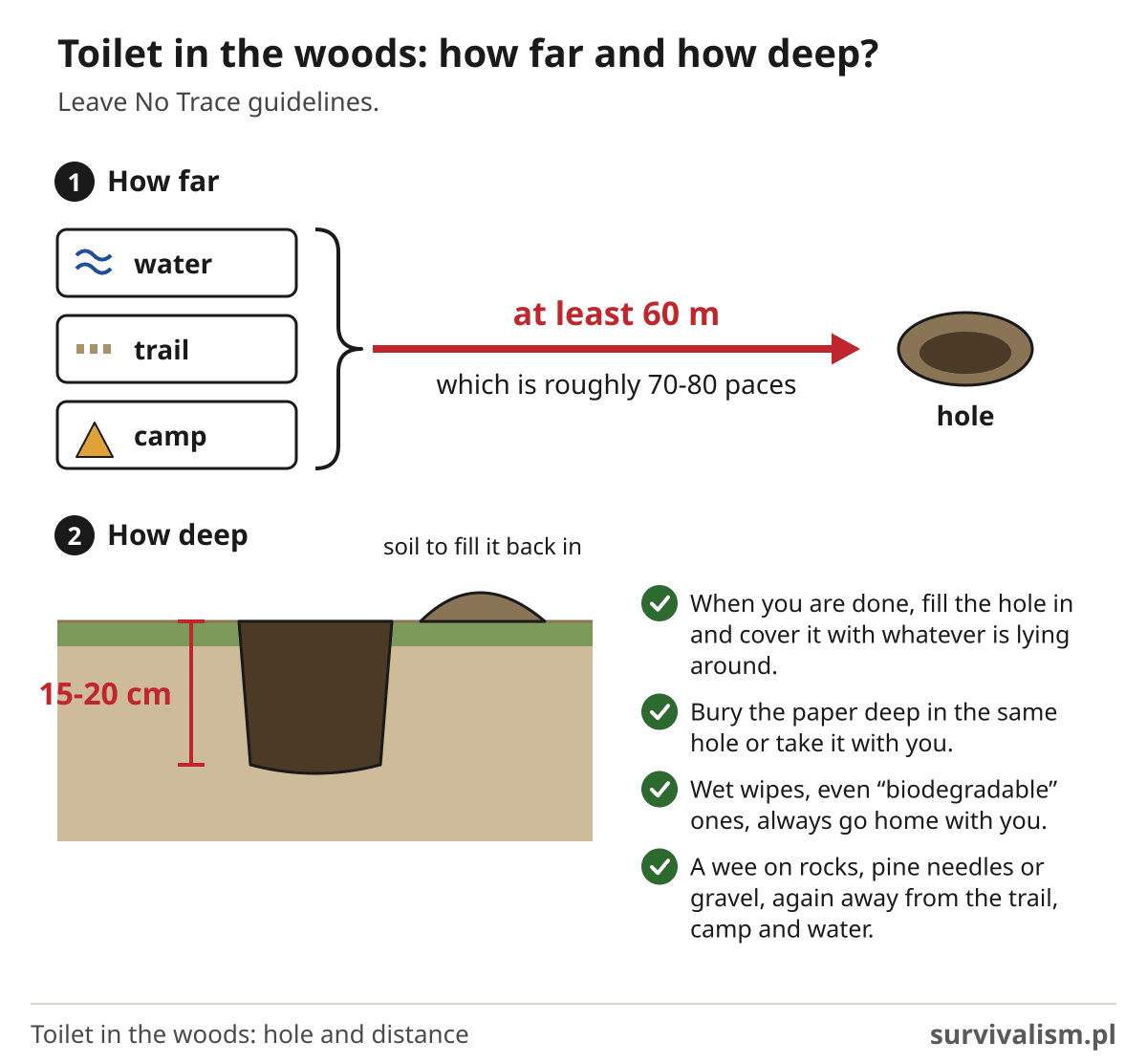
The third principle on the list above sounds serious, but in practice it mostly comes down to one question that everyone who spends a night in the woods asks themselves sooner or later. What about the toilet? The Leave No Trace organisation advises the following10:
- for a number two, dig a hole 15-20 cm deep. Move at least 60 m away from water, trails and your camp, which is roughly 70-80 paces
- when you are done, fill the hole in and cover it with whatever is lying around, so that nobody could guess what is there
- bury toilet paper deep in the same hole or take it with you. Wet wipes, even the “biodegradable” ones, always go home with you. Do not burn the paper, because that is an easy way to start a fire
- a wee does little harm to plants, but the salt in urine can attract animals, so it is better to go on rocks, pine needles or gravel, again away from the trail, camp and water
That is why there is a small trowel on the checklist. Without one, you will be digging a hole in root-filled forest soil with a stick at best, and with poor results. And the fact that animals come for the salt is worth remembering before you choose a spot for a wee right next to your tent 😉
Wild camping in the forest - the “Zanocuj w lesie” programme, or things are looking up [UPDATE]
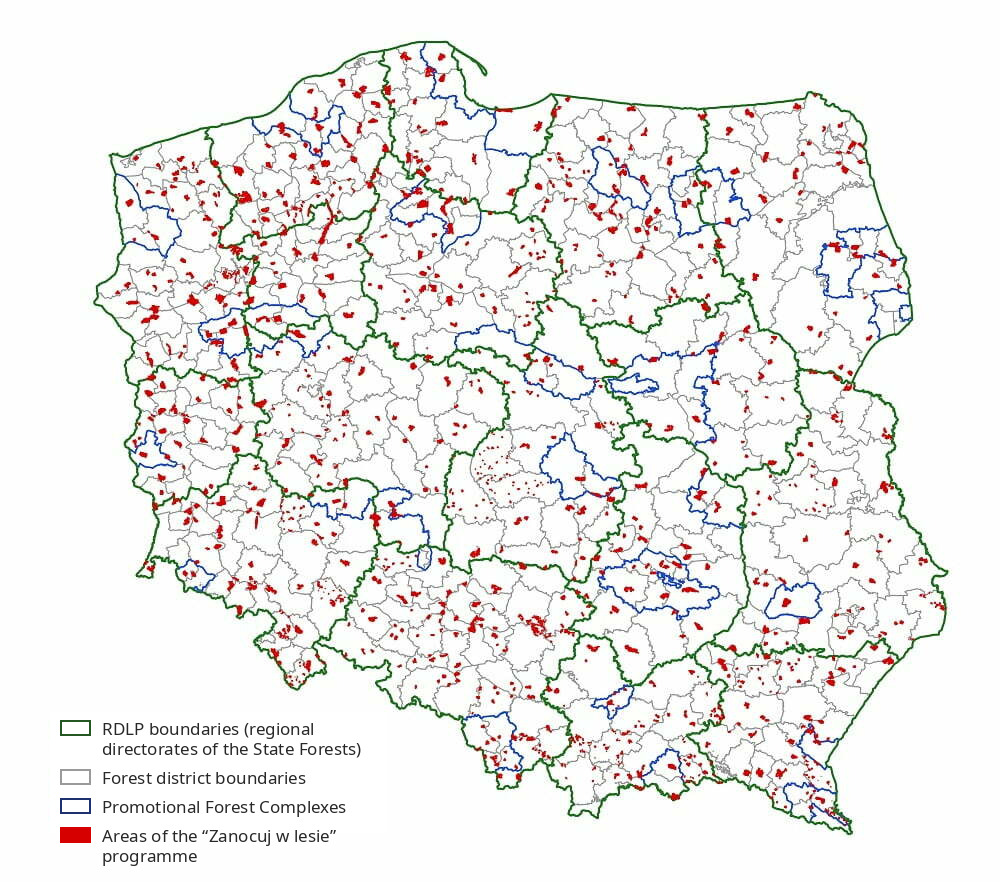
There have been big changes in the “Zanocuj w lesie” programme. It started out as a pilot, and since May 2021 it has been considerably expanded and runs permanently. At launch as many as 425 forest districts took part, with a total area of over 600,000 hectares, and today the programme areas cover about 643,000 hectares in total3. That is really huge progress compared with the earlier pilot.
I have gathered the current programme rules (how many people, how many nights, when you have to send a notification, what about campfires and stoves) and instructions on how to find an area on the map at the beginning of the article, in the section Where can you legally spend the night in the forest?
Below is a static version of the map.
A night in the forest abroad
There is nothing to stop you trying to spend your first night in the woods abroad. There are several countries in Europe with very liberal rules on camping in forests.
What do you think about camping abroad? Is it worth it?The Scandinavian countries lead the way here, because they have Allemansrätten, the “everyman’s right” to be in contact with nature. In Norway, Sweden and Finland you can spend the night practically anywhere: in Norway at least 150 m from inhabited houses and for no more than 2 nights in one place, while in Sweden and Finland the rules do not give a specific distance - it is enough to keep away from houses and stay a night or two. The situation is similar in Iceland, except that in 2015 the rules there were tightened a little because of the irresponsible behaviour of some tourists (these days you can only spend the night in a campervan or a caravan at a campsite or with the landowner’s permission).
In Estonia, too, you can spend the night almost anywhere. In Latvia you can sleep practically anywhere except in national parks. Lithuania is stricter: you can only pitch a tent at designated campsites4, so check the current rules before you go.
In some countries wild camping is tolerated, even though the rules partly forbid it. These are mainly the countries of Eastern Europe, such as Russia, Belarus, Ukraine and Slovakia. (Note: in September 2026, as I write this update, the Polish Ministry of Foreign Affairs advises against all travel to Russia, Belarus and Ukraine, so forget about camping there for now. Before you travel anywhere, check the ministry’s current travel warnings.)
You will find more information on camping abroad in this overview of countries where wild camping is allowed (in Polish).
Common questions about a night in the woods
Is it safe to sleep in the woods?
In my opinion, yes, as long as you prepare for it. Vampires and werewolves stay in the films, and the real dangers are falling branches, wild boar, hunters and mistakes in the dark. So before you pitch camp, look up, do not keep food where you sleep, make yourself visible at night and check the forecast. You will find the details above, in the part on safety at night in a Polish forest.
How do you prepare for your first night in the woods?
The easiest way to start is with a trial run in your garden or on your allotment, where you can test your kit without any stress. For your very first night in the woods, choose a place you know and can easily get home from, and ideally take someone you trust with you. Before you set off, check the weather forecast and tell someone close to you where you are going and when you will be back.
What should you take for your first night in the woods?
The bare minimum is a shelter (a tent, a tarp or a hammock), a sleeping bag suited to the night-time temperature plus a sleeping mat, a head torch with spare batteries, a charged phone, water, food, a first aid kit, a warm layer for the night and a rubbish bag. You will find the full checklist to tick off above, in the Kit section.
A few final words
Planning is especially important on night-time trips, whether into the woods or anywhere else. During the day you can usually put your mistakes right quickly, whether in navigation or anything else, but at night every mistake can have disastrous consequences. So plan your route in advance, tell someone close to you where you are going and when you will be back, and prepare your kit carefully using the checklist. Good planning will make your first night in the woods a pleasant experience that you will look back on fondly.
See you on the trail!
Sources
- Smith T.S. et al., “Efficacy of Bear Deterrent Spray in Alaska”, The Journal of Wildlife Management, 2008: doi.org/10.2193/2006-452
- CDC, “About Water Treatment Options When Hiking, Camping, or Traveling”: cdc.gov
- Lasy Państwowe (State Forests), „Pytania dotyczące Programu” (Questions about the programme): lasy.gov.pl (in Polish)
- Lithuania Travel, the official tourism website of Lithuania, “Camping rules and recommendations”: lithuania.travel
- Lasy Państwowe (State Forests), Blog Leśniczego (Forester’s blog), „Noc w lesie” (A night in the forest), 13.11.2007: lasy.gov.pl (in Polish)
- Urszula Olejnicka, RDLP w Białymstoku (Regional Directorate of the State Forests in Białystok), „Delikatna jak Sarna.” (As delicate as a roe deer), 11.07.2019: bialystok.lasy.gov.pl (in Polish)
- Lilianna Ewa Koszutowska, Nadleśnictwo Strzebielino (Strzebielino Forest District), „Puszczyk zwyczany i jego kuzyni” (The tawny owl and its cousins), 27.10.2022: strzebielino.gdansk.lasy.gov.pl (in Polish)
- Piotr Niegrzybowski, Nadleśnictwo Trzebielino (Trzebielino Forest District), „Rykowisko - czyli okres godowy jeleni” (The rut, or the mating season of red deer), 14.12.2012: trzebielino.szczecinek.lasy.gov.pl (in Polish)
- Katarzyna Klimek, Nadleśnictwo Szczecinek (Szczecinek Forest District), „Co zrobić, gdy spotkasz wilka” (What to do if you meet a wolf), 05.11.2020: lasy.gov.pl (in Polish)
- Leave No Trace, “Principle 3: Dispose of Waste Properly”: lnt.org
Leave a comment