
Quick picks
Lightest tent
0.92 kg
Cheapest tent
under 400 zł (checked )
Lightest without a tent
0.85 kg
Comparison table
Products in stock first, then by “Weight”. A name leads to the product's section. On a phone, scroll the table sideways.
| Product | Value for money | Weight | Packed size | Waterproof rating | Construction | Seasons | Price on Amazon.pl | Availability |
|---|---|---|---|---|---|---|---|---|
| Tents | ||||||||
| 3F UL Gear Lanshan 1 | no data | 0.92 kg | 34 × 15 cm | no data | trekking-pole tent | 3-season | 400-700 zł (checked ) | in stock (checked ) |
| MSR Hubba NX | 2.7 out of 10 | 1.29 kg | 46 × 15 cm | 1200 mm | dome | 3-season | over 700 zł (checked ) | in stock (checked ) |
| Naturehike Cloud-Up Pro 1 | 5.4 out of 10 | 1.39 kg | 13 × 39 cm | 3000 mm | dome | 3-season | 400-700 zł (checked ) | in stock (checked ) |
| Trinordic Endra | 7.3 out of 10Best value for money | 1.7 kg | 60 × 12 × 12 cm | 3000 mm | tunnel | 3-season | under 400 zł (checked ) | in stock (checked ) |
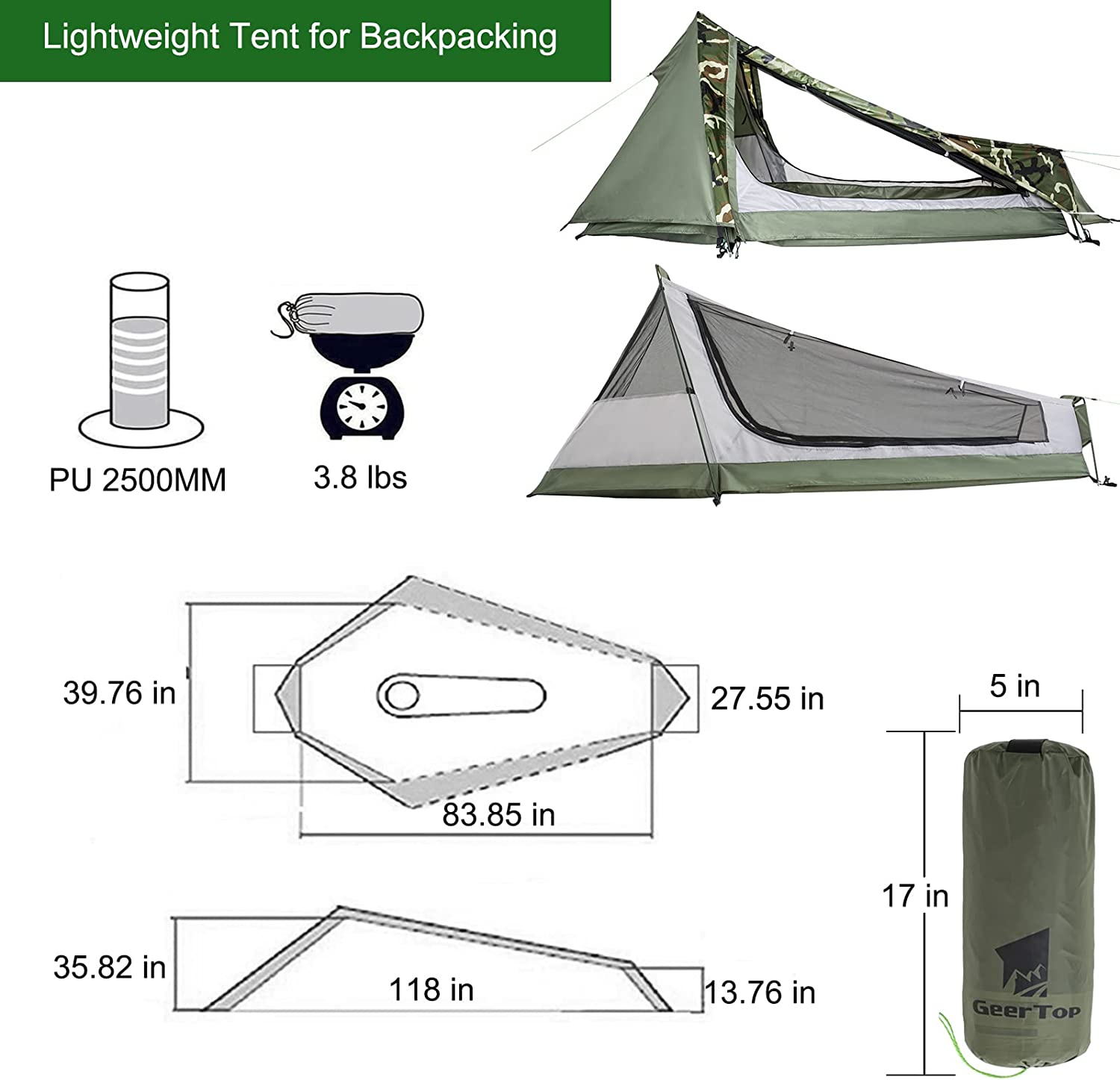
| Geertop Blazer 1 | 4.8 out of 10 | 1.7 kg | 43 × 11 × 11 cm | 2500 mm | low double-wall tent | 3-season | 400-700 zł (checked ) | in stock (checked ) |
| Tatonka Koli 1 | 4.4 out of 10 | 1.7 kg | 15 × 50 cm | 8000 mm | tunnel | no data | over 700 zł (checked ) | in stock (checked ) |
| Naturehike Cloud-Up 1 | 4.9 out of 10 | 1.75 kg | 41 × 13 cm | 3000 mm | dome | 3-season | 400-700 zł (checked ) | in stock (checked ) |
| Naturehike Mongar Pro | 4.9 out of 10 | 1.8 kg | 14 × 40 cm | 3000 mm | dome | 3-season | 400-700 zł (checked ) | in stock (checked ) |
| Wanderfalke Trail 1 | 2.9 out of 10 | 1.8 kg | 14 × 43 cm | 4000 mm | dome | 3-season | over 700 zł (checked ) | in stock (checked ) |
| Night Cat 1P | 6.9 out of 10 | 1.97 kg | 42 × 12 × 12 cm | 3000 mm (wall, single-wall tent) | dome | 3-season | under 400 zł (checked ) | in stock (checked ) |
| Bessport 1P | 6.9 out of 10 | 1.98 kg | no data | 3000 mm | dome | no data | under 400 zł (checked ) | in stock (checked ) |
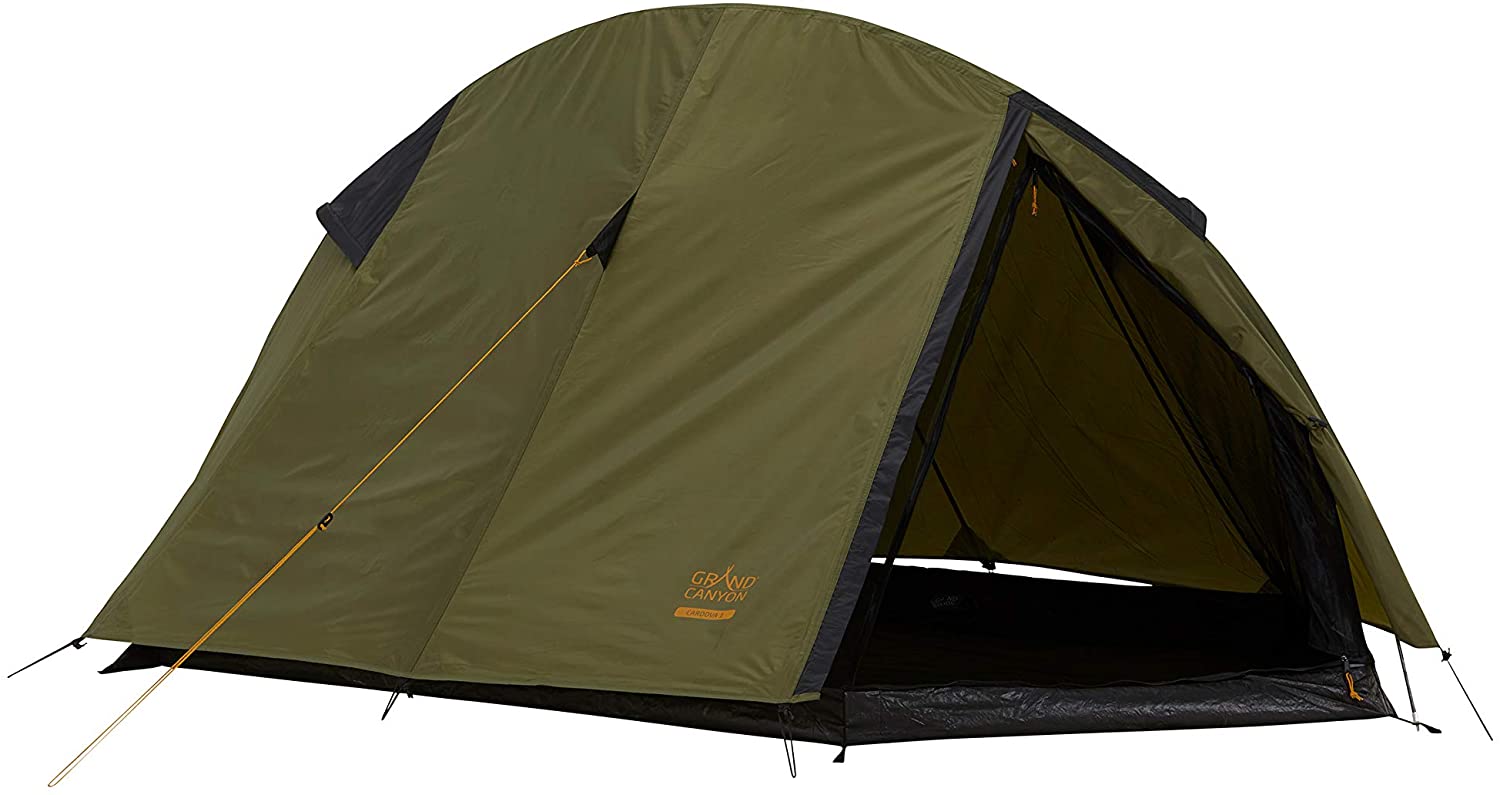
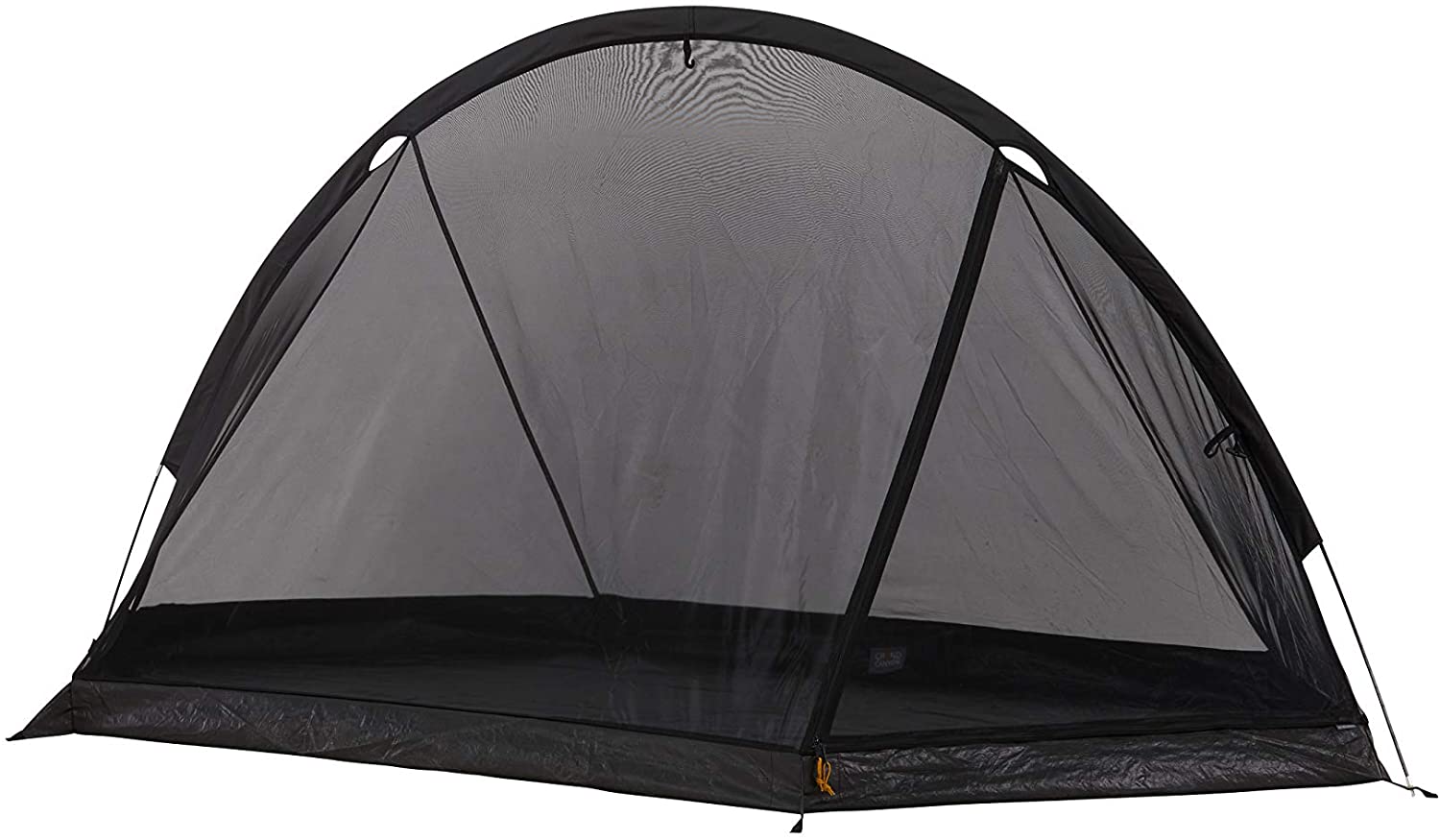
| Grand Canyon Cardova 1 | 6.3 out of 10 | 2.4 kg | 57 × 13 cm | 3000 mm | tunnel | no data | under 400 zł (checked ) | in stock (checked ) |
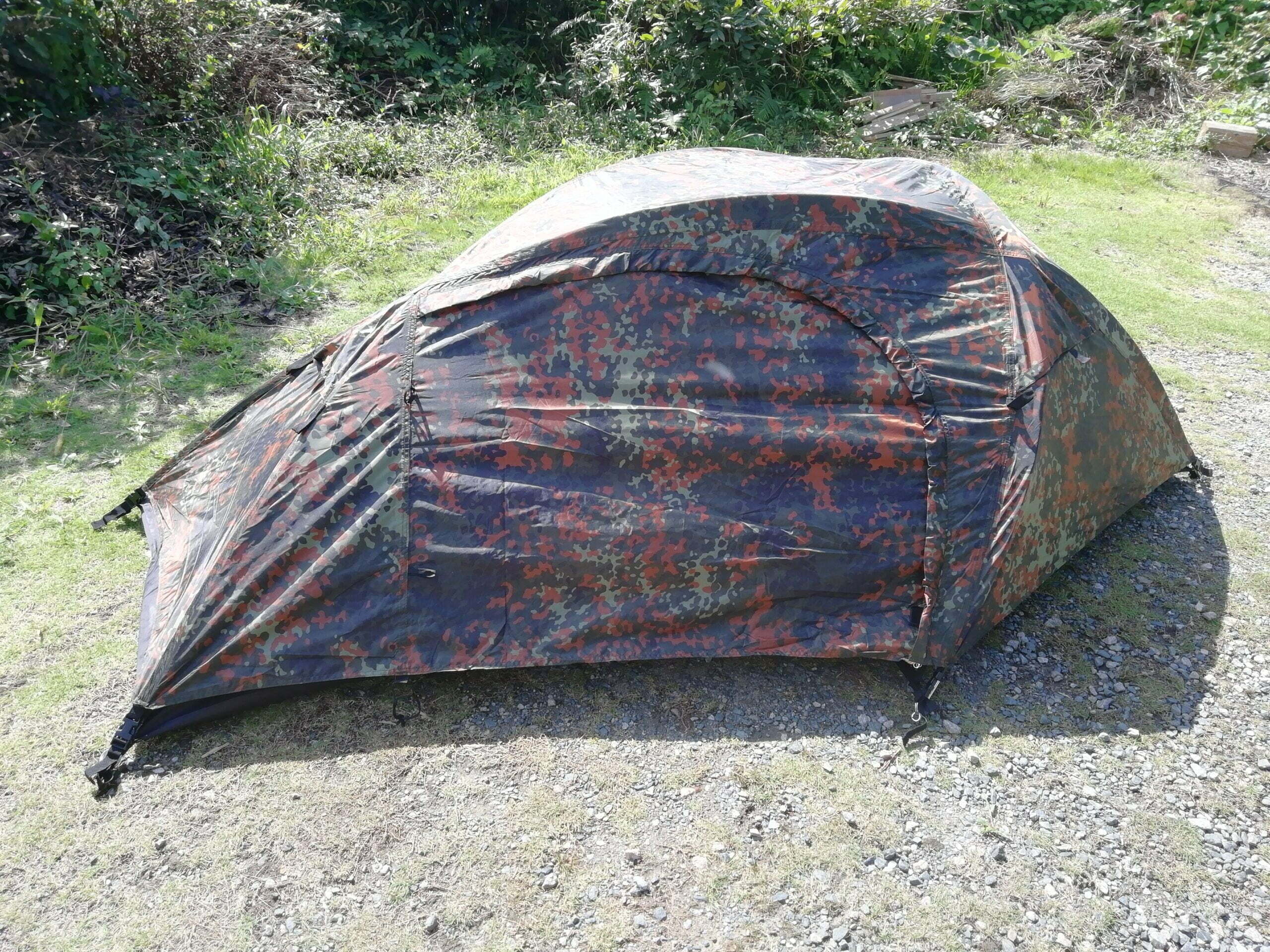
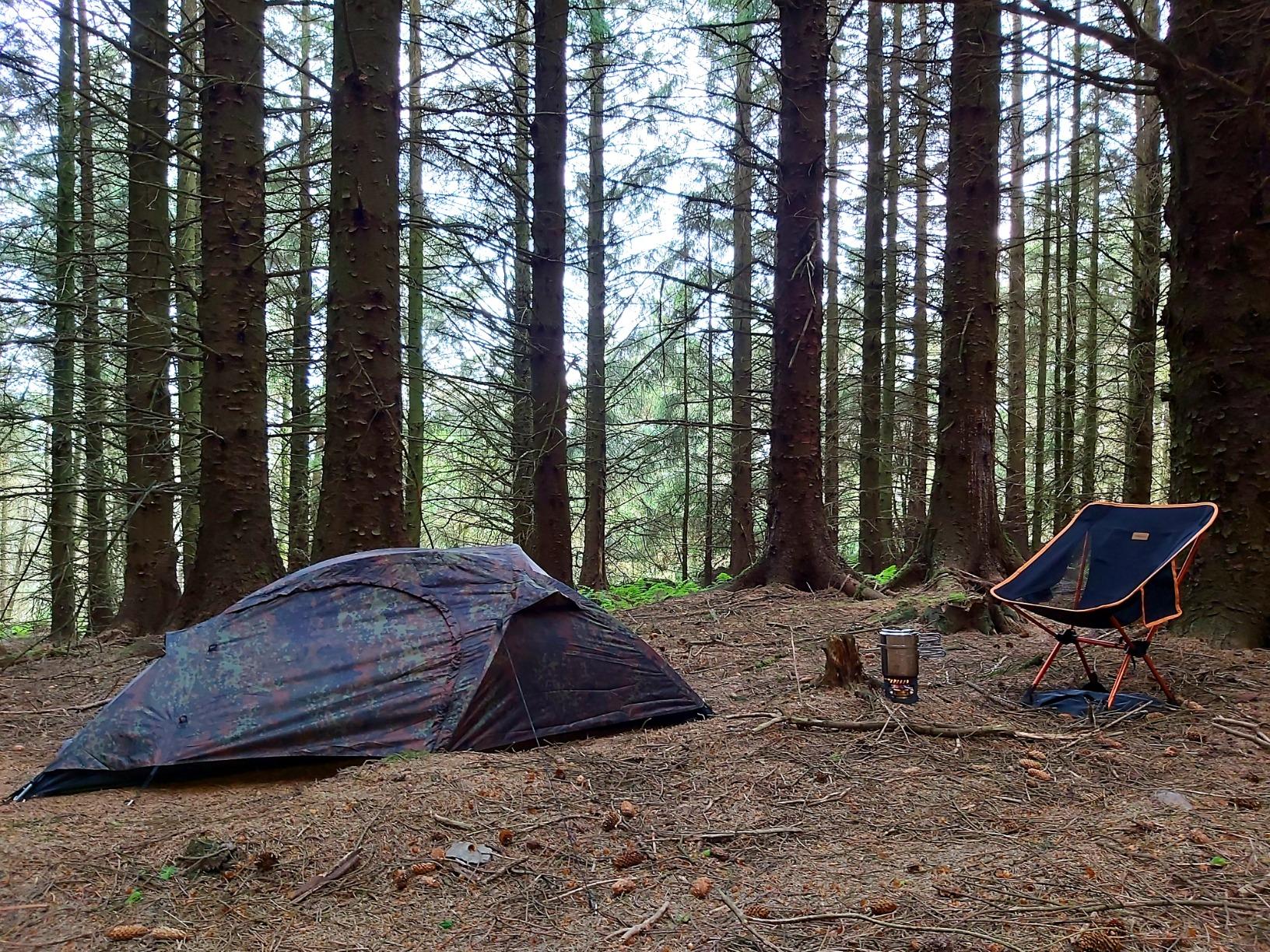
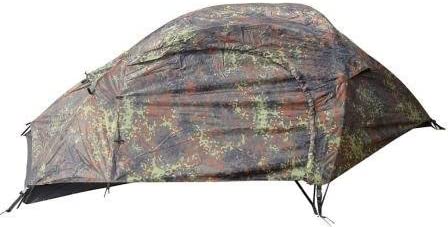
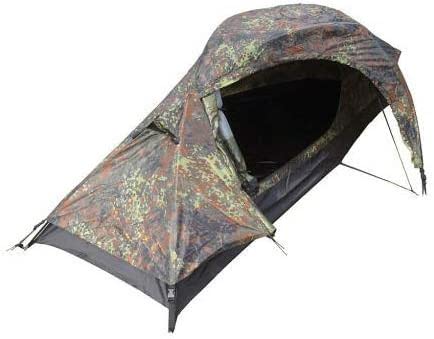
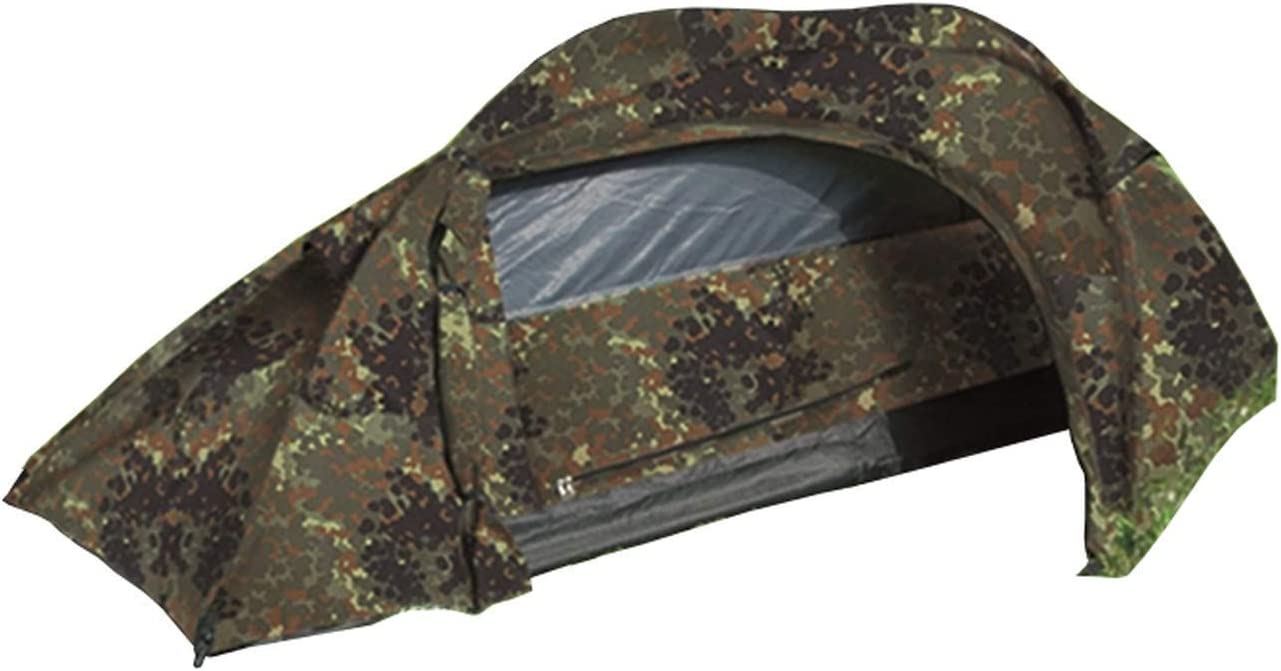
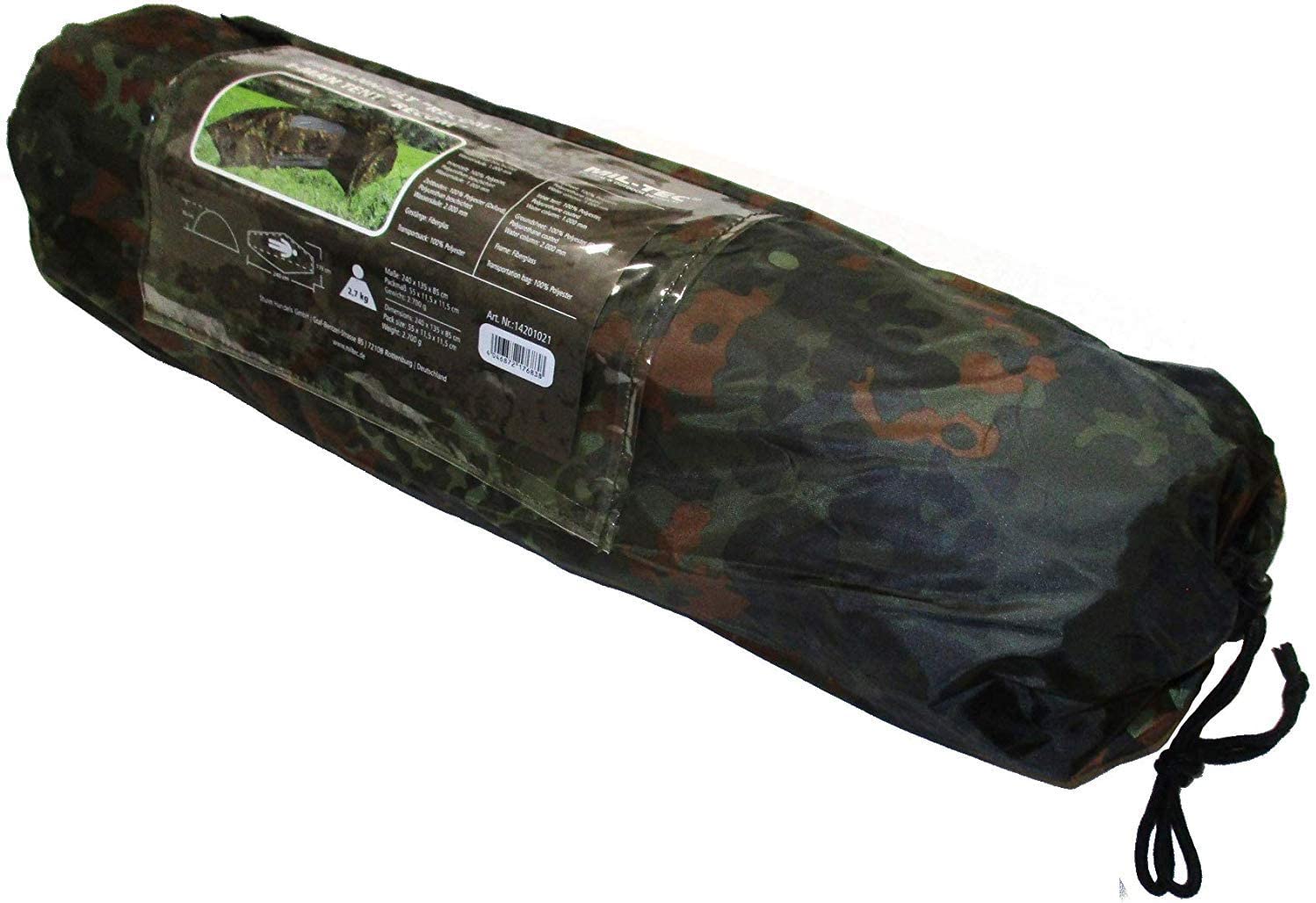
| Mil-Tec Recom | 3.4 out of 10 | 2.4 kg | 55 × 11.5 × 11.5 cm | 1000 mm | tunnel | 2-season | 400-700 zł (checked ) | in stock (checked ) |
| Grand Canyon Apex 1 | 6.1 out of 10 | 2.53 kg | 15 × 53 cm | 3000 mm | dome | no data | under 400 zł (checked ) | in stock (checked ) |
| Instead of a tent: a tarp | ||||||||
| Helikon-Tex Supertarp | no data | 0.85 kg | 28 × 10 × 16 cm | no data | tarp | no data | under 400 zł (checked ) | in stock (checked ) |
If you are looking for the best lightweight single person tent then you have come to the right place. It’s not easy to find a good product in the maze of thousands of single person tents available on the market.
Here are 15 options: fourteen tents and a tarp. You are sure to find something that suits you.
How do you choose a one-person tent, and what should you look for?
When you hike alone and carry everything on your back, the tent is one of the heaviest things in your pack. It has to weigh little and still get through a night of heavy rain, so that you wake up in a dry sleeping bag. The trouble is that tent descriptions are full of numbers and abbreviations that say little until you know where they come from: 3000 mm, 20D, 210T, PU, silicone, minimum weight, freestanding. Below I explain what they mean and why figures from two different tents cannot always be compared directly.
The tents in this comparison run from the cheapest to the top of the range. Several of them, such as the Grand Canyon Apex 1 and the Trinordic Endra, are described by their makers as tents for one or two people. Weight, waterproof rating and construction come from the makers, and where a maker does not publish a value, from the shop’s product page or another source that quotes the maker’s figures. Where I could not find a value in any source, the table says “no data”. This is a comparison of data, not a field test.
In my opinion, before you start comparing grams, it is worth answering three questions. How far will you carry the tent, what weather will you sleep in, and do you walk with trekking poles? The answers decide which columns of the table matter most to you.
- Weight, because you carry it every day. Check whether the maker gives the weight of the tent alone or of the whole set with stakes and bags. I explain the difference below.
- Water column of the flysheet and the floor, which tells you how well the fabric resists leaking. A high number helps, but seams and pitching also decide whether the inside stays dry.
- Construction. You can pitch a freestanding tent almost anywhere, while a trekking-pole tent is usually lighter but needs ground you can push stakes into.
- Single or double wall. This decides the weight and where the moisture from your breath ends up.
- Vestibule, doors and inside dimensions. Two tents with the same capacity can feel very different inside, so compare the floor dimensions, peak height, number of doors and vestibule space1.
What does the water column mean, and is 3000 mm enough?
The water column, or hydrostatic head, tells you how much water pressure a fabric withstands before it starts to leak. In the test a sample of fabric is clamped over a water reservoir and the pressure is raised step by step until drops appear on the other side2. The result is given in millimetres, so 3000 mm means the pressure of a column of water 3 metres high1. The method is described in the ISO 811 standard, published in Europe as EN ISO 811:2018, which replaced the older EN 208113.
Compare numbers from different tents with care, though. The makers report them themselves, usually without confirmation from an independent lab4. They also do not always describe the threshold the same way. MSR, for example, says that a fabric with a 1500 mm coating withstands such a column of water for more than one minute before a single drop appears5. On top of that, waterproofness drops with use, especially as the fabric wears. Whether the inside stays dry therefore depends not only on the fabric, but also on the seams, on how low the flysheet reaches and on pitching the tent well.
The table shows this well. The MSR Hubba NX from the top price bracket has a flysheet rated at 1200 mm according to the maker, while cheap polyester tents with a PU coating, such as the Grand Canyon Apex 1 and the Trinordic Endra, declare 3000 mm6, 7. That does not mean the cheaper tent keeps rain out better. These numbers describe different fabrics with different coatings, reported by different makers without a common check.
How much is enough? As a rule of thumb, fabric rated at 1000 mm or less is best seen as shower resistant, 1500 mm usually does for summer camping, and tents for year-round use have at least 2000 mm8. The floor usually has a higher rating than the flysheet, because it works under more pressure. When you kneel or sit on wet ground, your body weight pushes water into the fabric. In my opinion, for a cheaper polyester tent with a PU coating it is worth looking for a flysheet of at least 2000 mm, ideally 3000 mm, with taped seams, because every fabric loses some of its waterproofness over time.
Single-wall or double-wall tent?
Most tents in this comparison are double-wall tents. They have an inner tent, a light inner shell often made largely of mesh, and a waterproof flysheet pitched over it. The flysheet keeps the rain out and collects condensation on its inside, which is why it should not touch the inner tent8. A single-wall tent has one wall that does both jobs. That makes it lighter, but the water condensing on the ceiling reaches you and your sleeping bag more easily when you brush against it or when it starts to drip9. In this comparison the single-wall tent is the Night Cat 1P.
In double-wall tents the pitching order matters too. With many models you first put the inner tent up on the poles and then throw the flysheet over it10. This is how Naturehike describes pitching the Mongar Pro11. Other tents are pitched flysheet first, and in some the inner tent is clipped under the flysheet, so both layers go up at once. When you pitch in the rain this makes, in my opinion, a big difference, because the inner tent is under cover from the start.
Freestanding, semi-freestanding or trekking-pole tent?
A freestanding tent stands on its poles alone. You can put it up without stakes, which helps where stakes will not go into the ground10. Grand Canyon says that the Apex 1 can be set up on rock or sand without any pegs6. A semi-freestanding tent also stands on its poles, but some corners are not held taut by them, so you cannot do without a few stakes. With many freestanding tents you still have to stake out the vestibule to use it.
Tunnel tents almost always need stakes and guylines to stay upright8. Trinordic describes the Endra outright as a non-freestanding tunnel tent7.
The third group are tents without poles of their own, where a trekking pole takes the place of a tent pole. You find this mainly in very light tents. A trekking-pole tent is not freestanding, so it only stands once you stake it out and tension the guylines. In this comparison there is one such tent, the 3F UL Gear Lanshan 1, pitched with a single trekking pole. In my opinion it makes sense mainly if you walk with trekking poles anyway.
What is a tent made of: nylon, polyester, silicone, PU, 20D and 210T?
Light tent fabrics are usually nylon or polyester, and both break down in UV light over time8. Nylon is stronger and stretches more, and when it gets wet it expands as well12. That is why a nylon flysheet can slacken in the rain and need re-tensioning at night. Polyester stretches less and holds its tension better, and some makers say it is also less sensitive to UV. The stretch of nylon has an upside, though, because in strong wind the fabric gives a little instead of tearing.
The bare fabric would let water through, so it is given a coating. Most often this is silicone or polyurethane, PU for short. Silicone strengthens the fabric and sheds water well, but it is so slippery that seam tape will not stick to it13. PU is cheaper and lets you tape the seams, but it does not strengthen the fabric and breaks down in sunlight over time. That is why some makers put silicone on the outside and PU on the inside. It is a compromise: the outside sheds water well, and the seams can still be taped on the inside. In descriptions you will see this as Sil/PU. Mildew also damages the coating, so dry a wet tent as soon as you can after a trip5.
Markings such as 20D or 68D are denier, the weight of the yarn in grams per 9000 metres14. The lower the number, the thinner the yarn and the lighter the fabric, but, for the same material, usually weaker too. The T figure, such as 210T, is the number of threads in one square inch of fabric, counting the threads in both directions together. Thin threads can be woven more tightly, so light fabrics often have a higher T number. The T number therefore tells you about the density of the weave, not directly about strength, and denier alone will not let you compare nylon with polyester. Ripstop is a fabric with a stronger thread woven in at regular intervals, to make it harder to tear.
Two examples from the comparison. According to the maker, the Naturehike Cloud-Up Pro 1 has a 20D silicone-coated nylon flysheet and a 210T polyester floor1, while the Grand Canyon Apex 1 has a flysheet of 68D polyester with a PU coating6.
In ultralight gear you will also come across DCF, Dyneema Composite Fabric, more and more often. It is not a woven fabric but a laminate of Dyneema fibres sandwiched between two sheets of polyester, very strong for its weight15. It does not let water through, but it costs more than ordinary fabrics. There is no DCF tent in this comparison.
Why are seams taped?
Every stitch is a row of tiny holes in the fabric that water can seep through in a downpour. That is why the seams of the flysheet and the floor are often sealed with tape or a liquid sealant8. In the description look for “taped seams” or “sealed seams”. On fabrics coated with silicone only, tape does not stick, so the seams are sealed by hand with a liquid sealant13. Before your first trip, check in the description whether the maker has done it, because an unsealed seam can leak even with a high water column on the fabric2.
Where does water inside the tent come from when it is not raining?
It is usually condensation. It also forms in the rain, so a wet inner wall does not necessarily mean the flysheet is leaking1. Warm, moist air inside the tent meets a cooler wall and the water settles on it as drops. The moisture comes from your breath and skin, from wet ground and from wet gear inside, and there is most condensation in high humidity, on cold nights and in the rain5. No tent removes it completely, so ventilation is what counts. Keep at least two vents open so that air flows across the tent, use the mesh in the inner tent, and keep wet gear out of it.
In a double-wall tent condensation collects mainly on the flysheet, and the inner tent keeps it away from you8. In a single-wall tent it settles on the same wall you can touch, which is why a small cloth for wiping down the ceiling comes in handy with such a tent9.
What is the vestibule for?
The vestibule is the covered space under the flysheet, without a floor, between the inner tent and the door. You keep your boots and pack there8, and in the rain also wet clothes you do not want to bring into the inner tent6. In my opinion, in a one-person tent the vestibule deserves as much attention as the weight, because the inner tent usually has no room for anything but you and your sleeping bag. If the maker gives its area, compare it. MSR gives a vestibule area of 0.84 m² for the Hubba NX5. In this comparison the Bessport 1P, the Geertop Blazer 1 and the Naturehike Mongar Pro, among others, have two doors.
Minimum weight or packaged weight?
This is where it is easiest to go wrong. MSR gives weights under the American standard ASTM F1934-98, in which the packaged weight is everything in the box, while the minimum weight is only the inner tent, flysheet and poles, without stakes, guylines and the stuff sack5. Other makers talk about “trail weight” or “minimum package weight”, and many shops give one number without saying what it is. The difference is often more than a hundred grams. According to the maker the MSR Hubba NX weighs 1.12 kg minimum and 1.29 kg packaged, the Naturehike Cloud-Up Pro 1 weighs 1.23 kg or 1.39 kg1, and the Trinordic Endra 1.4 kg or 1.7 kg7. On top of that, the real weight can differ a little from the catalogue figure, because batches of fabric and coating do not weigh exactly the same.
In the table, when the maker gives both values, I show the higher one, with the accessories. When you compare tents outside the table, first check which weight each of them means.
What are poles and stakes made of?
Cheaper poles are made of fibreglass, more expensive ones of aluminium alloys, which are stronger and more durable. The pole sections are joined by an elastic cord running inside8. For aluminium, makers often give the alloy and the tube diameter. Trinordic gives a 7001 alloy and an 8.5 mm diameter for the Endra7. Among the tents in this comparison, the Grand Canyon Apex 1 and the Mil-Tec Recom are examples with fibreglass poles, and the Trinordic Endra, the Naturehike Mongar Pro and the Tatonka Koli 1 are examples with aluminium ones.
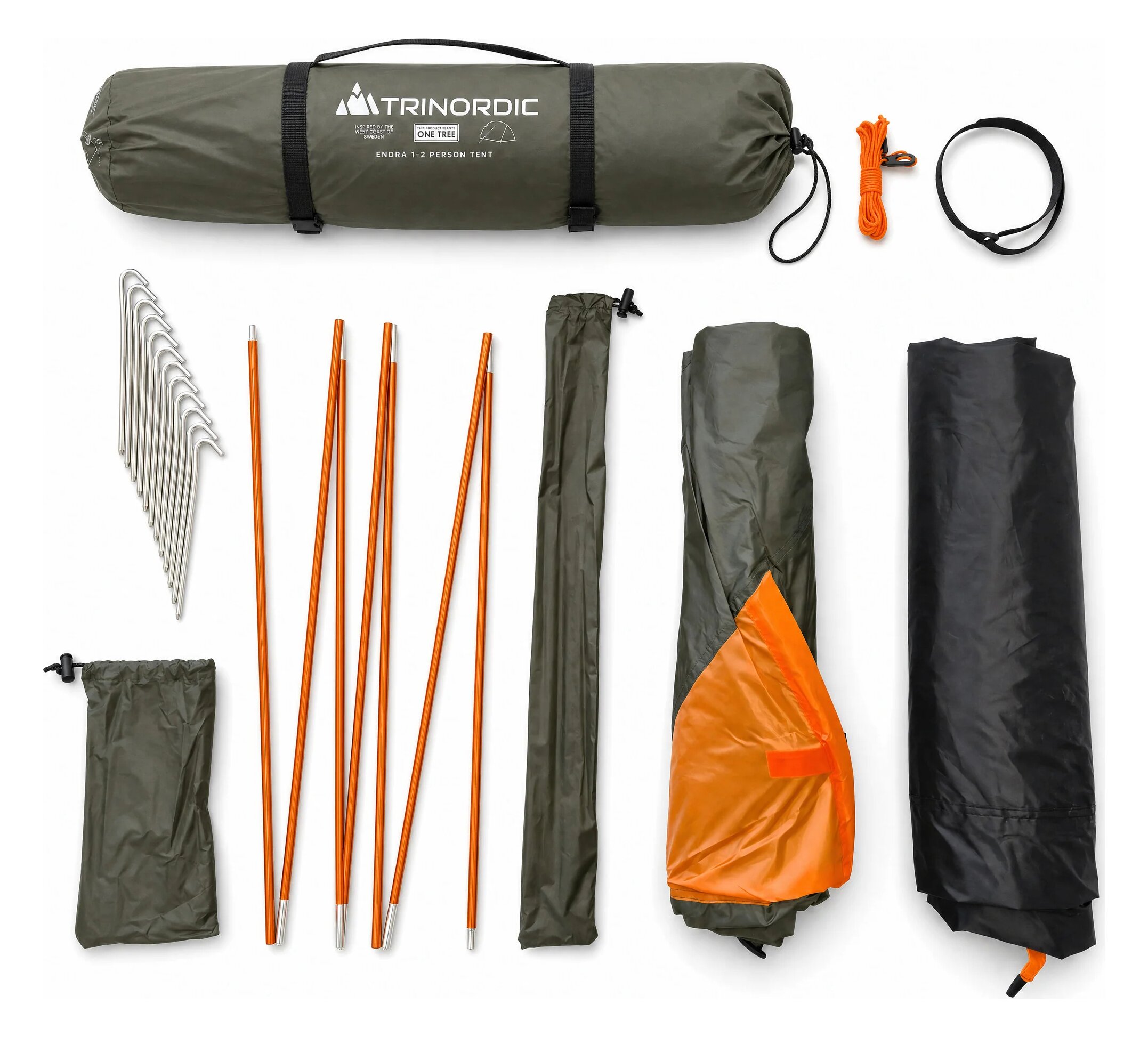
Stakes, also called pegs, hold the tent to the ground and against the wind together with the guylines. Makers supply different ones. Grand Canyon includes steel pegs with the Apex 16, Trinordic includes 12 aluminium stakes with the Endra, and Naturehike includes V-shaped aluminium stakes with the Mongar Pro11.
A tarp or a bivy instead of a tent?
A tarp is a sheet that you pitch above you on lines. It has no floor, walls or mesh, so you protect yourself from wet ground and insects separately. The sheet is pitched with a gap above the ground, so that air flows underneath and condensation does not build up16. The Helikon-Tex Supertarp, the only tarp in this comparison, has no floor or mosquito net, which is why it sits in a separate group in the table.
A bivy, or bivouac sack, is a light, waterproof cover that you sleep in together with your sleeping bag. It takes up less space than a tent and is quick to set up. There is no bivy in this comparison, and the Geertop Blazer 1, although low, is a full double-wall tent.
How do you read the comparison table?
Values in the table come from the makers, and where a maker does not publish a value, from the shop’s product page or another source that quotes the maker’s figures. Where I could not find a value, the table says “no data” rather than my guess.
- Weight is the value given by the maker, or by the shop when the maker does not publish it. When the maker gives both a minimum weight and a weight with accessories, I show the latter.
- Waterproof rating is the water column of the flysheet, or of the wall in a single-wall tent. The floor usually has more.
- Construction tells you whether the tent is a dome, a tunnel or a trekking-pole tent, a low double-wall tent or a tarp.
- Seasons are what the maker or the seller declares. A 3-season tent puts ventilation and low weight first, while a 4-season tent has a stronger structure, more fabric and less mesh1. When choosing, the weather you will sleep in matters more than the label.
- Price is a price bracket on the day of checking, not an exact amount, because shop prices change often.
How I work out the “Value for money” score is described in the methodology next to the table. Remember that the data will not tell you how a tent copes with a gale or how long its seams will last.
Sources
- Naturehike, Cloud Up Pro 1, specifications and FAQ (water column, condensation, seasons): naturehike.com
- Philip Werner, Section Hiker, “Hydrostatic Head Explained: Measuring Waterproofness”: sectionhiker.com
- SIS (Swedish Institute for Standards), SS-EN ISO 811:2018, description of the standard for the hydrostatic pressure test of fabrics: sis.se
- Philip Werner, Section Hiker, “How Waterproof is Silnylon?”, with the author’s reply in the comments on self-reported ratings: sectionhiker.com
- MSR, Hubba NX Solo, specifications and FAQ (weights under ASTM F1934-98, water column, condensation, mildew): cascadedesigns.com
- Grand Canyon, Apex 1, specifications: grand-canyon.dk
- Trinordic, Endra, specifications (in Swedish): trinordic.se
- Wikipedia, “Tent” (construction, water column, seams, poles, vestibule): en.wikipedia.org
- Section Hiker, “Single Wall Tents vs Double Wall Tents: Which is Right for You?”: sectionhiker.com
- Section Hiker, “Freestanding Tents Explained: Guide to Types and Setup”: sectionhiker.com
- Naturehike, Mongar Pro 1, specifications and pitching steps: naturehike.com
- Backpacker, “Could This Fabric Revolutionize Ultralight Backpacking Tents?”, on silnylon and silpoly: backpacker.com
- Intents Outdoors, “What are Tent Fabric Specifications and Coatings?”: intentsoutdoors.co.nz
- Wikipedia, “Units of textile measurement” (denier, thread count): en.wikipedia.org
- Wikipedia, “Dyneema Composite Fabric”: en.wikipedia.org
- Wikipedia, “Bivouac shelter” (bivouac sack, pitching a sheet): en.wikipedia.org
The finder works only with JavaScript switched on, and the same data are in the comparison table at the top of the page.
Let me help you choose a tent for a comfortable night
How do you choose a one-person tent that stays dry and is not too heavy? Answer a few questions about how and when you will camp, and this simple finder checks the weight, the water column and the seasons of each model. I will show straight away which tents on this list will do, also if you want a light tent for a backpack, and what to watch out for with each.
More filters
Order: best match first and, at an equal match, the higher “Value for money”.
No product on this list meets all of these conditions at once.
Best value for money
Watch out: it is a tunnel on a single arch, so it only stands once it is pegged and guyed out, and the maker gives no waterproof rating for the floor.
- Price on Amazon.pl
- under 400 zł (checked )
- Value for money
- 7.3 out of 10
Description and photosCheck the price Amazon store, affiliate link
Watch out: it is a single-wall tent, so the 3000 mm rating is for the wall itself, as there is no separate fly. Both poles are fibreglass.
- Price on Amazon.pl
- under 400 zł (checked )
- Value for money
- 6.9 out of 10
Description and photosCheck the price Amazon store, affiliate link
- Price on Amazon.pl
- under 400 zł (checked )
- Value for money
- 6.9 out of 10
Description and photosCheck the price Amazon store, affiliate link
Watch out: it weighs 2.4 kg, the pegs in the bag are weak, and in a downpour the fly has to be pitched taut so it does not touch the inner. The maker does not say which seasons it is meant for.
- Price on Amazon.pl
- under 400 zł (checked )
- Value for money
- 6.3 out of 10
Description and photosCheck the price Amazon store, affiliate link
Watch out: it is the heaviest tent in the comparison, and the maker does not say which seasons it is meant for.
- Price on Amazon.pl
- under 400 zł (checked )
- Value for money
- 6.1 out of 10
Description and photosCheck the price Amazon store, affiliate link
Watch out: the weight depends on the source (1.39 kg from the maker, 1.55 kg on the shop card), and it has only a few dozen ratings so far.
- Price on Amazon.pl
- 400-700 zł (checked )
- Value for money
- 5.4 out of 10
Description and photosCheck the price Amazon store, affiliate link
- Price on Amazon.pl
- 400-700 zł (checked )
- Value for money
- 4.9 out of 10
Description and photosCheck the price Amazon store, affiliate link
- Price on Amazon.pl
- 400-700 zł (checked )
- Value for money
- 4.9 out of 10
Description and photosCheck the price Amazon store, affiliate link
Watch out: it is a low double-wall tent, so you cannot sit up inside, in wind-driven rain water can creep in at the foot end, and it is no good for winter.
- Price on Amazon.pl
- 400-700 zł (checked )
- Value for money
- 4.8 out of 10
Description and photosCheck the price Amazon store, affiliate link
Watch out: it has only a handful of ratings, it is sold by a third-party seller, and as a tunnel it relies on well-tensioned guylines. The maker does not say which seasons it is meant for.
- Price on Amazon.pl
- over 700 zł (checked )
- Value for money
- 4.4 out of 10
Description and photosCheck the price Amazon store, affiliate link
Watch out: the fly is rated at only 1000 mm, the fibreglass poles and the pegs are weak, and you cannot sit up inside.
- Price on Amazon.pl
- 400-700 zł (checked )
- Value for money
- 3.4 out of 10
Description and photosCheck the price Amazon store, affiliate link
- Price on Amazon.pl
- over 700 zł (checked )
- Value for money
- 2.9 out of 10
Description and photosCheck the price Amazon store, affiliate link
Watch out: the maker rates the fly at only 1200 mm, so the finder leaves it out when you ask about heavy rain, and the floor is 76 cm wide.
- Price on Amazon.pl
- over 700 zł (checked )
- Value for money
- 2.7 out of 10
Description and photosCheck the price Amazon store, affiliate link
Watch out: you pitch it on a 120-125 cm pole that is not included, the first pitch takes practice, and tall people will find it cramped.
- Price on Amazon.pl
- 400-700 zł (checked )
- Value for money
- no data
Description and photosCheck the price Amazon store, affiliate link
Watch out: there is no floor and no mesh, you need your own guylines and pegs, and the maker does not give a waterproof rating in mm.
- Price on Amazon.pl
- under 400 zł (checked )
- Value for money
- no data
Description and photosCheck the price Amazon store, affiliate link
Not a full match for your answers, but worth considering
You can find more options on Amazon.pl: search results for “1 person tent” Amazon store, affiliate link
All models
Tents
3F UL Gear Lanshan 1
- Weight
- 0.92 kg
- Packed size
- 34 × 15 cm
- Waterproof rating
- no data
- Construction
- trekking-pole tent
- Seasons
- 3-season
Value for money: no data
Price on Amazon.pl: 400-700 zł (checked )
Availability: in stock (checked )
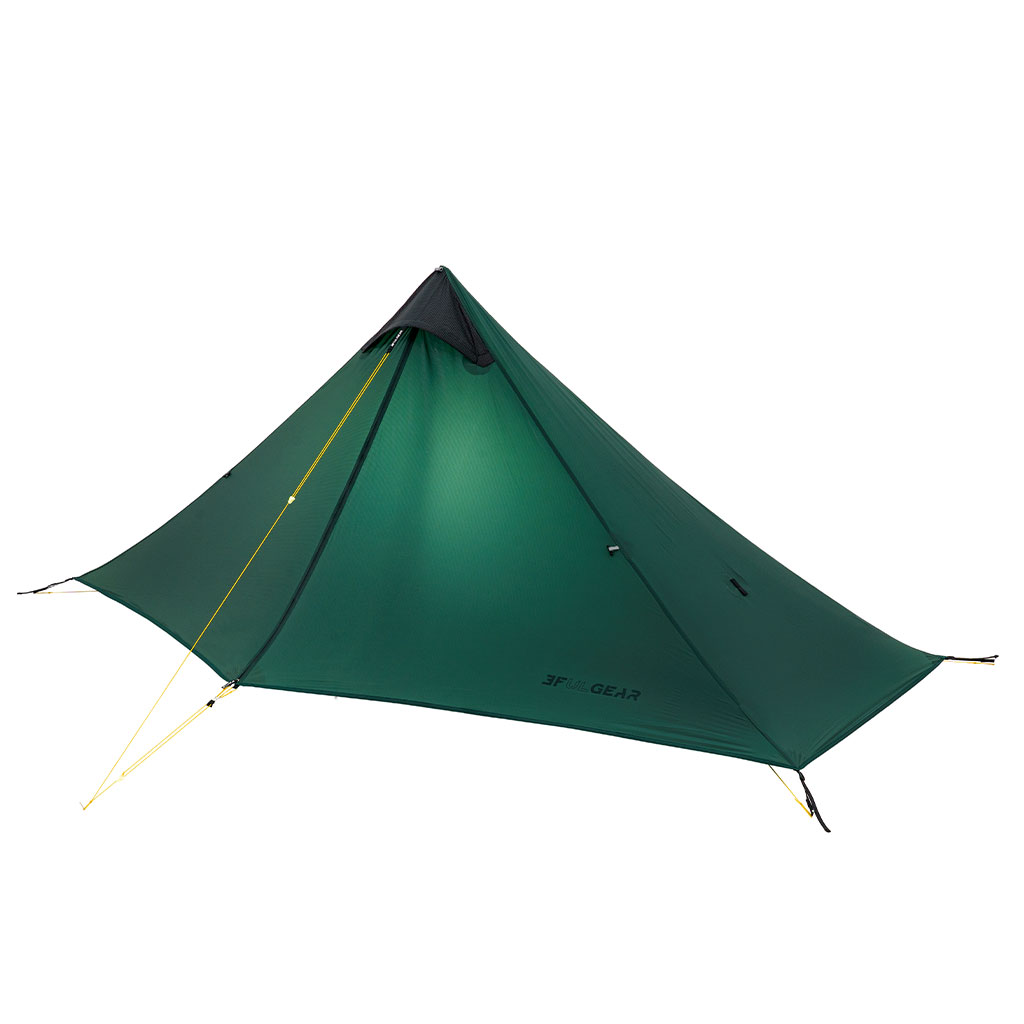
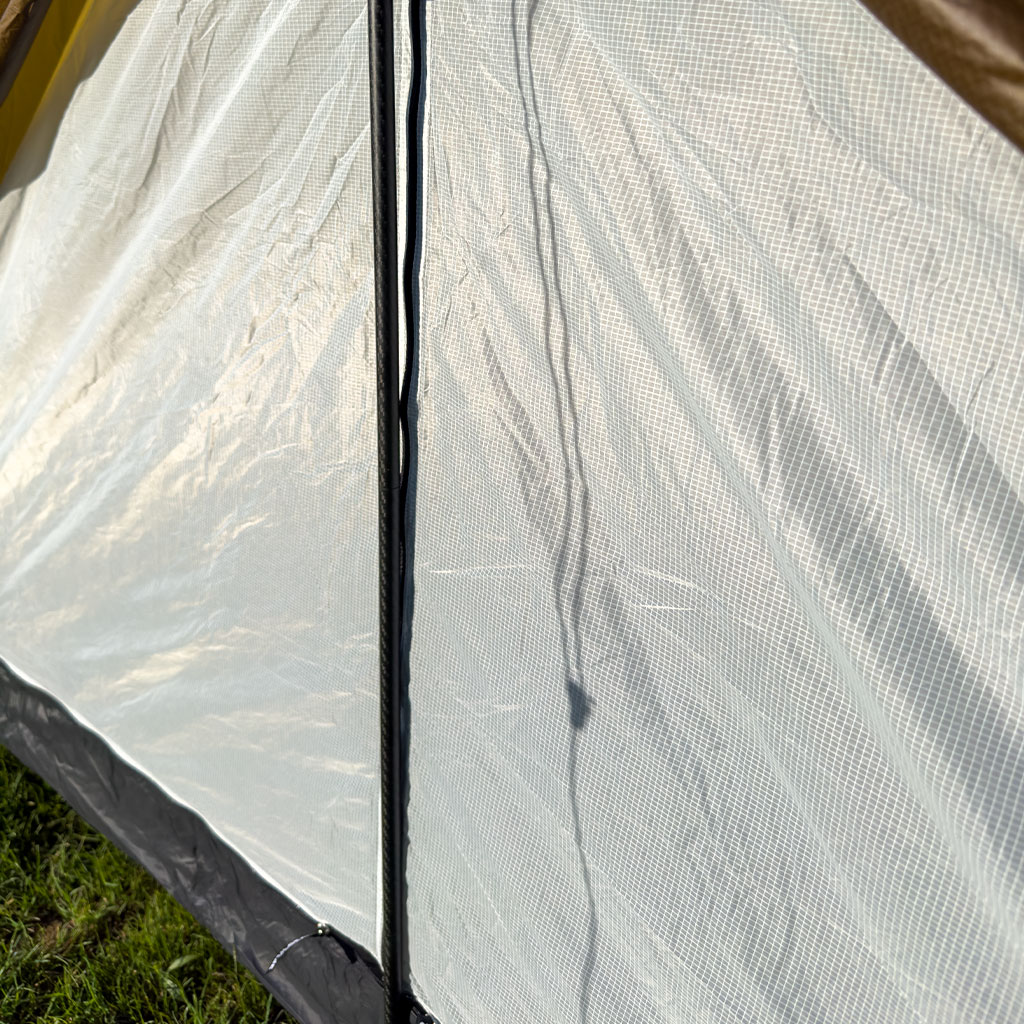
Check the price Amazon store, affiliate linkThe 3F UL Gear Lanshan 1 is the lightest tent in this round-up: the maker puts it at about 920 g. It is a double-wall tent with a fly made of thin 15D nylon and a mesh inner, one door and a vestibule for your boots and pack.
There is a catch: the Lanshan has no poles of its own. You pitch it on a single trekking pole, 120-125 cm long, which is not in the box, plus pegs (9 pegs and 4 guylines are included). If you walk with poles anyway, you carry no extra frame at all. If you do not, you will have to buy one.
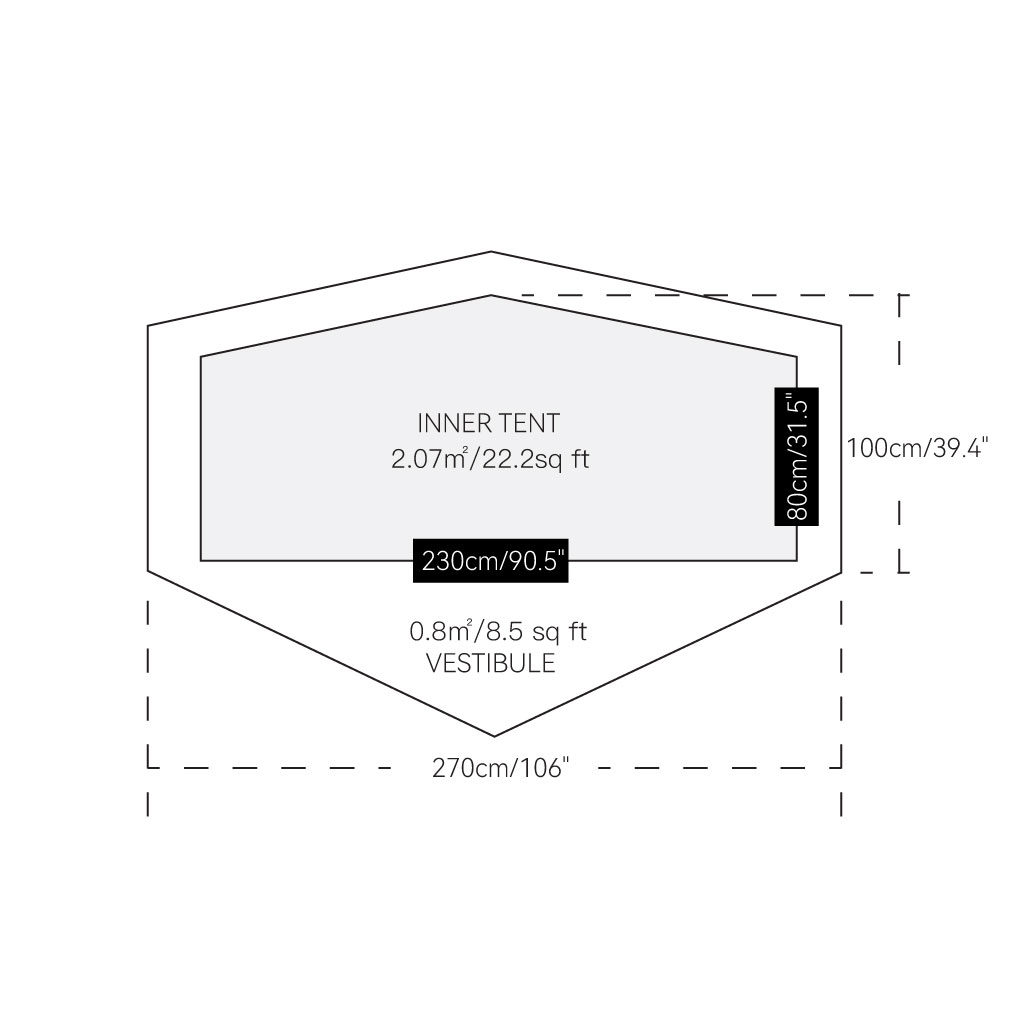
Amazon buyers praise the weight, how it stays dry in the rain and how well it holds up in the wind. They complain that the first pitch takes practice and that tall people find it cramped, with the mesh hanging close to the face. The inner tent is 230 cm long.
The link goes to the 3-season version with a mesh inner. The maker rates the floor at 6000 mm and gives no figure for the fly.
Pros
- Lightest tent in the round-up: about 920 g
- Stays dry in the rain
- Holds up well in the wind
- Small when packed: 34 x 15 cm
- Double wall: mesh inner and a separate fly
Cons
- Needs a 120-125 cm trekking pole, not included
- The first pitch takes practice
- Cramped for tall people, mesh close to the face
- Weak pegs in the box
- The maker gives no waterproof rating for the fly
All technical details
| Colour | green (Forest Green) |
|---|---|
| Floor waterproof rating | 6000 mm (no figure given for the fly) |
| Packed size | 34 x 15 cm |
| Weight | about 920 g |
| Fabric | fly: 15D nylon, PU coated; inner: 20D nylon mesh; floor: 20D nylon, PU coated |
| Construction | double wall, pitched on one trekking pole (pole not included) |
| Seasons | 3-season |
| Pitched size | 270 x 110 x 125 cm, inner tent 230 cm long |
MSR Hubba NX
- Weight
- 1.29 kg
- Packed size
- 46 × 15 cm
- Waterproof rating
- 1200 mm
- Construction
- dome
- Seasons
- 3-season
Value for money: 2.7 out of 10
Price on Amazon.pl: over 700 zł (checked )
Availability: in stock (checked )
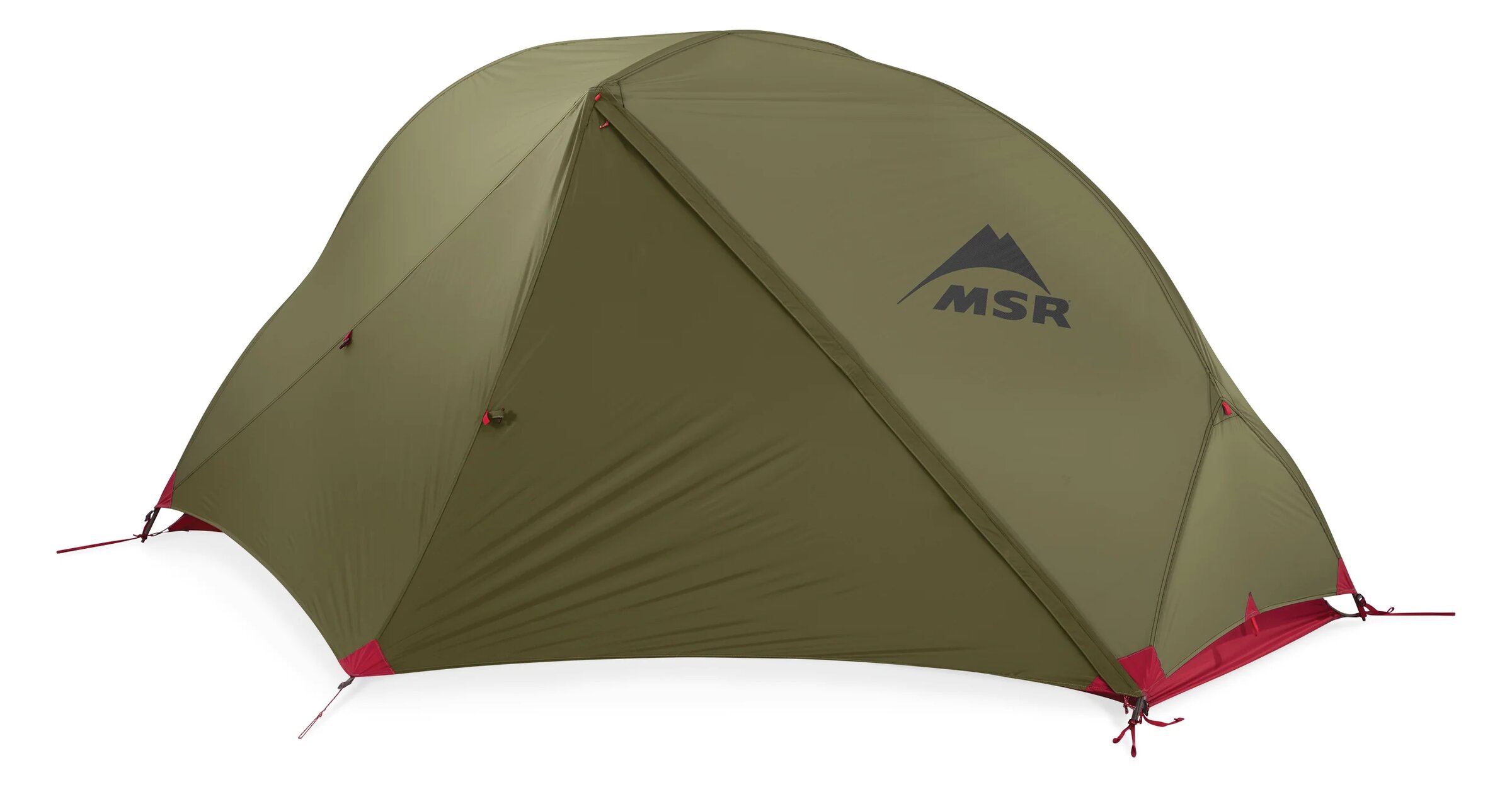
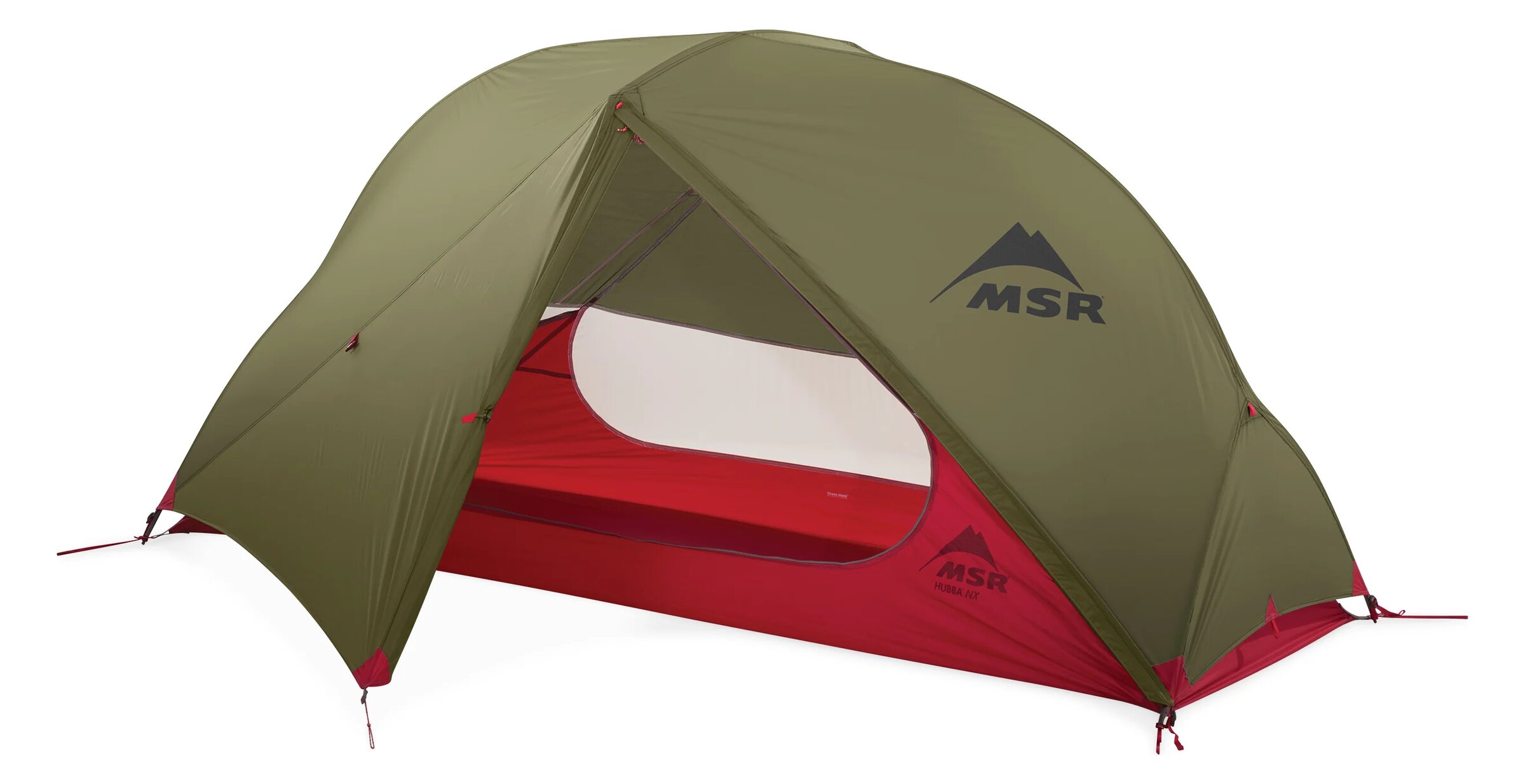
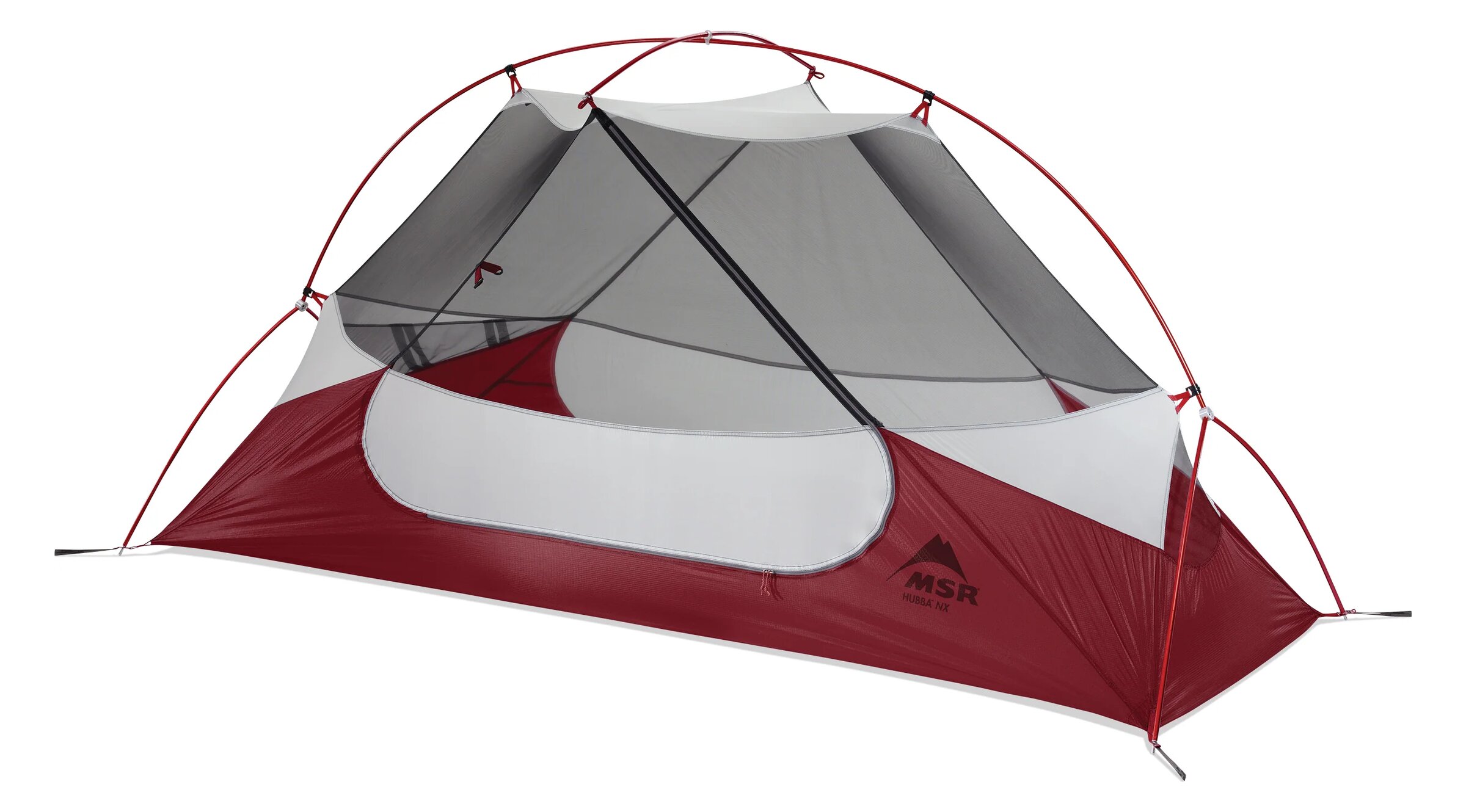
Check the price Amazon store, affiliate linkThe MSR Hubba NX is a one-person freestanding tent. The frame is a single set of DAC Featherlite NFL aluminium poles joined by a hub. The maker puts it at 1.29 kg for the full set and 1.12 kg in its minimum configuration, and packed it measures 46 x 15 cm.
The floor is 216 x 76 cm and the height 91 cm. 76 cm of width is not much, so your gear will most likely stay outside the inner tent.
The maker rates the 20D ripstop fly at 1200 mm and the 30D ripstop floor at 3000 mm, so its fly rating is lower than that of most tents in this round-up.
The maker gives no season rating; the Amazon listing describes it as a 3-season tent. That listing has (as of 15.10.2026) only two photos and a description in Lithuanian, so the other figures in the table come from the maker’s site.
Pros
- Light: 1.29 kg for the full set, 1.12 kg minimum
- Freestanding, hub-and-pole frame
- DAC Featherlite NFL aluminium poles
- Floor rated at 3000 mm by the maker
Cons
- Fly rated at only 1200 mm
- Narrow inner tent: 76 cm
- Season rating from the seller only, not the maker
All technical details
| Waterproof rating | fly 1200 mm, floor 3000 mm |
|---|---|
| Packed size | 46 x 15 cm |
| Weight | 1.29 kg (maker’s minimum 1.12 kg) |
| Fabric | fly: 20D ripstop; floor: 30D ripstop |
| Pole material | DAC Featherlite NFL aluminium, hub-and-pole frame |
| Construction | dome, freestanding |
| Seasons | 3-season |
| Pitched size | floor 216 x 76 cm, height 91 cm |
Naturehike Cloud-Up Pro 1
- Weight
- 1.39 kg
- Packed size
- 13 × 39 cm
- Waterproof rating
- 3000 mm
- Construction
- dome
- Seasons
- 3-season
Value for money: 5.4 out of 10
Price on Amazon.pl: 400-700 zł (checked )
Availability: in stock (checked )
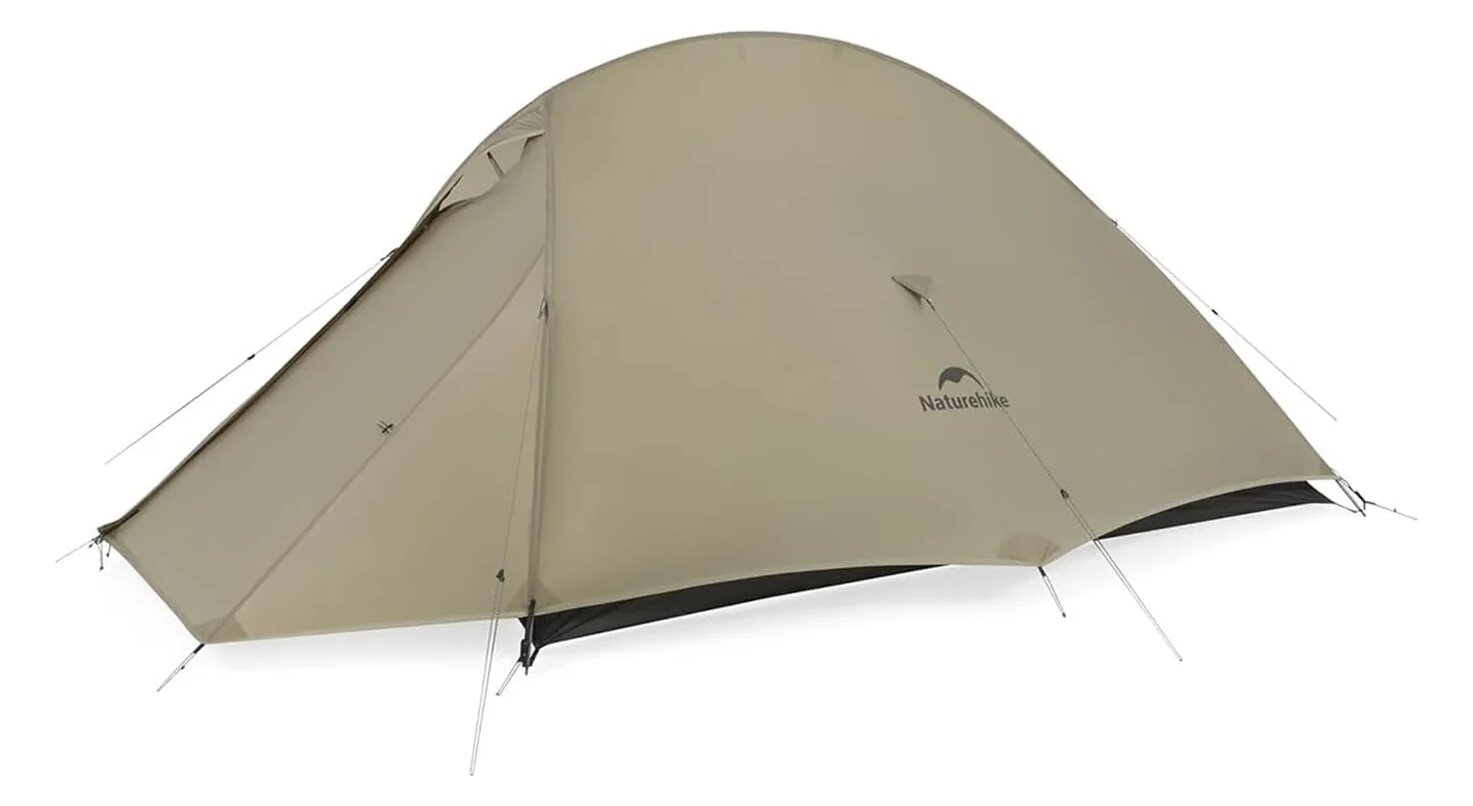
Check the price Amazon store, affiliate linkThe Cloud-Up Pro 1 is one of three Naturehike tents in the round-up, next to the Cloud-Up 1 and the Mongar Pro. The maker gives 1.39 kg for the full set and 1.23 kg in its minimum configuration, while the Amazon listing says 1.55 kg. Packed, it is 13 cm across and 39 cm long.
The maker gives its pitched size as 210 x 90 cm and 105 cm high. That is the whole tent, not just the floor, so the inner tent is smaller. The maker does not give its size separately.
The 20D fly is rated at 3000 mm and the 210T floor at 5000 mm. The maker also lists a 20D groundsheet rated at 3000 mm.
The frame is Yuksom aluminium; the seller says it is a single pole. The maker sells it as a 3-season tent.
Pros
- Light: 1.39 kg, 1.23 kg minimum
- Small when packed: 13 x 39 cm
- Floor rated at 5000 mm by the maker
- Yuksom aluminium frame
Cons
- The maker gives the size of the whole tent, not the inner
- The Amazon listing says 1.55 kg, the maker 1.39 kg
- The maker does not name the construction type
All technical details
| Waterproof rating | fly 3000 mm, floor 5000 mm |
|---|---|
| Packed size | 13 x 39 cm (diameter x length) |
| Weight | 1.39 kg (maker’s minimum 1.23 kg; Amazon listing: 1.55 kg) |
| Fabric | fly: 20D fabric, PU coated; floor: 210T fabric, PU coated; groundsheet: 20D fabric |
| Pole material | Yuksom aluminium |
| Construction | dome (semi-geodesic with one pole, per the seller) |
| Seasons | 3-season |
| Pitched size | 210 x 90 x 105 cm (whole tent) |
Trinordic Endra
- Weight
- 1.7 kg
- Packed size
- 60 × 12 × 12 cm
- Waterproof rating
- 3000 mm
- Construction
- tunnel
- Seasons
- 3-season
Value for money: 7.3 out of 10
Best value for money
Price on Amazon.pl: under 400 zł (checked )
Availability: in stock (checked )
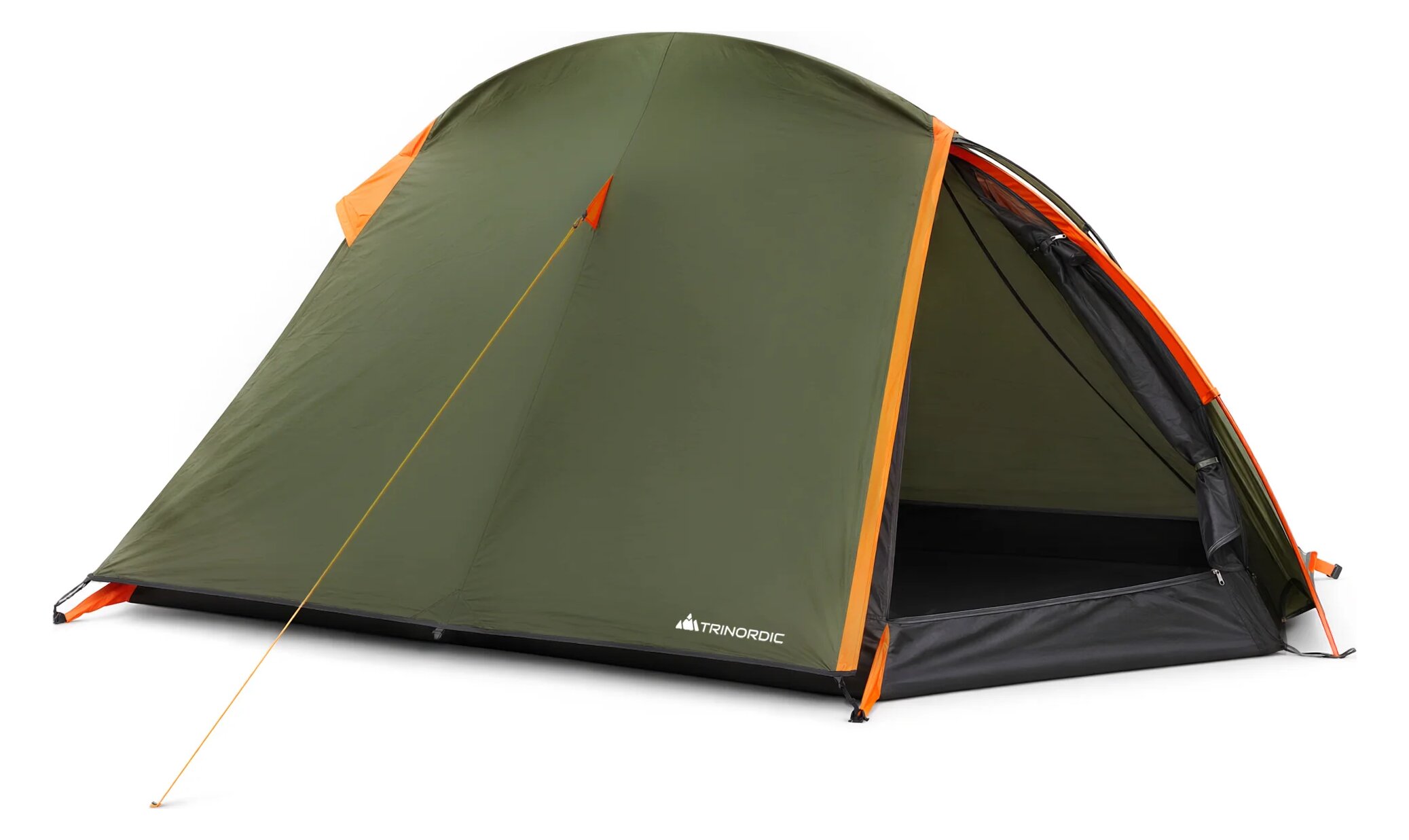
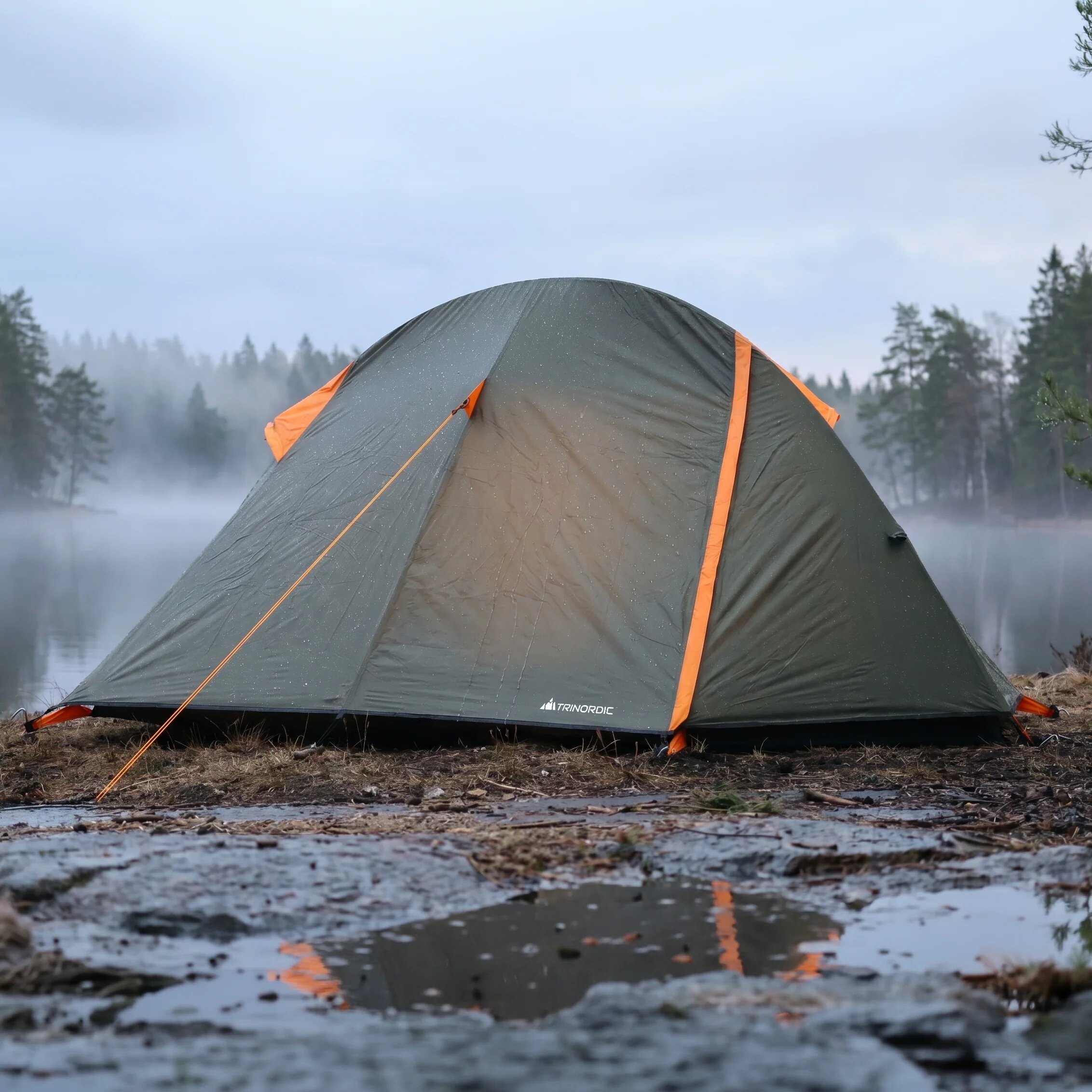
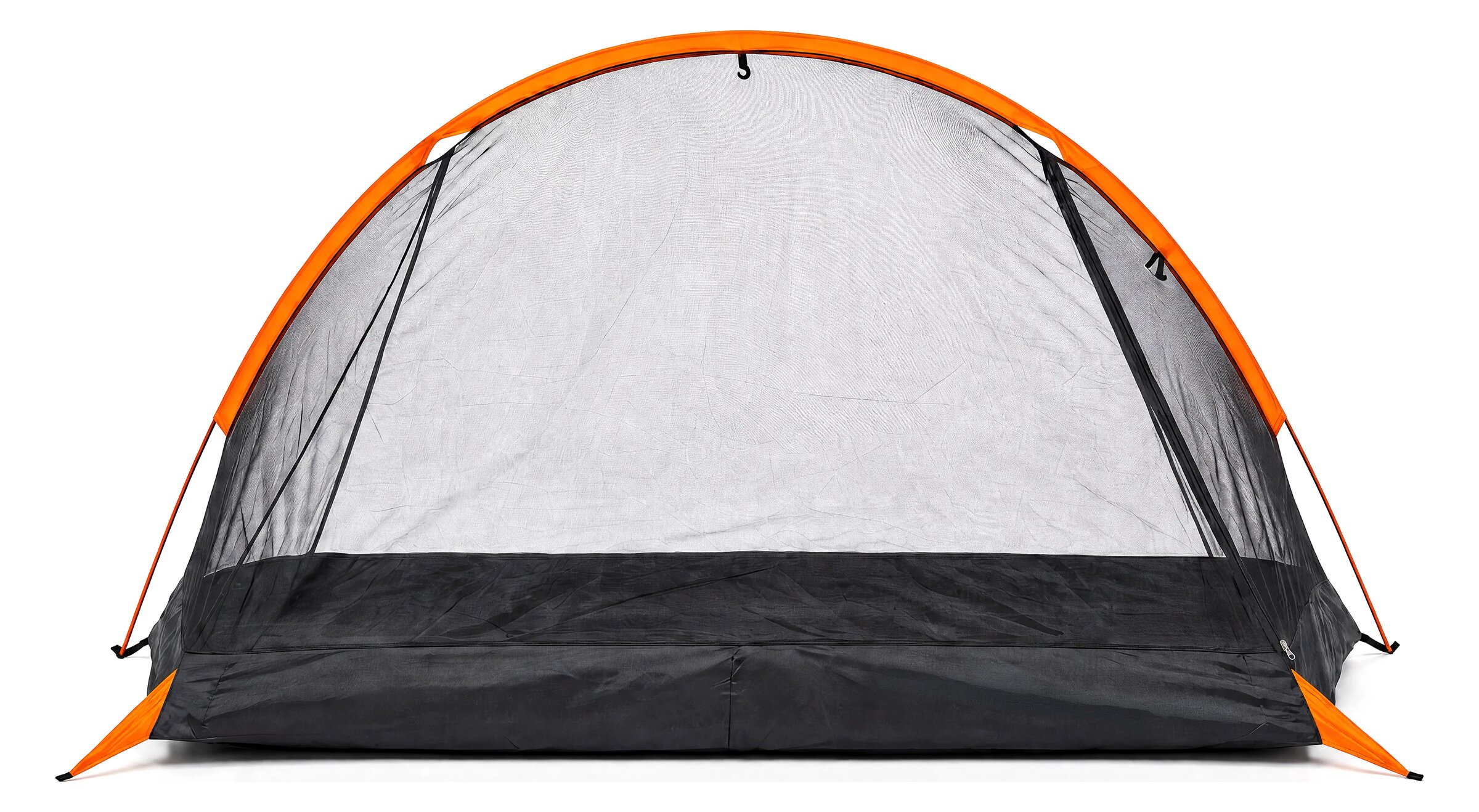
Check the price Amazon store, affiliate linkThe Trinordic Endra is a tunnel tent pitched on a single arch of 7001 aluminium, 8.5 mm thick. The maker puts the full set at 1.7 kg and the tent alone at about 1.4 kg. Packed, it measures 60 x 12 x 12 cm.
The maker sells it as a tent for one or two people. The floor is 260 x 150 cm and the peak height is 110 cm. One person has room for a pack alongside, two people get 75 cm of width each.
With only one arch, the tent does not stand on its own. It takes shape once you stake it out and tension it, which can be awkward on hard or stony ground.
The maker rates the fly at 3000 mm. The floor is a bathtub design in Oxford fabric, but the maker gives no figure for its waterproofing. The Endra is a 3-season tent.
Pros
- Light: 1.7 kg, the tent alone about 1.4 kg
- Large floor: 260 x 150 cm
- 7001 aluminium pole
- Fly rated at 3000 mm by the maker
- Room for a second person or your gear
Cons
- Not freestanding, needs pegs and tension
- Long when packed: 60 cm
- No floor waterproof rating from the maker
All technical details
| Waterproof rating | fly 3000 mm (no figure given for the floor) |
|---|---|
| Packed size | 60 x 12 x 12 cm |
| Weight | 1.7 kg (maker’s minimum 1.4 kg) |
| Fabric | floor: Oxford fabric, bathtub design |
| Pole material | 7001 aluminium, one 8.5 mm arch |
| Construction | tunnel, single arch, not freestanding |
| Seasons | 3-season |
| Pitched size | floor 260 x 150 cm, height 110 cm |
Geertop Blazer 1
 Amazon store, affiliate link
 Amazon store, affiliate link
 Amazon store, affiliate link
 Amazon store, affiliate link
 Amazon store, affiliate link
 Amazon store, affiliate link
 Amazon store, affiliate link
 Amazon store, affiliate link
 Amazon store, affiliate link
 Amazon store, affiliate link
 Amazon store, affiliate link
 Amazon store, affiliate link
 Amazon store, affiliate link
- Weight
- 1.7 kg
- Packed size
- 43 × 11 × 11 cm
- Waterproof rating
- 2500 mm
- Construction
- low double-wall tent
- Seasons
- 3-season
Value for money: 4.8 out of 10
Price on Amazon.pl: 400-700 zł (checked )
Availability: in stock (checked )
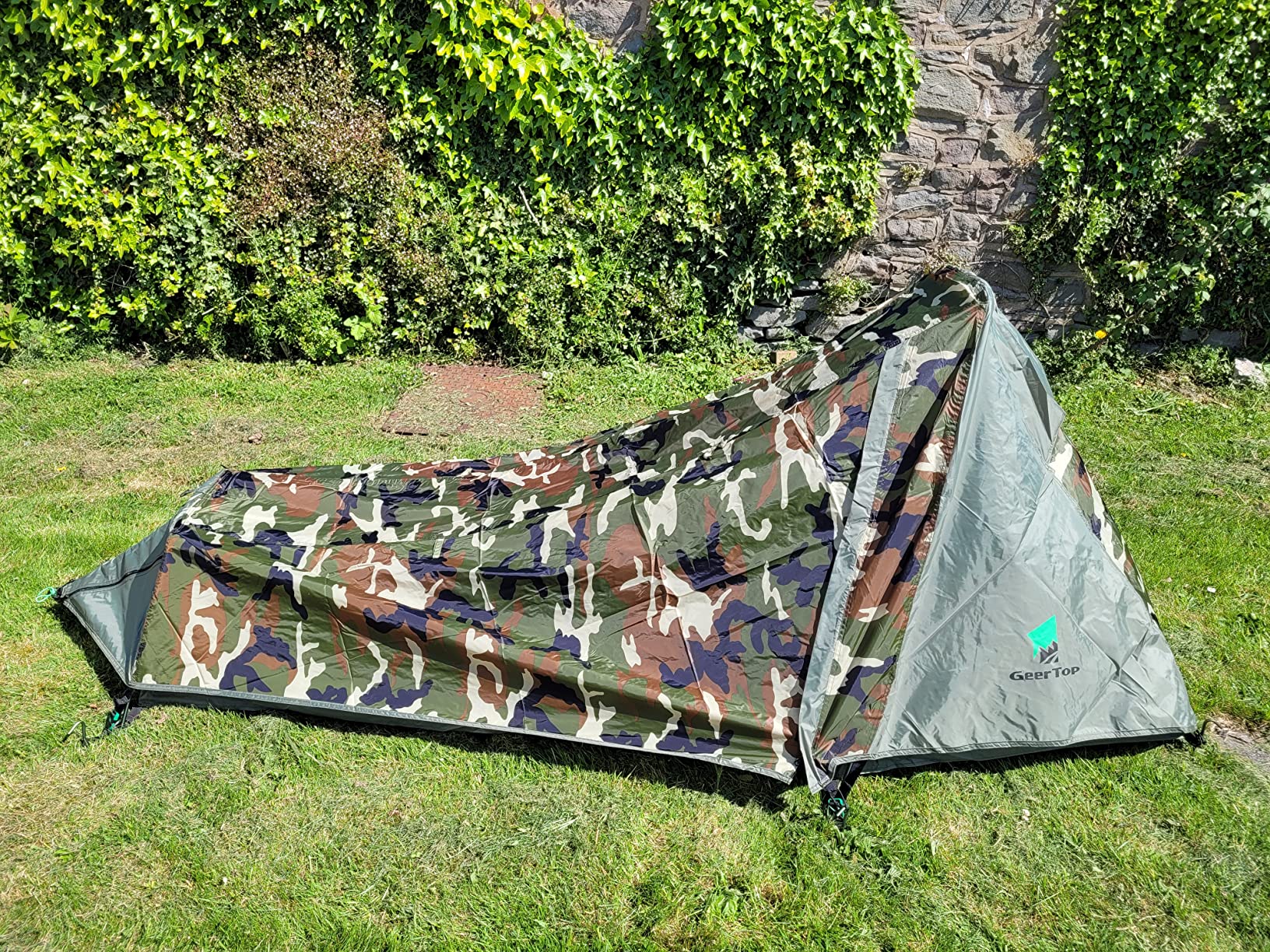
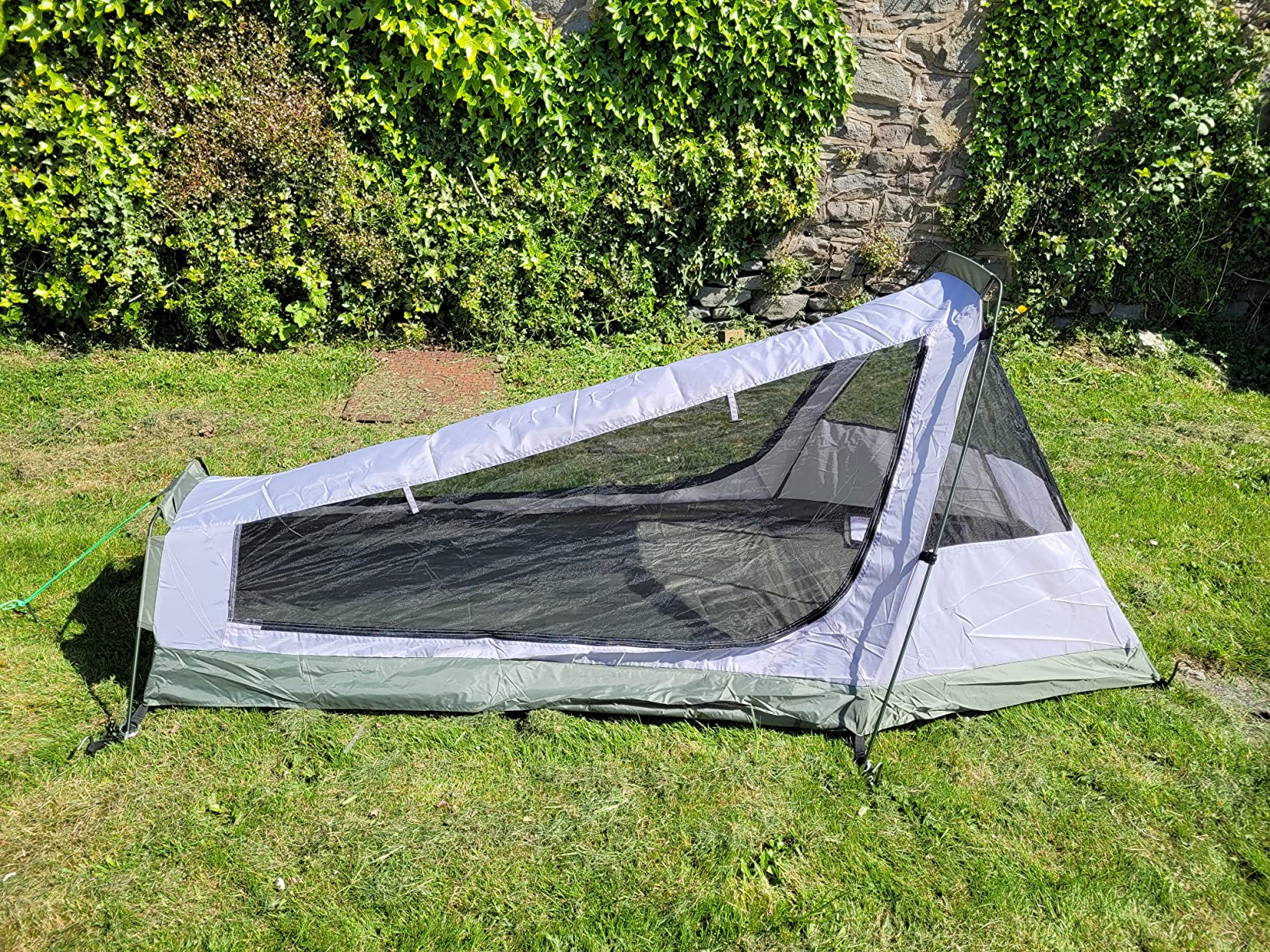
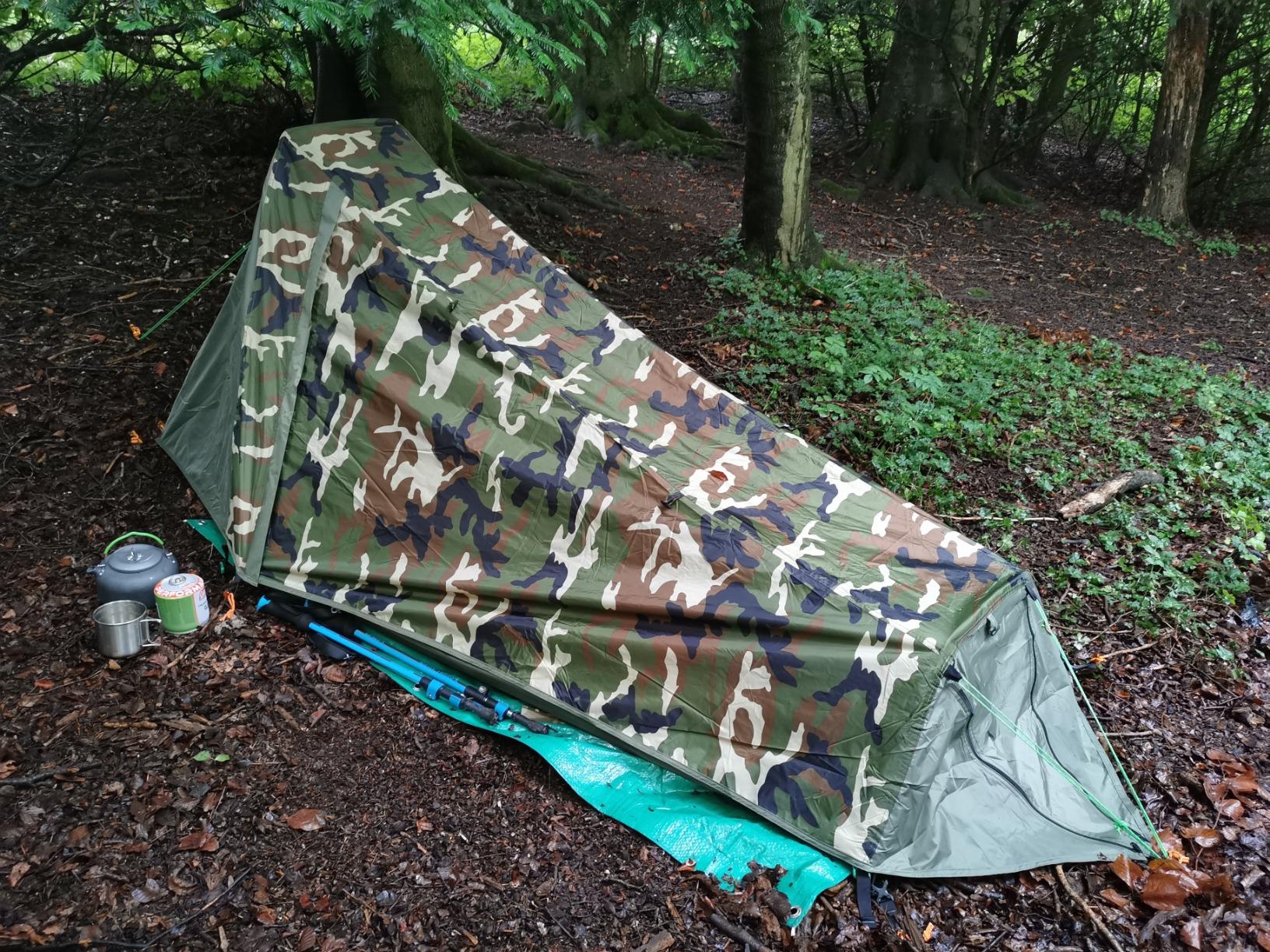
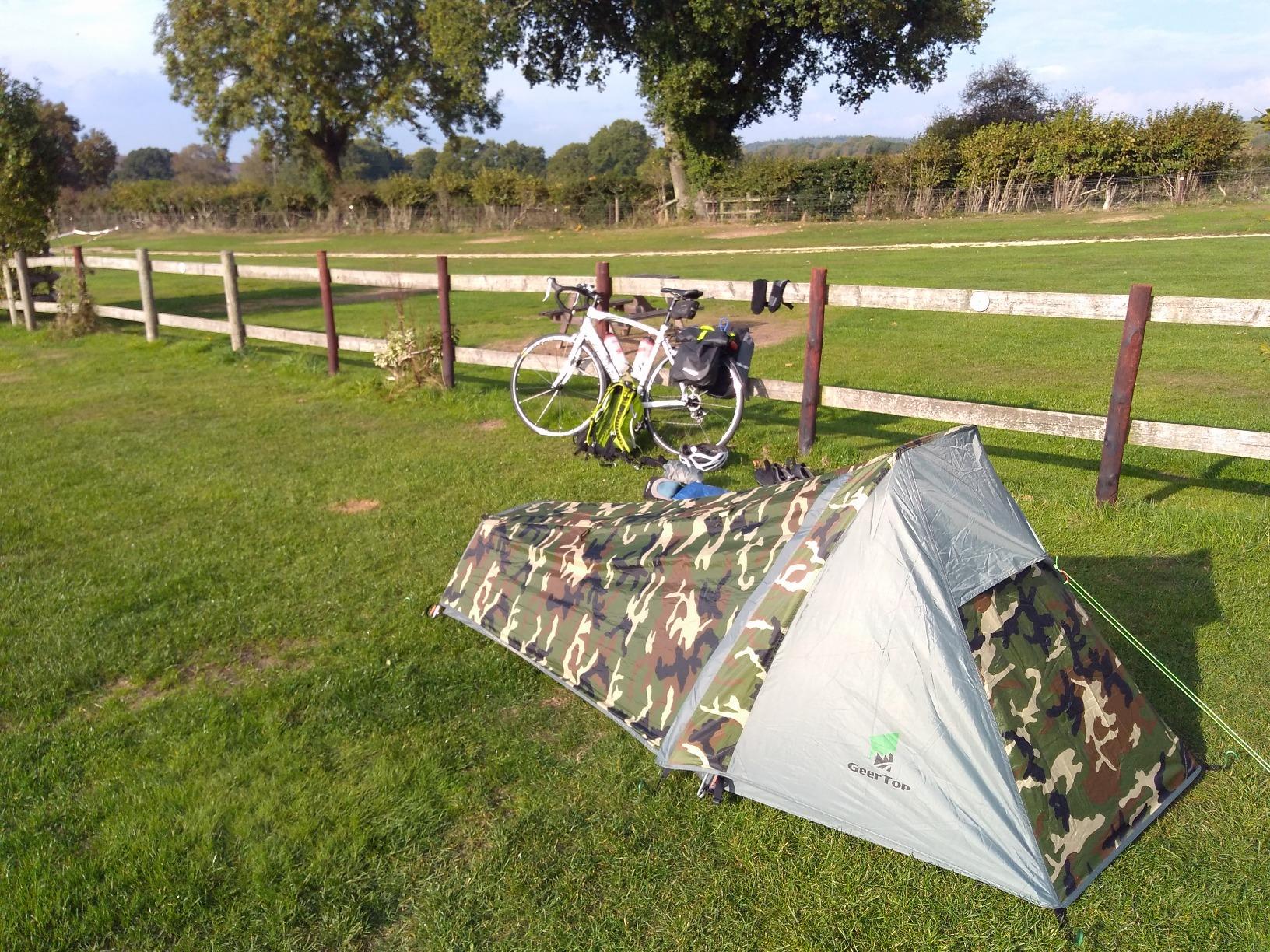
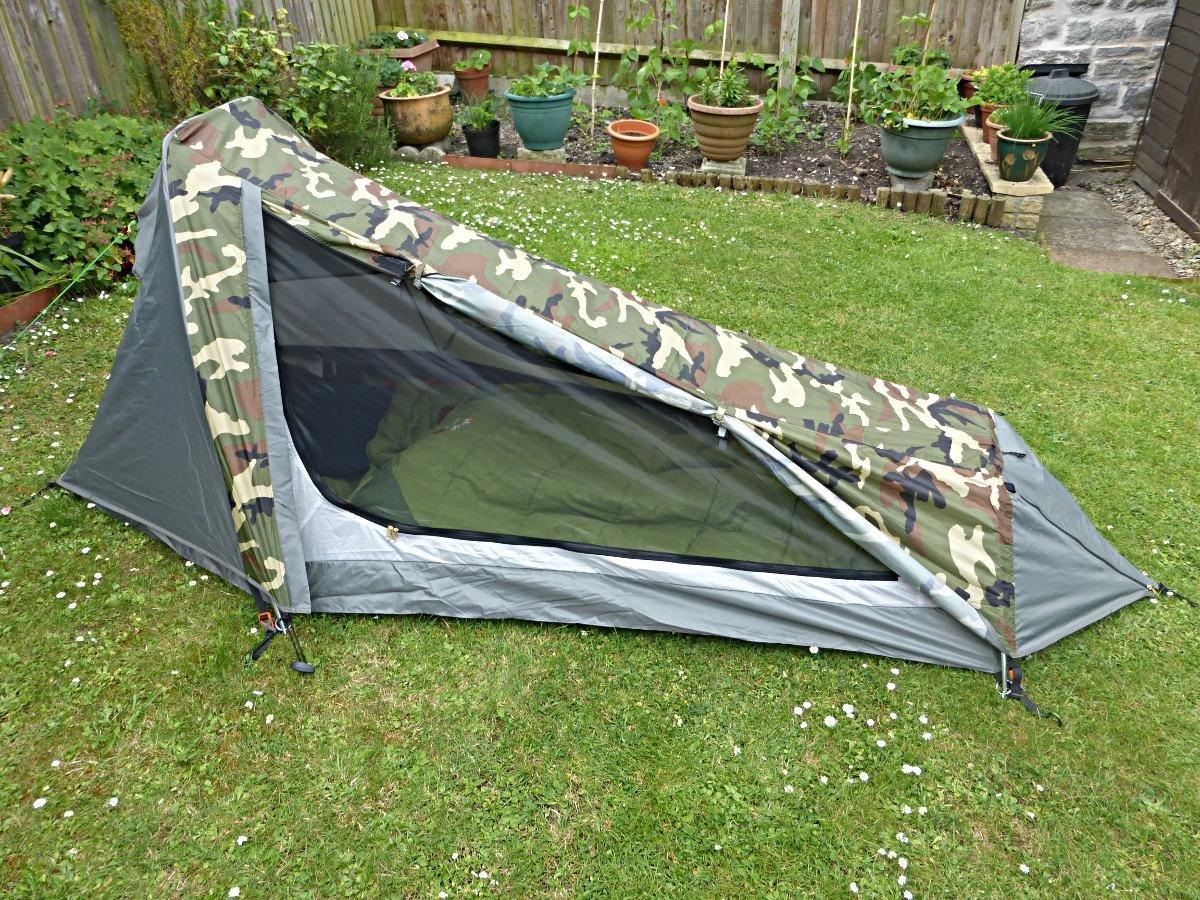
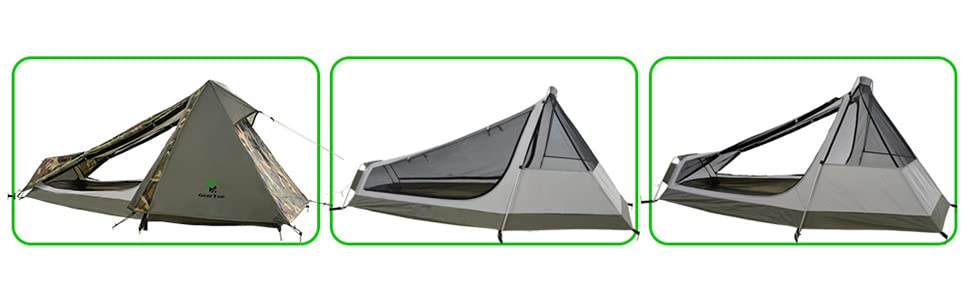
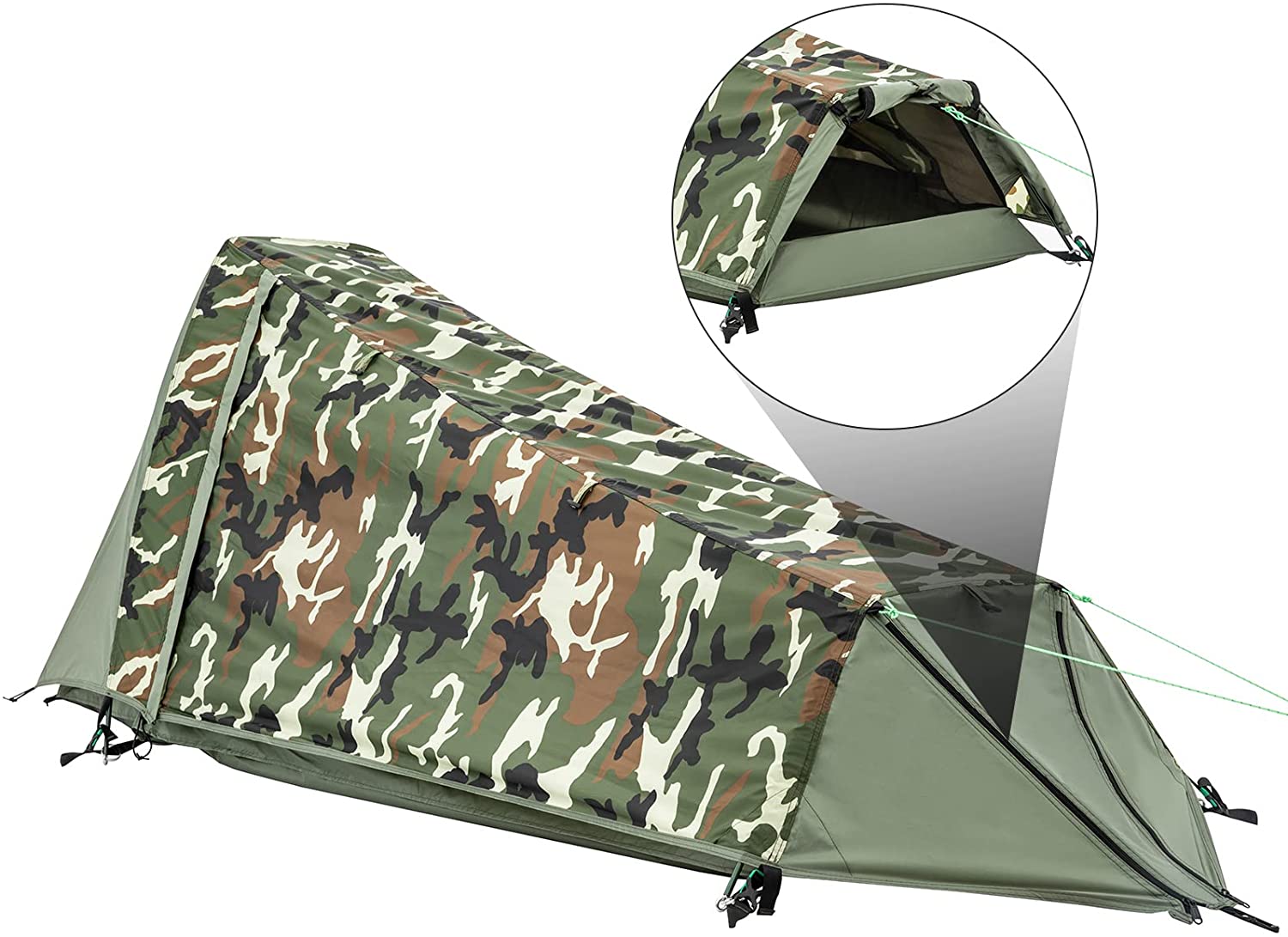
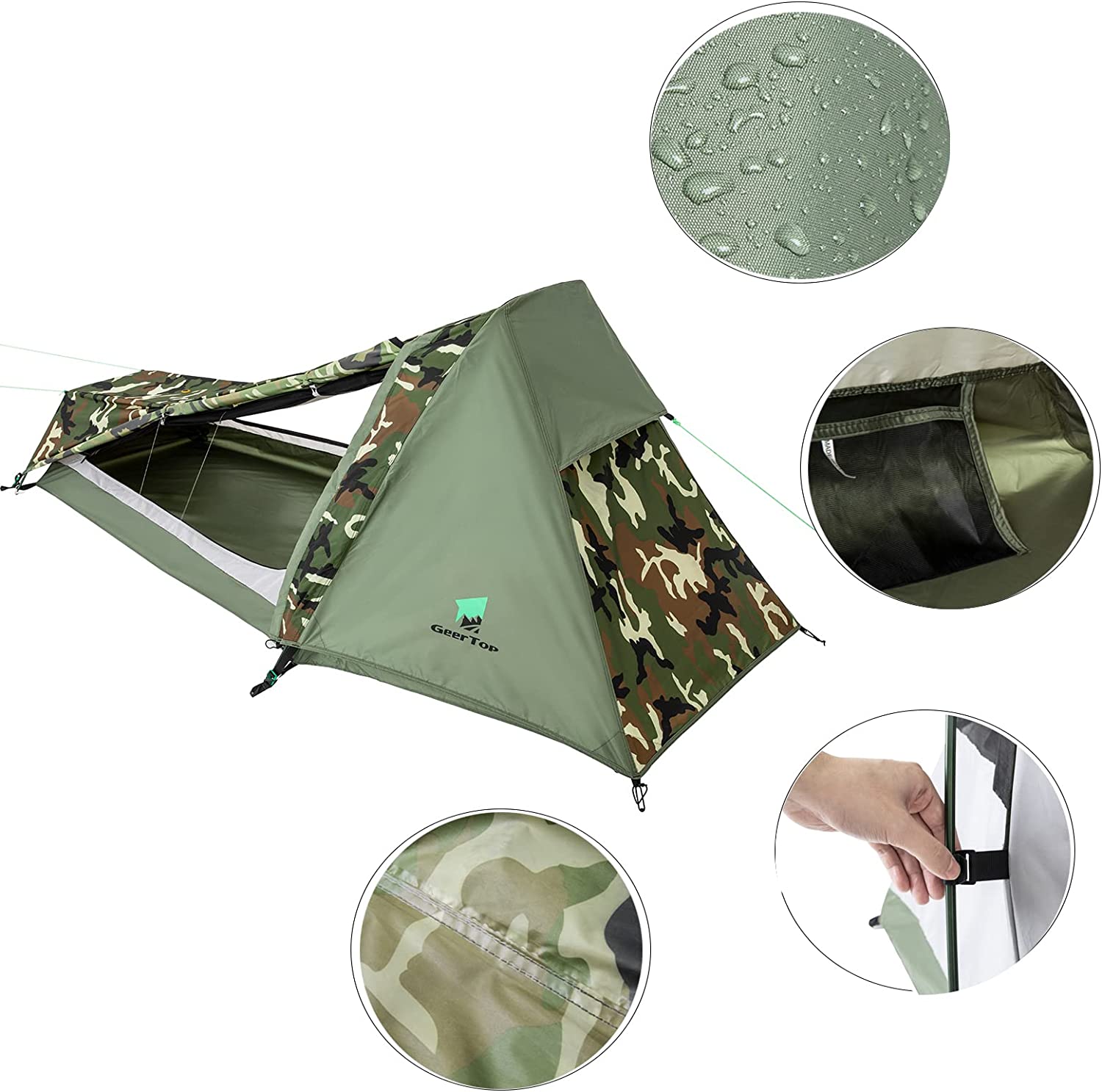
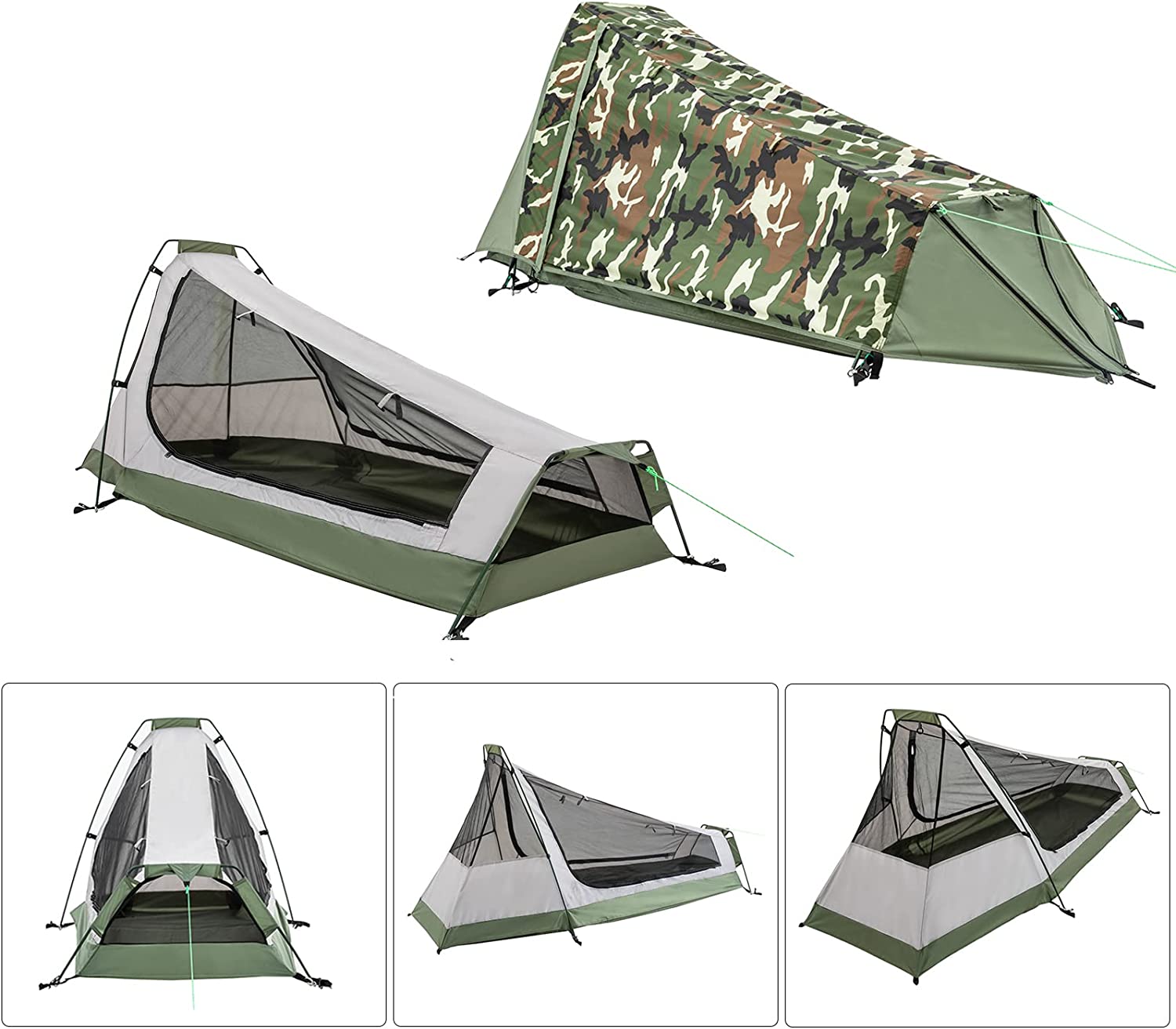
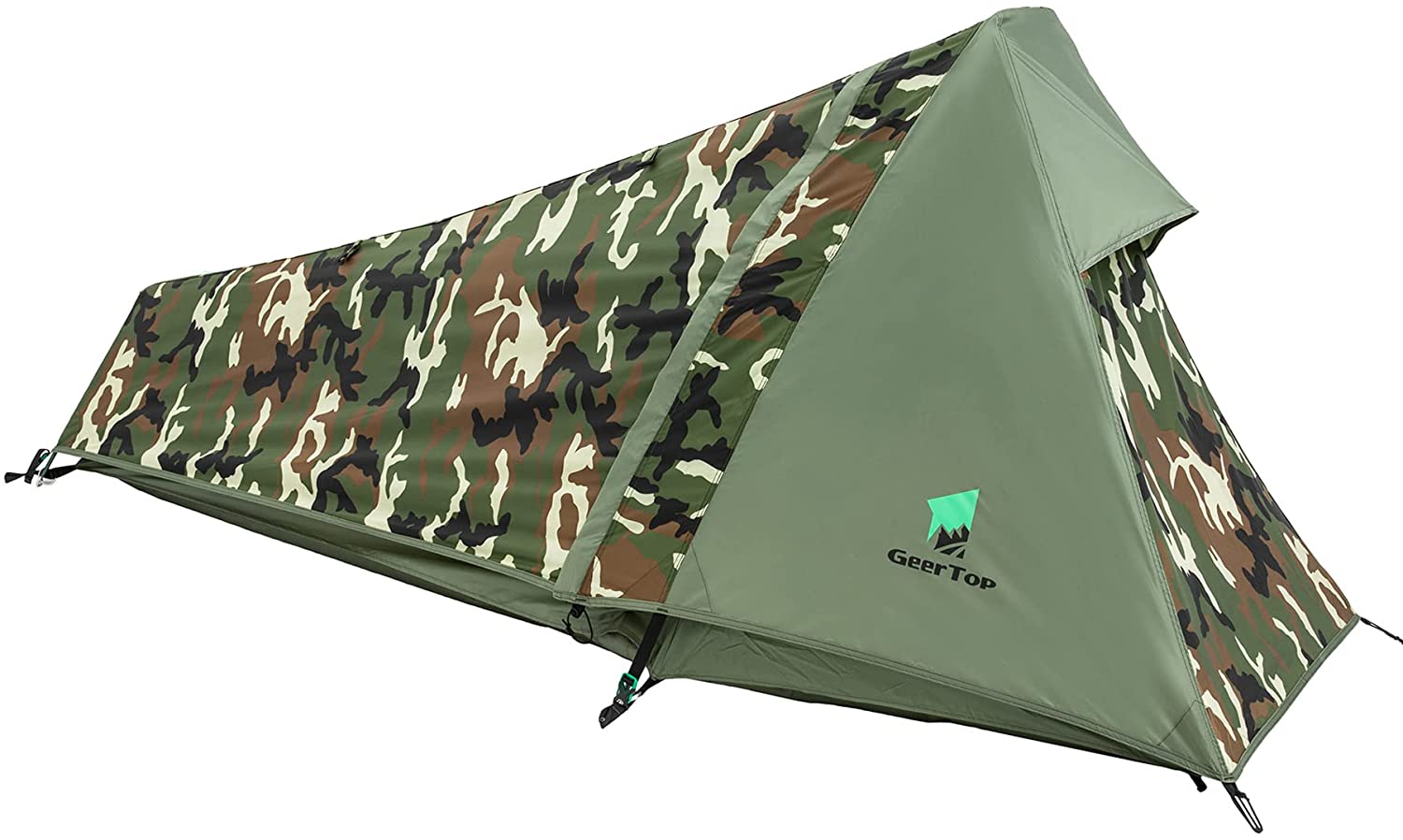
Check the price Amazon store, affiliate linkThe Geertop Blazer 1 is a low double-wall tent pitched on two aluminium poles. It does very well in spring, summer and autumn. It is not suitable for winter camping - the maker itself says it is not a winter tent.
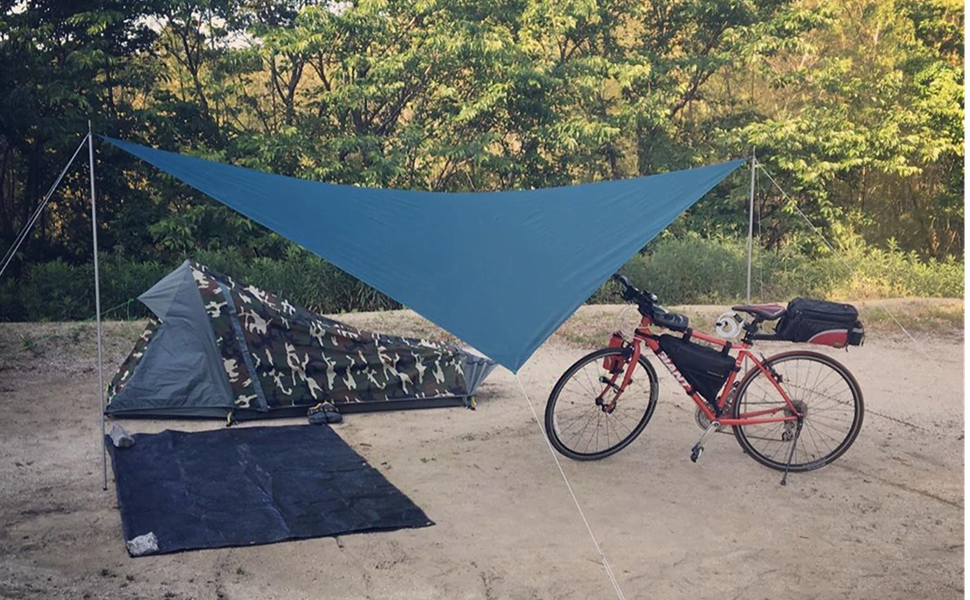
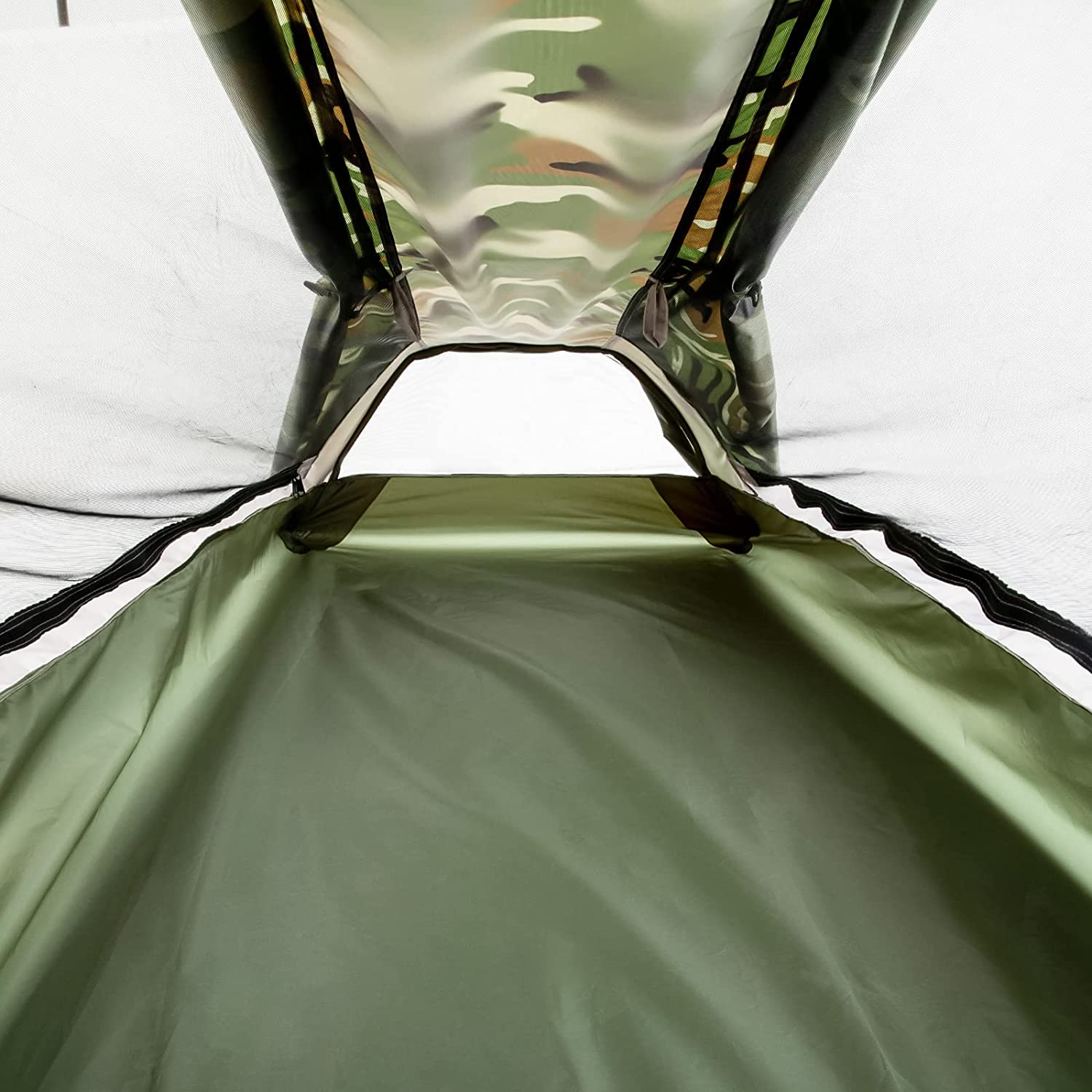
Beyond that, the Geertop Blazer 1 is a good choice for solo hikers, with a few reservations. It is made of good-quality materials and keeps rain and wind out well. It is also light, at about 1.7 kg. There is enough room inside for one person to sleep, and even some extra space for a backpack.
The downside of the Geertop Blazer 1 is its rather low “ceiling”, so if you are prone to claustrophobia you will not feel comfortable. Several buyers also point to the flat roof and the short fly: in a downpour with wind, water can seep in by your feet.
Despite these flaws, the Geertop Blazer 1 is worth recommending, because for relatively little money it offers decent quality at a reasonable weight.
Pros
- Quick to pitch
- Dry in rain and storms
- Light and small when packed
- Roomy for such a low tent
- Camouflage colour
Cons
- Flat roof and short fly: may leak in wind-driven rain
- Too low to sit up
- Not for winter: 3-season according to the maker
All technical details
| Colour | camo |
|---|---|
| Waterproof rating | 2500 mm |
| Packed size | 43 x 11 x 11 cm |
| Weight | 1.7 kg |
| Pole material | aluminium, two poles |
| Construction | low double-wall tent on two poles |
| Seasons | 3-season |
| Pitched size | 213 x 99 x 91 cm |
Tatonka Koli 1
- Weight
- 1.7 kg
- Packed size
- 15 × 50 cm
- Waterproof rating
- 8000 mm
- Construction
- tunnel
- Seasons
- no data
Value for money: 4.4 out of 10
Price on Amazon.pl: over 700 zł (checked )
Availability: in stock (checked )
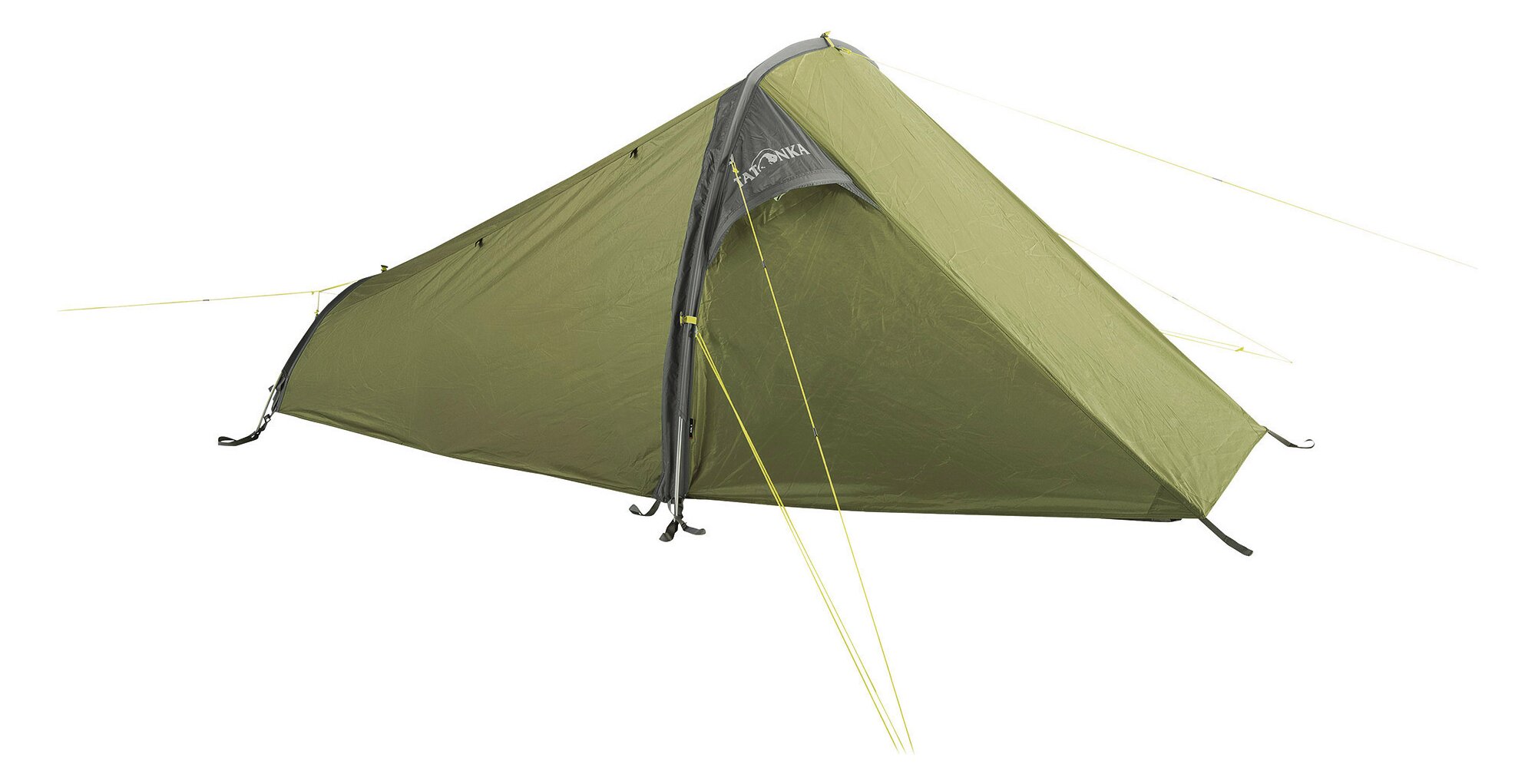
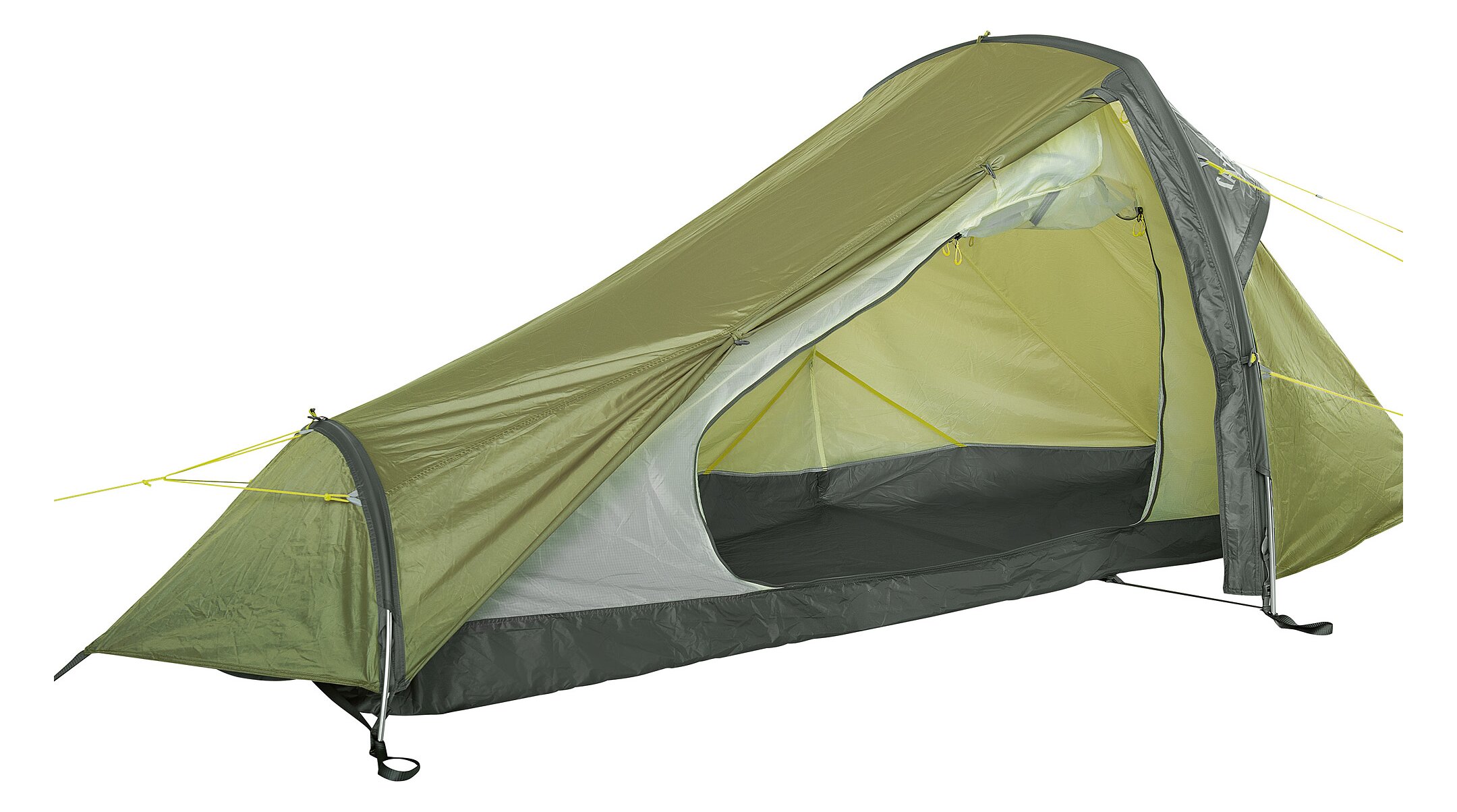
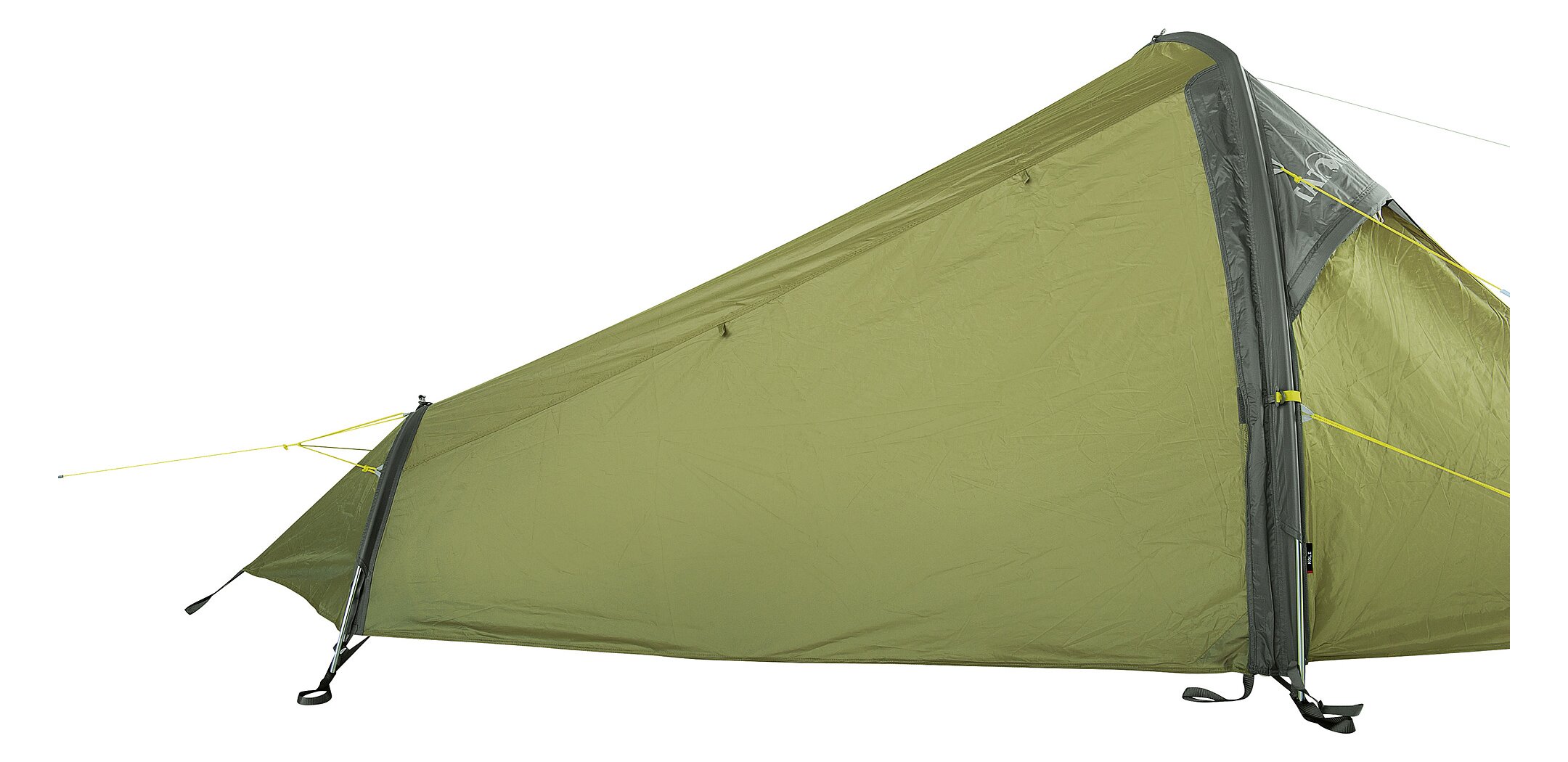
Check the price Amazon store, affiliate linkThe Tatonka Koli 1 is a one-person tunnel tent. The maker puts it at 1.7 kg, or 1.6 kg in its minimum configuration, and packed it is 15 cm across and 50 cm long.
The maker rates the fly at 8000 mm and the floor at 10,000 mm, so the fly is rated higher than on most tents in this round-up. The frame is 7001/T6 aluminium with 9.5 mm poles.
The maker gives the size as 270 x 125 x 90 cm, without splitting it into inner tent and vestibule, so it is not clear how much of that length is sleeping space. At 90 cm high, there is little room to sit up straight inside.
Like any tunnel tent, the Koli 1 is not freestanding and only holds its shape once staked out and tensioned. The maker gives no season rating.
Pros
- Fly 8000 mm, floor 10,000 mm, per the maker
- 7001/T6 aluminium frame
- Plenty of length: 270 cm
- 1.7 kg, 1.6 kg minimum
Cons
- Low: 90 cm high
- Not freestanding, needs pegs and tension
- No season rating from the maker
- Very few Amazon customer ratings (as of 15.10.2026)
All technical details
| Waterproof rating | fly 8000 mm, floor 10,000 mm |
|---|---|
| Packed size | 15 x 50 cm (diameter x length) |
| Weight | 1.7 kg (maker’s minimum 1.6 kg) |
| Pole material | 7001/T6 aluminium, 9.5 mm poles (1 + 1) |
| Construction | tunnel |
| Pitched size | 270 x 125 x 90 cm |
Naturehike Cloud-Up 1
 Amazon store, affiliate link
 Amazon store, affiliate link
 Amazon store, affiliate link
 Amazon store, affiliate link
 Amazon store, affiliate link
 Amazon store, affiliate link
 Amazon store, affiliate link
 Amazon store, affiliate link
 Amazon store, affiliate link
 Amazon store, affiliate link
- Weight
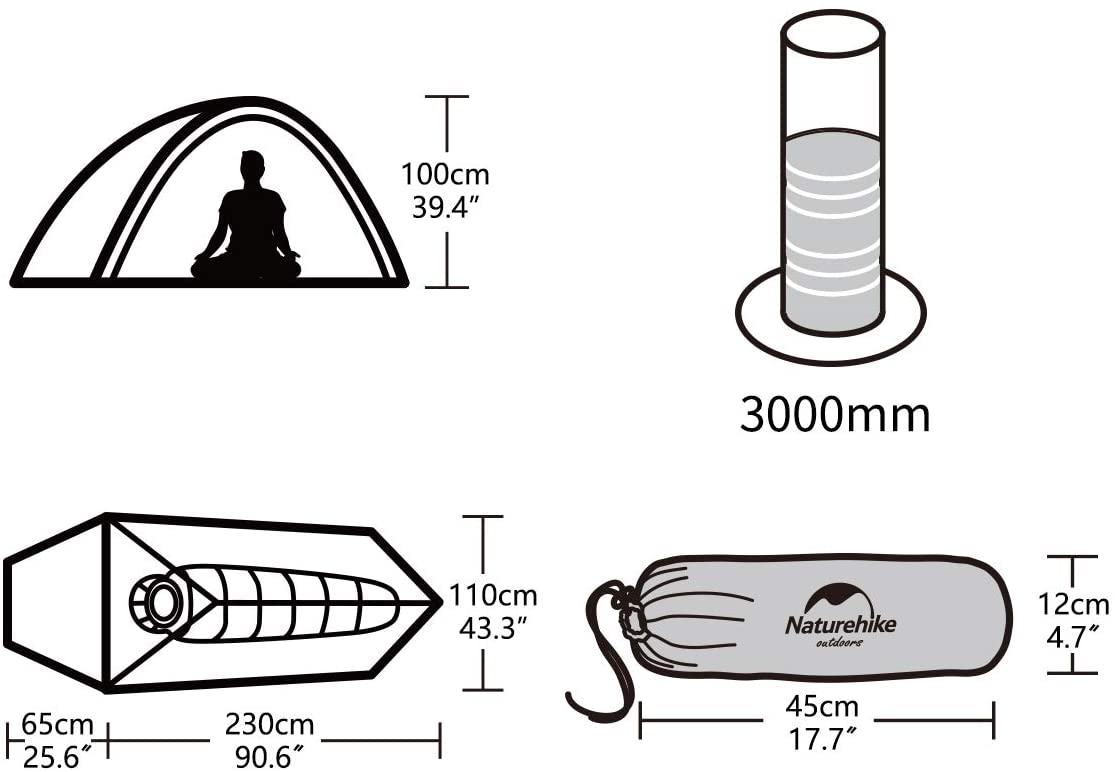
- 1.75 kg
- Packed size
- 41 × 13 cm
- Waterproof rating
- 3000 mm
- Construction
- dome
- Seasons
- 3-season
Value for money: 4.9 out of 10
Price on Amazon.pl: 400-700 zł (checked )
Availability: in stock (checked )
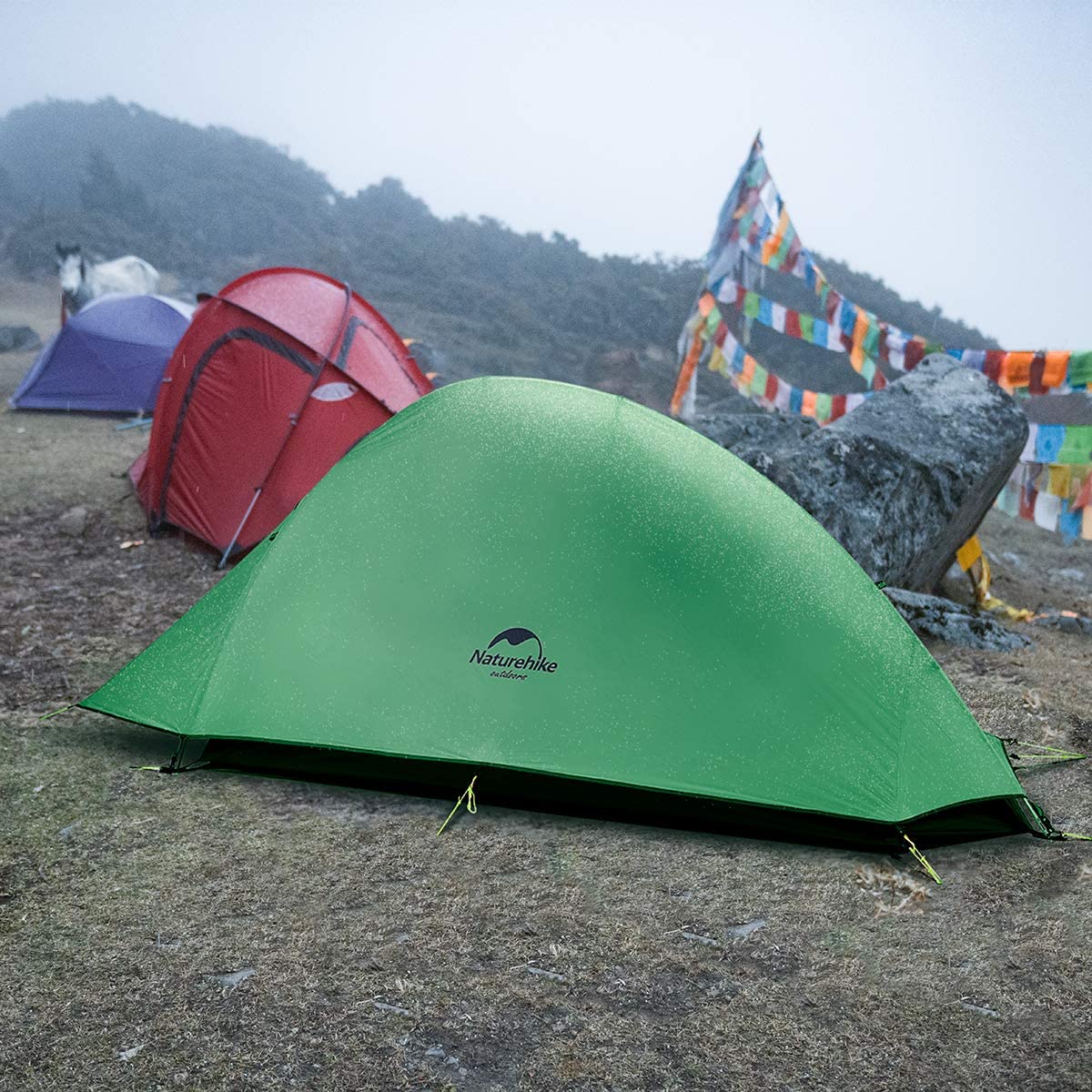
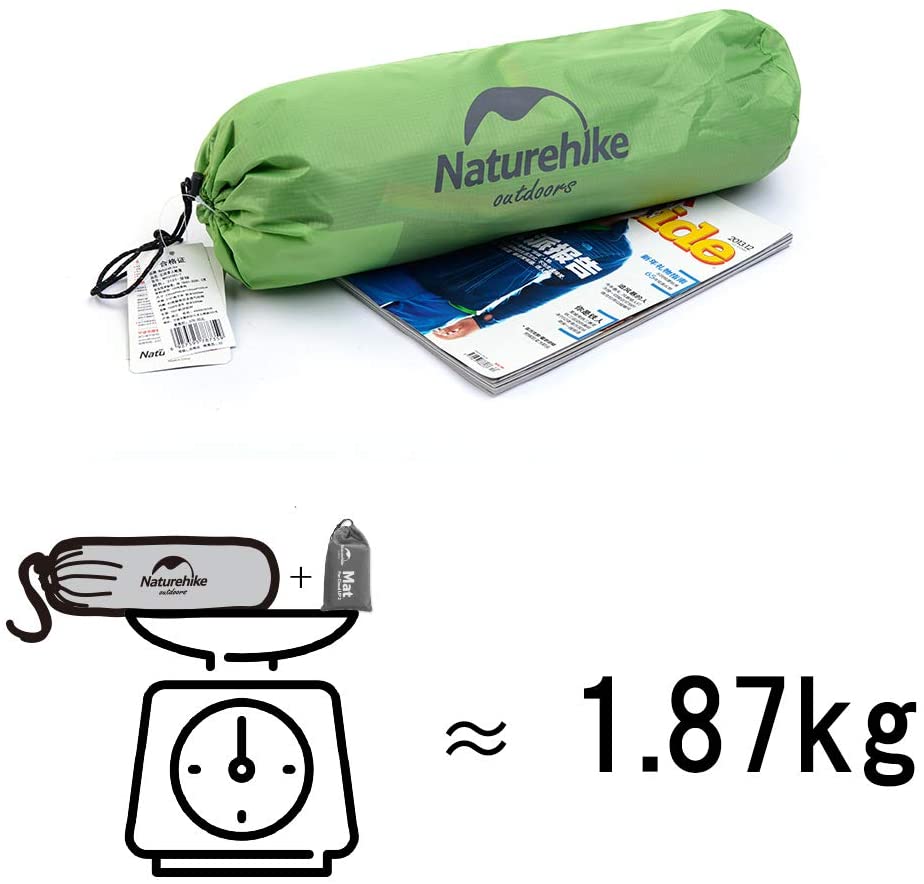
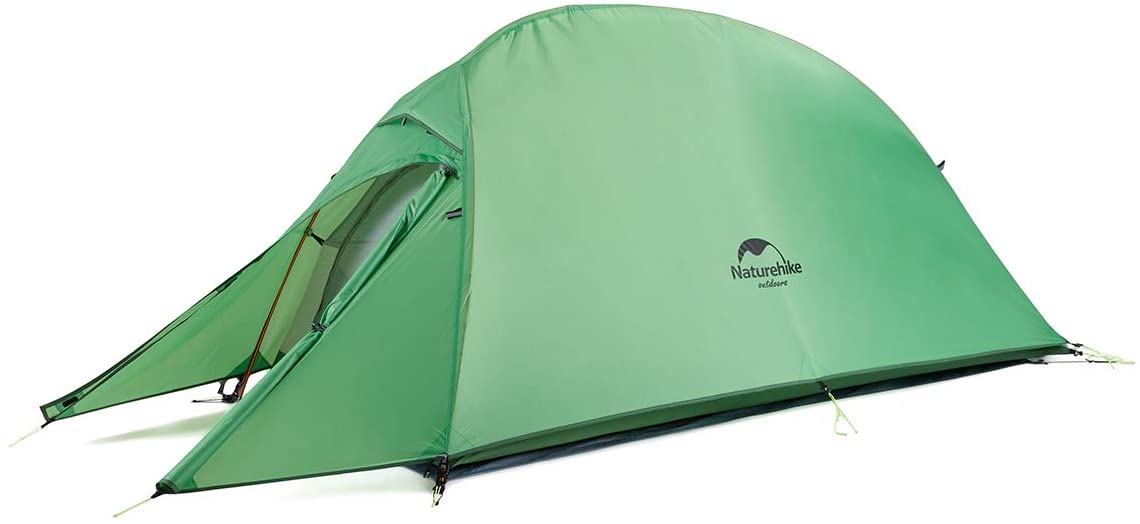
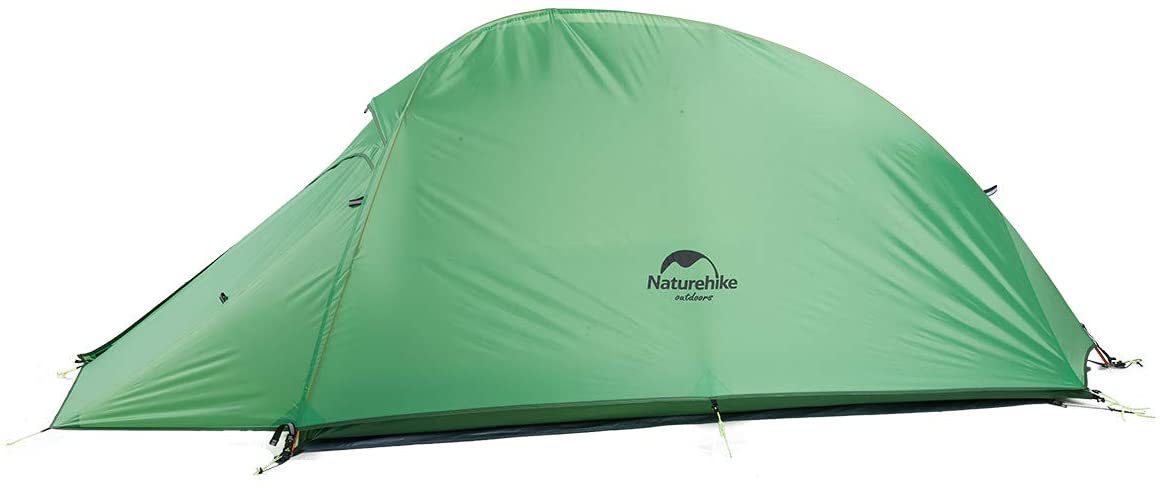
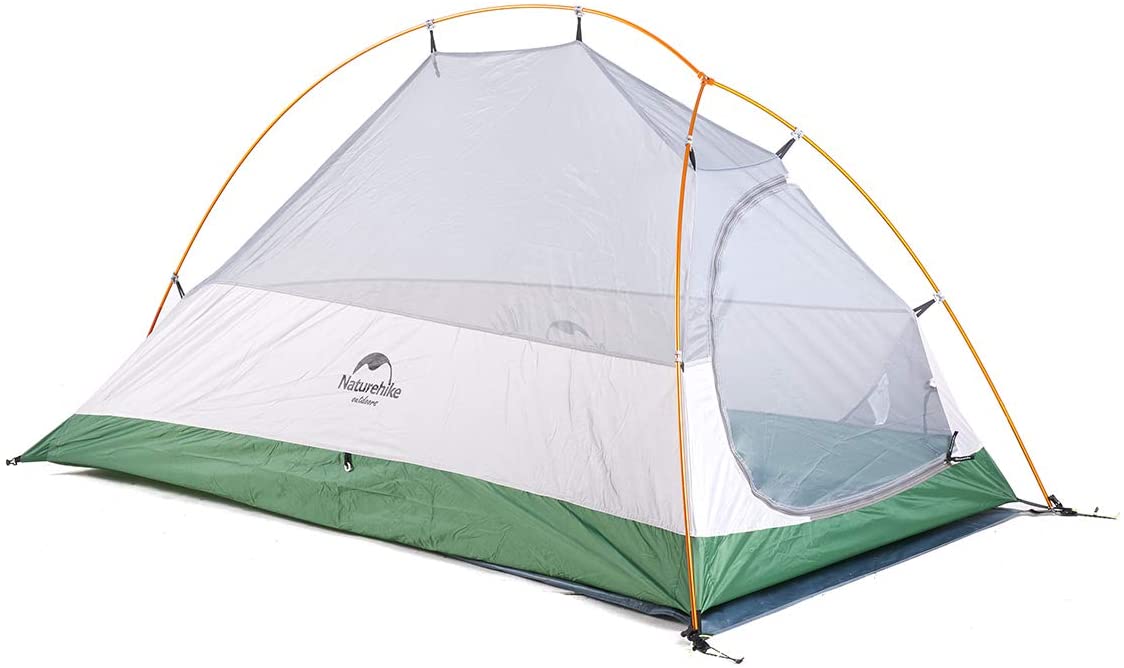
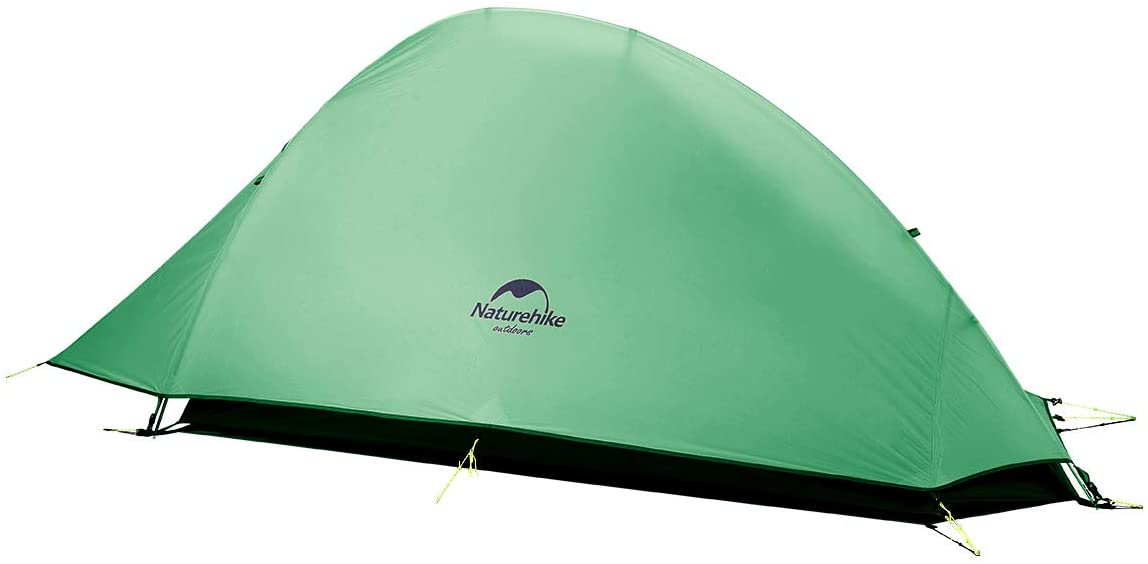
Check the price Amazon store, affiliate linkThe Naturehike Cloud-Up is made from top-quality materials. Ultralight and compact, it is ideal for solo walkers and mountain lovers - it weighs about 1.75 kg!
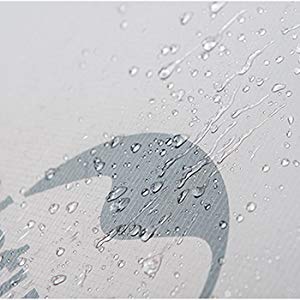
The fly is made of PU coated 210T polyester with a 3000 mm waterproof rating. The model also comes in a lighter 20D nylon version (4000 mm), but the link below goes to the 210T version.
It also has protection against gusty wind in the form of 5 reflective guylines. To make it even more waterproof, the maker has taped the seams.
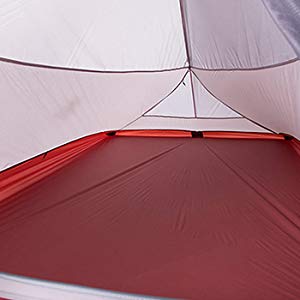
There is enough room inside for one person and a backpack, and someone of average height can sit up comfortably.
According to the maker, the design cuts down on condensation, but do not count on the inside always staying dry.
The well-thought-out design makes it quick to pitch and strike.
For all its strengths, this tent is not meant for professional use, and while it copes fairly well with gusty wind, it will not protect you in a real gale. And if you plan to travel in winter, you should look at another option.
Pros
- Easy to pitch
- Light and compact
- Solid aluminium poles and pegs
- Good waterproofing
Cons
- Cramped for tall people
- Weaker in strong wind
- Not suitable for winter trips
- The maker is discontinuing this model
All technical details
| Colour | green |
|---|---|
| Waterproof rating | 3000 mm (fly, 210T version) |
| Packed size | 41 x 13 cm |
| Weight | 1.75 kg (minimum weight per the maker 1.46 kg) |
| Fabric | fly: 210T polyester, PU coated; inner: B3 mesh; floor: 210T polyester |
| Pole material | 7001 aluminium |
| Construction | dome |
| Seasons | 3-season |
| Pitched size | 210 x 110 x 100 cm |
Naturehike Mongar Pro
- Weight
- 1.8 kg
- Packed size
- 14 × 40 cm
- Waterproof rating
- 3000 mm
- Construction
- dome
- Seasons
- 3-season
Value for money: 4.9 out of 10
Price on Amazon.pl: 400-700 zł (checked )
Availability: in stock (checked )
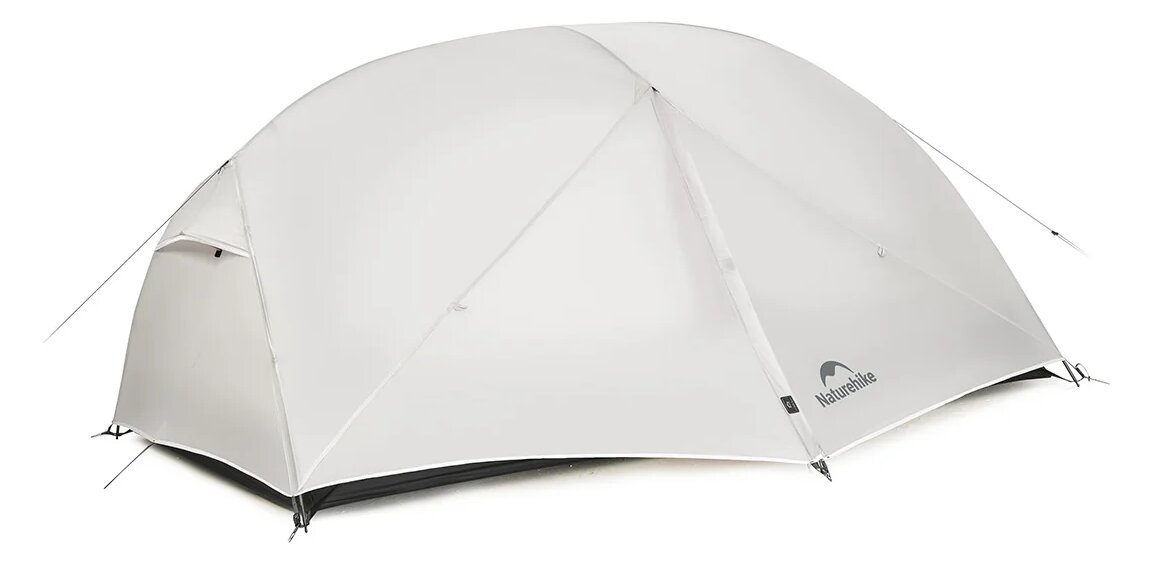
Check the price Amazon store, affiliate linkThe Naturehike Mongar Pro is a one-person dome tent. The maker gives a packed weight of about 1.8 kg (the Amazon listing gives a minimum of 1.6 kg), and in its bag it is 14 cm across and 40 cm long.
The maker gives the inner tent as 220 x 95 cm and 100 cm high. The fly covers 230 x 205 cm, which leaves plenty of room under it on either side of the inner tent.
The fly is 20D nylon with a silicone and PU coating, rated at 3000 mm. For the base the maker lists two layers: a 210T fabric rated at 5000 mm and a 20D fabric rated at 3000 mm. It does not say clearly which one is the floor of the inner tent.
The frame is Yuksom aluminium, 8.5 mm thick. The maker sells it as a 3-season tent.
Pros
- Yuksom aluminium frame, 8.5 mm
- Fly 3000 mm, base up to 5000 mm, per the maker
- Plenty of room under the fly: 230 x 205 cm
- Short when packed: 40 cm
Cons
- Unclear which base layer is the floor of the inner tent
- Narrow inner tent: 95 cm
- The maker does not name the construction type
All technical details
| Waterproof rating | fly 3000 mm; base: 5000 mm (210T fabric) and 3000 mm (20D fabric) |
|---|---|
| Packed size | 14 x 40 cm (diameter x length) |
| Weight | about 1.8 kg (Amazon listing: minimum 1.6 kg) |
| Fabric | fly: 20D nylon, silicone and PU coated; base: 210T fabric and 20D fabric, both PU coated |
| Pole material | Yuksom aluminium, 8.5 mm |
| Construction | dome |
| Seasons | 3-season |
| Pitched size | 230 x 205 x 105 cm, inner tent 220 x 95 x 100 cm |
Wanderfalke Trail 1
- Weight
- 1.8 kg
- Packed size
- 14 × 43 cm
- Waterproof rating
- 4000 mm
- Construction
- dome
- Seasons
- 3-season
Value for money: 2.9 out of 10
Price on Amazon.pl: over 700 zł (checked )
Availability: in stock (checked )
Check the price Amazon store, affiliate linkThe Wanderfalke Trail 1 is a one-person dome tent with a mesh inner and a separate fly. The maker has no product page, so the figures come from the seller on Amazon and the construction type from the description in the fernglas.net shop. The seller puts it at 1.8 kg.
Packed, it is 14 cm across and 43 cm long. The floor is 230 x 100 cm and the height 105 cm.
The seller rates the fly at 4000 mm and the floor at 5000 mm. The frame is aluminium, and the seller describes the tent as freestanding and 3-season. So it stands without pegs, although in wind you still need to stake it down.
The link goes to the olive version. The same listing offers other variants from the series at different prices, so check which one is selected before you buy.
Pros
- Fly 4000 mm, floor 5000 mm, seller's figures
- Double wall: mesh inner and a separate fly
- Freestanding, according to the seller
- Floor 230 x 100 cm
Cons
- No maker's page, seller's figures only
- Few Amazon customer ratings (as of 15.10.2026)
- The listing also offers other variants, so it is easy to order the wrong one
All technical details
| Colour | olive |
|---|---|
| Waterproof rating | fly 4000 mm, floor 5000 mm (seller’s figures) |
| Packed size | 14 x 43 cm (diameter x length, seller’s figure) |
| Weight | 1.8 kg (seller’s figure) |
| Pole material | aluminium (seller’s figure) |
| Construction | dome, double wall, mesh inner (per the fernglas.net shop description) |
| Seasons | 3-season |
| Pitched size | floor 230 x 100 cm, height 105 cm (seller’s figures) |
Night Cat 1P
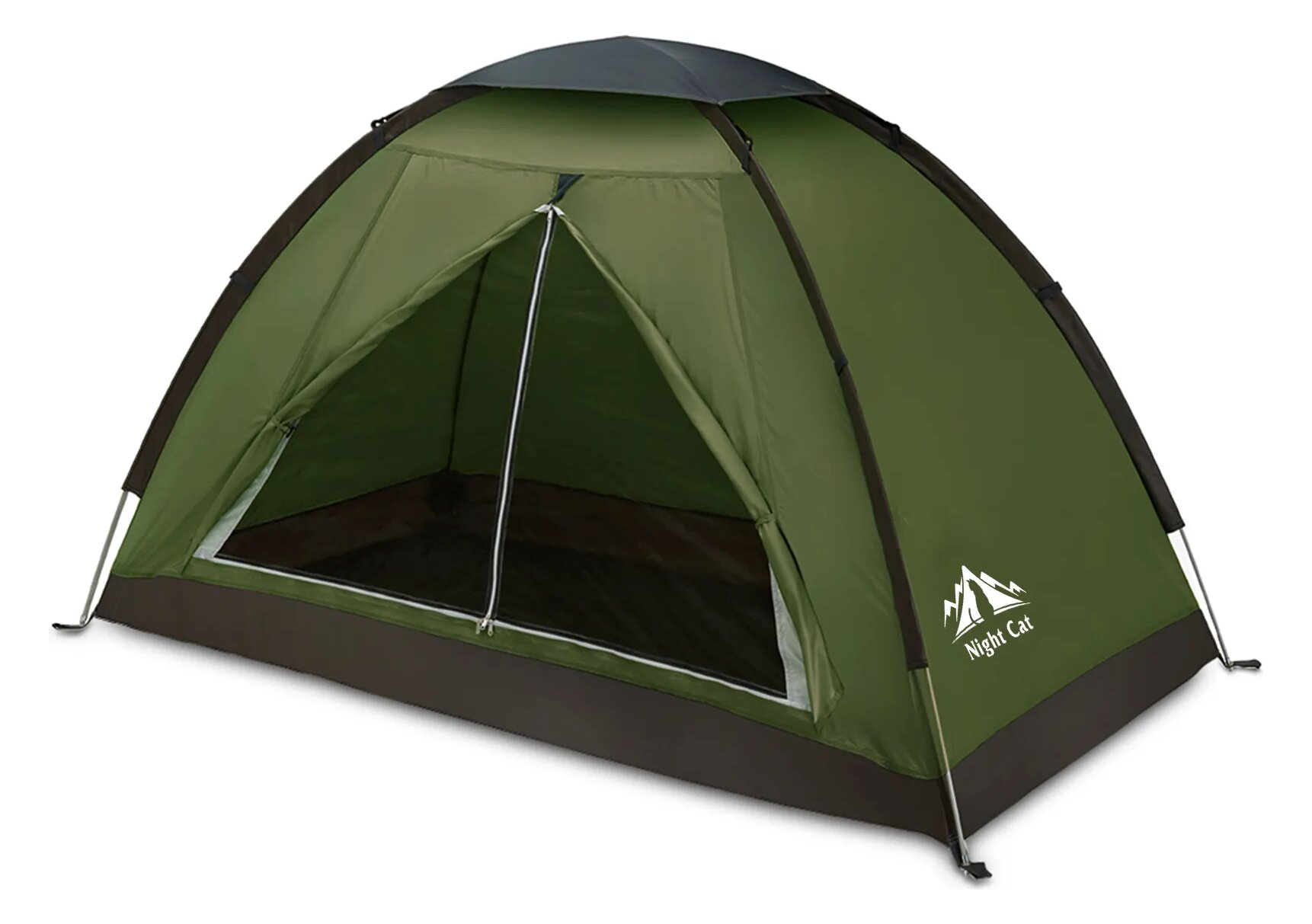
A single-wall tent: there is no separate fly, so the 3000 mm in the waterproof column is the rating of the wall itself.
- Weight
- 1.97 kg
- Packed size
- 42 × 12 × 12 cm
- Waterproof rating
- 3000 mm (wall, single-wall tent)
- Construction
- dome
- Seasons
- 3-season
Value for money: 6.9 out of 10
Price on Amazon.pl: under 400 zł (checked )
Availability: in stock (checked )
Check the price Amazon store, affiliate linkThe Night Cat 1P is a single-wall tent: there is no separate fly, and the wall is one layer of 210D PU-coated polyester that the maker rates at 3000 mm. It weighs 1.97 kg (the maker rounds it to 2 kg), and the seller gives the packed size as 42 x 12 x 12 cm.
It is a dome on two fibreglass poles that slide diagonally into sleeves. The seller gives the floor as 220 x 120 cm, and the listing title sells it for one or two people.
A single wall means fewer parts to pitch and less weight, but also trouble with moisture. In a double-wall tent, condensation forms on the fly and the inner tent keeps you away from it. Here it settles on the only wall there is, the one your sleeping bag can touch.
The seller lists it as a 3-season tent. The floor is PU-coated Oxford fabric, but nobody gives a figure for its waterproofing.
Pros
- Few parts to pitch: one wall and two poles
- Wall rated at 3000 mm by the maker
- Floor 220 x 120 cm
- Three-season, according to the seller
Cons
- Single wall: condensation forms on the inside of the wall
- Fibreglass poles
- No floor waterproof rating
- Amazon customer ratings also cover other versions of this tent (as of 15.10.2026)
All technical details
| Waterproof rating | 3000 mm, wall; single-wall tent with no separate fly |
|---|---|
| Packed size | 42 x 12 x 12 cm (seller’s figure) |
| Weight | 1.97 kg (maker: 2 kg) |
| Fabric | wall: 210D polyester, PU coated; floor: Oxford fabric, PU coated |
| Pole material | fibreglass, 2 poles |
| Construction | dome, single wall |
| Seasons | 3-season |
| Pitched size | floor 220 x 120 cm (seller’s figure) |
Bessport 1P
- Weight
- 1.98 kg
- Packed size
- no data
- Waterproof rating
- 3000 mm
- Construction
- dome
- Seasons
- no data
Value for money: 6.9 out of 10
Price on Amazon.pl: under 400 zł (checked )
Availability: in stock (checked )
Check the price Amazon store, affiliate linkThe Bessport 1P is a one-person dome tent with two doors. The maker has no product page for it, so the figures come from the seller on Amazon. The seller puts it at 1.98 kg, or 1.93 kg in its minimum configuration.
According to the seller, the inner tent is 223 x 85 cm and 107.5 cm high. With two doors you get out on whichever side suits you, without climbing over your gear.
The frame is 7001 aluminium with 8.5 mm poles. Aluminium is lighter and less brittle than fibreglass, which the Night Cat 1P, for example, uses for its poles. The seller gives no figure for the fly. The 3000 mm comes from a test of the one-person version on naturcamping.net, which quotes it as the declared rating.
No source gives a packed size or a season rating for the one-person version, so the table leaves them out.
Pros
- Two doors
- 7001 aluminium frame
- Inner tent 223 x 85 cm, 107.5 cm high
- Under 2 kg: 1.98 kg, seller's figure
Cons
- No maker's page, seller's figures only
- Fly rating only from an outside test
- No packed size or season rating
- Amazon customer ratings also cover other versions of this tent (as of 15.10.2026)
All technical details
| Waterproof rating | fly 3000 mm (declared rating, quoted in a naturcamping.net test of the one-person version) |
|---|---|
| Weight | 1.98 kg, minimum 1.93 kg (seller’s figure) |
| Pole material | 7001 aluminium, 8.5 mm poles (seller’s figure) |
| Construction | dome, two doors (seller’s figure) |
| Pitched size | inner tent 223 x 85 cm, height 107.5 cm (seller’s figure) |
Grand Canyon Cardova 1
- Weight
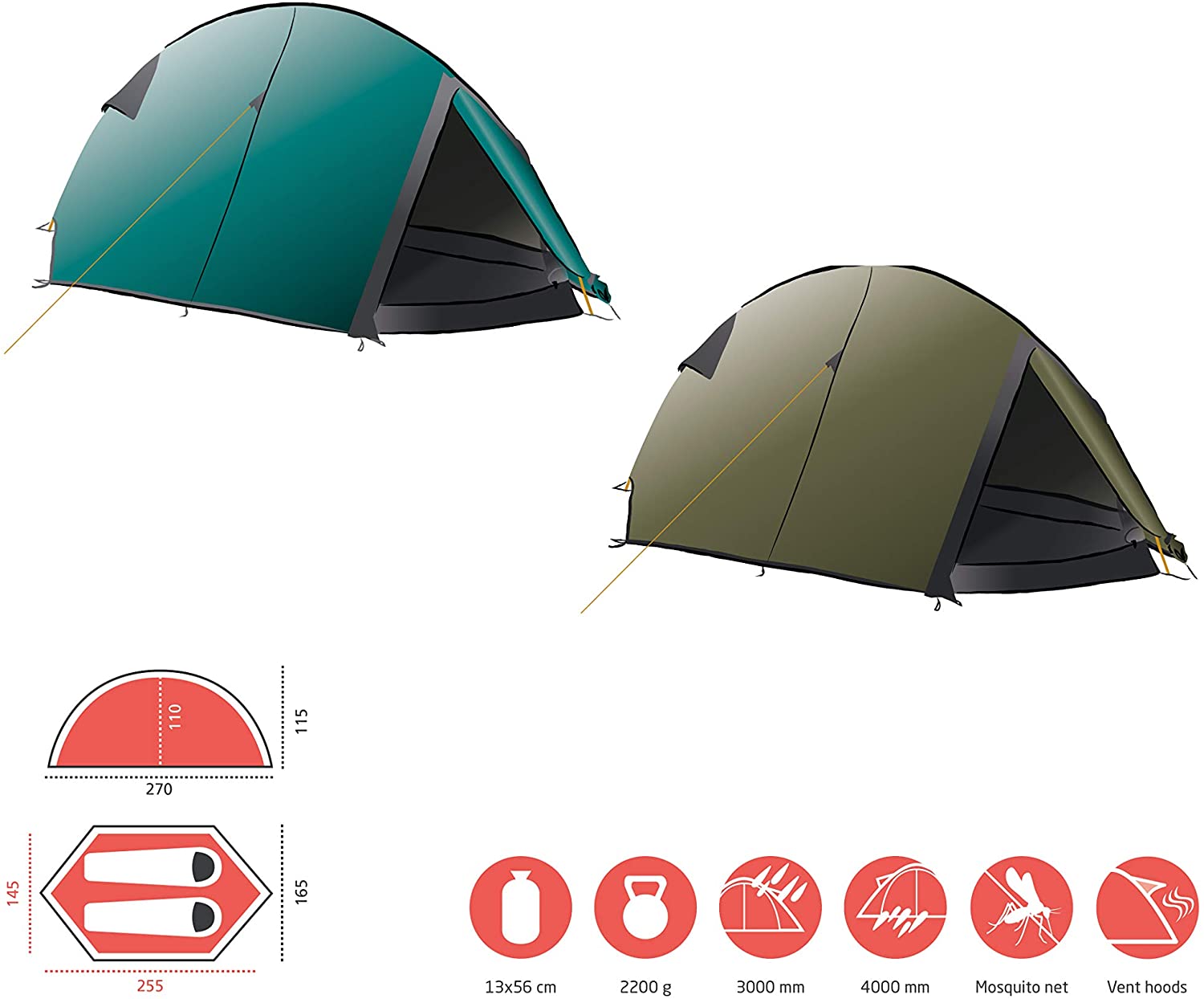
- 2.4 kg
- Packed size
- 57 × 13 cm
- Waterproof rating
- 3000 mm
- Construction
- tunnel
- Seasons
- no data
Value for money: 6.3 out of 10
Price on Amazon.pl: under 400 zł (checked )
Availability: in stock (checked )
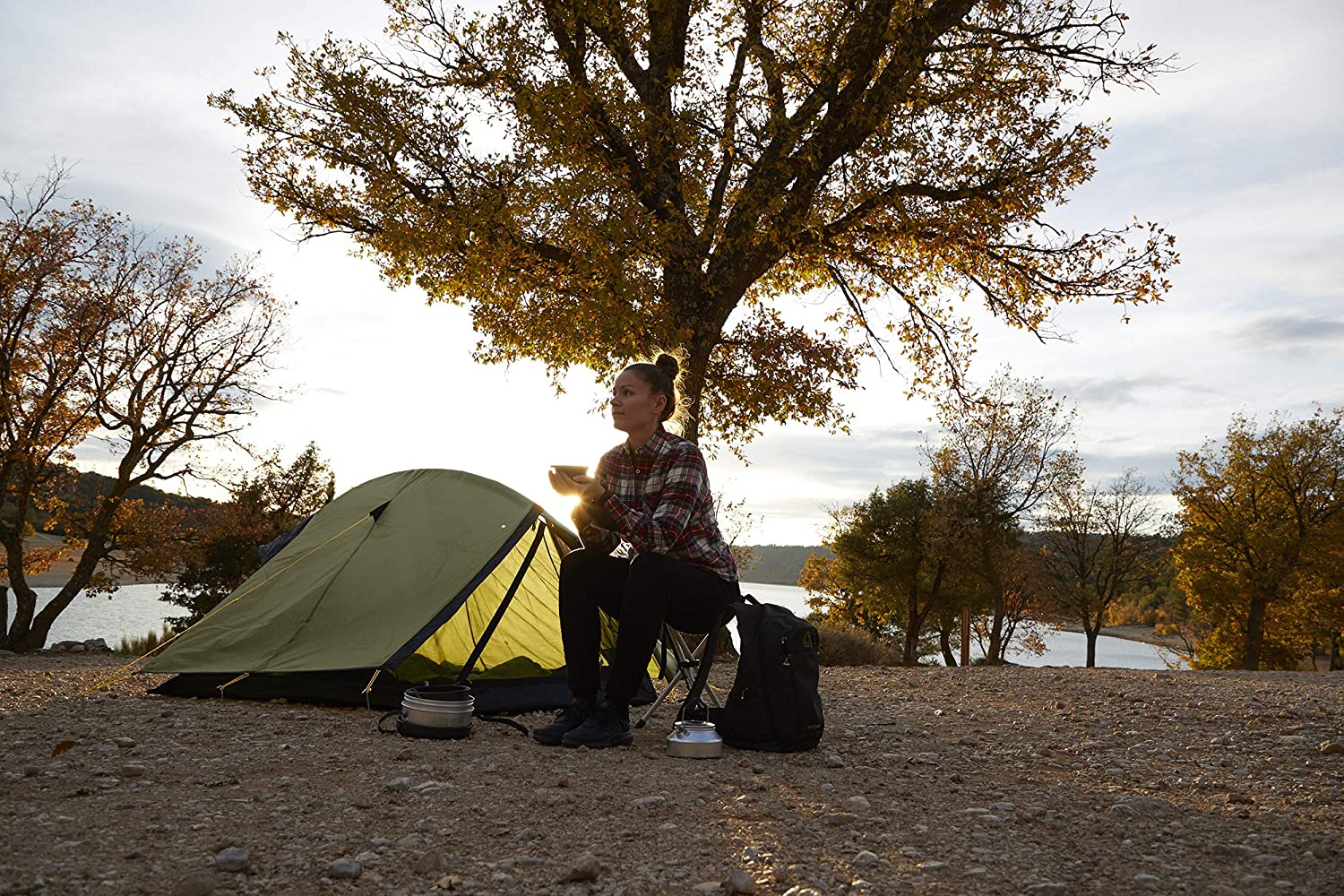
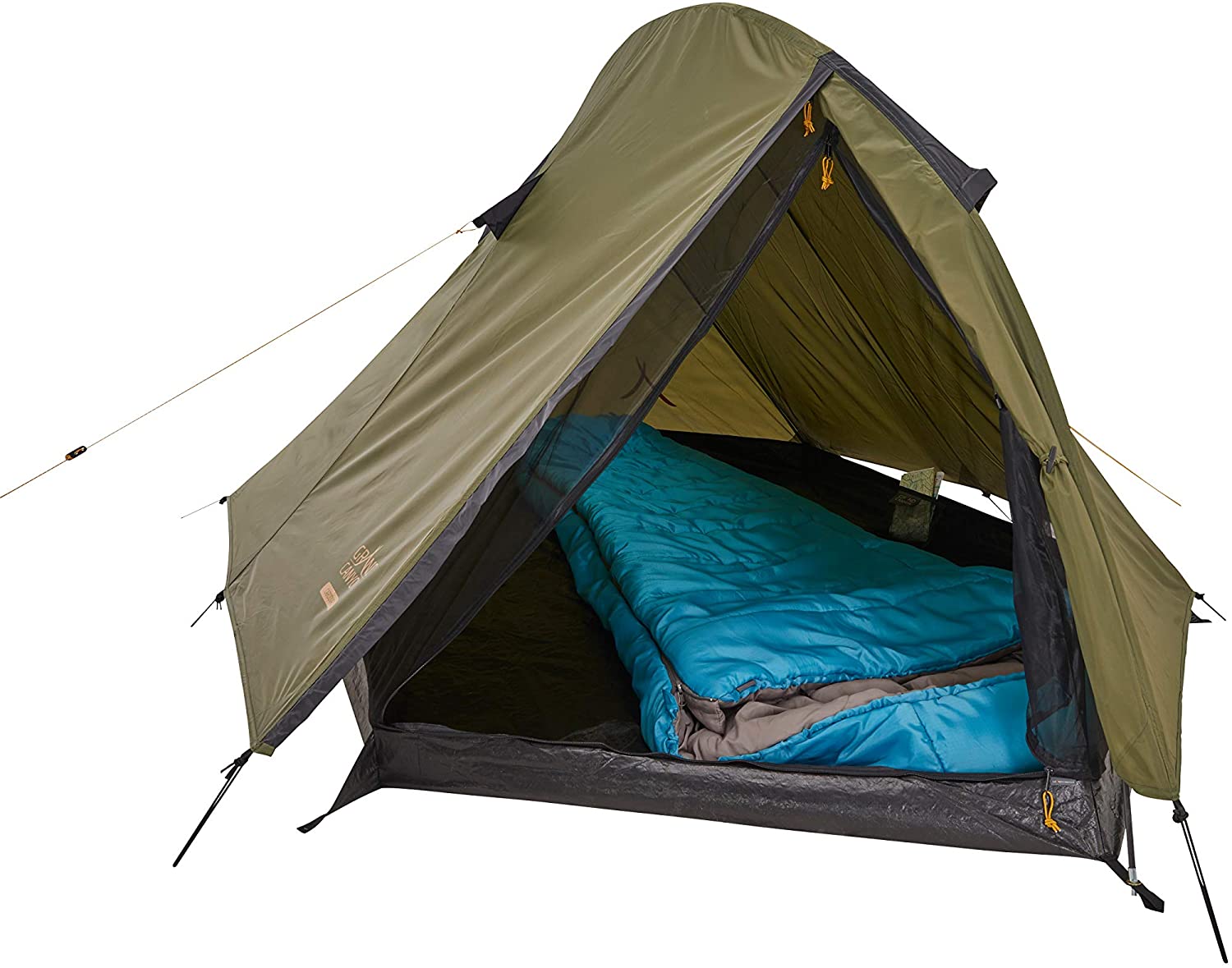
Check the price Amazon store, affiliate linkAnother strong contender at a good price. This is a light one-person tent that can squeeze in two people at a push.
It goes up quickly and easily, and it will keep you dry in the rain. The price is very attractive here too, which may come as a surprise, because the tent is genuinely well made: sealed seams and decent zips.
The inside is roomy enough for an average-sized person to sit up comfortably.
In very heavy rain you may find a bit of damp here and there inside, especially if the fly is not pitched taut and touches the inner tent. The pegs in the box are weak too, so it is worth getting a few aluminium ones straight away. Still, for short trips close to home it should do the job perfectly.
Pros
- Quick and easy to pitch
- Good ventilation, you can sleep under the mesh alone
- Dry in the rain when the fly is taut
- Small when packed
- Attractive price
Cons
- Weak pegs in the box
- Hard to fit back into its bag
- Leaks in a downpour if the fly touches the inner
- One of the three heaviest in the round-up: 2.4 kg
All technical details
| Colour | olive green |
|---|---|
| Waterproof rating | fly 3000 mm, floor 4000 mm |
| Packed size | 57 x 13 cm |
| Weight | 2.4 kg |
| Fabric | fly: 68D 190T polyester, PU coated; floor: PU coated polyethylene |
| Pole material | fibreglass |
| Construction | tunnel, single pole |
Mil-Tec Recom
- Weight
- 2.4 kg
- Packed size
- 55 × 11.5 × 11.5 cm
- Waterproof rating
- 1000 mm
- Construction
- tunnel
- Seasons
- 2-season
Value for money: 3.4 out of 10
Price on Amazon.pl: 400-700 zł (checked )
Availability: in stock (checked )
Check the price Amazon store, affiliate linkThe Mil-Tec Recom Flecktarn is for people who want reasonable quality for not much money. The tent is fairly cheap and decently made, though it has its flaws.
It is a tunnel design, which makes it more stable and better at handling sudden gusts of wind. Add the camouflage pattern and you can easily stay out of sight of curious eyes.
As mentioned above, a low price means some compromises: it weighs 2.4 kg, which is fairly average for this class of tent. Several buyers also complain about thin pegs and fibreglass poles, and you cannot sit up inside.
Even so, the tent is well made from good-quality materials, so if your budget is tight and an extra kilo in your pack does not bother you, it is well worth considering.
Pros
- Roomy for one person with gear
- Easy to pitch
- Dry in rain and wind
- Camouflage colours
- Good value for money
Cons
- Weak fibreglass poles and thin pegs
- You cannot sit up inside
- Fairly heavy: 2.4 kg
- Fly rated at only 1000 mm
All technical details
| Colour | Flecktarn camo |
|---|---|
| Waterproof rating | fly 1000 mm, floor 2000 mm |
| Packed size | 55 x 11.5 x 11.5 cm |
| Weight | 2.4 kg |
| Fabric | polyurethane coated polyester |
| Pole material | fibreglass |
| Construction | tunnel |
| Seasons | 2-season |
Grand Canyon Apex 1
- Weight
- 2.53 kg
- Packed size
- 15 × 53 cm
- Waterproof rating
- 3000 mm
- Construction
- dome
- Seasons
- no data
Value for money: 6.1 out of 10
Price on Amazon.pl: under 400 zł (checked )
Availability: in stock (checked )
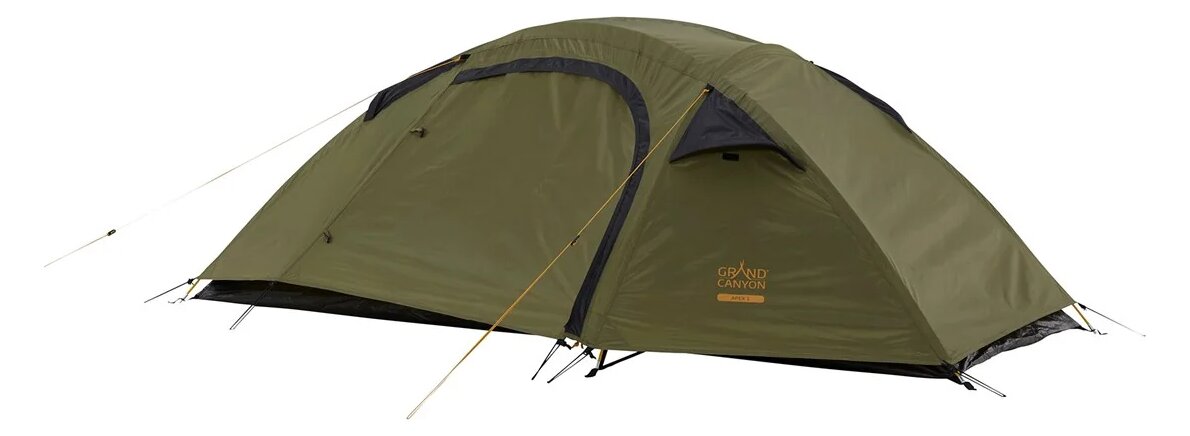
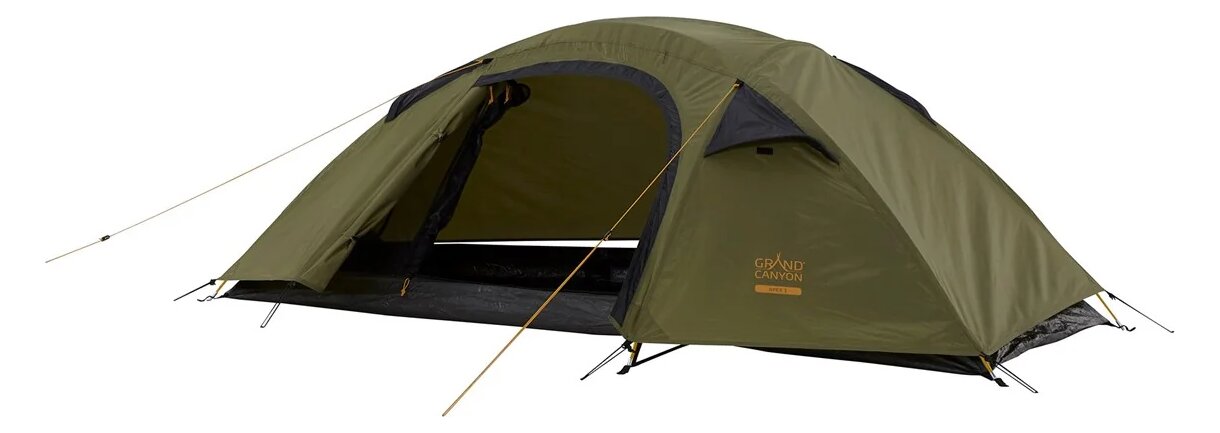
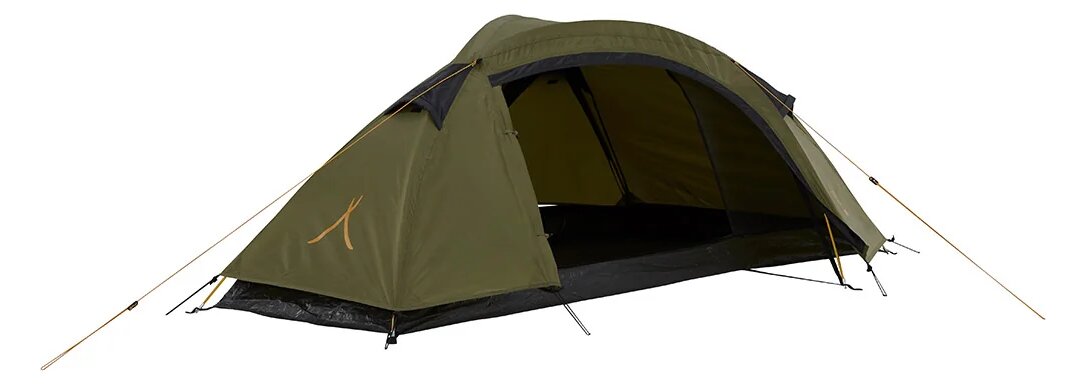
Check the price Amazon store, affiliate linkThe Grand Canyon Apex 1 is a dome tent on two fibreglass poles. The maker calls it a geodesic dome and sells it as a tent for one or two people. The maker puts it at 2.53 kg, and packed it is 15 cm across and 53 cm long.
The tent stands on its own without pegs, so you can still move it after pitching or put it up where pegs will not go into the ground. In wind you still need to stake it down.
The maker rates the fly at 3000 mm and the floor at 4000 mm. Fibreglass poles weigh more than aluminium ones, and it shows: the Apex 1 is one of the heavier tents in the round-up.
The Amazon listing gives 2350 g, 180 g less than the maker. The table shows the maker’s figure. The maker gives neither a season rating nor the height of the tent.
Pros
- Freestanding, no pegs needed to stand
- Fly 3000 mm, floor 4000 mm, per the maker
- Sold by the maker for one or two people
- Dome on two poles
Cons
- One of the heavier tents in the round-up: 2.53 kg
- Fibreglass poles instead of aluminium
- No height or season rating from the maker
- The maker and the Amazon listing differ on weight by 180 g
All technical details
| Colour | olive (Capulet Olive) |
|---|---|
| Waterproof rating | fly 3000 mm, floor 4000 mm |
| Packed size | 15 x 53 cm (diameter x length) |
| Weight | 2.53 kg (Amazon listing: 2350 g) |
| Pole material | fibreglass, 2 poles |
| Construction | dome (geodesic), freestanding |
Instead of a tent: a tarp
A tarp is not a tent, so it stands apart and the tent quick picks leave it out.
Helikon-Tex Supertarp
- Weight
- 0.85 kg
- Packed size
- 28 × 10 × 16 cm
- Waterproof rating
- no data
- Construction
- tarp
- Seasons
- no data
Value for money: no data
Price on Amazon.pl: under 400 zł (checked )
Availability: in stock (checked )
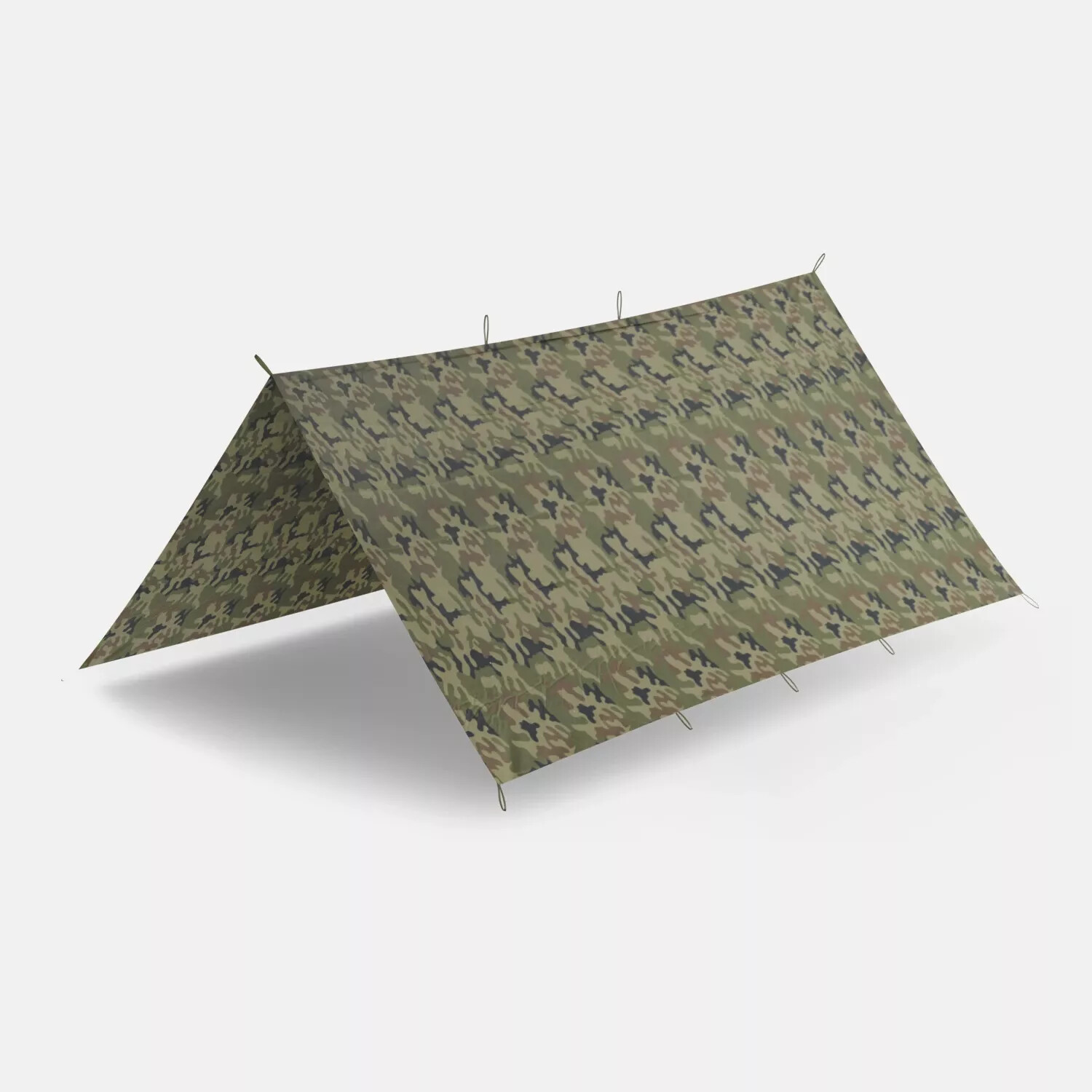
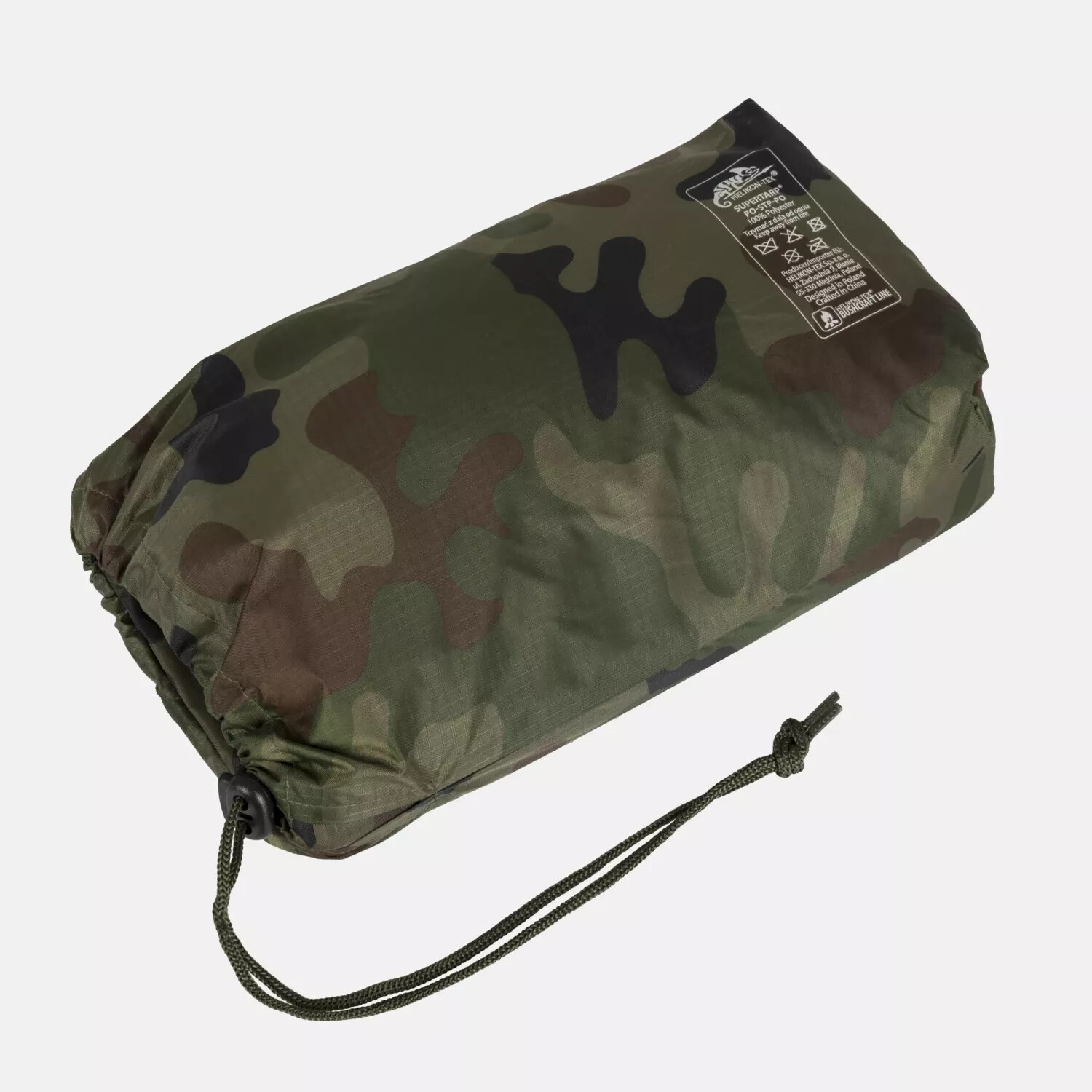
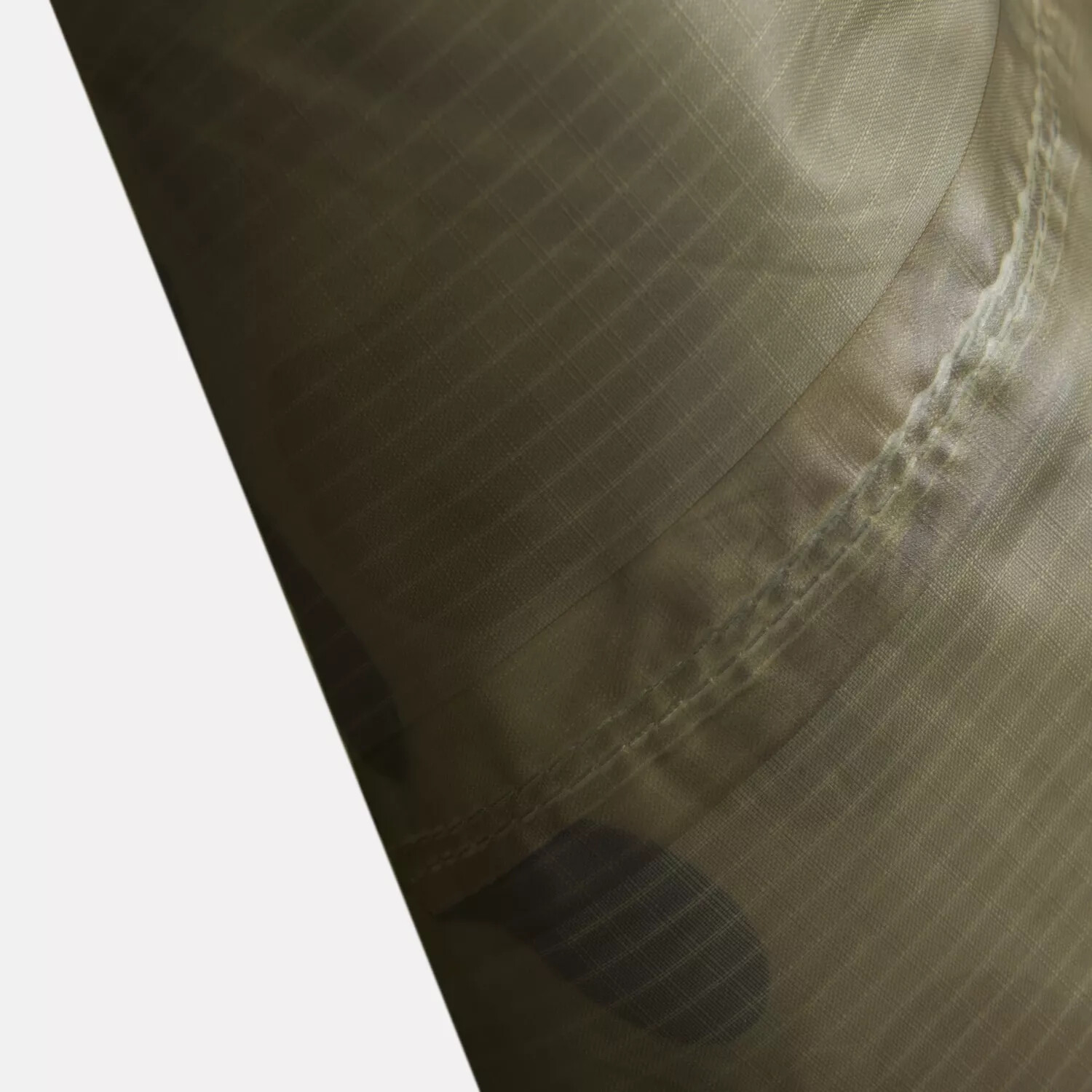
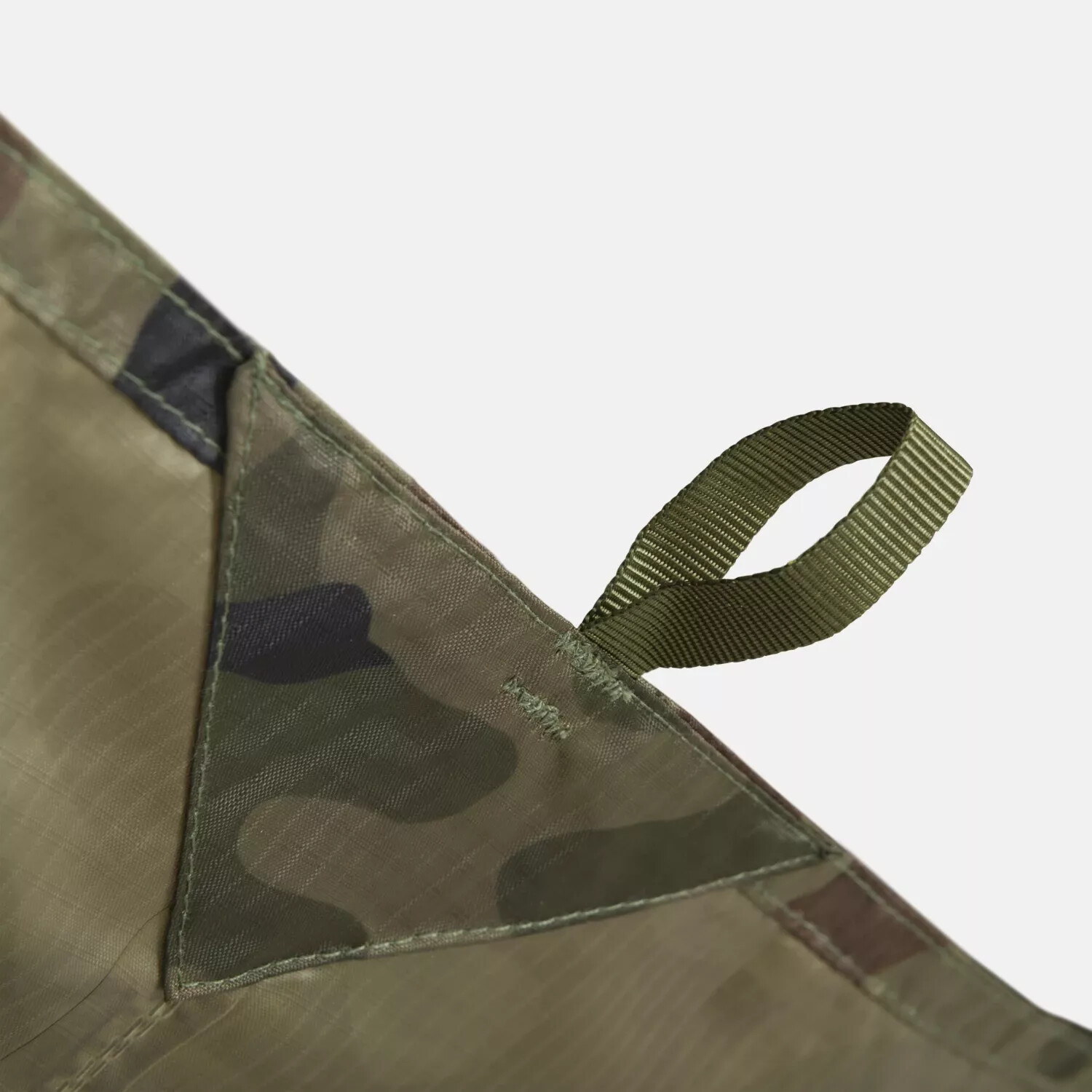
Check the price Amazon store, affiliate linkThe Supertarp from the Polish brand Helikon-Tex is a 3 x 3 m tarp (298 x 300 cm to be exact) made of coated polyester ripstop. The maker puts it at 850 g, and it packs down to 28 x 10 x 16 cm.
It is not a tent. There is no floor and no mesh, so you need at least a sleeping mat to go with it, and in mosquito season a net or a bivy bag as well. You pitch it on lines between trees or on trekking poles. With 19 reinforced attachment points you can set it up in many different ways.
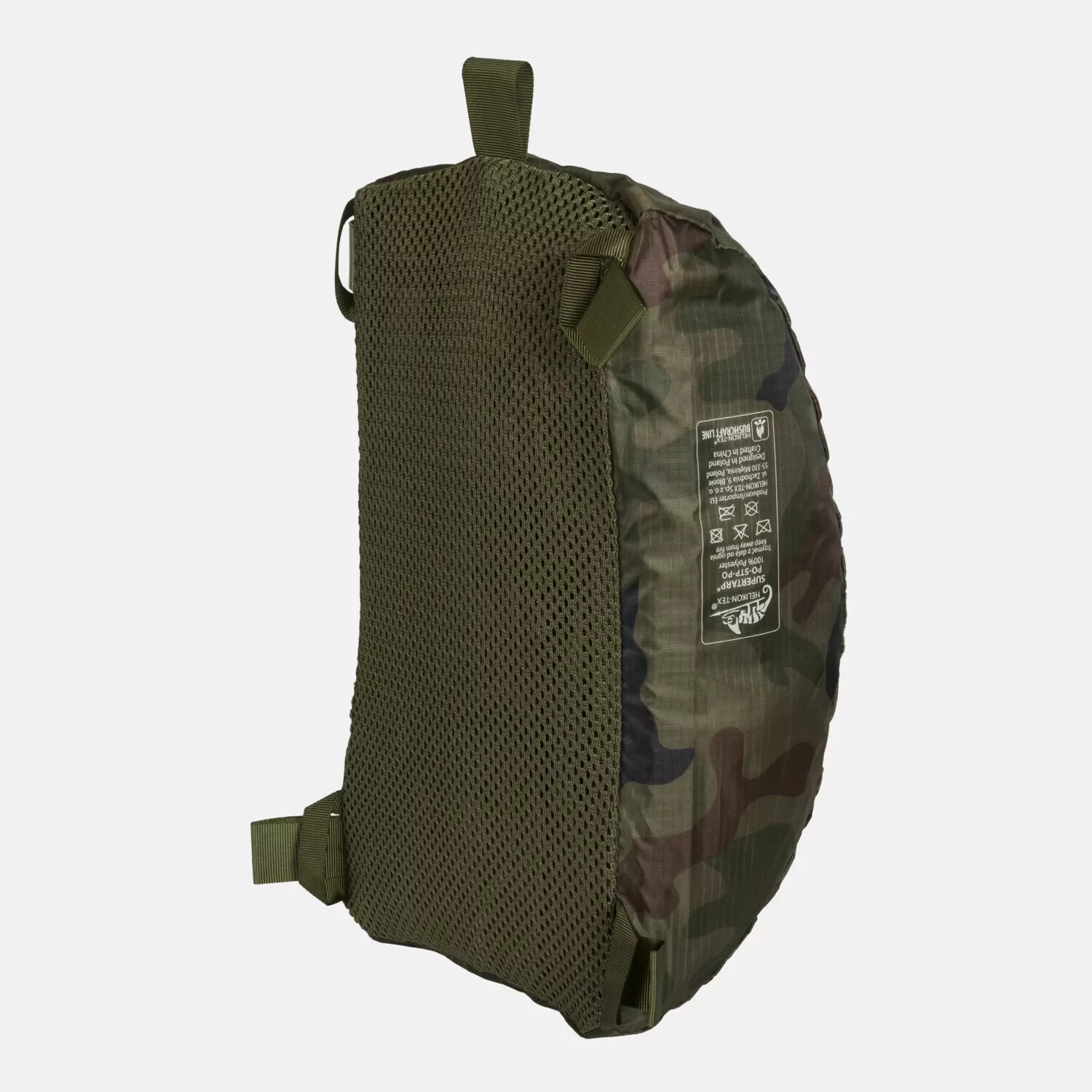
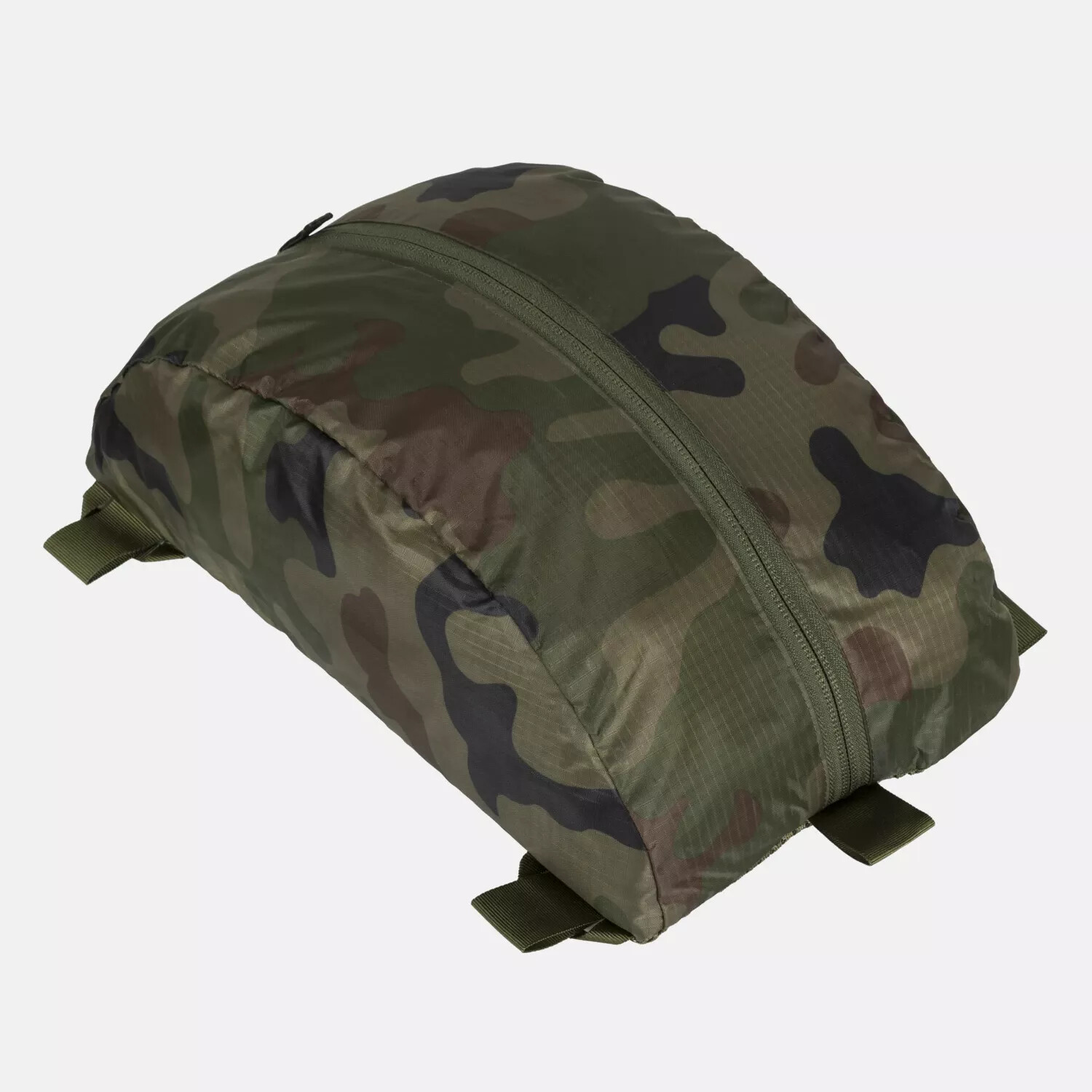
It comes with two covers: a drawstring bag and a zippered cover with straps for fixing it to a backpack. Lines and pegs are up to you.
Buyers praise the build quality, the fact that it keeps the rain out, the low weight and the two covers. A few say the fabric is thin and does little against the sun. The maker gives no waterproof rating in millimetres; it speaks of protection from rain and sun and of taped seams.
Pros
- Well made, taped seams
- Keeps the rain out
- Light: 850 g
- 19 attachment points, many ways to pitch it
- Two covers, one with backpack straps
Cons
- No floor and no mesh
- Needs lines and trees or trekking poles to pitch
- No waterproof rating in mm from the maker
- Thin fabric, little protection from the sun
All technical details
| Colour | PL Woodland camo |
|---|---|
| Packed size | 28 x 10 x 16 cm |
| Weight | 850 g |
| Fabric | coated polyester ripstop, 72 g/m² |
| Construction | tarp, 298 x 300 cm, 19 attachment points |
Which one to choose
With this many models it is easy to lose track, so here is a short cheat sheet: what you are after, what to pick and what to watch out for. The cheapest come first.
If you are on a tight budget and just need a tent for the weekend, go for the Grand Canyon Cardova 1
Watch out: it weighs 2.4 kg, the pegs in the bag are weak, and in a downpour the fly has to be pitched taut so it does not touch the inner. The maker does not say which seasons it is meant for.
If you want a cheap tent that more buyers have rated than any other in this comparison, go for the Night Cat 1P
Watch out: it is a single-wall tent, so the 3000 mm rating is for the wall itself, as there is no separate fly. Both poles are fibreglass.
If you want to spend little and still carry the tent in your pack, go for the Trinordic Endra
Watch out: it is a tunnel on a single arch, so it only stands once it is pegged and guyed out, and the maker gives no waterproof rating for the floor.
If you travel by car and want plenty of floor space for little money, go for the Grand Canyon Apex 1
Watch out: it is the heaviest tent in the comparison, and the maker does not say which seasons it is meant for.
If all you want is a roof over your head and the lightest possible load, go for the Helikon-Tex Supertarp
Watch out: there is no floor and no mesh, you need your own guylines and pegs, and the maker does not give a waterproof rating in mm.
If you want a light tent that stands on its own aluminium pole, go for the Naturehike Cloud-Up Pro 1
Watch out: the weight depends on the source (1.39 kg from the maker, 1.55 kg on the shop card), and it has only a few dozen ratings so far.
If every gram counts and you hike with trekking poles anyway, go for the 3F UL Gear Lanshan 1
Watch out: you pitch it on a 120-125 cm pole that is not included, the first pitch takes practice, and tall people will find it cramped.
If you want to disappear into the woods and keep your pack inside, go for the Mil-Tec Recom
Watch out: the fly is rated at only 1000 mm, the fibreglass poles and the pegs are weak, and you cannot sit up inside.
If room to lie down is enough and you want to be set up in a few minutes, go for the Geertop Blazer 1
Watch out: it is a low double-wall tent, so you cannot sit up inside, in wind-driven rain water can creep in at the foot end, and it is no good for winter.
If you want the highest fly waterproof rating in this comparison, go for the Tatonka Koli 1
Watch out: it has only a handful of ratings, it is sold by a third-party seller, and as a tunnel it relies on well-tensioned guylines. The maker does not say which seasons it is meant for.
If you want the lightest dome you can get and price is no object, go for the MSR Hubba NX
Watch out: the maker rates the fly at only 1200 mm, so the finder leaves it out when you ask about heavy rain, and the floor is 76 cm wide.
Questions and answers
How do I choose a one-person tent?
Start with three questions. How will you carry it? In a pack you feel every kilo after a few hours, in a car weight hardly matters. When will you camp? A summer tent can have more mesh, while spring and autumn call for a tighter one. Do you expect heavy rain? Then look at the waterproof rating of the fly. Compare prices only after that. The finder on this page asks you exactly these questions and narrows the list straight away.
What waterproof rating does a tent need?
A fly rated at 3000 mm is a common benchmark today, and that is where the finder counts a tent as ready for heavy rain. The floor is usually rated higher, because your knees and back press on it. The number on the label is a lab test of new fabric. In real rain the seams, a taut fly and the gap between fly and inner matter just as much. If the maker gives no rating, the table says "no data" and the finder leaves that tent out when you ask about heavy rain.
Which one-person tent for bikepacking?
Look at the weight and the packed size, because whether a tent fits under the saddle or on the handlebars usually comes down to the length of the pack with the poles. The packed size is in the table and under "More filters" in the finder. Be careful with tents pitched on trekking poles: if you ride without poles, you will need a separate pole.
Tent, tarp or bivy?
A tent gives you a floor, insect mesh and room to sit up and wait out the rain. A tarp is just a roof. It is the lightest option, but it gives no protection from below or from mosquitoes. A bivy sits in between: a bag you sleep in lying down, pitched in a few minutes. There is no bivy bag in this comparison, and the tarp is listed separately, so the tent quick picks leave it out.
Is a more expensive tent a better tent?
What the data shows is that most tents in the cheapest bracket weigh around 2 kg or more, while lighter designs turn up in the pricier brackets. A higher price does not always mean a higher waterproof rating, and the table shows that clearly. A table cannot tell you how long the fabric, seams and poles will last, so here the buyers' ratings are the only hint you get.
How do you know which tents are popular?
From two things the shop shows: the number of ratings and the best-seller rank. Amazon.pl does not show how many units were sold for these tents. The most popular cheap tents have more than two thousand ratings each, so their popularity is plain to see. Fewer people buy the most expensive ones, which have a handful or a few dozen ratings, so there the count tells you little.
What does "no data" in the table mean?
That none of the sources I could find gives that value: not the maker and not the shop card. I do not fill it in by guesswork. In the finder, a tent with a missing value does not match a question about that value, and you can see why straight away.
Leave a comment