
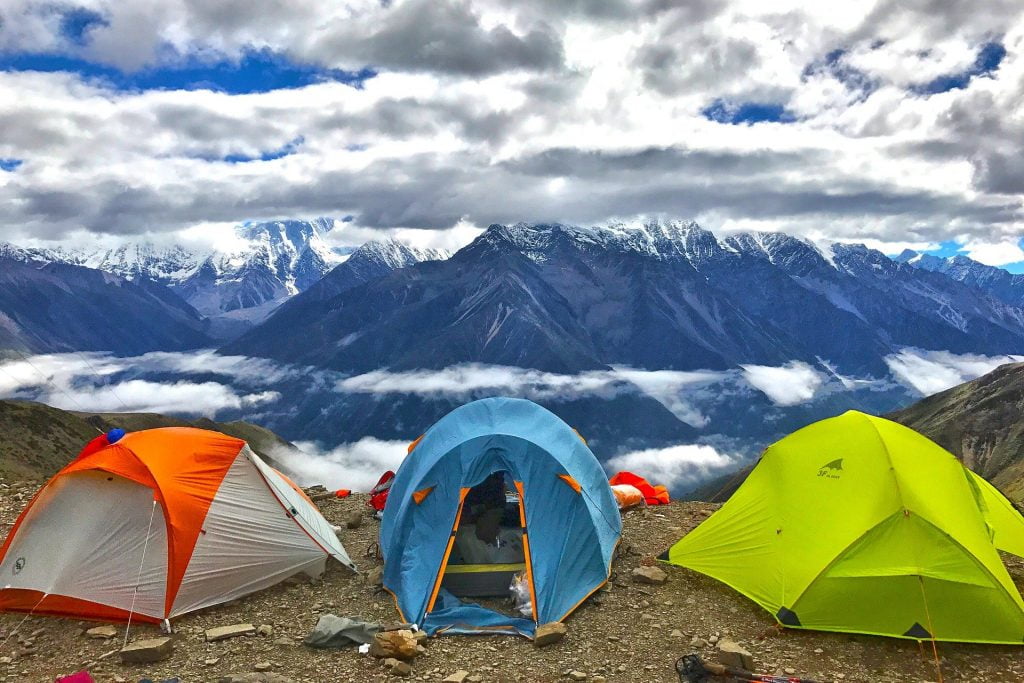
If you are planning a camping trip, alone or with company, you are probably wondering how to sort out shelter and a place to sleep. For a solo hiker the obvious answer seems to be a lightweight one-person tent. It is not always the best option, though. You have at least 2 more options to choose from: a tarp and a bivy.
Each of them has its pros and cons, which I will try to describe below.
Lightweight or ultralight one-person tent
When it comes to shelter for a night outdoors, a tent is naturally the first thing that comes to mind. It is a well-known solution, and progress has reached outdoor gear too, making tents better and better: lighter, easier to pitch and taking up less room in your rucksack. Here are the advantages of this option.
Advantages of a tent
Freestanding
A tent, especially a dome tent, is often freestanding, which means it has its own frame that holds its shape and does not need separate anchor points (tunnel tents and lightweight tents pitched on trekking poles still have to be staked out and guyed, though). You can pitch a tent anywhere with even a little reasonably flat ground: in the desert, high in the mountains above the tree line, in a field.
Quick and easy to pitch
Modern tents are designed to be as quick and simple to set up as possible. They are easy to pitch and to pack away. That matters when you need to get out of the snow or rain quickly, or when you reach your camp spot worn out.
There is even a whole group of pop-up tents, which spring into shape on their own as soon as you take them out of the bag. Pitching one takes just a few seconds.
Privacy
The opaque walls of a tent give you a minimum of privacy, especially on all kinds of campsites where lots of people are camping. This lets you shut yourself off from your surroundings. That advantage can sometimes also be a drawback, as you will see further on.
Protection from the weather and insects
Anyone who has ever slept outdoors in summer will appreciate this. Mosquitoes can ruin even the best break, especially at night, when you need to sleep and recover during a short summer night. Protection from rain or snow matters a lot too, and a tent gives you maximum comfort here.
Disadvantages of a tent
Every rose has its thorns. As a shelter, a hiking tent also has its drawbacks. These include:
Weight and bulk
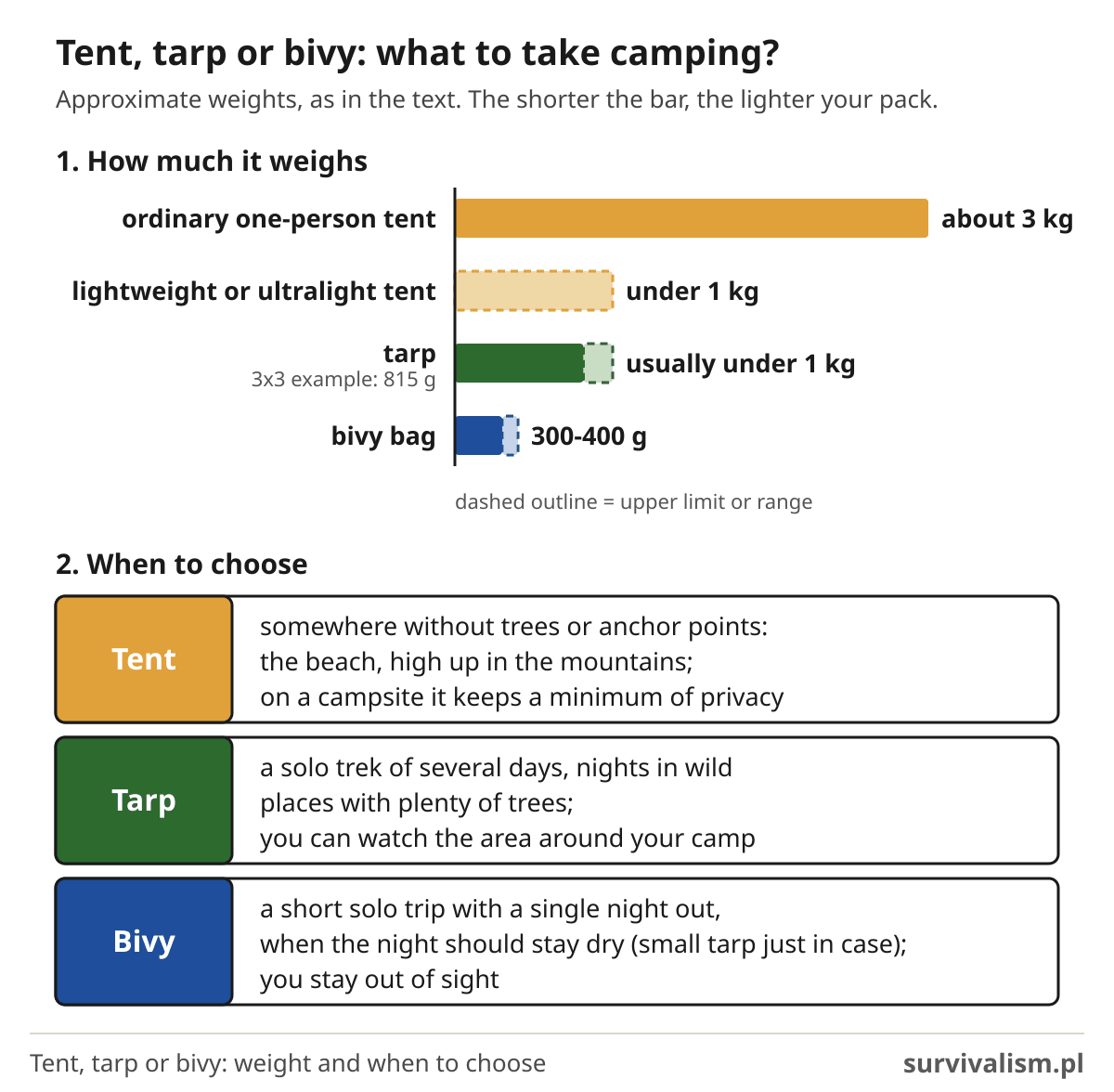
A typical one-person tent, not to mention two-person, three-person and bigger tents, is relatively heavy. An ordinary one-person tent can weigh around 3 kg. Lightweight and ultralight tents, on the other hand, usually weigh under a kilogram, but they are often not freestanding, which means you have to make sure the whole structure is properly supported yourself.
Another serious drawback of many lightweight one-person tents is their high price, which is often a barrier the average hiker simply cannot get over.
Poor ventilation, condensation
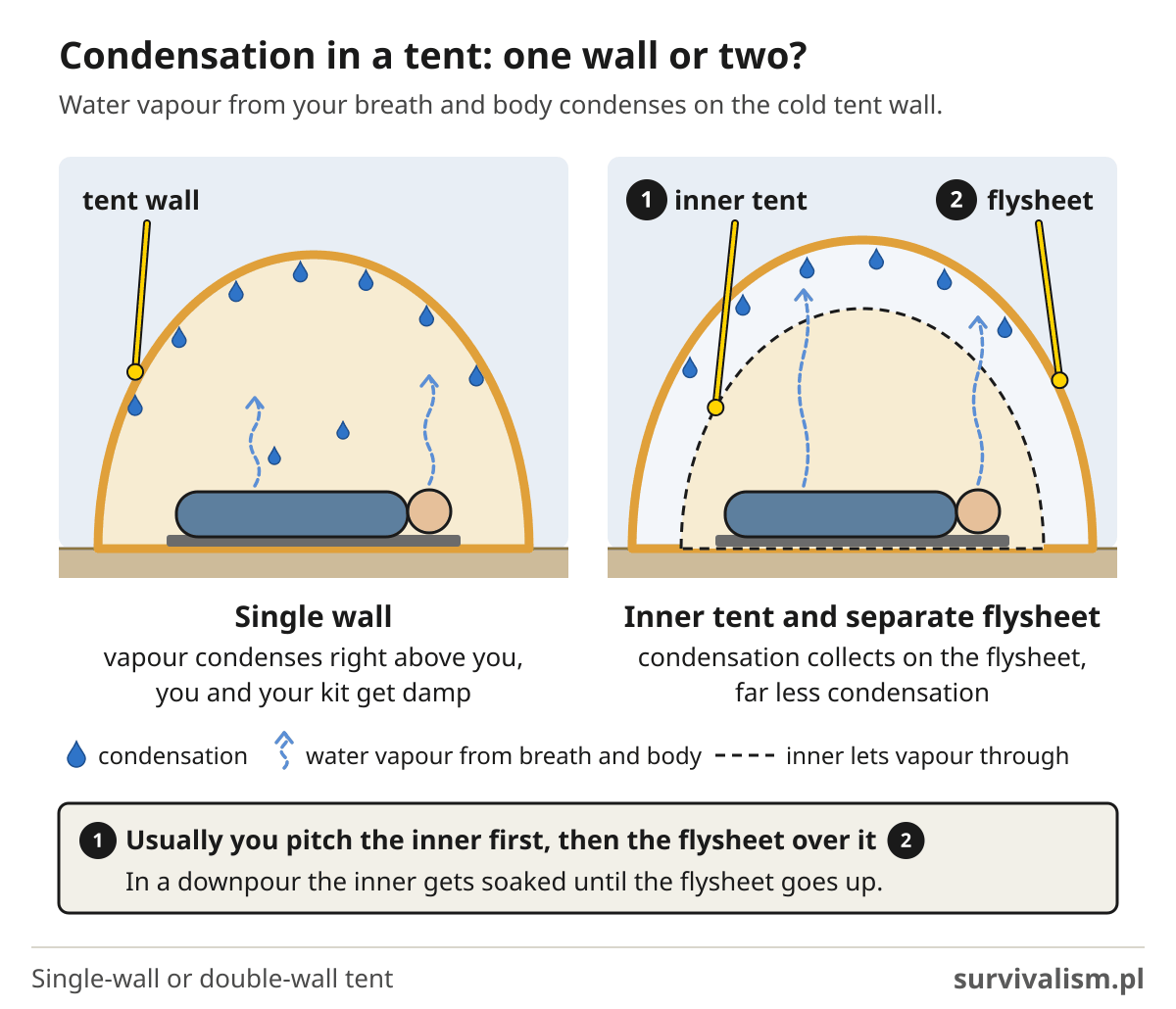
Being an enclosed structure, a tent by its very nature tends to restrict natural airflow. That in turn means condensation forms inside, and both your kit and you end up damp. Single-wall tents are particularly prone to condensation problems. Double-wall tents, i.e. those with a separate flysheet, suffer from it far less.
How it is pitched
Most tents are double-wall, so you effectively have 2 separate parts: the inner tent and the flysheet. They have to be put up separately and in the right order. Usually you pitch the inner first (although there are designs where it is the other way round), and only then the flysheet over it, whose job is to protect your sleeping area from rain, snow and wind.
If you have to pitch your tent in a downpour, for example, your inner will inevitably get soaked, because it is exposed to the rain until the flysheet goes up.
Limited space
As I mentioned earlier, a tent is by nature an enclosed structure and its floor space is limited by its “walls”. This means you will not always be able to cram in everything you would like, and that applies especially to one-person tents.
No protection from the sun
This is partly linked to the previous point. If you happen to pitch your tent in full sun, it will very quickly turn into a “sauna” inside. The tent works like a greenhouse, trapping a lot of the heat.
Complex construction
Even the simplest tent is made up of at least a few parts. Any of them can get damaged or lost. That forces you to either carry some repair kit or accept that you will have to improvise if something breaks.
A tarp as an alternative to a tent
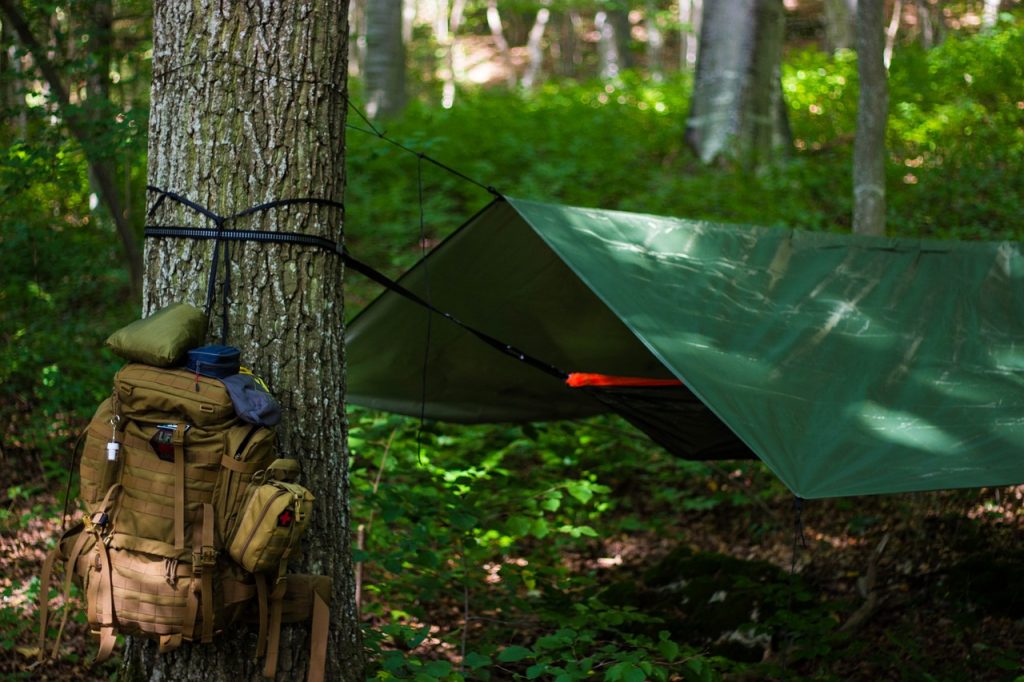
What is a tarp? Simply a waterproof sheet of the right size with sewn-in attachment points. Thanks to its undeniable advantages, it is often the choice of more experienced hikers and bushcrafters. The most versatile tarp size is the 3×3 tarp, a square measuring 3 metres by 3 metres.
A good example of a versatile 3×3 tarp is the WTP Camo Furtiv by Solognac (Decathlon) in camouflage colours, measuring 2.97 x 2.85 m. It weighs just 815 grams and has as many as 21 attachment points.
Advantages of a tarp
Light and compact
A tarp is nothing more than a piece of waterproof fabric, so it will not take up much room in your rucksack. It will not weigh much either, usually under 1 kg. The tarp I mention above packs into a stuff sack of about 17 x 26 cm, so it will fit under the lid or in an outside pocket of a larger rucksack.
Versatility
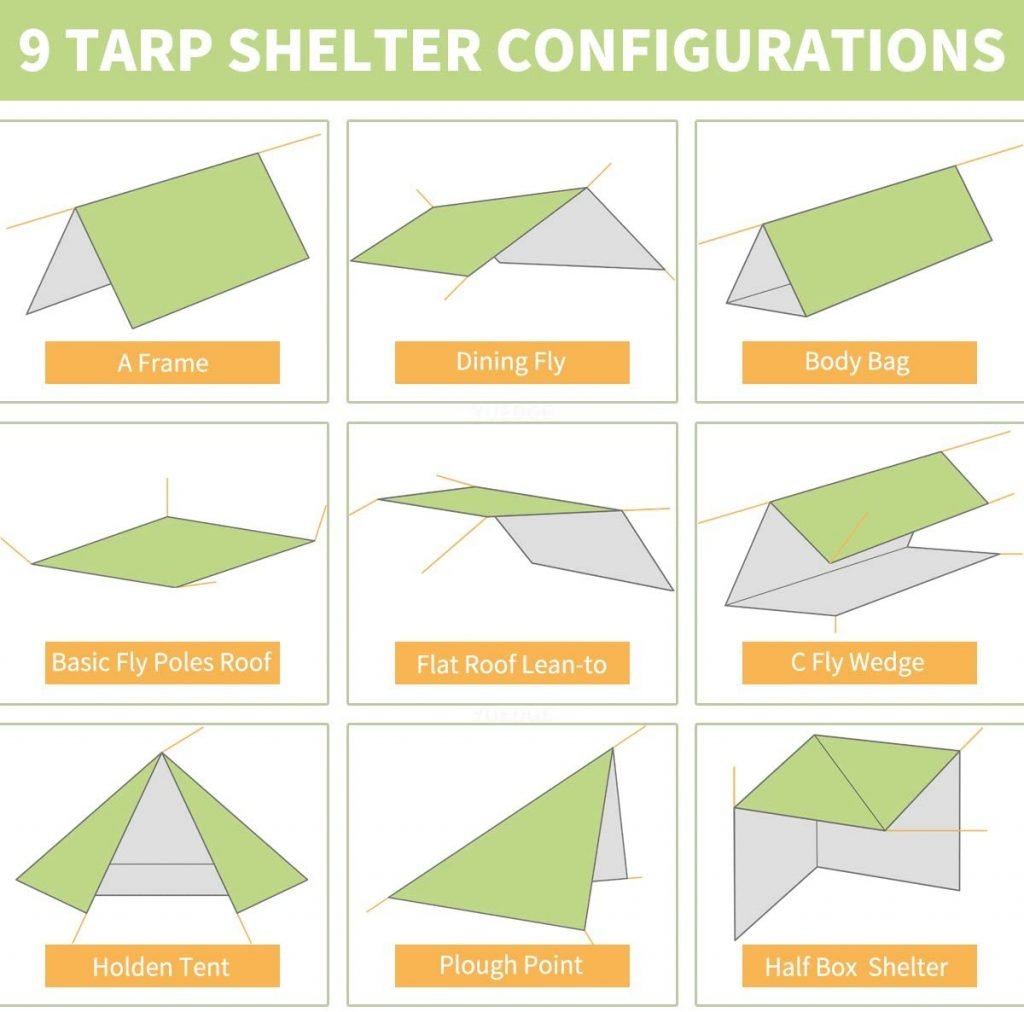
A tarp can be pitched in lots of ways. You can use it just as a roof, or build a half-open or closed shelter. There are endless ways to pitch a tarp, so you can adapt it pretty well to whatever conditions nature throws at you.
Quick to pitch in the rain
When the rain catches you out, you can - with a bit of practice - put up a tarp in a few minutes. That gives you quick shelter from the wet, and once it is up you can carry on with other camp jobs underneath at your leisure. It is a big advantage over most tents, where you have to pitch the sleeping part first.
Because it is so simple, a tarp makes an ideal emergency shelter, for a sudden downpour for example.
More space
A tarp gives you far more space to work with than a tent. As a last resort, you can even light a small fire under it (carefully, with the tarp pitched high and open, because sparks and heat can burn holes in nylon and polyester or melt them) or cook something on a stove (with the tarp pitched open, away from the fabric and with good airflow, because carbon monoxide builds up under a closed tarp1, 2; a headache, dizziness or nausea is a signal to turn the stove off at once and get out into fresh air3, but do not wait for them, because carbon monoxide can put you to sleep without any warning). In most cases you will also be able to string a line under the tarp to hang up wet clothes or bits of camp gear.
You can keep an eye on your surroundings
If you pitch your tarp open or half-open, you can keep watch on your surroundings the whole time and see what is going on around you. This matters especially on solo trips, where you would rather know what is happening near your camp. A tarp also gives you better, closer contact with nature.
Good sun protection and ventilation
Unlike a tent, a tarp does not trap heat, so it shades you from the sun without raising the temperature or creating a sauna effect. Being an open structure, it also lets air circulate freely, so condensation problems are much smaller than in a tent.
Not much can go wrong
Being an extremely simple structure, a tarp is far less prone to failure than a tent. You would have to try really hard to damage a tarp so badly that it becomes completely unusable.
Disadvantages of a tarp
For all its undeniable strengths and advantages over a tent, a tarp of course has its weaknesses too.
It is not freestanding
With a tarp, holding the shelter up is your job. Whether that means a line strung between trees, trekking poles or a bicycle depends on your ingenuity and the situation. It can be a real drawback in deserts or anywhere without trees, though, so I would not recommend a tarp for the beach.
It takes experience and practice to pitch
Pitching a tarp is not rocket science, but you do need a bit of practice to do it well and get the result you want.
No protection from insects
A tarp gives you no protection from insects at all. That is why in summer you will need a mosquito net, which adds to the weight and bulk of your kit.
You need insulation from wet ground
A tarp has no floor, so where the ground is damp or boggy you need extra insulation under your sleeping bag (for example a groundsheet under your mat). A mat itself - a foam mat or a self-inflating mat suited to the season - is something you will need every time, though, also on dry ground and in a tent, because the ground draws heat from your body even in summer1.
The middle ground: the bivy bag
The bivy bag was originally meant to protect mountaineers from sudden changes in the weather. In its original form it was simply a waterproof bag for your sleeping bag that a mountaineer could quickly crawl into, without having to put up any complicated structure.
Since then the idea has evolved, and today there is a wide range of bivy bags, from ordinary single-use, very handy and light bags made of reinforced NRC foil, the foil used for emergency blankets (do not close a bag like that over your face, and treat it as an emergency option for a single night - the foil does not let water vapour through, so the sleeping bag inside will quickly get damp), to structures that look like small, light one-person tents.
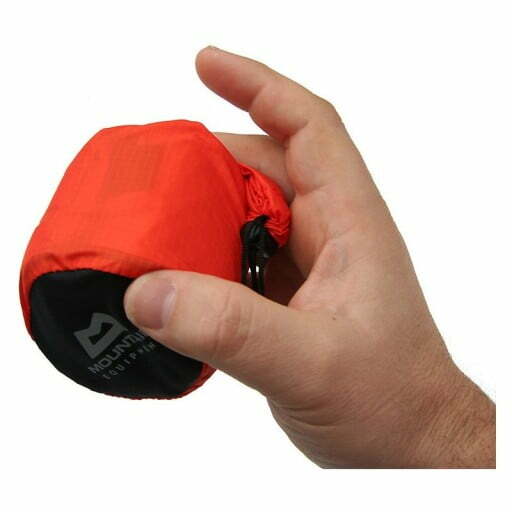
Note: the naming has got rather muddled, and different manufacturers use different names and their own terminology. Sometimes “bivouac sheet” means a tarp, sometimes a bivi is called a “sleeping bag cover”, and at other times a more elaborate bivy is also called a one-person tent.
To muddy the waters even further, the spelling varies too: sometimes manufacturers write “biwi” (the Polish spelling), sometimes “bivy” and at other times “bivi” 🙂
Advantages of a bivy bag
Quick and easy to set up
In its most basic form, a bivy bag is a bit like a waterproof sack, so all you need is a small patch of flat ground to lay your bivy on, and that’s it - you can crawl in just as you would into a sleeping bag.
Low weight and small size
A bivy bag often weighs just 300 to 400 g. Some are also small enough to fit comfortably in your trouser pocket.
You can set it up in any conditions
To bed down in a bivy bag you only need a few square metres of reasonably flat ground. Many bivies also have attachment points, so you can anchor one even on sloping ground. That stops you from sliding and slipping downhill.
Camouflage and protection from strong wind
Thanks to its low, squat shape and small size, a bivy bag is ideal for hikers who would rather not advertise their presence. A bivy in camouflage colours is very easy to miss in the woods, even from close by.
Its low profile also lets you sit out, stress-free, even very strong winds that could tear an ordinary tent to shreds.
Warmth
A bivy bag combined with a sleeping bag keeps you warmer, so you can sleep and camp comfortably at lower temperatures than a sleeping bag under a tarp alone would allow (compared with a tent, the advantage is smaller, because a tent also shields you from the wind).
Disadvantages of a bivy bag
A bivy can do a very good job in some situations, but it is not a fully universal solution either, and like the other two it has its drawbacks.
More elaborate bivies are hardly different from tents
The more elaborate bivy bags have a supporting frame, a mosquito net and other features typical of tents. At that point the line between a bivy and a tent gets blurred. Such “tent-like” bivies can even be heavier than lightweight and ultralight one-person tents.
Incomplete protection from the elements
Simpler bivy bags do not fully protect you from rain and snow. There is usually nothing around the opening to shield you from the elements. You can easily fix that by pitching a small tarp, but it complicates the whole process and adds to the weight and bulk of your kit.
Awkward to get in and out of
Getting into or out of a bivy bag takes a bit of wriggling, and not everyone likes that. On top of that, in bad weather such as snow or rain, if you climb into the bivy in your clothes you bring all the moisture in with you, which makes camping a lot less comfortable.
Incomplete protection from insects
Most bivy bags have no built-in mosquito net, so if you are somewhere swarming with mosquitoes or other flying bugs, you will need a separate net.
Cramped
If you struggle with small spaces or tend towards claustrophobia, a bivy is not a good choice for you. When you sleep in a bivy, the top of it often rests right on your face, which some people find very uncomfortable.
Condensation
Most bivy bags are single-wall, so they tend to collect water vapour, which then condenses. You can counter this to some extent by exhaling outside the bag. The air you breathe out is one of the main sources of this moisture, but water vapour also comes from your body, which is why a breathable fabric matters so much (more on that below).
Bonus: what should you look for when choosing a bivy bag?
If you like the idea of sleeping in a bivy, before you buy one check that it is made of a “breathable” fabric. That matters if you don’t want to battle condensation. Also make sure the bivy bag you pick will comfortably fit your sleeping mat and sleeping bag. Check, too, that the opening is wide and roomy enough. It is also worth considering a model with a built-in mosquito net, which should still allow proper ventilation.
What should you choose?
As you can see above, each option has its pros and cons. What you go for depends largely on the circumstances and your personal preferences. And, of course, on how deep your pockets are.
When to choose a one-person tent?
Go for a tent when you are heading somewhere without trees or other anchor points, such as the beach or high up in the mountains. A tent is also a good choice on a public campsite - it will let you keep a minimum of privacy. A bigger tent, say a two-person or even a four-person one, can also work well if keeping your kit light is not a priority.
When to choose a tarp?
A tarp is a good option for a slightly more experienced hiker. If you are planning a solo trek lasting several days, with nights in wild places with plenty of trees, a tarp should tick all your boxes. It lets you watch the area right around your camp and keeps you close to nature.
When to choose a bivy bag?
I would pick a bivy for a short solo trip with a single night out. For a trip like that you can predict the weather fairly well, so if there is a good chance the night will stay dry, a bivy should be a good choice (the weather can still surprise you, though, especially in the mountains, so take a small tarp just in case). A bivy also lets you stay out of sight and, being so small, takes up very little room in your rucksack.
This article draws, among other sources, on material from the Polish YouTube channel Bushcraftowy, which I warmly recommend.Sources
- “Survival”, FM 21-76, Department of the Army, chapter 15 “Cold Weather Survival”: archive.org
- CDC, “Carbon Monoxide Poisoning Basics”: cdc.gov/carbon-monoxide
- NHS, “Carbon monoxide poisoning”: nhs.uk/conditions/carbon-monoxide-poisoning
Leave a comment