
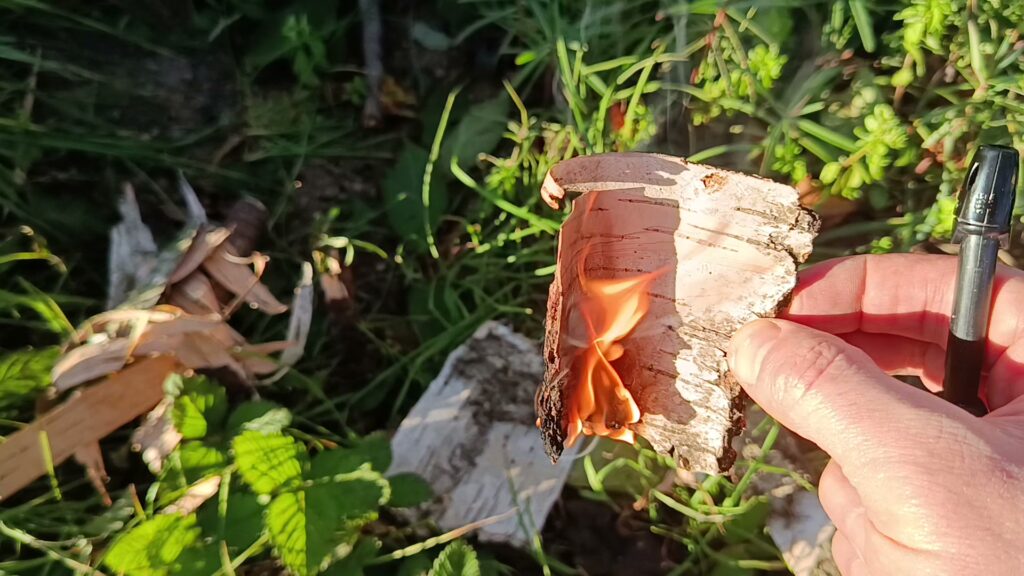
You hear two things about birch bark. That it’s the best tinder you’ll find in the forest, and that it burns even when wet. I wrote about it myself in my post on 8 kinds of fire everyone should know, but there I was writing from research and a few quick tries “in the field”. This time I wanted to check properly and thoroughly whether it’s true or just one of those urban legends.
The plan was simple. Three pieces of bark from three different trees and three burn tests. First a whole piece, then bark torn up fine, and finally bark with water poured over it.
Where I got the bark
I took the first piece from a birch that was lying on the ground and already rotting. The bark on it was a bit damp, which you could see at first glance and feel under your fingers.
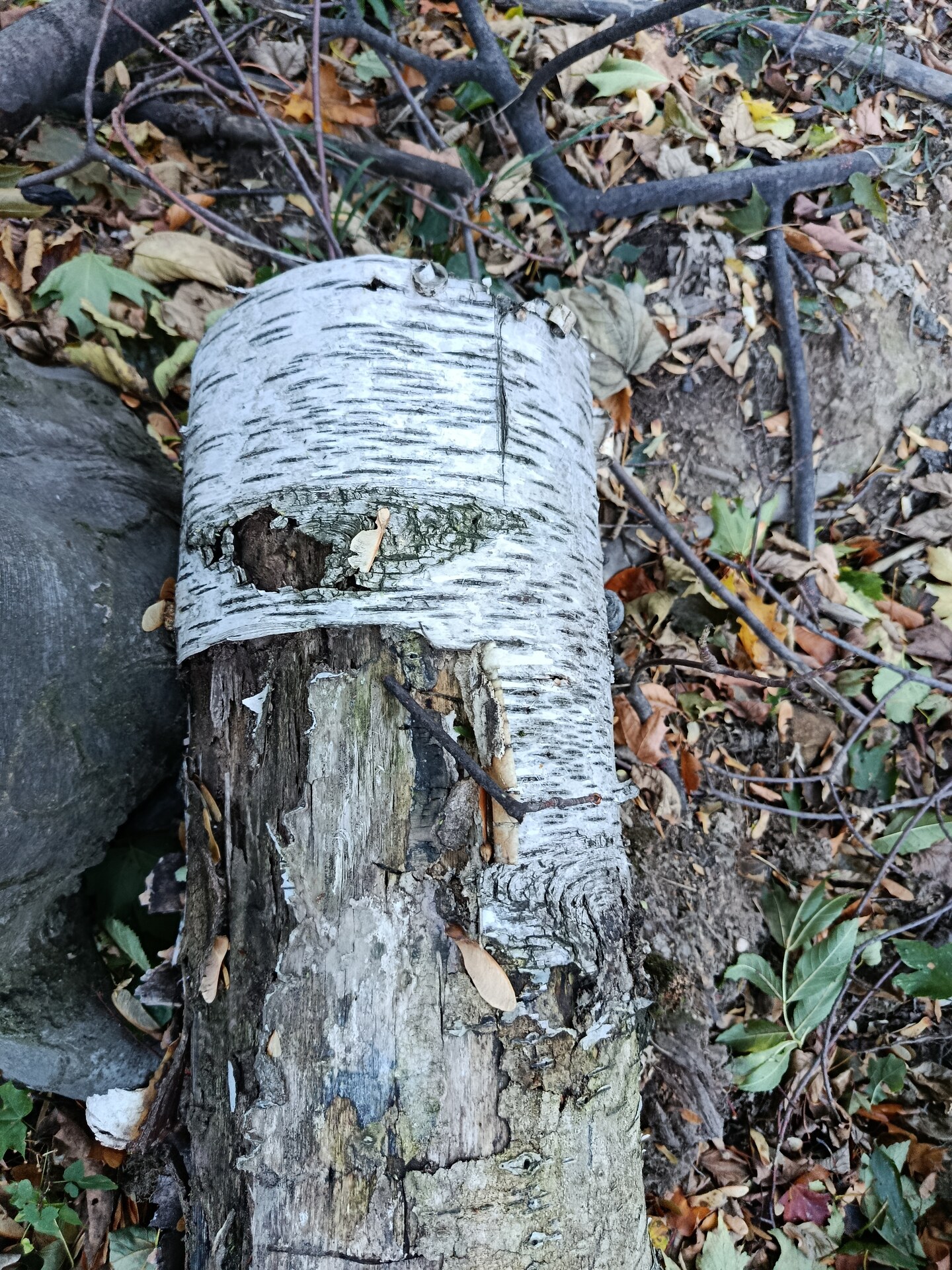
The second came from a tree that was dead but still standing. The trunk had gone rotten, and the woodpeckers had already managed to make little holes in it 🙂 From that one I took two pieces, plus a few shreds torn off the surface of the bark.
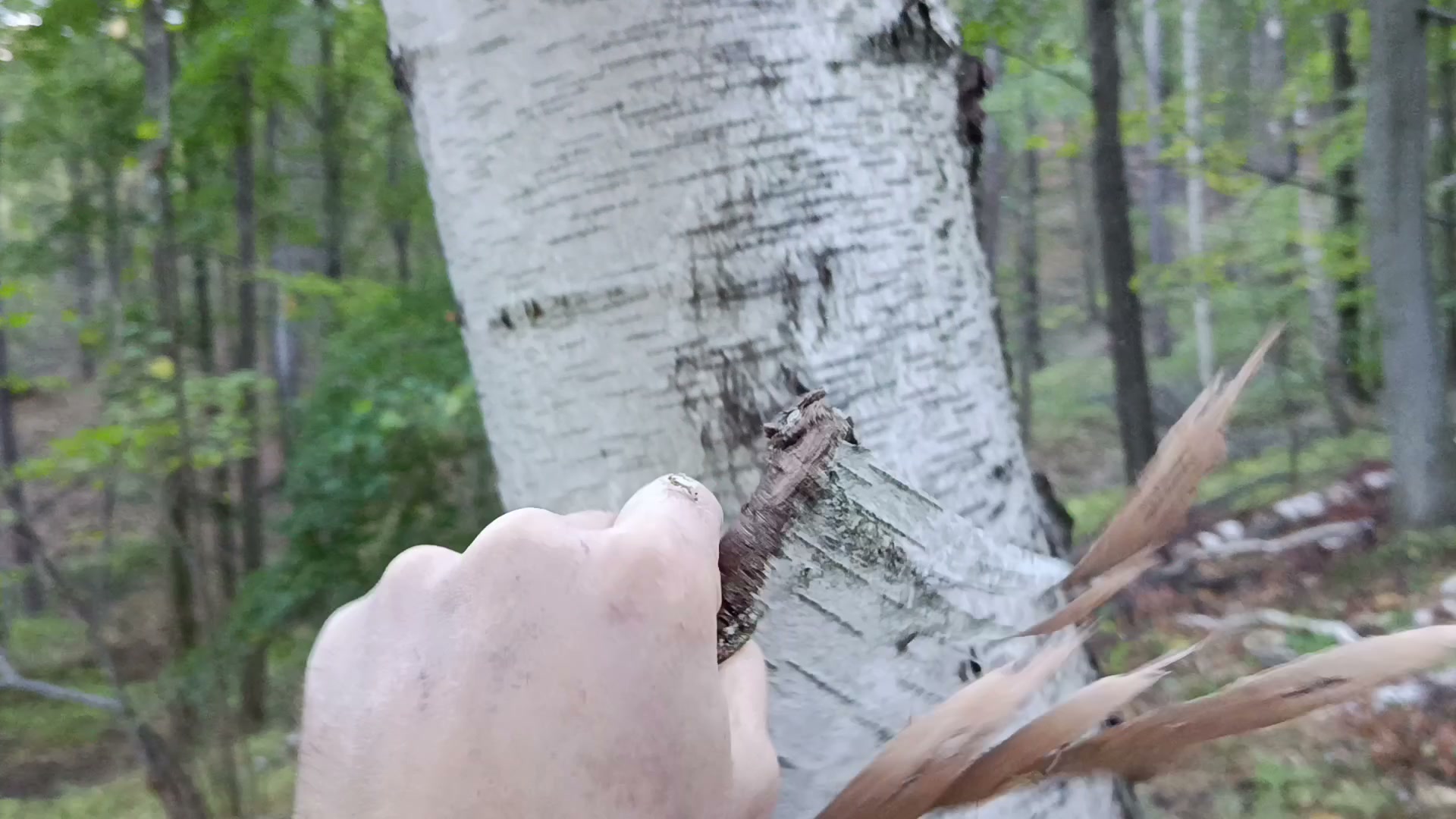
The third came from a living, healthy birch. Here I didn’t strip any bark off the trunk, I just pulled off a few loose strips that were already peeling away from the tree on their own. At a rough guess, that was maybe half a percent of the bark on the whole trunk.
Test one: a whole piece of bark
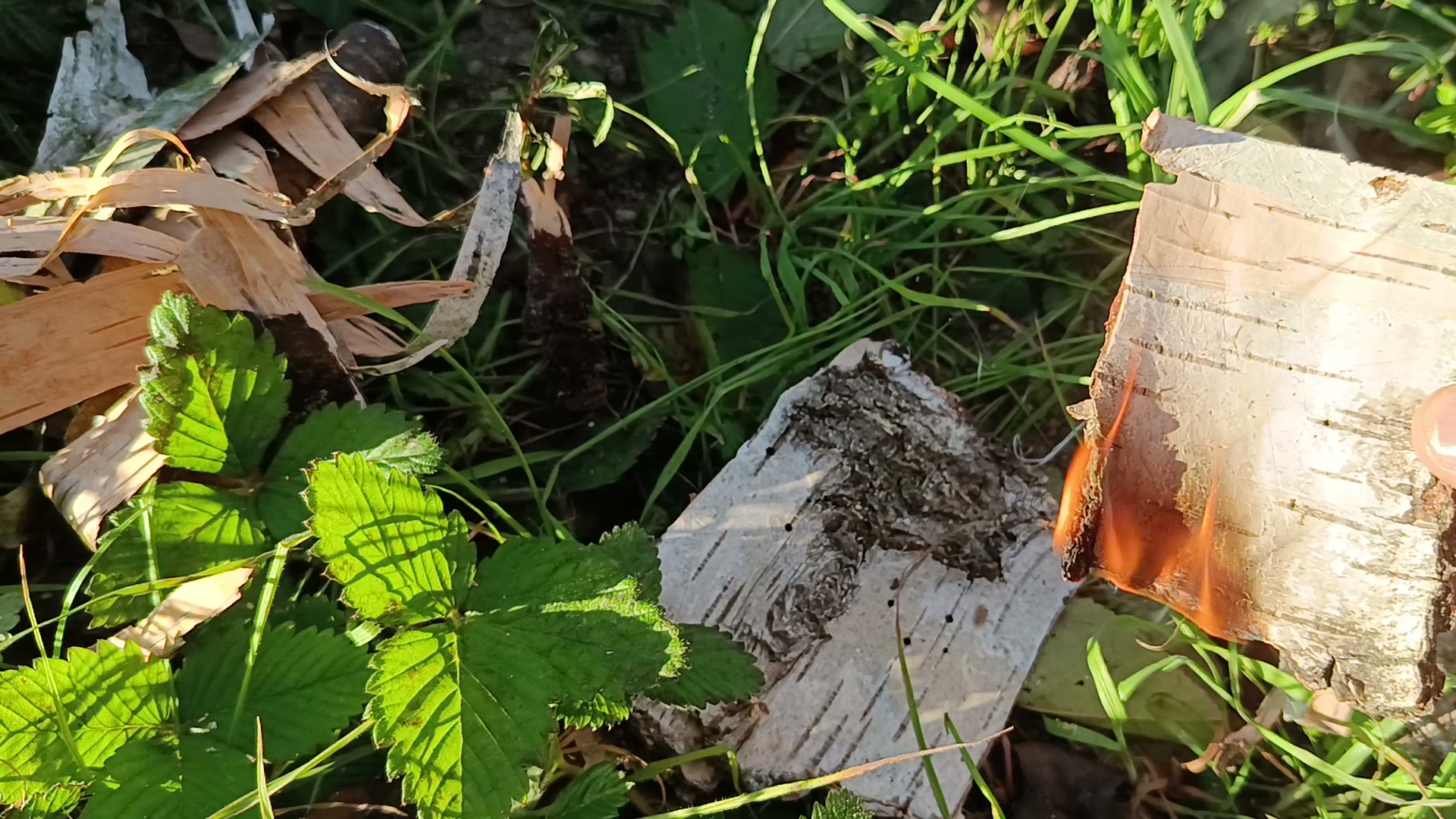
I started the test with the bark from the fallen tree. Something was happening, but could you call it tinder? So-so, I’d say. The whole piece didn’t want to burn as it was, and straight away I thought it might need tearing into smaller pieces.
Then the bark from the dead but standing tree. Here I was pleasantly surprised. The whole piece caught easily and burned literally like plastic. The shreds torn off the surface caught too, curled up and kept on burning.
Test two: bark torn up fine
I tore the bark from the fallen tree, the one that had burned worst in the first test, into smaller pieces and laid them in a loose pile. And here came a surprise. It caught and burned really nicely, again with a slightly plasticky smell.
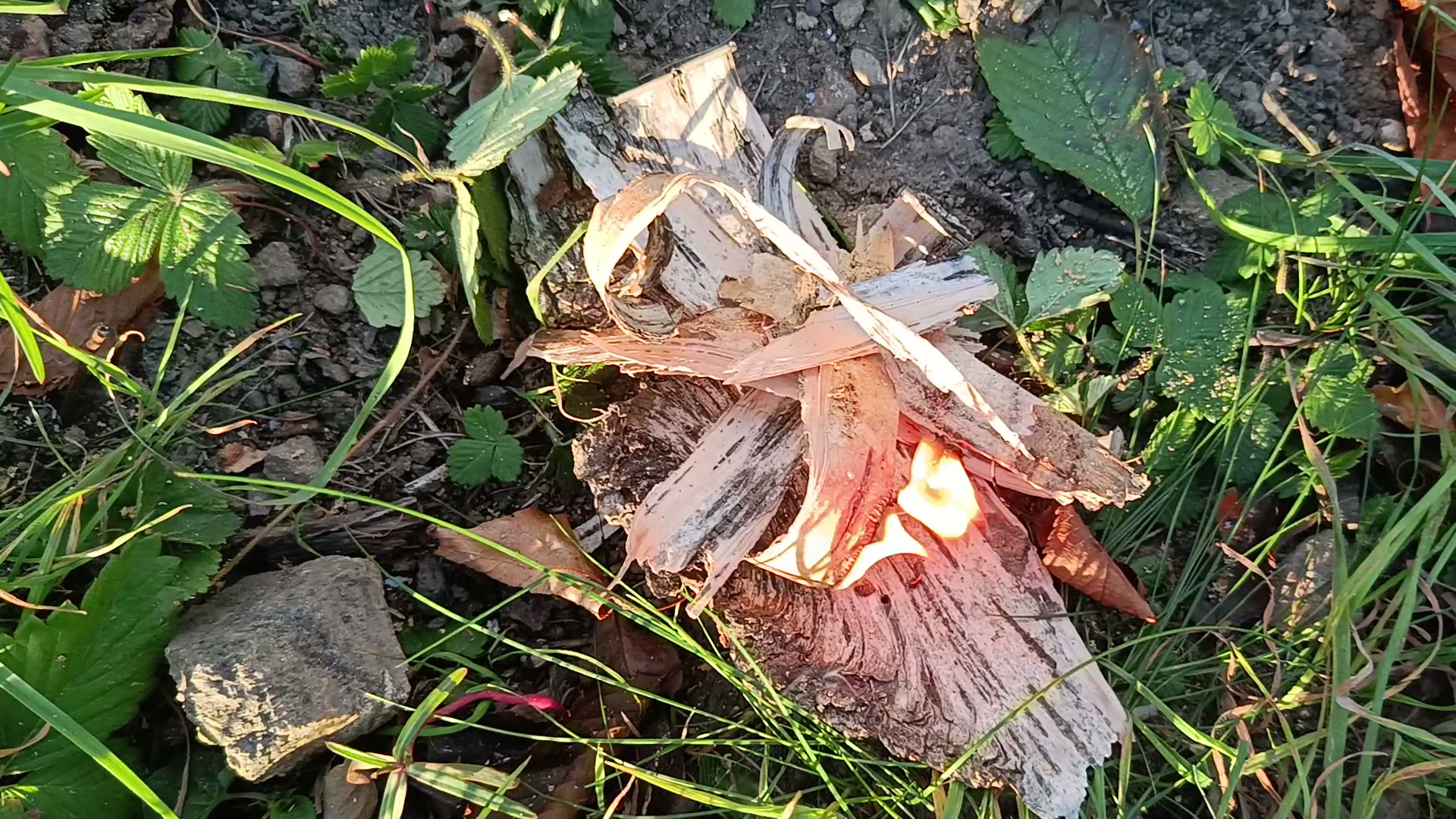
It was much the same with the bark from the dead, standing tree. Again, the way I laid it did all the work, but this one burned more briskly. The conclusion suggests itself. You’re better off collecting bark from standing trees than from fallen ones.
Last of all, the strips from the living birch. These probably burned best of all. They caught at once, as if someone had poured petrol over them. So what the old-timers say turns out to be true: birch bark is the best tinder you can find in the forest 😉
That plastic smell has a history of its own, by the way. Dry distillation of birch bark gives birch tar, a pitch that Neanderthals were already using as glue.1
Test three: bark doused with water
For dessert I saved the test that was meant to settle whether birch bark really burns when wet. I took bark from the living birch, the one that had just burned best, laid a new pile and poured a little water over it.
The first interesting thing showed up straight away. The water didn’t soak into the bark, it gathered on it in little droplets. The outer bark of a birch is hydrophobic, which means it repels water and doesn’t absorb it.1
The burning itself went worse. The wet bark burned less willingly, if at all. Something was happening, single pieces were burning, but for quite a while I wouldn’t have called it tinder. You could see that this bark wanted to catch, but wanting isn’t always enough. It was only after several attempts that it finally caught, after a fashion.
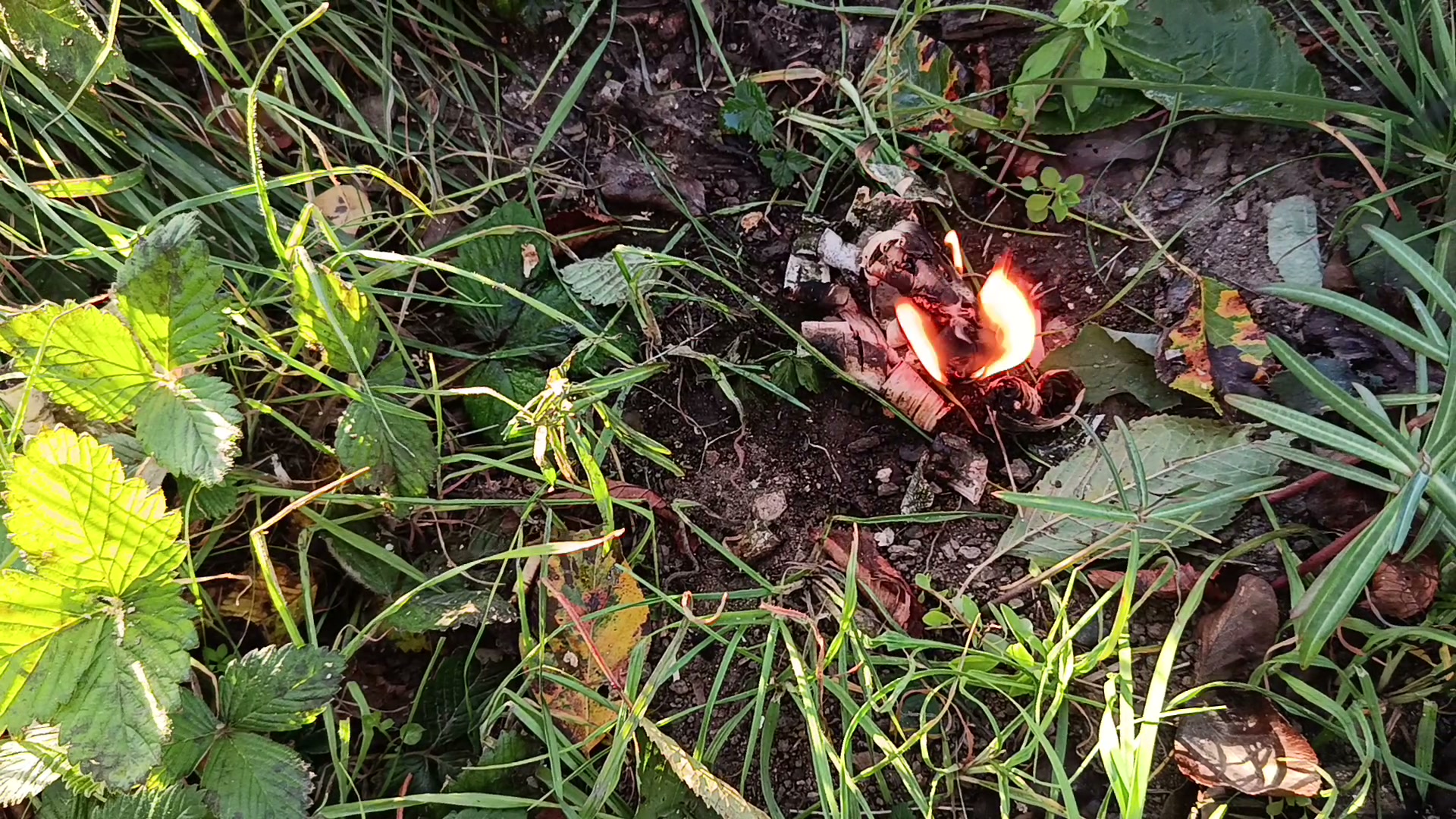
Of all the tests, this one came out worst, but there’s no denying that the bark did light in the end. I think that with a bit of determination you can get a fire going from wet birch bark, if you tear it into smaller pieces, lay it well and light it several times. It’s just not easy, and certainly not as easy as with dry bark.
What the tests show
- Birch bark is excellent tinder, but only if you prepare it. Torn into strips and loosely piled, it burns much better than a whole piece.
- The bark from the fallen, rotting tree burned worst, the bark from the dead standing tree better, and the loose strips from the living birch best of all.
- Wet bark does burn, but reluctantly. If you can, keep a supply of dry bark in your pocket or in a small bag.
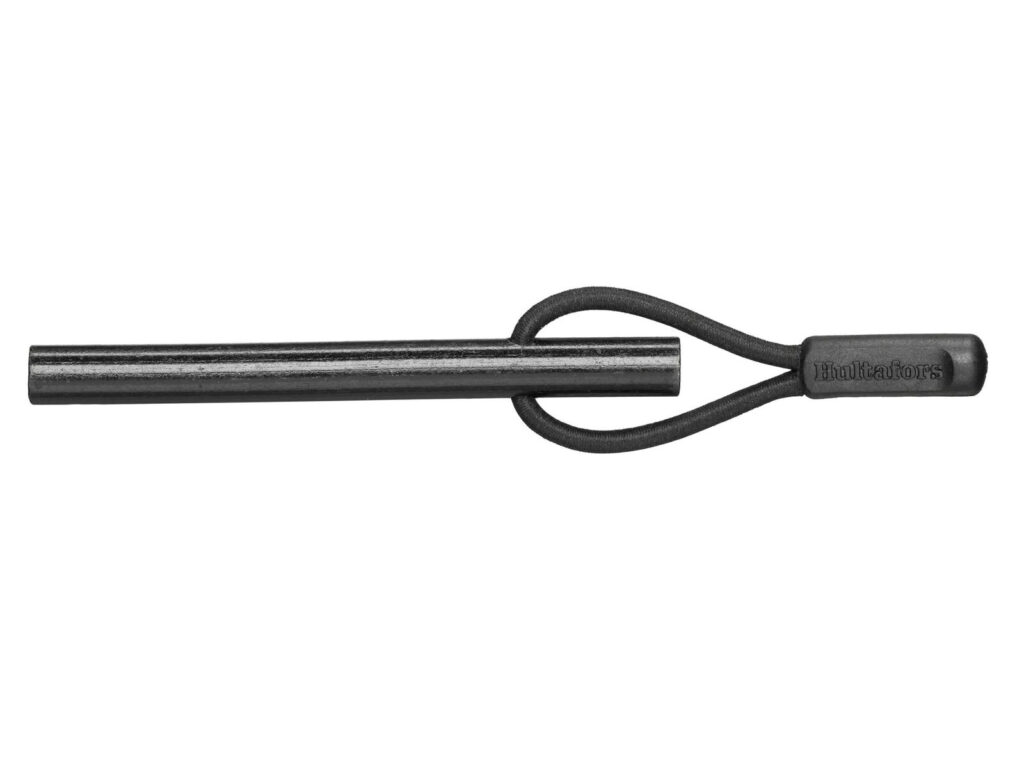
I lit all the tests with a long gas lighter, the kind you use for a barbecue. For your rucksack, though, next to the bark in its bag, a fire steel Amazon store, affiliate link, opens in a new tab is the better choice. It has no gas to run out of, and according to the manufacturer it lasts several thousand strikes and works in any weather.2
 Amazon store, affiliate link, opens in a new tab
The same day, I used the same bark to light a tipi fire on wet wood, and it caught without any trouble. If you need more ways to get a fire going in difficult conditions, have a look at my post on how to light a campfire in almost any conditions.
And what do you use to start a fire in the forest? Have you ever tried it with wet birch bark? Let me know in the comments.
See you on the trail!
Sources
- Wikipedia (English), “Birch bark”: en.wikipedia.org/wiki/Birch_bark
- Hultafors, “Tändstål FS” (product page 380280): hultafors.com/products/fire-steel-fs
Leave a comment