
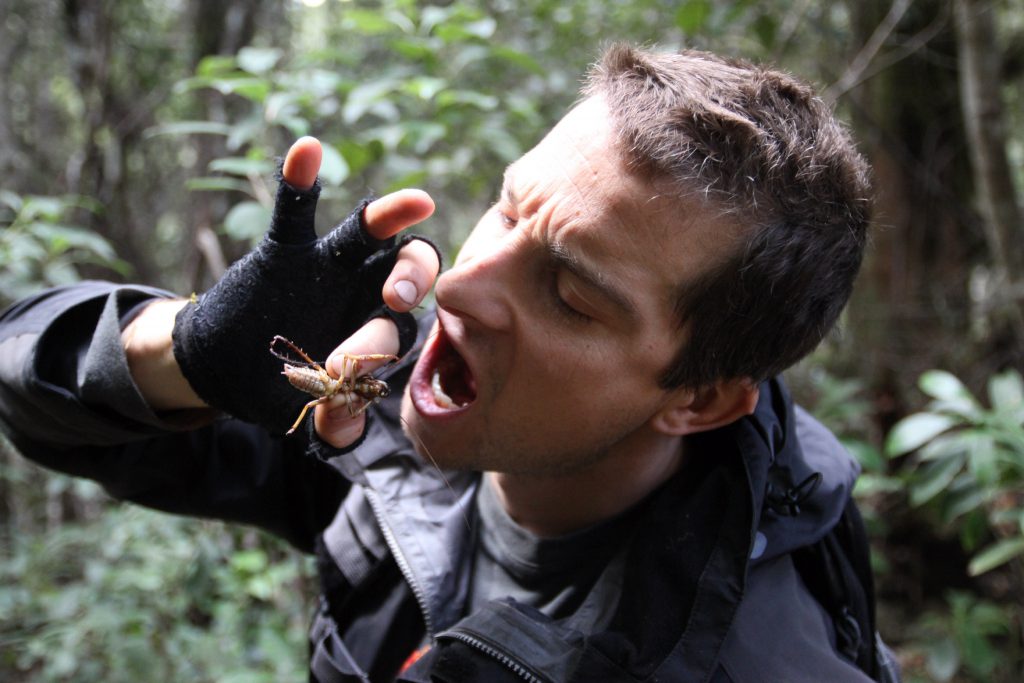
What food should you take on a hike in the mountains?
Food in the mountains, as on any longer trip, is really important. On a strenuous hike your need for energy goes up considerably. The right food will keep you in good shape and give you the strength and energy to carry on. When your stomach is rumbling, even the most beautiful views won’t make much of an impression on you. Your thoughts will inevitably keep circling back to food.
In this article I will focus more on what food to take with you into the mountains than on how to get hold of it there. But if you are more interested in the answer to the question “how do you get food in the mountains”, let me know in the comments. I am getting ready to write a big article on that topic.
On my trips I have tested all sorts of foods and meals. I would like to share my observations with you. Here I will try to answer the question: what food should you take with you on hikes in the mountains?
Choosing the right food matters quite a lot, which is why one of the most important questions to ask yourself is: how long are you planning your trip to last? The answer to that question largely decides what kind of food you should take with you. Some food works better on a short, one-day outing, and some on a week-long trip.
Fun fact: centuries ago, when the indigenous peoples of North America set off on a longer journey, they took with them something called pemmican. It was an energy mix made mainly of dried, shredded meat mixed with fat, sometimes with dried fruit added, and it gave them the energy they needed for travelling and hunting. Pemmican is something you can make yourself, but this kind of trail food is not always to everyone’s taste, so for most people who are not after culinary adventures it will be safer to take some good, proven energy bars.
Food for the mountains
To start with, a fairly important general rule about food in the mountains: don’t take more food than you can actually eat. More than once, after a trip, I have caught myself unpacking half my food from my rucksack, uneaten. Space in your rucksack is not unlimited, and there is no need to carry extra, unnecessary weight either. Over time you will get better at judging how much food to take with you.
1. Food to take on a day hike
The best food to take on a day hike is energy bombs packed with as many calories as possible. Food you can eat without heating, straight from your rucksack or pocket, is the best choice here. On a short trip it is usually not worth taking cooking gear, because it is heavy and takes up a lot of room.
While walking you need a lot of energy, which comes from carbohydrates and fats (fats “burn” in the flame of carbohydrates). That is why you should take foods that contain sugar, sweet drinks included:
- chocolate
- snack bars
- dried fruit
- nuts
- sweets
- sweet coffee or tea
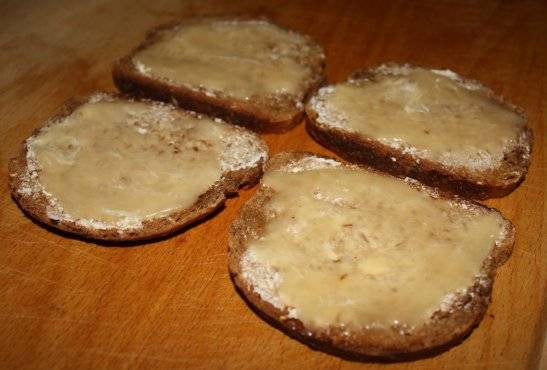
My personal favourite is home-made sandwiches with peanut butter and honey. Any other “loaded” sandwiches will also be a good choice. They give you plenty of much-needed energy, and you can make them just the way you like.
While walking I also like to have some sweets somewhere in an easy-to-reach pocket, boiled sweets for example. That way I can reach for the calories I need without stopping.
You can also be tempted to eat fruit and other treats you find along the trail. Here, though, you must be absolutely sure that the fruit is edible and that it won’t poison you.
What dry food should you take to the mountains?
Dry trail food for the mountains is food you can eat without cooking, straight from your rucksack, and that won’t go off after a few hours in the warmth. There is one more thing to think about, and that is how much energy you carry in every gram. After all, every extra gram rides on your back.
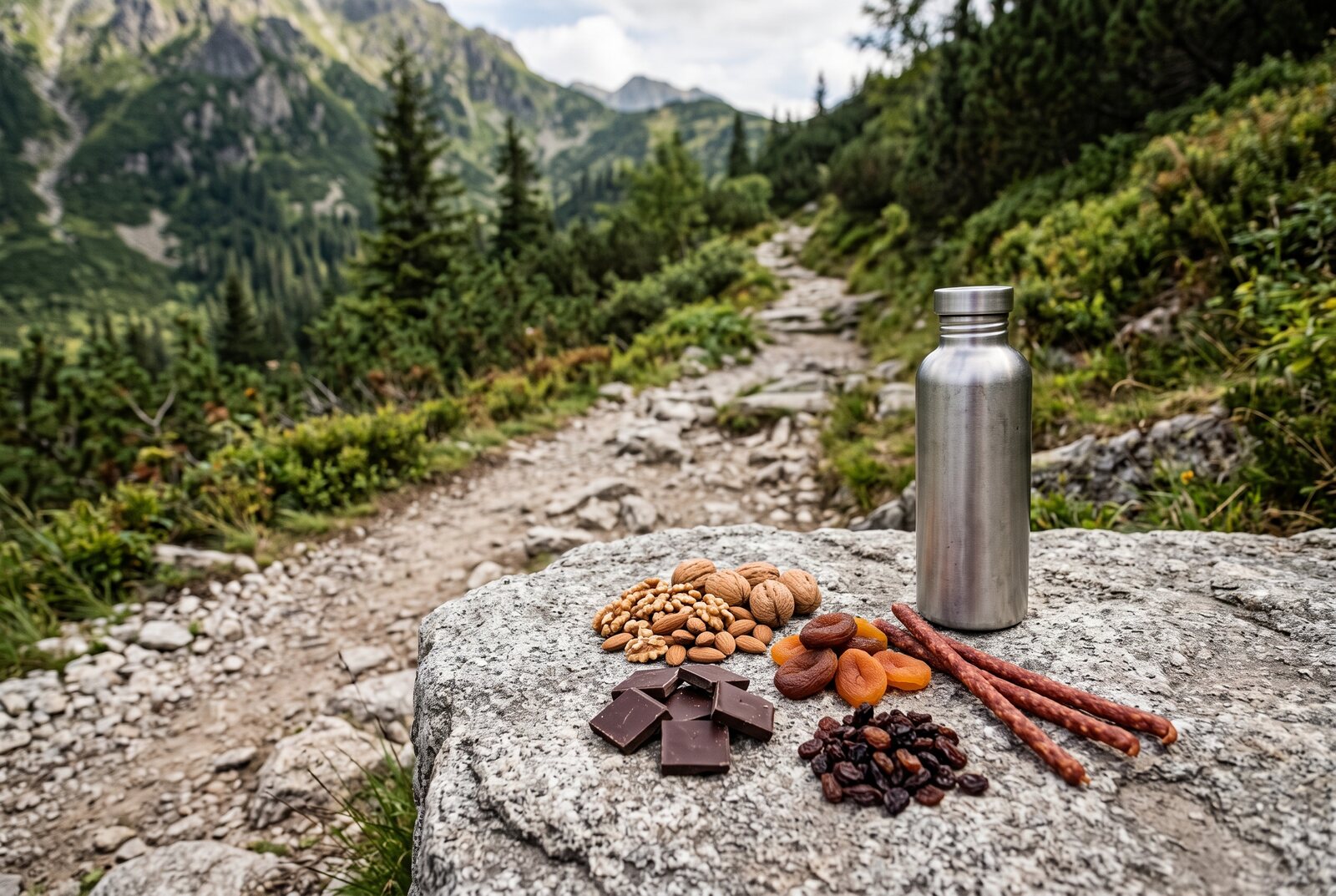
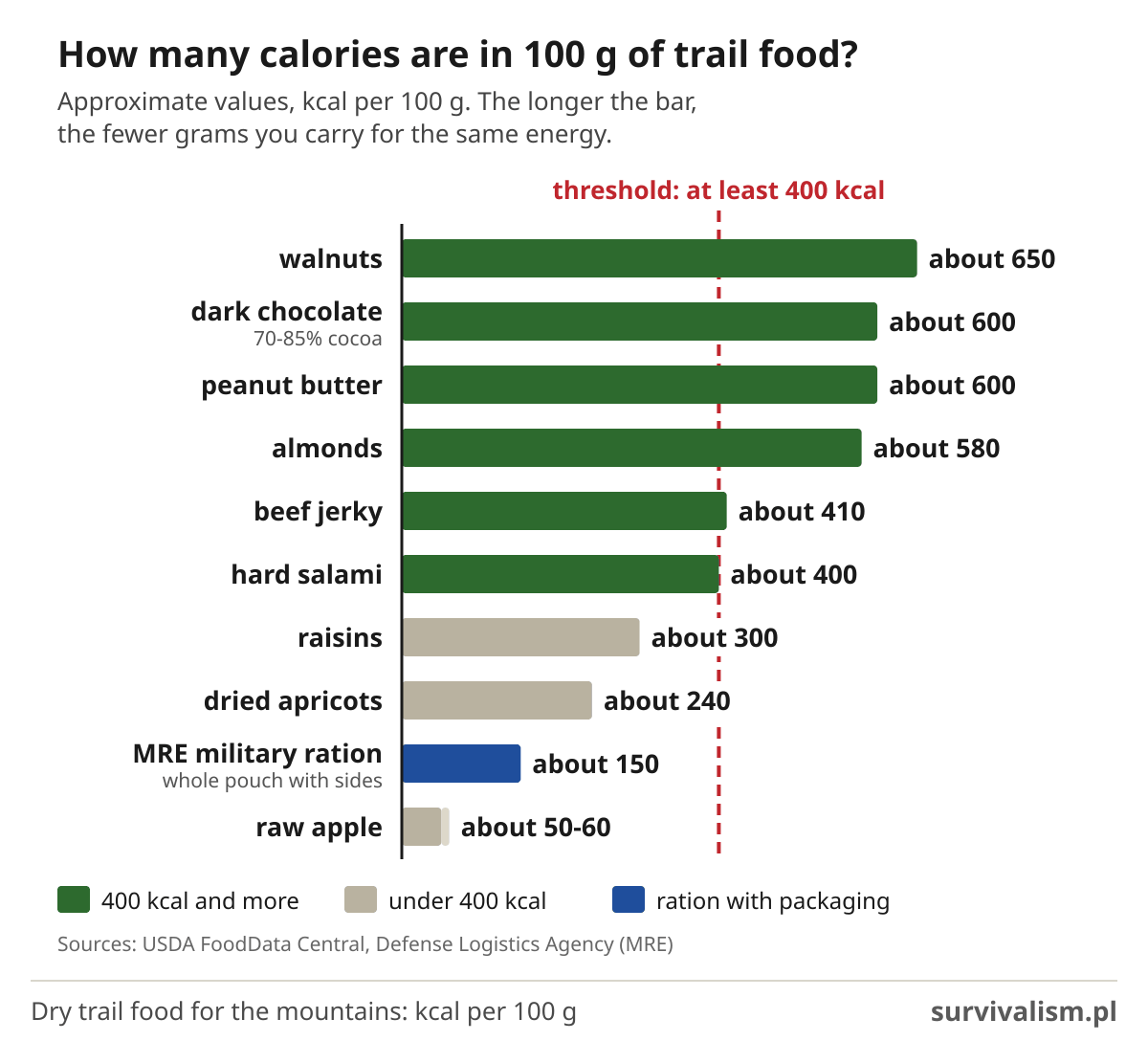
The numbers make this clear. 100 g of raw apple has about 50-60 kcal, while 100 g of walnuts has about 650 kcal1. To get as much energy from apples as from 100 g of walnuts, you would have to carry more than a kilogram of fruit. So take an apple for the taste and to freshen up, and get your energy from the foods below (values per 100 g):
- walnuts about 650 kcal, almonds about 580 kcal,
- dark chocolate (70-85% cocoa) about 600 kcal,
- peanut butter about 600 kcal,
- hard salami about 400 kcal and beef jerky about 410 kcal, and Polish kabanos, thin dry sausages, belong in the same group,
- raisins about 300 kcal, dried apricots about 240 kcal.
Look for food with at least 400 kcal per 100 g, and treat dried fruit as something to add to nuts, not something to replace them with. A handful of nuts, raisins and broken-up dark chocolate in one bag is the simplest high-calorie trail food you can put together at home in 5 minutes.
2. Food to take on trips with an overnight stay
On a trip lasting several days, a hot meal will lift your morale and give you much-needed energy. The simplest thing is to take a few links of sausage and roast them over a campfire. Campfire sausage is delicious, as probably every Pole knows 😉
Another “dish” I sometimes make is a single potato wrapped in aluminium foil. Before I wrap the potato in foil, I add a spoonful of butter, a piece of onion, a little salt and sometimes some meat, bacon for example. I throw this “bomb” straight into the embers, and 30-60 minutes later (judging this takes some practice) I have a delicious, steaming potato.
For various reasons, though, you can’t always light a campfire. Sometimes it is simply too wet or there is no suitable fuel. That is why it is worth thinking about taking a camping stove with you. These stoves come in a huge range of types and sizes - from very small, almost pocket-sized ones to huge, complicated sets that a restaurant kitchen wouldn’t be ashamed of.
Of course, on mountain trips and other hikes out in the open, you should try to find a setup that is both practical and efficient.
An important note here: make sure you have as much fuel as you need to heat up and cook the food you have brought. If the tin of beans says it needs heating for half an hour and you only have fuel for 15 minutes, you will have to make do with undercooked food or stay hungry. This applies especially to small camping burners, which carry a relatively small supply of fuel.
How much food should you take for a few days in the mountains?
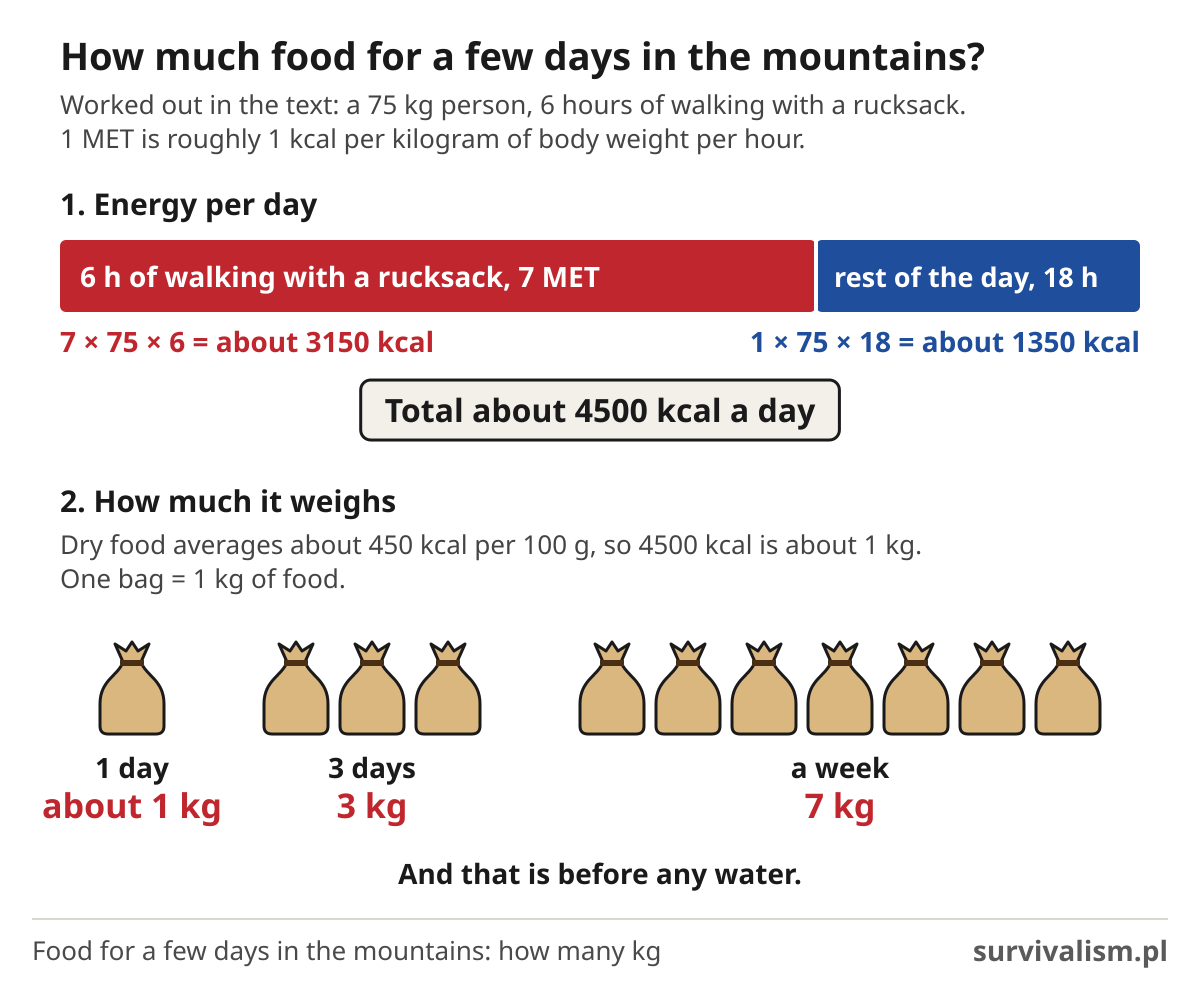
Food for a few days in the mountains gets packed for the whole trip at once, so it is worth working it out before you start stuffing your rucksack. Measurements in soldiers, both in barracks and on field exercises, gave an average energy use of about 4600 kcal a day for men and about 2850 kcal for women, and in the cold and high in the mountains it was usually even higher2. A soldier is not a hiker on a trail, but the order of magnitude is similar.
You can also work it out yourself. In the tables of energy expenditure, hiking with a rucksack is rated at 7 MET, and 1 MET is roughly 1 kcal for every kilogram of body weight per hour3. So a person weighing 75 kg will burn about 3150 kcal (7 × 75 × 6) over 6 hours of walking with a rucksack, and about 1350 kcal (1 × 75 × 18) over the remaining 18 hours of the day. That comes to about 4500 kcal in total. It is an approximation, because every body works a little differently, but it is good enough for planning.
Now turn the calories into kilograms. If you take dry food with an average of about 450 kcal per 100 g, 4500 kcal weighs about 1 kg. For three days that is 3 kg of food, and for a week 7 kg, and that is before any water. On a trip of several days every calorie per gram counts, which is why food that is mostly water, like fresh fruit or tinned meals, is better left for short outings or the first evening.
3. A hot meal without cooking
Cooking outdoors can be great fun, but we don’t always have the time for it. What do you do if you fancy a hot meal but don’t feel like cooking? Well, for thousands of years food supply has been one of the biggest logistical problems of every army. Even the best-armed soldier won’t be able to fight well if he is hungry. There is even a saying that an army marches on its stomach. Modern armies have ration packs refined almost to perfection (in the US Army they are known as MREs Amazon store, affiliate link, opens in a new tab, short for Meal, Ready-to-Eat). You can buy similar ready meals in a great many flavours and varieties.
There is a wide range of meals on the market, so you are sure to find something for yourself. Many packs also come with a special chemical heater (use it according to the instructions, outdoors or in a well-ventilated place, never inside a closed tent - it gets very hot during the reaction and gives off flammable hydrogen). You just pour in a little water, wait a moment, and you have a delicious, ready-to-eat hot soup, spaghetti or even coffee. These rations give you a full, high-calorie meal in one handy pouch, although on weight they lose out to dry trail food, as you will see below. They are fairly expensive, though, so it is worth considering whether our wallets can stretch to them, or whether we would rather prepare our food ourselves.
Military rations, or what is in an MRE?
A military ration is designed for hard work in the field, where the field kitchen can’t get to. The American MRE is a full meal in a single pouch, with a main course and sides, and one pouch provides an average of 1250 kcal (13% protein, 36% fat and 51% carbohydrates). There are 24 different menus, the main course can be eaten cold, and stored at 27 °C the ration stays fit to eat for 3 years4.
Weight is another matter. A case of 12 rations weighs about 10 kg, so one pouch is about 0.8 kg. That works out at about 150 kcal per 100 g, four times less than nuts. A military ration wins on convenience and shelf life, not on weight, so on a trip of several days it works better as one hot meal a day than as your whole menu.
Another ready-meal option is freeze-dried food. It is tasty, wholesome food that differs from ordinary food only in that almost all of its water has been removed (usually about 98%). The water is removed by freeze-drying: the food is frozen and the ice evaporates in a vacuum, so the food keeps its nutritional value and flavour.
It is not the cheapest option: one such meal costs us several dozen złoty (the Polish currency). But you can look at it from a different angle - a good freeze-dried meal costs about the same as a meal in a restaurant. So eating one is a bit like going out to a restaurant.
Another important factor is the air temperature you will be walking in. A few times, the cheese sandwiches I had lovingly made at home turned into a melted, greasy ball after a few hours in the heat. Believe me, eating a sandwich like that is no pleasure.
Melted cheese is the least of your worries. Between 5 and 60 °C bacteria in food multiply very fast (a single one can become two in 15 minutes), and meat, cheese and eggs make ideal food for them. That is why cooked food should not sit at room temperature for more than 2 hours5. A rucksack in the sun stays in that range all day. So in hot weather, eat sandwiches with cold meat, cheese or egg at your first stop, no later than about 2 hours after taking them out of the fridge, and leave the dry food for the rest of the day, meaning nuts, dried fruit, bars and dry sausage.
If you are travelling somewhere hot, taking fresh fruit with you may be a good idea. Fruit such as apples not only quenches your thirst, but also provides fructose and nutrients that help keep your energy up.
I mentioned sweet coffee earlier. I love coffee, but I think that for hiking, especially in the mountains, yerba mate is a better fit. I don’t know if it’s just my subjective impression, but after drinking yerba mate I get such a “kick” that I can walk for several hours - even over difficult terrain - without a rest. This drink is not popular everywhere, but these days you can buy anything online. Not everyone likes the taste of yerba mate either, so if you have never tried it, test its taste before your trip.
You can also take typical energy drinks, Red Bull for example.
Trail food for the mountains in winter
In winter, food in the mountains has different problems than in the heat. Energy use in the cold tends to be higher than in mild conditions2, and wading through snow takes its toll. In the tables, snowshoeing with vigorous effort is rated at 10 MET, against 7 MET for ordinary walking with a rucksack3. So take more calories than you would in summer for the same route.
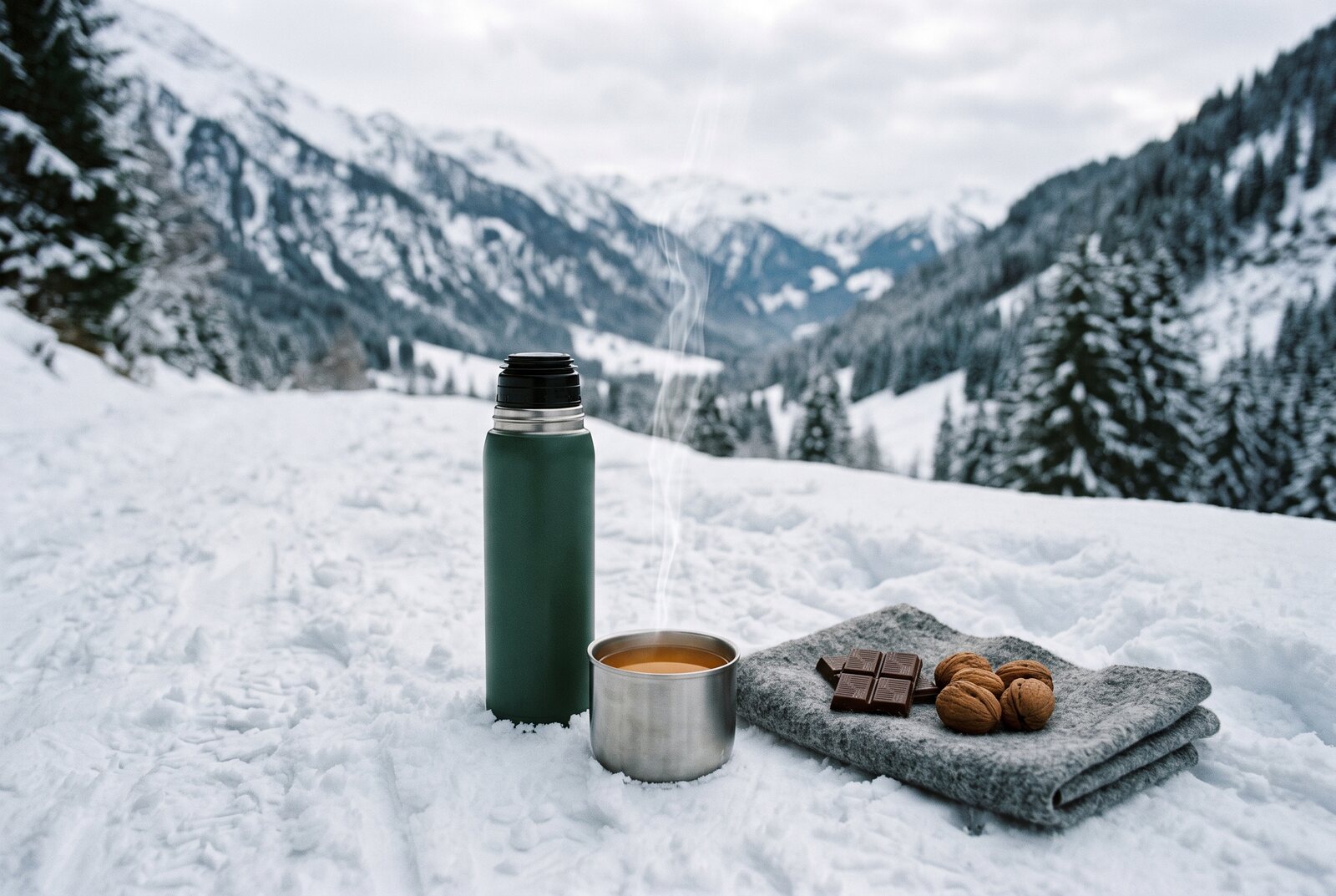
On top of that, bars and chocolate go so hard in the frost that they are difficult to bite, and the water in your bottle can freeze. Carry snacks in an inside pocket of your jacket, close to your body, and take a flask of hot, sweet tea in addition to your water. In winter, a cup of something hot at a stop does more for morale than many a dinner.
If you are heading into the mountains in winter, have a look at the article Mountains in winter, or how not to freeze on the trail, where I write about the rest of the preparations.
5. Staying properly hydrated
On every trip we plan for longer than a few hours, we MUST take water or another thirst-quenching drink with us. A person can survive surprisingly long without food, but only about 3 days without water (and even less in the heat and during hard physical effort). I wrote about this in the article “Symptoms of dehydration and how to prevent it”.
Water is the first thing to think about. Depending on the weather and on how hard you are walking and working, you should allow from 3 up to as much as 6 litres of water per person per day. That is quite a lot, and space in your rucksack is not unlimited. Even if you manage to fit a dozen or so litres of water in somewhere, carrying that weight is no pleasure. To get round this, you could think about taking a water filter (a typical hiking filter removes bacteria and protozoa but not viruses or chemicals, so be careful: collect water from flowing streams, not from puddles and not downstream of fields or roads, and remember to replace a worn-out cartridge).
Even on a gentle walk, your body’s need for fluids rises sharply. Drink regularly, whenever you feel thirsty, and don’t put off drinking until a stop that is hours away. A few sips at a time are enough, rather than pouring litres into yourself in advance (drinking far more than your thirst asks for can also be risky, because it can lead to a dangerous drop in the sodium level in your blood, known as hyponatraemia).
So drink enough not to feel thirsty. The rule seems simple, even trivial, and yet more than once I have caught myself not reaching for water for many hours. Suddenly it would turn out that I was very thirsty, which meant I was dehydrated. Dehydration in turn made me tire faster and feel generally uncomfortable. Sometimes you can’t sense that discomfort straight away, because it builds up gradually and unnoticed. Only after we have quenched our thirst and replaced the lost fluids do we realise we had been drinking too little. Suddenly our strength and energy come back.
Common questions about food in the mountains
What is dry trail food?
Food you can eat without cooking and without a fridge, and that copes well with a few hours or days in a rucksack. For example nuts, dark chocolate, bars, peanut butter, raisins and other dried fruit, dry sausage and beef jerky. The best dry trail food packs a lot of calories into little weight, about 400-650 kcal per 100 g1.
What food should you take for a day in the mountains?
Sandwiches for your first stop (in hot weather eat them no later than about 2 hours after taking them out of the fridge), dry trail food for the rest of the day and something sweet in an easy-to-reach pocket, so you can get calories without stopping. Add water, and how much depends on the weather and how hard you are working (I write more about this above, in the part on hydration). A stove is usually not worth carrying for a single day.
How many calories do you burn in the mountains?
With 6 hours of walking with a rucksack, a person weighing 75 kg will use about 4500 kcal a day, because 6 hours of walking is about 3150 kcal and the rest of the day about 1350 kcal3. A lighter person will burn less, a heavier one more, and without a rucksack the figure will be lower.
To sum up
I hope this article has taught you the key things about the best food for mountain trips. The most important thing here is staying properly hydrated. On short trips, a good choice is dry provisions, high-calorie sweets and sweet drinks containing caffeine.
On longer hikes you can take on preparing your own meals. If you decide to do so, plan every aspect of cooking and heating food in the open air carefully.
Good food has a positive effect on morale and lets you fully enjoy your trip. Even the most beautiful views won’t make you happy if you are hungry.
See you on the trail!
Sources
- U.S. Department of Agriculture, FoodData Central (SR Legacy), energy per 100 g: apple with skin (168202, 57 kcal) and without skin (171689, 48 kcal), walnuts (170187), almonds (170567), dark chocolate 70-85% (170273), peanut butter (172470), hard salami (172938), beef jerky (167536), raisins (168165), dried apricots (173941): fdc.nal.usda.gov
- Tharion W.J. et al., “Energy requirements of military personnel”, Appetite 2005, 44(1), pp. 47-65: pubmed.ncbi.nlm.nih.gov/15604033
- Herrmann S.D. et al., “2024 Adult Compendium of Physical Activities: A third update of the energy costs of human activities”, Journal of Sport and Health Science 2024, 13(1), pp. 6-12 (1 MET ≈ 1 kcal/kg/h), codes 17010 and 19192: pacompendium.com
- Defense Logistics Agency, “Meal, Ready-To-Eat (MRE)”: dla.mil
- World Health Organization, “Five keys to safer food manual”, 2006, pp. 9 and 18 and the glossary (“danger zone”), PDF: who.int
Leave a comment