
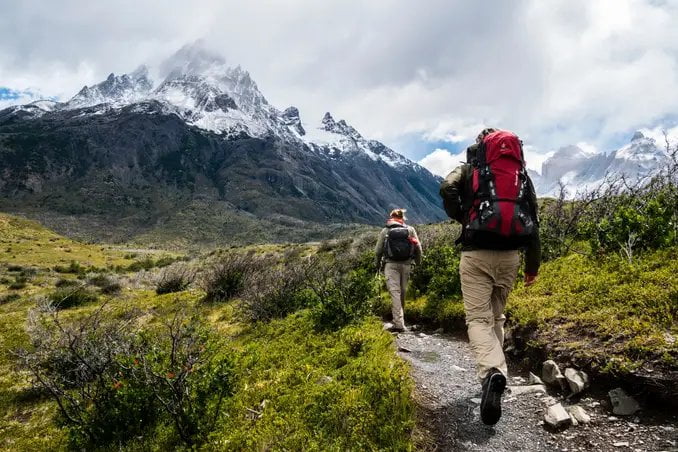
Many people give up on longer trips into the outdoors because they think they are not fit enough to walk those few, or a dozen or so, kilometres. They don’t know how to walk in the mountains, and the mountains often scare them. When I first got into the mountains, I was full of doubts too. Although I was neither particularly old nor in especially poor physical shape, I thought that mountain trips were only for people with iron fitness.
Nothing could be further from the truth.
I realised this on a trip to the Canadian Rockies with a friend from Edmonton. He brought his whole family along, including his six-year-old son and three-year-old daughter, and… they managed. True - we weren’t conquering snow-capped peaks, just moving from one tourist attraction to the next. But these were still the vast, wild Rocky Mountains. That was when I understood that mountain walking is a sport for everyone, whatever their age and fitness.
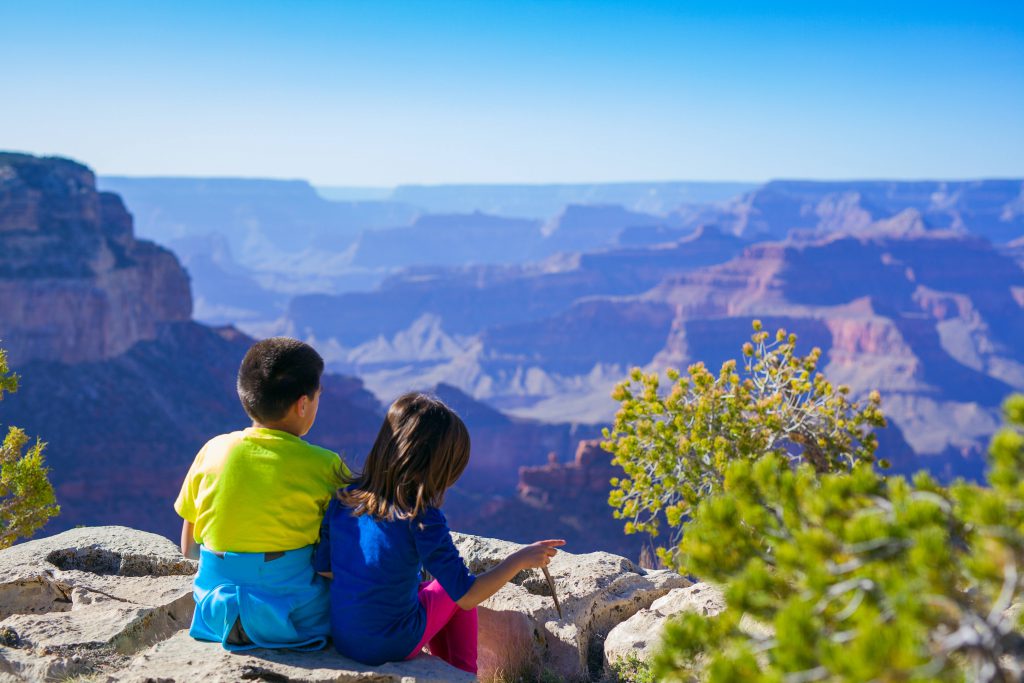
Since then I have walked hundreds, maybe even thousands, of kilometres outdoors, and along the way I have worked out a few simple rules that let me move efficiently and without excessive effort, so that a trip to the mountains becomes pure pleasure.
How do you prepare for a mountain trip?
Every trip starts at home, when we make the necessary preparations. That way the whole adventure goes smoothly and is a pleasure for us. Let’s begin.
Start with the route and how much time you need for it. You will find walking times on the signposts along the trails, and for your whole planned route mapa-turystyczna.pl, a Polish online hiking map, will work it out for you. It assumes that an average walker covers 4 km an hour, and adds 10 minutes for every 100 metres of ascent. Treat these times as a reference point, because a lot depends on fitness, experience and the weather1. After a few trips, compare your times with the ones on the map, and you will know whether your own pace, which I write about below, is faster or slower than average.
Take a map and compass too, even if you have navigation on your phone, and learn to use them before you really need them. Losing the trail is the easiest way to add a few kilometres to your day, and some frayed nerves on top. Practise walking on a compass bearing with them.
You don’t have to train for the mountains as if for a marathon either, but fitness does make a difference. Ordinary, regular walks do the most good, ideally with a rucksack, plus something for endurance, such as cycling or running, and a bit of strength training for your legs. This combination clearly improves how fast and how economically you walk with a load2.
Boots for the mountains
I hardly need to convince anyone how important well-fitting, comfortable and durable footwear is for a walker. Everyone has their own opinion on which boots are best for a mountain trip, but a few universal rules apply whatever your personal preferences. Here are a few things that - in my view - are key when choosing footwear. If you are looking for specific models, have a look at my guide to trekking boots.
Don’t set off on a long, hard route in boots you haven’t tried out. Test them on short walks first, and if you really must go in new boots, then - just in case - throw a light spare pair into your rucksack.
I once climbed a peak in New Zealand, about 2,400 m above sea level, in sandals. My new boots turned out to be so uncomfortable that after a few kilometres I could not take a step in them without wincing in pain. My salvation was 2 pairs of socks pulled over my sore feet, and sandals. I must have looked comical, but I made it to the top. (Don’t take this as a model, though - sandals don’t protect your ankles from sprains or your feet from cold and sharp stones, so for me it was an emergency fix, not a way to walk in the mountains.)
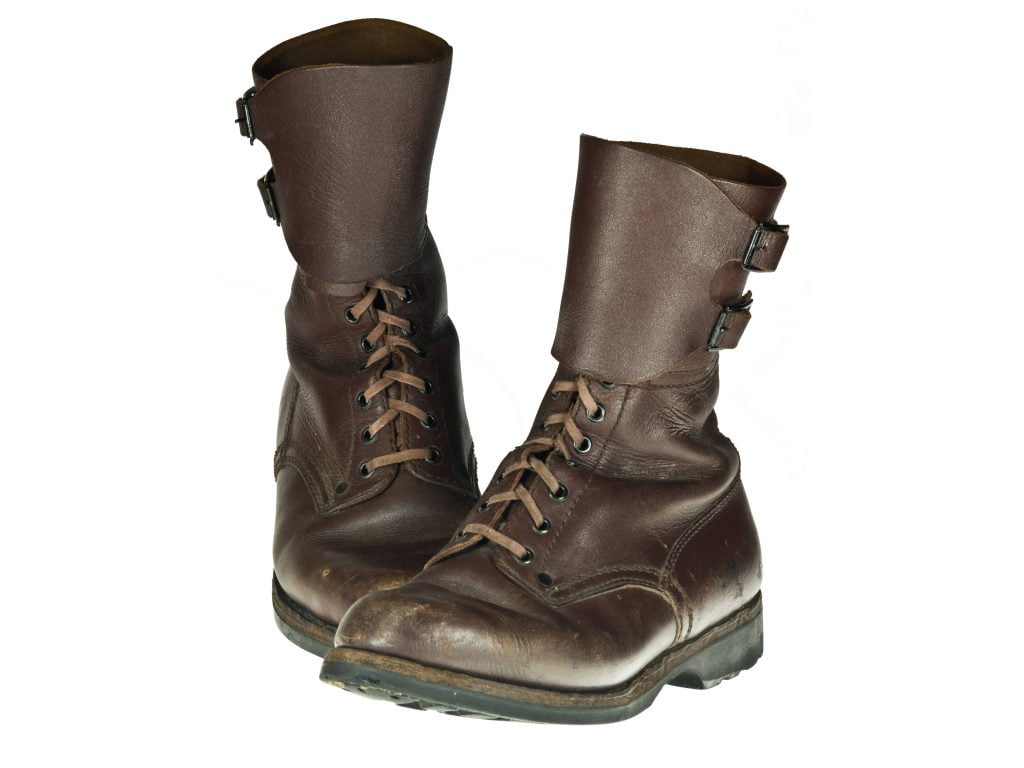
Don’t go overboard with “professional” footwear. Some people get the idea of taking boots on mountain trips that may well be solid and durable, but are also heavy and often simply too clunky. I would put most military boots in this category, and they are - somewhat paradoxically - not always the best choice for a mountain walker.
Remember that every extra gram your boot weighs gets multiplied by the number of steps you take. Let’s do a simple calculation. If we assume that the average step length for a man is about 0.8 metres and we have 10 km to walk, we need to take about 12,500 steps. Let’s also assume that one boot weighs 0.5 kg and that each step lifts it 10 cm. To keep things simple, let’s also assume that we are walking on flat ground. This is easy to work out from the energy formula:
E = m × g × h
which in our case gives:
E = 0.5 kg × 9.81 m/s2 × 1250 m
E = 6131.25 J
So it will cost us 6131 joules of energy. In the second case, let’s assume that we have exactly the same distance to cover, only this time our boot is a mere 100 g heavier.
E = 0.6 kg × 9.81 m/s2 × 1250 m
E = 7357.5 J
This time our energy expenditure comes to 7357 joules, which is 20% more! A measly 100 grams, yet the difference is noticeable, because it gets multiplied by well over ten thousand steps. (To be fair, I have to add that this is a simplified model: that 20% refers only to the energy needed to lift the boot, which comes to a mere 1.5 kcal or so in the first case and 1.8 kcal in the second, while the whole 10 km walk costs hundreds of kilocalories.)
Measurements do show, however, that the weight of your boots really matters: every extra 100 g on a boot raises the energy cost of walking with a rucksack by about 1% on average, and the same weight costs as much as 6.4 times more on your feet than in your rucksack3. In other words, a kilogram on your feet is several kilograms on your back.
A boot should have a hard, durable sole. Sometimes you can get away with trainers, and most of the time they will do the job, but in that case the route you are walking should be fairly even. If, however, you plan to leave the trail now and then, it is better to get something that will protect your feet well from protruding stones, rocks, sticks and other obstacles. The overly soft, flexible sole of a trainer means your foot will feel every bump, multiplied by the number of steps. Believe me, it is no fun at all.
If you wear leather boots, protect them well against moisture. There is a huge range of boot care products on the market, so you are sure to find something that suits you.
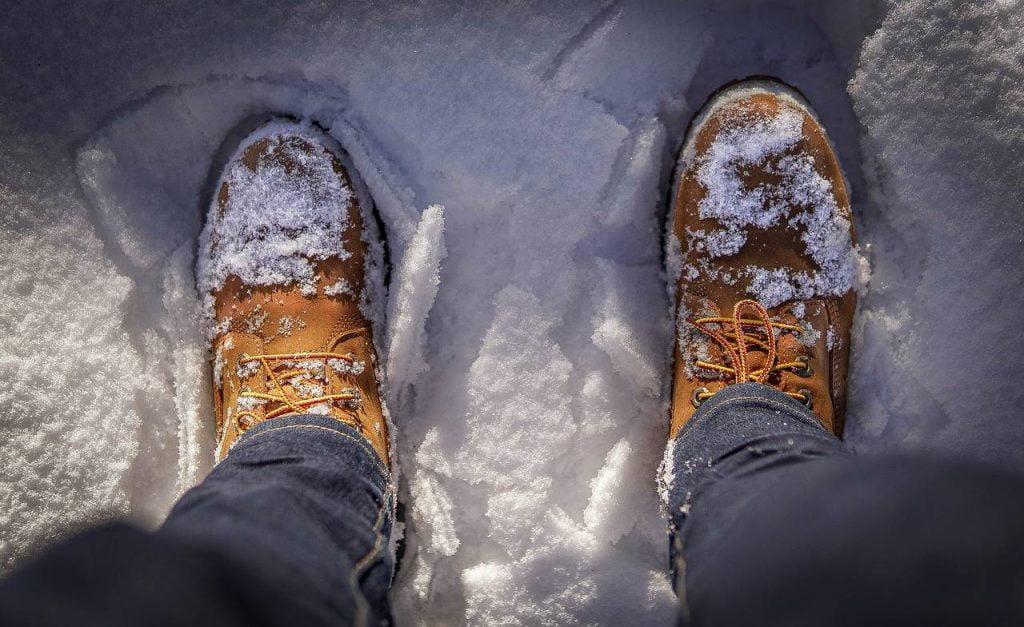
In winter especially, we should look after our boots properly so that they resist moisture, because melting snow soaks into untreated leather very quickly. If you don’t, not only can you ruin them for good, but once soaked they also become much heavier, which makes walking harder. Besides, marching with wet feet is no fun. I write separately about how to prepare for a winter outing from head to toe in the article Mountains in winter, or how not to freeze on the trail.
Boots are only half the battle, though, because with a rubbed heel even the lightest boots won’t help much. A lot depends on your socks. A combination of two pairs works well: one synthetic (e.g. acrylic or nylon) and one wool, because this combination produces fewer blisters4. Put them on carefully, without wrinkles, because on a longer route every crease turns into a sore spot. And when, on the move, you feel that something is starting to burn or rub, stop straight away and cover the spot with a thicker anti-chafing plaster before it turns into a blister5.
How to walk - a few tips
The right walking technique is key. You might think that something like walking is intuitive and that everyone has mastered it; after all, we have been walking since early childhood. Nothing could be further from the truth.
Good walking technique, meaning how you put your foot down, how you hold your body and how long your steps are, makes all the difference to how comfortably you move. Here are a few tips that will help you enjoy physical activity in the mountains and beyond.
- Lift your feet as little as is physically possible; when I am on the trail, I almost shuffle them along the ground. Almost, because I lift my foot only as high as is absolutely necessary to take a step. I have already shown how much the weight of a boot matters; the same goes for how high we lift our feet. Every unnecessary extra centimetre is multiplied by the number of steps, which in turn means more energy used and, in the end, more fatigue. (This applies to even ground, though. On stones, roots and ice, lift your foot as high as you need to and watch where you put it - a stumble on a mountain trail can end in a sprained ankle or a fall onto rocks.)
- Walk at “your own pace”. What is your own pace? It is a walking speed that lets you keep going for a long time without getting overly tired or stopping to catch your breath. The best way to measure your pace is not by the length or speed of your steps, but by how often and how deeply you breathe. If you are puffing like a steam engine and have to stop every few minutes to get your breath back, you are setting yourself too ambitious a pace.
We often think that walking faster gets us there sooner, but that is not always true. This matters most when going uphill - when I started out, I often caught myself not changing my pace at all on the way up, ambitiously believing that I would “manage”. Every time, though, I had to give in and stop to catch my breath. I have never checked it, but I am almost certain that by walking more slowly, but steadily and without stops, we will get there faster and more surely than by rushing and stopping every few minutes.
Sometimes (especially in winter, when I was wading through snowdrifts) I found myself almost shuffling on the spot, taking tiny steps of a few dozen centimetres. But I could keep that pace up for at least several dozen minutes, and thanks to that I overtook almost everyone I met on the trail. Of course, when you are travelling in a group, the pace should match its slowest member. - Put your foot down loosely, without tensing your muscles unnecessarily. Without overdoing it, of course: the point is not to “drag yourself along”, but - once again - not to waste precious energy. Every bit of unnecessary muscle tension is an equally unnecessary loss of energy, and it grows with every step. So put your foot down loosely but firmly, without tensing your whole leg, only the parts of it needed to take the step. I know this may seem a bit hard to master, but in time you will be able to control your body so well that you will apply all the tips above more or less automatically.
- On the flat, walk with a relaxed, natural stride and don’t take two-metre leaps. Going uphill, shorten your step - the steeper it is, the shorter (small steps also worked for me in snowdrifts, as I wrote above), and on the way down take short steps on slightly bent knees.
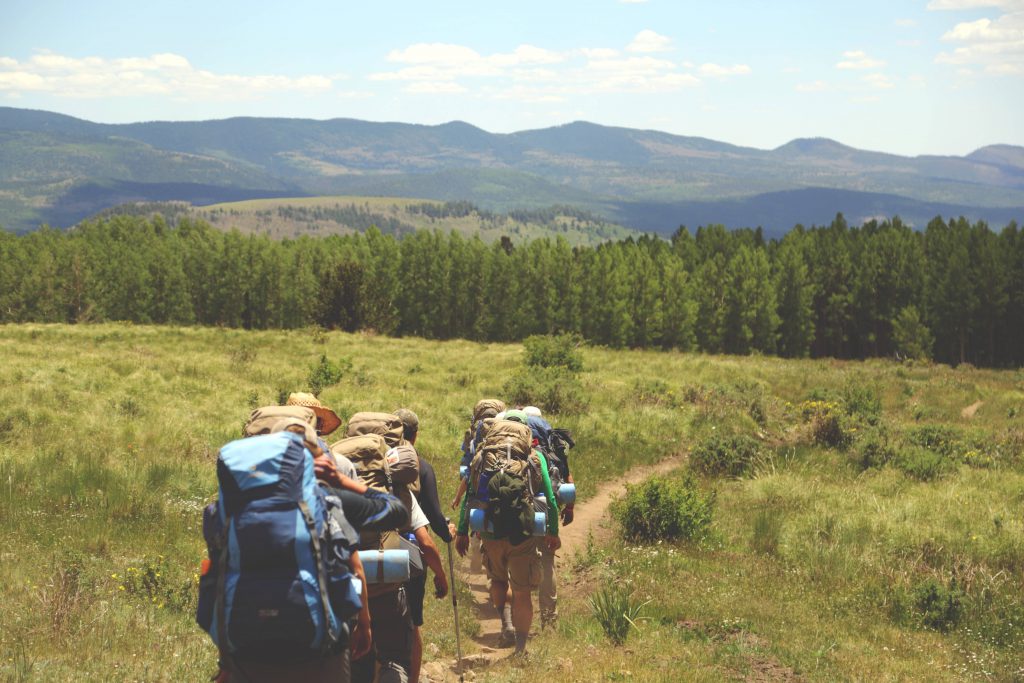
Getting your walking technique right can take quite a while, but believe me, it pays off. When I started out in the mountains, I was very often so tired after a trip, or even during it, that I thought I would never make it home. It was a combination of poor fitness and setting the bar too high. Now, when I hit the trail, I sometimes feel as if I am not walking but floating above the ground. My legs know what to do by themselves.
What is a typical walking pace in the mountains?
Your own pace is best judged by your breathing, but when you plan a route, a concrete number comes in handy too. How many kilometres an hour does a walker cover?
On a level floor and without a rucksack, healthy adults aged 20-79 walk at a comfortable pace with an average speed of about 1.27 to 1.46 metres per second, depending on age and sex11. Multiply that by 3.6 and you get about 4.6 to 5.3 km an hour. The catch is that this was measured over a few metres of floor, not on a trail.
Out in the terrain the pace looks different. The US Army manual on foot marches gives average rates of march for soldiers, not hikers, that is 4 km an hour on roads by day and only 2.4 km an hour cross-country, away from roads, and at night 3.2 and 1.6 km respectively12. The same manual adds that moving too fast, even in ideal conditions, can tire you out early, force frequent rest stops and end up costing you time.
In the mountains, the climbing comes on top of the kilometres. In 1892 the Scottish mountaineer William Naismith proposed a simple formula for people in fair condition on easy outings, known today as Naismith’s rule. Allow an hour for every 3 miles on the map (about 4.8 km) and an extra hour for every 2000 feet of ascent (about 610 m)13. He gave it when describing one of his own outings, on which he covered 10 miles with 6300 feet of ascent (about 16 km and 1920 m of climbing) in six and a half hours, short halts included. The formula gives 3 hours 20 minutes for the distance (10 divided by 3) and about 3 hours 10 minutes for the ascent (6300 divided by 2000), which also comes to about 6.5 hours.
The mapa-turystyczna.pl map I mentioned at the start assumes a slower pace on the flat, 4 km an hour, but counts the ascent almost the same way, because 10 minutes for every 100 m is an hour for 600 m1. On a 10 km route with 600 m of ascent, Naismith’s rule gives about 3 hours (10 km divided by 4.8 km/h is about 2 hours, plus an hour for the ascent), and the map gives 3.5 hours (10 km divided by 4 km/h is 2.5 hours, plus 6 times 10 minutes). Neither formula adds any time for the descent. In difficult terrain, for example in the Tatras, the map’s times are corrected by hand, usually based on the signposts, and those tend to be generous, especially on the climbs.
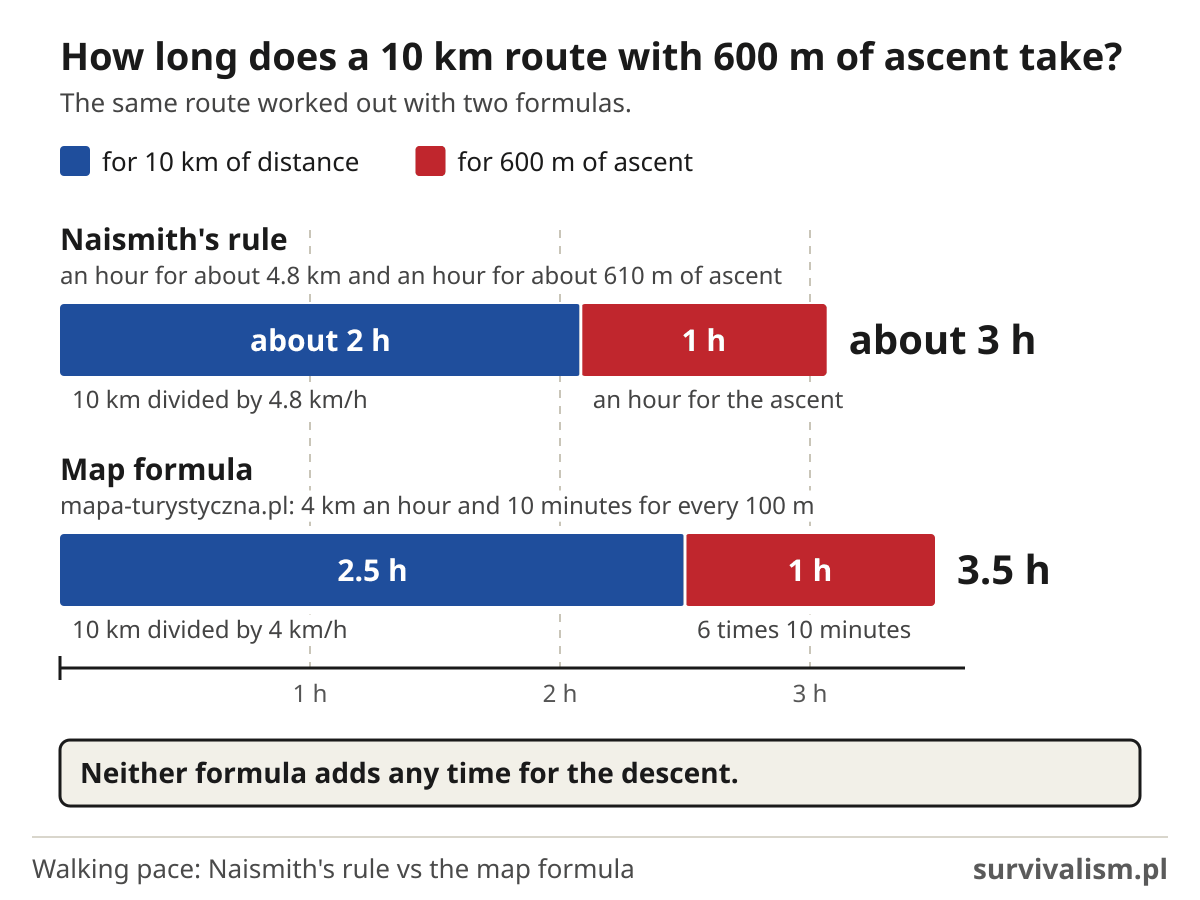
Both formulas give an average, and your pace is your pace. If after a few trips it turns out that you need, say, a quarter more time than the map shows, multiply its times by 1.25 and you have your own conversion factor. A 4-hour route will then take you 5.
Uphill: the rest step
On a gentle climb, what I wrote above is enough: a shorter step and a pace matched to your breathing. When it gets really steep, the so-called rest step comes in handy. After each step, pause for a split second and shift all your weight onto your back leg, with the knee straight, so that your bones carry the weight rather than your muscles. Meanwhile your front leg is relaxed and resting. Match your breathing to your steps: the steeper it gets, the more breaths per step5.
Put your foot down flat, with the whole sole, and wherever you can, look for a level spot for it: a stone, a step, the uphill side of a tuft of grass. This protects your ankle from sprains and your Achilles tendon from strain. You can also tackle a very steep slope by zigzagging instead of going straight up.
I wrote earlier that I had never checked whether a slow, steady walk is faster than rushing and stopping. It turns out that I am not the only one who thinks so: a slow, even step with a short pause is more efficient than bursts of speed, which wear you out quickly and need longer rests afterwards5.
Downhill: spare your knees
Going down costs less energy than going up, but it is much harder on the body. With every step down, your whole body weight lands on your feet and legs, and that can end in blisters, bruised toenails, and sore knees and back5. So before a descent, lace your boots tighter so that your foot doesn’t slide forward in them, and trim your toenails while you are still at home.
Go down at a moderate pace, as I wrote above: with short steps and on slightly bent knees that cushion every step. Keep your back straight and your weight over your feet, and put your whole sole down. On a steep descent, poles help a lot - more about them in a moment.
Trekking poles: what they do and what they don’t
Speaking of knees, it is time for trekking poles. They always come up when people ask how to walk in the mountains without getting tired, and rightly so, though not always for the reason people usually think.
Poles are most useful on the way down. In measurements of walking down a steep, 25-degree slope with poles, the forces acting on the knee joint were 12-25% lower6. Your arms take over part of the weight, and your body leans slightly forward, which takes even more load off your knees. On top of that, on descents and on slippery ground, poles give you an extra point of support5.
Uphill, it is a different story. In measurements of walking uphill with a heavy rucksack, poles did not reduce energy use, and with them the heart even beat a little faster, because the arms took over part of the work. On the other hand, the legs worked less, the stride got longer and the walk itself felt easier7. So poles don’t give you free energy; they shift part of the effort from your legs to your arms, and spare your knees along the way.
Rest stops and eating on the move
I wrote above that it is better to walk more slowly and steadily than to stop every few minutes to catch your breath, and indeed, at a moderate pace you need fewer stops5. That doesn’t mean, though, that you have to walk all day without a break.
A sensible rhythm looks like this. After about half an hour of walking, make your first short stop: adjust your laces and rucksack, and take off or add a layer of clothing. After that, if you are already fit, short breaks every hour or hour and a half, for a minute or two, are enough: have a drink, eat something small, lean your rucksack against a tree or a rock to take the weight off your shoulders, and set off again before your muscles stiffen. On a longer stop, put on something warmer straight away, because it is easier to stay warm than to warm up again later.
Eat little and often instead of one big meal at the summit. During exercise lasting longer than an hour, your body needs a top-up of carbohydrates; 30-60 g an hour is usually enough8. In practice, that means something small at every short stop: a snack bar, a handful of dried fruit or a sandwich.
Hydration and food
I have already written about this in the article on food in the mountains, so here I will just repeat the most important points: drink regularly and take more water than you think you need (but drink when you are thirsty, rather than forcing it down beyond your thirst - during hard exercise, too much water can lead to hyponatraemia9, a life-threatening drop in the level of sodium in the blood), and don’t be afraid of high-calorie food. On a full day’s mountain route, you will usually burn off the extra calories, because your body needs far more energy on a mountain trip than it does sitting in front of the telly or even walking on flat ground.
Roughly how much should you drink? To start with, assume 0.4-0.8 litres for every hour of walking8 and see how that works for you. For a six-hour route that comes to 2.4 to 4.8 litres, so if there is no mountain hut along the way, you can see straight away how much water you need to take. You can read how to tell when your body is still short of water in the article on the symptoms of dehydration.
You can also give yourself a boost with energy drinks. Good alternatives are sweet coffee or yerba mate.
Space in your rucksack
I have already mentioned how much every gram of extra weight you carry with you or on you matters. So think hard: do you really need to take 5 tins of food, a propane-butane gas canister and a laptop? Or perhaps you carry things in your rucksack that you have “always” taken but never actually used? Maybe it would be a good idea to find lighter replacements for them, or even to give them up altogether?
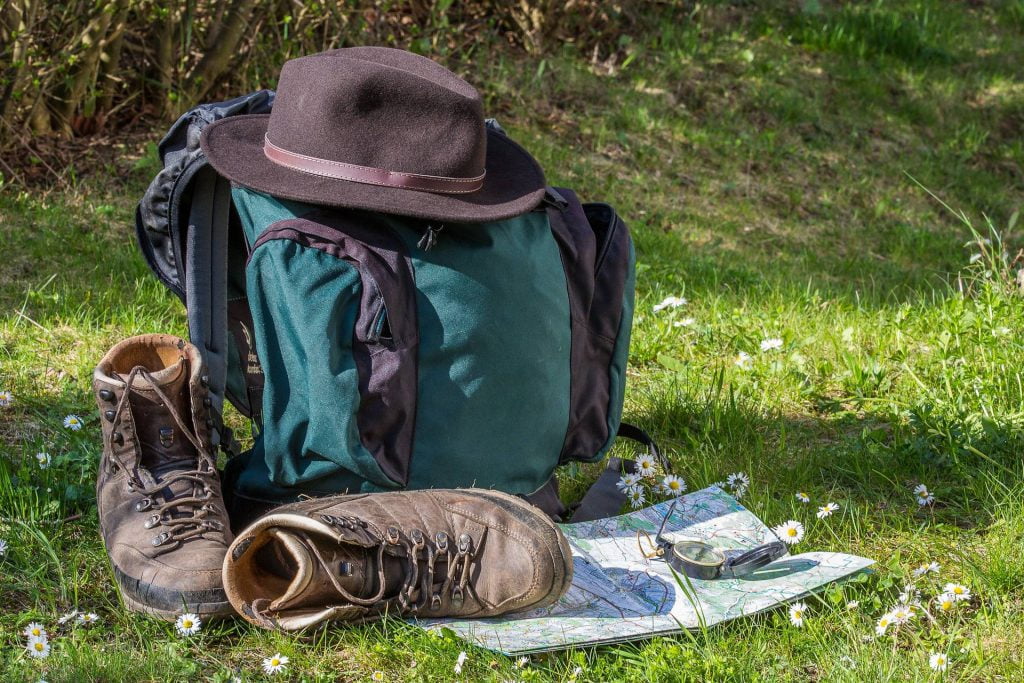
Don’t worry - with every trip you will have a much better idea of what you need; practice makes perfect.
It is not only how much you carry that counts, but also how you carry it, which brings us to the balance I mentioned. Pack the heaviest things as close to your back as possible, because weight kept close to your body’s centre of gravity costs the least energy. Always fasten and tighten the hip belt if your rucksack has one: it takes pressure off your shoulders and is simply more comfortable2. I also write about how to choose what goes into your rucksack, so that you don’t carry anything unnecessary, in the article on how to pack a bug-out bag.
Common questions about walking in the mountains
Which mountain walking technique is the least tiring?
The one that doesn’t waste energy on anything unnecessary. On even ground, keep your feet low, put them down loosely and walk at a pace that doesn’t leave you puffing. Going uphill, shorten your step, and on steep ground switch to the rest step. Go down with short steps on slightly bent knees, and on a steep descent let your poles help you. You will find the details above.
How long does it take to climb 1000 metres?
For the height gain alone, the two rules described above give almost the same answer. By Naismith’s rule, 1000 m takes about 1 hour 40 minutes (1000 divided by 610 m an hour)13, and by the map’s formula exactly 1 hour 40 minutes (10 times 10 minutes)1. Add the time for the kilometres on the map, and if you already have your own conversion factor, multiply the result by it.
How many kilometres a day can a walker cover?
The US Army manual on foot marches gives 20 to 32 km a day for soldiers12. In the mountains, though, it is not just the distance that counts but also the height gain, so it is better to plan your day in hours rather than kilometres. With 6 hours of walking at the map’s pace (4 km an hour and 10 minutes for every 100 m of ascent)1, a route with 600 m of ascent can be about 20 km long, because 20 km at 4 km/h is 5 hours, plus an hour for the ascent.
Time to get off your backside
I hope the tips I have shared will help you plan your trips better and motivate you to get off your backside and out of the house. It goes without saying that the physical fitness you will inevitably improve through frequent trips outdoors is hugely important for your physical and mental health, so it is well worth the effort.
What is more, contact with nature also has a very positive effect on the human mind, and physical exercise releases endorphins and endocannabinoids10, natural “drugs” produced by our own bodies that lift your mood and dull the sensation of pain.
Perhaps that is where the feeling of floating I mentioned earlier comes from? For me, this state of mild euphoria kicks in after about half an hour of walking; the first half hour is always harder, and then, once I settle into the right pace, my legs carry me along by themselves.
Head for the mountains and see for yourself.
Sources
- mapa-turystyczna.pl, „Na jakiej podstawie liczone są czasy przejść?” (How are walking times calculated?), FAQ: mapa-turystyczna.pl/faq (in Polish)
- Knapik J.J., Reynolds K.L., Harman E., “Soldier load carriage: historical, physiological, biomechanical, and medical aspects”, Military Medicine 2004, 169(1), pp. 45-56: pubmed.ncbi.nlm.nih.gov/14964502
- Legg S.J., Mahanty A., “Energy cost of backpacking in heavy boots”, Ergonomics 1986, 29(3), pp. 433-438: pubmed.ncbi.nlm.nih.gov/3698970
- Knapik J., Harman E., Reynolds K., “Load carriage using packs: a review of physiological, biomechanical and medical aspects”, Applied Ergonomics 1996, 27(3), pp. 207-216: pubmed.ncbi.nlm.nih.gov/15677062
- “Military Mountaineering”, FM 3-97.61, Department of the Army, 2002, chapters 2 (blisters, feet) and 8 (mountain walking), PDF: archive.org
- Schwameder H. et al., “Knee joint forces during downhill walking with hiking poles”, Journal of Sports Sciences 1999, 17(12), pp. 969-978: pubmed.ncbi.nlm.nih.gov/10622357
- Knight C.A., Caldwell G.E., “Muscular and metabolic costs of uphill backpacking: are hiking poles beneficial?”, Medicine & Science in Sports & Exercise 2000, 32(12), pp. 2093-2101: pubmed.ncbi.nlm.nih.gov/11128857
- Better Health Channel (Department of Health, State of Victoria, Australia), “Sporting performance and food”: betterhealth.vic.gov.au
- Hew-Butler T. et al., “Statement of the Third International Exercise-Associated Hyponatremia Consensus Development Conference, Carlsbad, California, 2015”, Clinical Journal of Sport Medicine 2015, 25(4), pp. 303-320: pubmed.ncbi.nlm.nih.gov/26102445
- Fuss J. et al., “A runner’s high depends on cannabinoid receptors in mice”, PNAS 2015, 112(42), pp. 13105-13108: pnas.org
- Bohannon R.W., “Comfortable and maximum walking speed of adults aged 20-79 years: reference values and determinants”, Age and Ageing 1997, 26(1), pp. 15-19: pubmed.ncbi.nlm.nih.gov/9143432
- “Foot Marches”, ATP 3-21.18, Department of the Army, 2017, figure 1-2 and paragraph 1-96, PDF: archive.org
- Naismith W.W., “Cruach Ardran, Stobinian, and Ben More”, Scottish Mountaineering Club Journal, vol. II (1892), pp. 135-136: archive.org
Leave a comment