
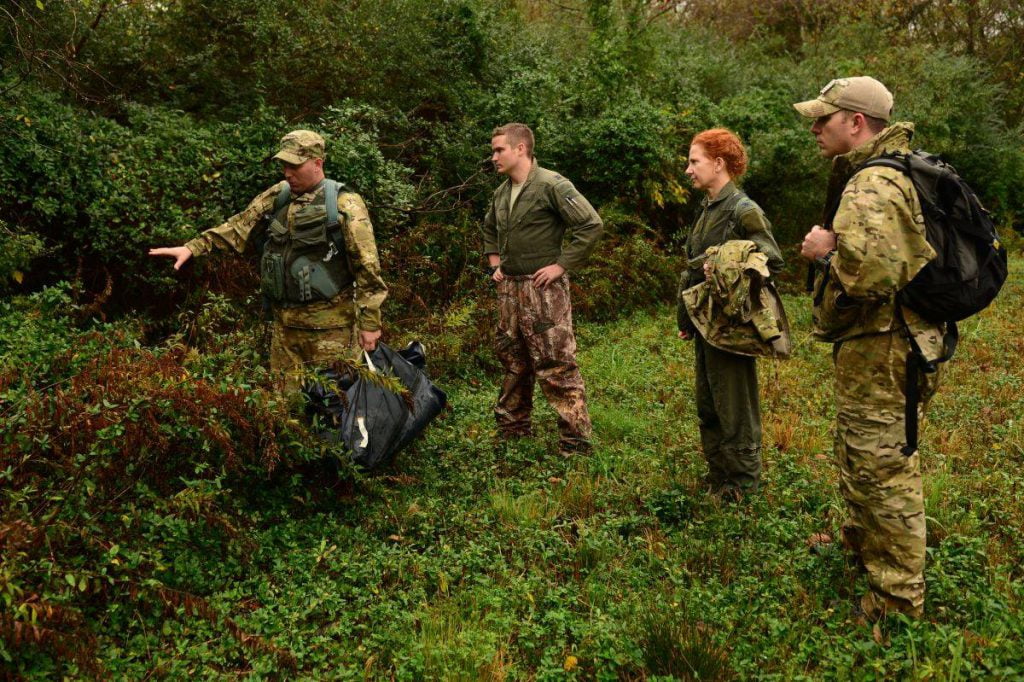
By way of introduction
Before we get down to business, I would like to explain my approach to the Polish spelling of the terms discussed here.
I have come across many ways of spelling and inflecting these terms in Polish: survivalism, surwiwalizm, surwiwalista, prepper, preppersi, prepperzy, surwiwalowcy and so on. In this article, and across the whole site, I intend to stick to the following convention: I treat the words preppers, prepper and survivalist as meaning the same thing. The Polish word surwiwalowiec, which I render in English as wilderness survivalist, has a slightly different shade of meaning from those above, so I will try to keep these ideas reasonably clearly apart.
I accept both survivalism and the Polonised survivalizm as correct. If anyone has objections to this approach, please leave your opinion in a comment under the article.
I have approached the subject of this article mainly from the perspective of Western civilisation, and more specifically from the American one, because it was in the States that prepper organisations began, and that is where they are still growing fastest today.
Let’s get to it. First, it would be good to answer the question…
What is a prepper / survivalist?
Survivalism is a movement of people (known as survivalists or preppers) who actively prepare for crisis situations, including possible disruptions to the social or political order, on anything from a local to an international scale.
The main emphasis here is on self-reliance, stockpiling supplies and gaining survival knowledge and skills. Preppers often train in self-defence and first aid, learn to be self-sufficient, and also stockpile food and water.
A prepper tries to be as self-sufficient as possible, so as to depend as little as possible on outside factors. Some survivalists build shelters or seek out natural ones (caves, abandoned mines and so on), which they adapt and convert into shelters and supply stores (a word of warning: in disused mines the roof can cave in, and gases can displace the oxygen without any visible sign1, so this is an idea to read about rather than copy).
Prepper or wilderness survivalist?
In the introduction I promised to keep these two words apart, so I will explain straight away how I understand them.
A prepper (or survivalist) prepares for a crisis where they live. They stock up on water and food, have a plan in case the family gets separated, and keep a packed bug-out bag in the wardrobe. They think about what they will do if, for a few days, there is no electricity, no water in the taps or no cash in their wallet.
A wilderness survivalist learns to cope outdoors: to light a fire, sleep under the open sky, and find water and the way home. They are in their element on a night in the woods, a cross-country walk on a compass bearing or a winter trip into the mountains, not in the pantry.
In practice the line is blurred. A good prepper should be able to survive a night away from home, and a wilderness survivalist who comes back from the woods to an empty fridge is not fully prepared either 😉 On this blog you will find both. If what interests you most is where to start, skip to the Where to start? section at the end of the article.
A bit of history, or where preppers came from
The modern survivalist movement began in the USA and Great Britain. Its roots lie partly in popular culture, mainly in literature describing real or fictional disasters, including the collapse of the world economy and economic crisis.
The biggest contribution to spreading awareness of the need to be prepared came from the Cold War, when there was a real threat of a nuclear conflict breaking out on a global scale.
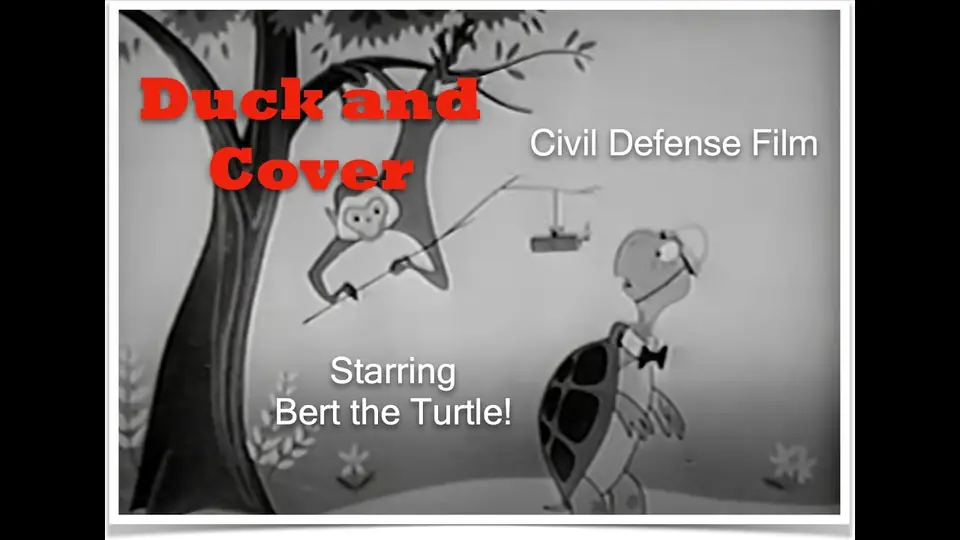
Civil defence programmes in the USA during the Cold War promoted public fallout shelters, private nuclear bunkers and training for children, such as the classic film Duck and Cover.
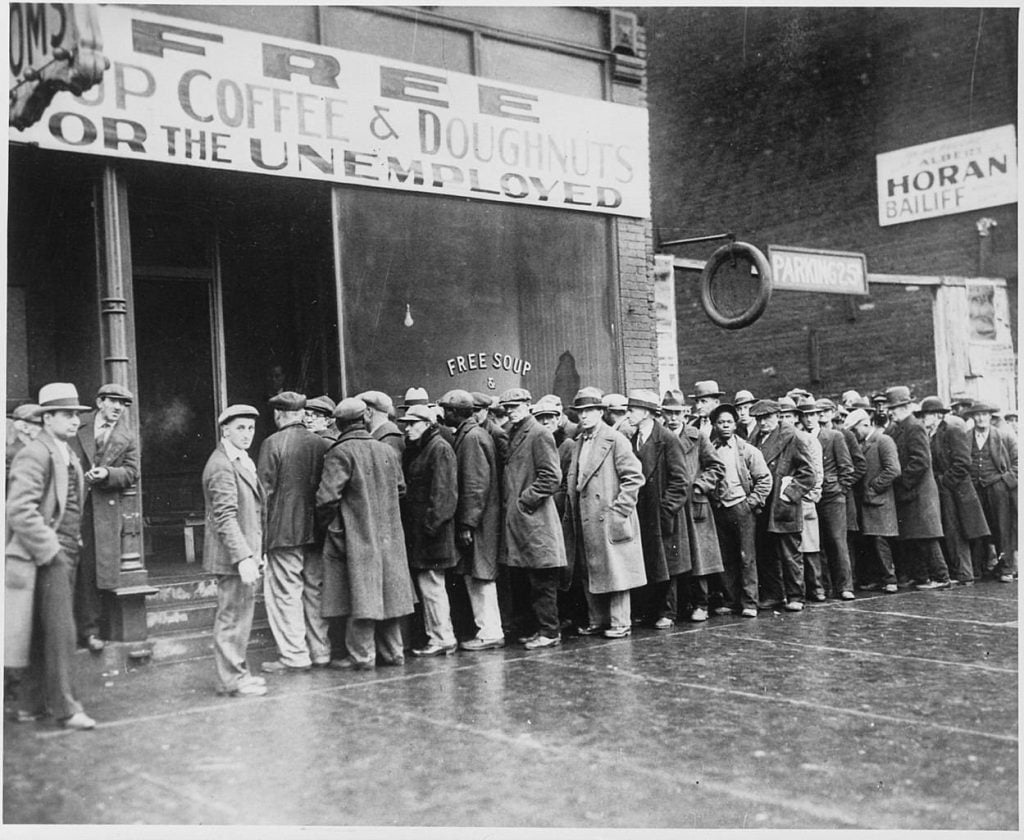
The Great Depression, which hit the USA in 1929, was held up by the forerunners of preppers as an example of how disaster can strike at any moment and how you need to be ready for it.
How the prepper movement developed
In the 1970s Howard Ruff warned of socio-economic collapse in his 1974 book “Famine and Survival in America”. Ruff’s book was published during a period of rampant inflation following the 1973 oil crisis. It contains most of the elements present in the modern prepper movement, including advice on storing food.
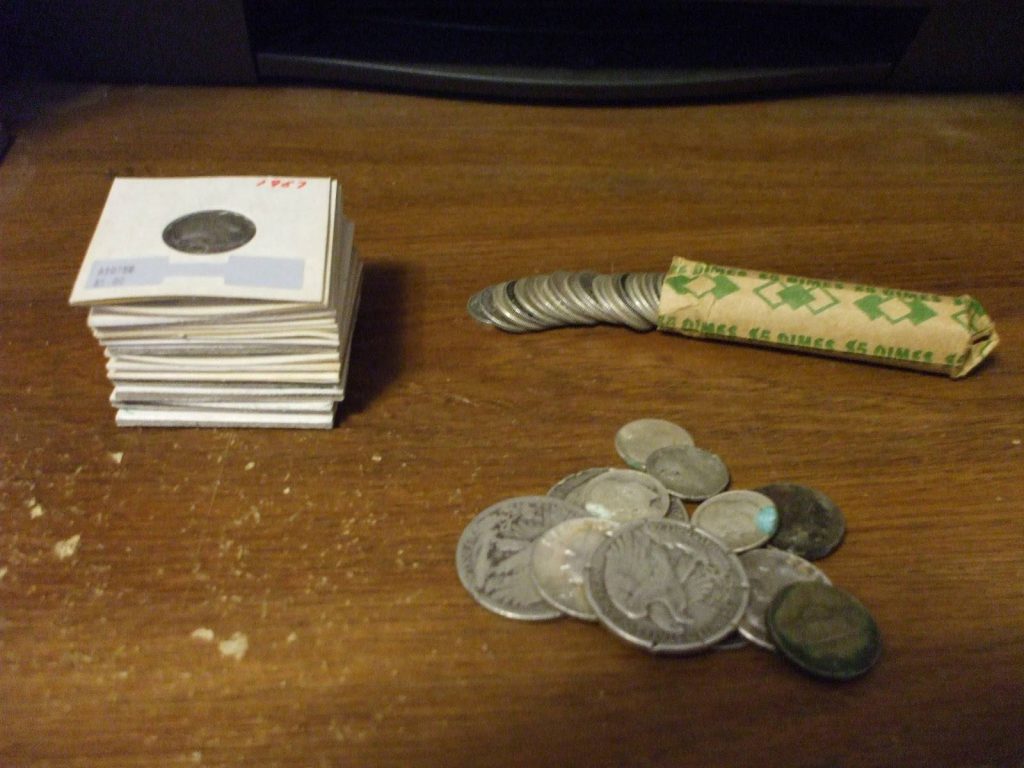
In his book Howard Ruff also argued that precious metals such as gold and silver have an intrinsic value that makes them more useful than paper money (so-called fiat money) in the event of a socio-economic collapse. Ruff later published milder variations on the same themes, such as “How to Prosper During the Coming Bad Years”, which became a bestseller in 1979.
The Cold War and the threat of nuclear conflict
Interest in the survivalist movement peaked in the early 1980s, thanks to Howard Ruff’s book mentioned earlier and to “Life After Doomsday” by Bruce D. Clayton, published in 1980. Clayton’s book came out just as the arms race between the United States and the Soviet Union started up again.
This unfavourable turn in relations between the two nuclear powers shifted the emphasis in survivalists’ thinking. Until then they had been preparing to survive economic collapse, famine and energy shortages. Those were the main worries of preppers in the 1970s. In the 1980s they were already getting ready for a potential nuclear war.
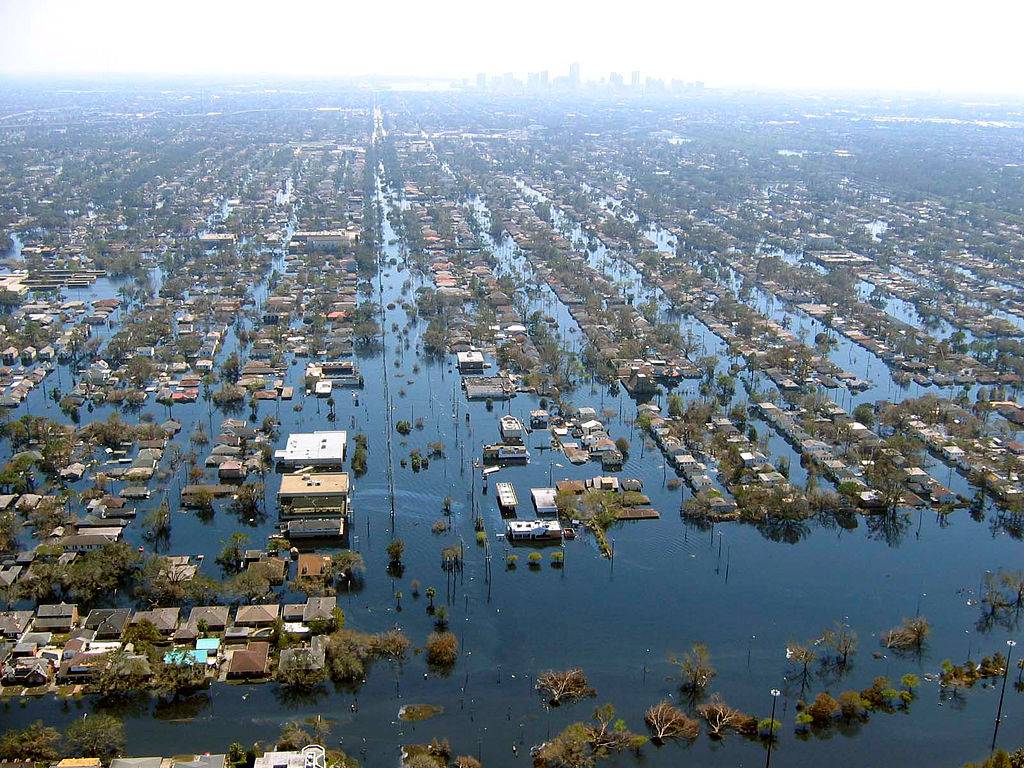
The next wave of interest in survivalism began after the attacks of 11 September 2001 and the bombings that followed in Bali, Madrid and London. Fear of war, bird flu, energy shortages, ecological disasters and global climate change, combined with economic uncertainty and humanity’s visible helplessness after the 2004 Indian Ocean tsunami and Hurricane Katrina, boosted interest in survival topics.
After the Great Recession of 2008 many books came out with advice on surviving all kinds of potential disasters - from energy shortages and breakdowns to nuclear and biological terrorism. Besides books, blogs and internet forums became popular ways of spreading survival information, and today so are YouTube channels and social media groups. The internet has become a kind of forum where preppers all over the world swap views and ideas.
The latest wave so far came with the COVID-19 pandemic and the war in Ukraine, which escalated into full-scale war in 2022. This time even people who would never call themselves preppers started thinking about supplies.
An outline of views and possible scenarios
Followers of survivalism approach the subject in different ways, depending on their circumstances, their way of thinking and their personal predictions about the future.
Their main types are described below, although most preppers (if not all of them) fit more than one category:
Focused on general safety
People in this group of preppers learn the principles and techniques needed to survive any life-threatening situation. They prepare for disasters that can cause physical injury and call for an immediate response or defence against threats. This group focuses on preparing to counter the effects of disasters and on working to prevent and limit the damage they cause.
Survival in wild and hostile terrain
This group puts the emphasis on the ability to stay alive for an indefinite time in life-threatening conditions in the wild.
This is mainly about plane crashes, accidents at sea and getting lost in the forest. They put strong emphasis on overcoming the dangers of surviving thirst, hunger, a hostile climate, difficult terrain, illness or injury, stress and fear.
Self-defence
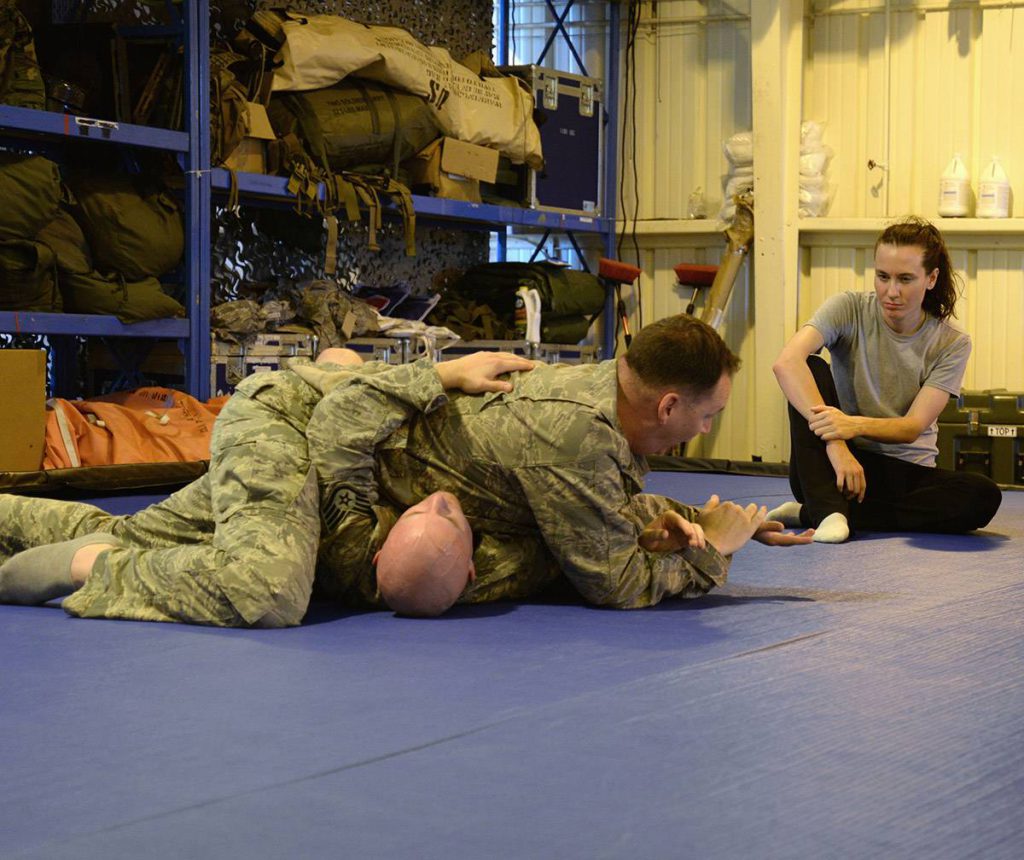
This group focuses on surviving sudden acts of violence, including personal protection and its legal consequences. Awareness of potential threats and practising various martial arts matter a lot to them. They also train in tactics and in using whatever means of defence are available. This group of preppers is often oriented towards using firearms to defend themselves against attackers or intruders breaking into their homes.
Natural disasters (short and violent)
This group is made up of people who live in areas prone to tornadoes, hurricanes, floods, fires, earthquakes or heavy snowfall and want to be ready for possible emergencies. They often build safe shelters that can withstand the forces of nature. They assume that society and civilisation as a whole will survive, so they store food, water, medicine and enough supplies to last only a relatively short time, until contact with the rest of the world and order are restored.
Natural disaster (long-term)
This group focuses on the long-term consequences of weather events lasting 2-10 years, which could, among other things, destroy crops. Preppers in this group may lay in as much as several tonnes of food for each member of the family and store other supplies that could last them for years.
An open-ended, multi-generational natural disaster
This group believes the end of civilisation as we know it is likely, as a result of factors such as global warming, global cooling, environmental degradation, or the warming or cooling of the Gulf Stream. Some also foresee a period of hard, severe winters caused by a supervolcano eruption, an asteroid strike or a nuclear conflict spreading on a global scale.
The biological and chemical scenario
This group prepares for the effects of the spread of deadly diseases and biological and chemical agents, including swine flu, E. coli O157, botulism, dengue fever, Creutzfeldt-Jakob disease, SARS, rabies, anthrax, plague, cholera, HIV, Ebola, the Marburg virus, the Lassa virus, sarin and VX. Many of them own full-face NBC gas masks, polyethylene suits, PVC boots, nitrile gloves, plastic sheeting for sealing rooms and duct tape.
A note added later, about a year after the pandemic broke out: this particular dark scenario came true before our eyes. The whole world changed, and in just a dozen or so weeks. The COVID-19 epidemic is not just a virus: it will bring many other consequences with it.
Financial crash
Survivalists preparing for this scenario believe the global financial system is fundamentally flawed and unsustainable in the long run. They invest in gold and silver bars, coins and other precious metals, and some of them in cryptocurrencies too. They expect paper (or rather electronic) money to become worthless soon because of hyperinflation. At the end of the first decade of the 21st century this scenario still had many followers.
The biblical Apocalypse
These people study biblical prophecies about the end times and believe one of several scenarios could come true. This group holds a wide range of beliefs and views. Their attitudes vary enormously: from pacifists to armed camps, and from not stockpiling food at all (leaving their fate in the hands of Divine Providence) to storing enough food to survive for decades.
Peak oil (the moment oil production peaks)
This group believes that reaching and passing peak oil production poses a real threat to Western civilisation. People in this group often move to the countryside with their whole families to farm the land and so become self-sufficient.
Focused on keeping civilisation going
This group focuses mainly on maintaining some form of legal system and social cohesion after the collapse of society’s technical infrastructure. They draw their inspiration from books such as “The Postman” by David Brin, “The Knowledge: How to Rebuild Our World from Scratch” by Lewis Dartnell or “The American Common Law: The Customary Law of the American Nation” by Marcus B. Hatfield.
Changing fears and changing preparations
Survivalists’ fears about their own future and that of their families, and their preparations for dealing with the problems a potential disaster would bring, have changed over the years. In the 1970s the fears were mainly about economic collapse, hyperinflation and famine.
Preparations mainly involved storing food and moving to an area where you could farm the land yourself. Some stockpiled precious metals and goods for barter, such as ammunition, which they believed could become a kind of currency in the future. They assumed paper money would become completely worthless in the near future.
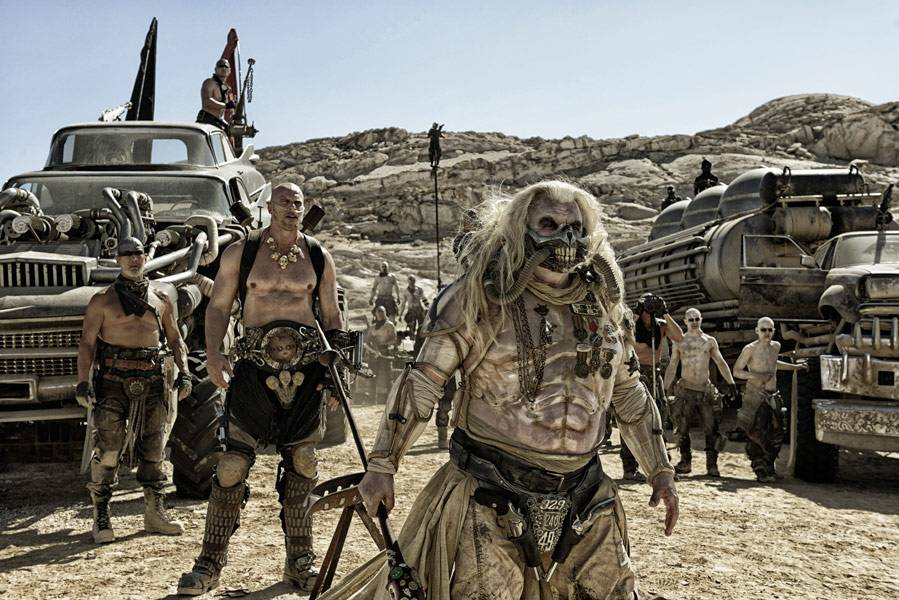
In the early 1980s the threat of nuclear war became a widespread fear, so some preppers built fallout shelters at the time. They prepared to survive nuclear strikes and to live on in a world destroyed by atomic war. This scenario inspired many books and films, both documentary and fictional. A kind of post-apocalyptic pop culture grew up around it too.
Religious beliefs
There are also preppers with more specific fears that stem from their apocalyptic religious beliefs.
Some Protestants rely on an interpretation of biblical prophecy known as the “post-tribulation rapture”, according to which the world will have to go through a seven-year period of war and global dictatorship called the “Great Tribulation”. Jim McKeever helped popularise preparing to survive this scenario in his book “Christians Will Go Through the Tribulation, and How To Prepare For It”.
Some Catholics are preppers too. Their beliefs are based on a number of Marian apparitions that speak openly of a great punishment sent upon humanity by God. This applies especially to those associated with Our Lady of Fátima and Our Lady of Akita (who states plainly that “fire will fall from the sky and will wipe out a great part of humanity”).
Terminology
Survivalists keep their group identity by using specialist terminology that is not widely understood outside their circle. They often use military acronyms such as OPSEC and SOP. They also use terms that are unique to their own survivalist groups. I have gathered the most common ones below. If a term is missing here, tell me about it in a comment under the article.
Let’s start with the crisis itself. SHTF is short for “shit hits the fan”, the moment when everything falls apart. I’ll leave the exact picture to your imagination 😉 TEOTWAWKI stands for “the end of the world as we know it”, and WROL (“without rule of law”) is a situation in which law and order stop working2.
The second group is about backpacks and bags. A BOB (bug-out bag) is simply the pack you grab to leave home and get somewhere safe. An INCH bag (“I’m never coming home”) is its heavier cousin: a pack for living in the woods with no return to civilisation, so instead of a food supply it holds seeds, snares and fishing gear. EDC (everyday carry), in turn, is what you carry on you every day in case something happens while you are away from home. And a BOL (bug-out location) is the place you head for with such a bag, for example a relative’s house in the countryside or your allotment plot.
And the military acronyms? In the military, OPSEC (operations security) means making sure an adversary cannot piece together important information about you from small observations3. For a prepper it usually comes down to a simple rule: don’t brag to the neighbours about how much you have stored. An SOP (standard operating procedure) is a procedure agreed in advance, for example a household plan of who does what when the power goes out or you have to leave home in a hurry.
How the public sees the prepper movement
In popular culture preppers are often seen as having links to paramilitary activities and groups. Some survivalists take an active part in military-style training, often with firearms, and the media sometimes play up this aspect.
The potential collapse of civilisation is often given as a reason for being well armed. As a result, some non-militaristic preppers have unfairly been given a militaristic image.
Survivalists around the world
Individual survival preparedness and survivalist groups and forums - both formal and informal - are popular all over the world. They are most active in Australia, Austria, Belgium, Canada, Spain, France, Germany (often organised under the guise of “adventure clubs”), Italy, the Netherlands, Sweden, Switzerland, the United Kingdom, South Africa and the United States.
And in Poland?
For a long time you could treat all this as an American curiosity. Today that is hard to do. The Polish government’s Poradnik bezpieczeństwa (Safety Guide), drawn up in the light of the war in Ukraine, was delivered in print to every household in Poland in December 2025 and January 20264. If you didn’t throw it out with the leaflets, you have a pretty decent beginner’s manual at home 😉
And it is not only about war. On 28 April 2025 the power went out all at once across the whole of mainland Spain and Portugal5. What would happen if something like that hit us here, and how to prepare for it, I cover in my article on blackouts in Poland.
Where to start?
You don’t have to start digging a bunker or buying gold bars straight away 😉 In Poland it is usually about far more down-to-earth things: a fire, a flood or a few days without power4. A few simple steps are enough to begin with:
- Supplies for at least 3 days. At least 3 litres of water per person per day6, so a family of four needs 36 litres for 3 days. Plus food you can eat without cooking. You can read why water comes first in the article on the symptoms of dehydration.
- Light and news without power: a torch, a battery or wind-up radio, a charged power bank.
- Cash in various denominations, because without power you can’t pay by card.
- A first aid kit and the medicines that you and your family take regularly.
- A family plan: where you will meet and how you will get in touch if the phones stop working. The government’s „Plan na kryzys” (Crisis Plan, in Polish) has ready-made sections to fill in.
- A packed bug-out bag in case you have to leave home. What to put in it I describe in the article on how to pack a bug-out bag.
Three days is the minimum, though. My own advice is to stock up for at least a week, and ideally for two weeks.
So who are preppers and survivalists?
They are simply a more or less formal group preparing for “hard times” to come, whatever might cause them. That kind of foresight seems sensible and worthwhile.
And what do you think? Do you have enough food at home to last you at least a week? Do you have a safe shelter where you could sit out the hard times?
Source of some of the information: I translated and adapted the definition of survivalism, the history of the movement, the description of the prepper groups and the passages on religious beliefs, terminology, public perception and survivalists around the world from the article “Survivalism” on the English-language Wikipedia (authors: Wikipedia contributors). The original is available under the Creative Commons Attribution-ShareAlike 4.0 (CC BY-SA 4.0) licence, and I make my translated and modified versions of these passages available under the same licence.
Sources
- Mine Safety and Health Administration (MSHA), “Stay Out - Stay Alive”: msha.gov/stay-out-stay-alive
- Wikipedia, “Glossary of survivalist terminology”: en.wikipedia.org/wiki/Glossary_of_survivalist_terminology
- NIST Computer Security Resource Center, glossary, “operations security (OPSEC)”: csrc.nist.gov/glossary/term/operations_security
- „Poradnik bezpieczeństwa” (Safety Guide, gov.pl), „Pytania i odpowiedzi” (Questions and answers): gov.pl/web/poradnikbezpieczenstwa/pytania-i-odpowiedzi (in Polish)
- ENTSO-E, “28 April 2025 Blackout”: entsoe.eu
- „Poradnik bezpieczeństwa” (gov.pl), „Przygotuj swoje otoczenie” (Prepare your surroundings), section „Zapasy domowe na minimum 3 dni” (Household supplies for at least 3 days): gov.pl/web/poradnikbezpieczenstwa/przygotuj-swoje-otoczenie (in Polish)
Leave a comment