
Deserts are areas that get less than 250 mm of rain a year. They are hot and dry during the day and cold at night. The most important thing you need in the desert is water. Dry air and high temperatures will dehydrate you especially fast if you cannot avoid direct sunlight and physical effort. If you end up in the desert unprepared, start looking for water straight away, but avoid moving about in the hottest part of the day so that you do not dehydrate. I have already written about dehydration in the article “Symptoms of dehydration and how to prevent it“. Below I focus on finding water in the desert, although most of the tips here will work at any latitude and longitude. Read on to find out how to find water in the desert, and not only there.
Finding areas rich in water
Slow down your water loss
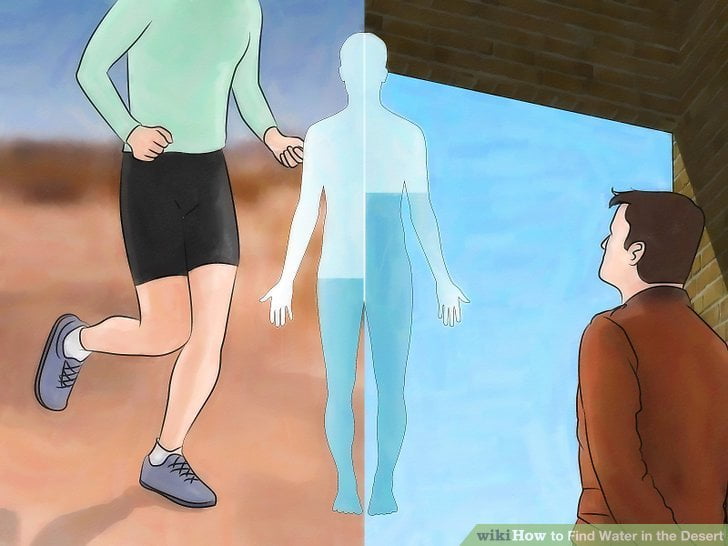
Exercise and sun exposure will speed up dehydration. Be sensible about how you search for water. If you can, spend the hottest part of the day in a shady spot, out of the wind. Cover your skin to cut down on the water you lose through sweating.
Watch the wildlife
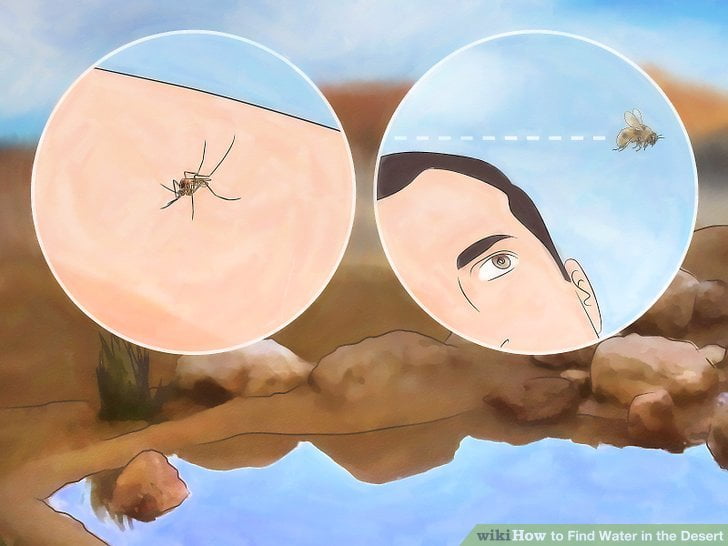
A group of animals of any kind almost always means that water is nearby. Look out for the following signs:
- Listen carefully and watch the sky for circling birds.
- If you spot swarms of flies or mosquitoes, that is a sure sign that water may be somewhere close.
- Bees often fly in a straight line between a water source and their hive.
- Look for animal tracks, especially ones leading downhill.
Look for vegetation
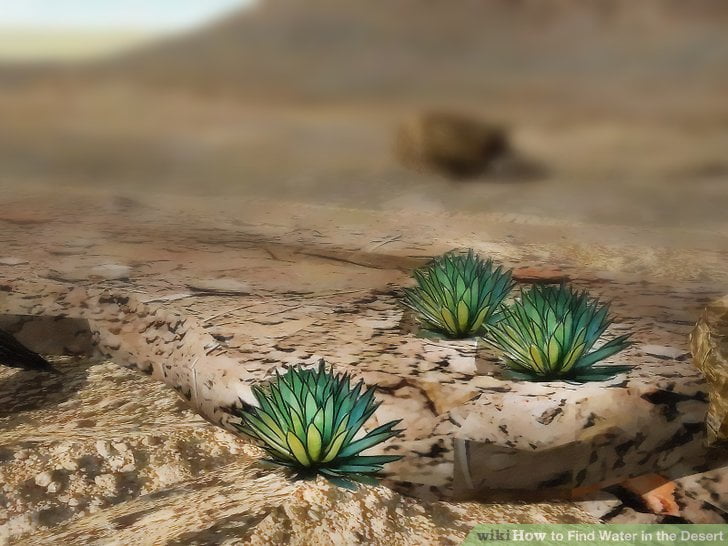
Dense vegetation and most trees cannot survive without a steady water source.
- If you do not know the local plants, try to find the greenest ones you can. Deciduous, broad-leaved trees are usually a better sign of water than pines, because they tend to need more of it. If you can identify the local plants, learn the species below.
- In North America, look for cottonwoods, willows, sycamores, hackberries and tamarisk.
- In Australia, look for kurrajong, needle bush, desert oak or water bush. Keep an eye out for certain eucalyptus species that grow as several stems coming out of the same underground tuber.
Look for canyons, valleys or any other natural dips in the ground
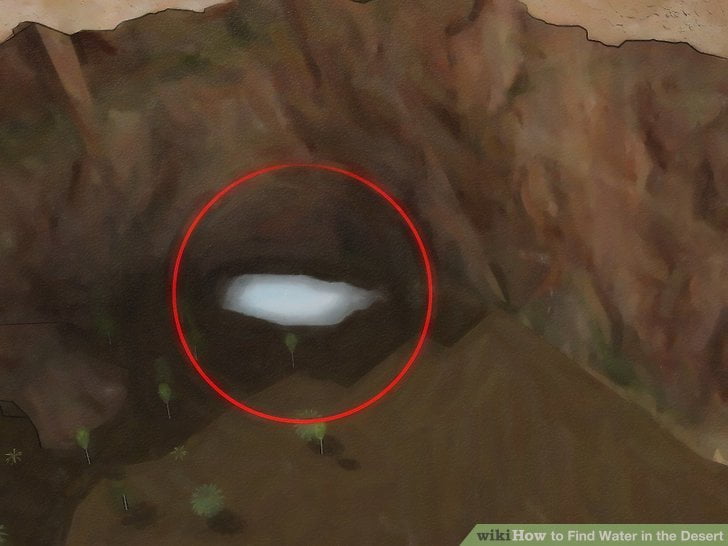
The best place to start looking for water in the desert is a canyon that stays in shade through the hot afternoon, above its mouth. That means a north-facing canyon if you are in the northern hemisphere, or a south-facing one in the southern hemisphere. Find them on a topographic map if you have one, or simply by studying the landscape around you.
- Snow or rain is more often held in these cooler canyons, sometimes for months after a heavy downpour.
Find a dry stream bed or riverbed
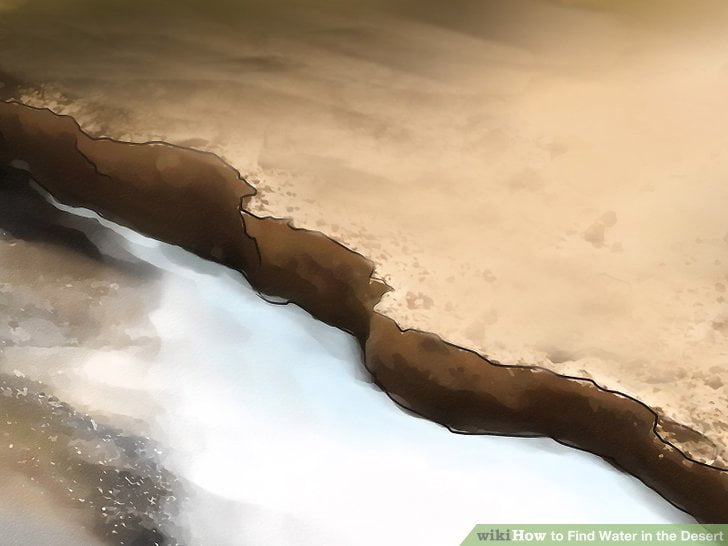
Sometimes water in the desert can be found just below the surface. The best place to start is on the outside edge of a bend in the riverbed. Flowing water may have scoured and carved out this area, leaving a hollow where the last of the water has collected.
Pay close attention to promising rock formations
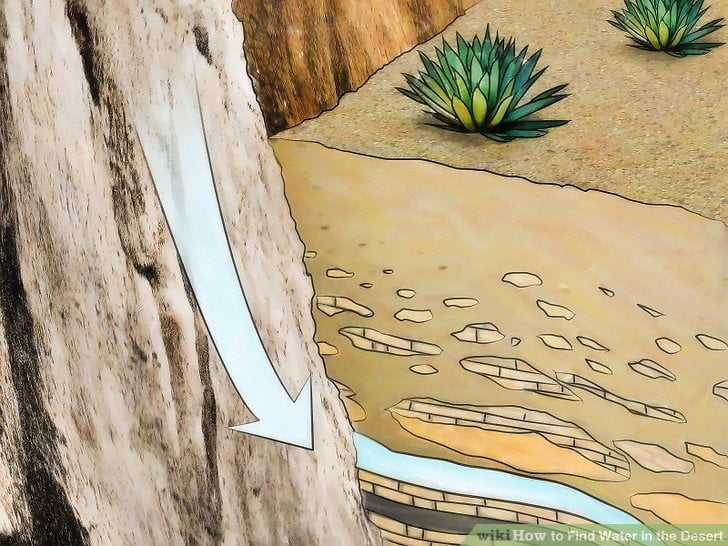
Groundwater collects along the dividing lines of the landscape, at the foot of mountains or large rocks. The best place to dig for water is where hard, impermeable rock “disappears” below the surface.
- Softer stone such as sandstone can have pockets and hollows that hold water for a while after a downpour. If it has rained recently, search along flat stretches of this rock or on top of boulders.
Dunes and sand near the beach
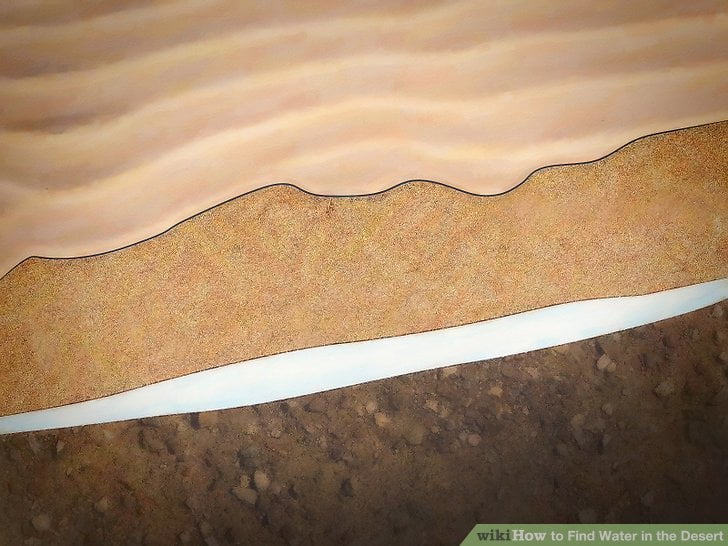
If you are close to the ocean, the dunes along the beach can trap and filter seawater. Digging above the high-tide line may uncover a thin layer of drinkable water sitting on top of the heavier salt water.
Find a good vantage point
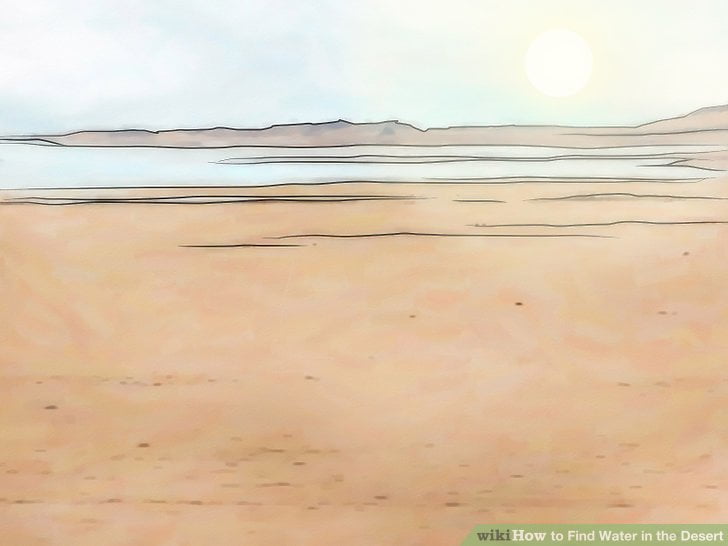
The lie of the land can sometimes make it hard to search for water. Climbing to higher ground gives you the best vantage point for spotting water in the desert. Only try this as a last resort, because the effort will dehydrate you. And you are not likely to find any water at the top of the hill either.
- When the sun is low in the sky, look for glints or reflections on the ground. That could be a body of water. If you are in cattle-grazing country, you may see a man-made water collection system at the bottom of gently sloping ground.
- Always carry binoculars when you head into the desert. They can help you spot water-rich areas from a long way off.
Digging for water
Choose the most likely spot, because every bit of wasted effort costs you precious water
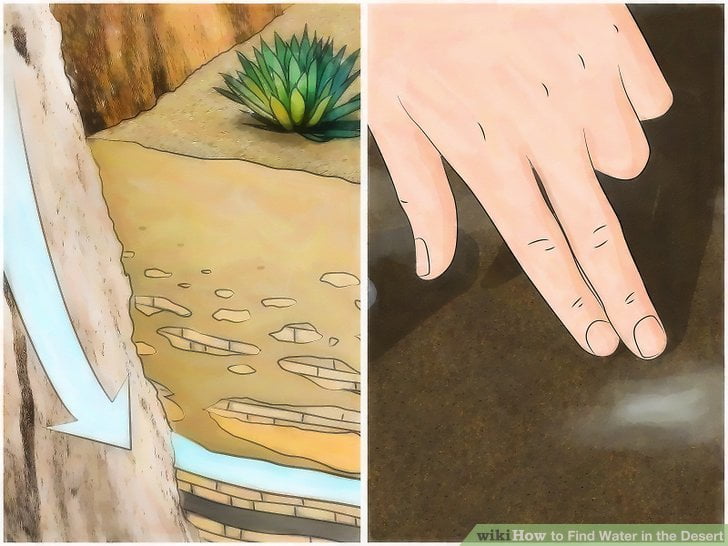
Once you reach an area that looks promising, look around for water on the surface. In most cases you will not be that lucky and will have to dig instead. These are the best places to dig for water:
- At the foot of a sloping rock.
- Near patches of dense vegetation, especially where bulges and cracks in the ground may point to tree roots.
- Anywhere the surface soil is damp, or at least more clay than sand.
- At the lowest point in the area.
Wait for the cooler part of the day
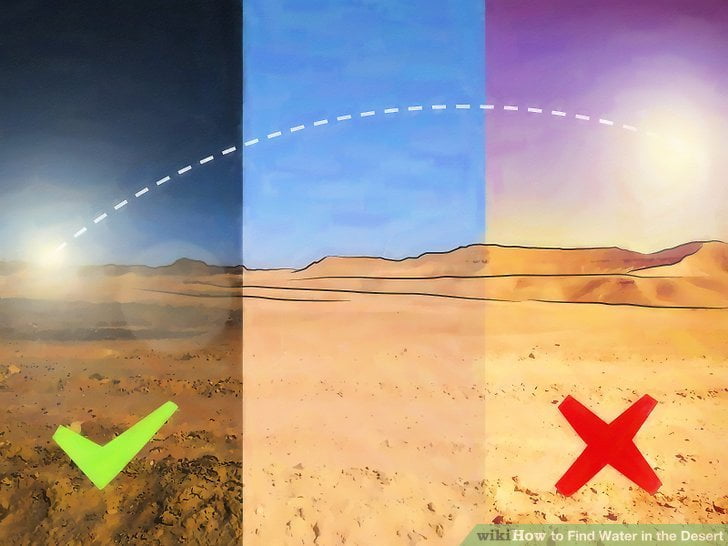
Digging for water in the desert in the middle of the day is risky, because you lose sweat through the effort and the heat. If you can afford to wait, stay in the shade until the temperature starts to drop.
- Groundwater tends to be closest to the surface in the early morning, especially in areas with more or less dense vegetation.
Look for moisture about 30 cm below the surface
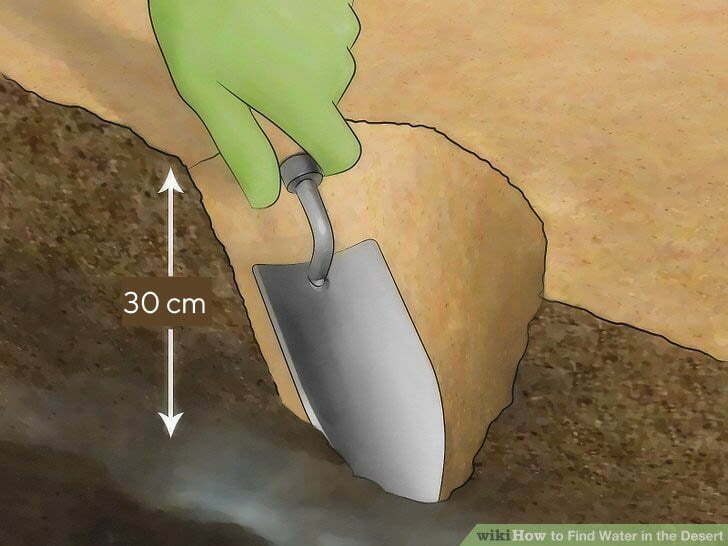
Dig a narrow hole about 30 cm deep. If the soil is still dry, move on to another spot. If you find damp soil, go on to the next step.
Make the hole bigger
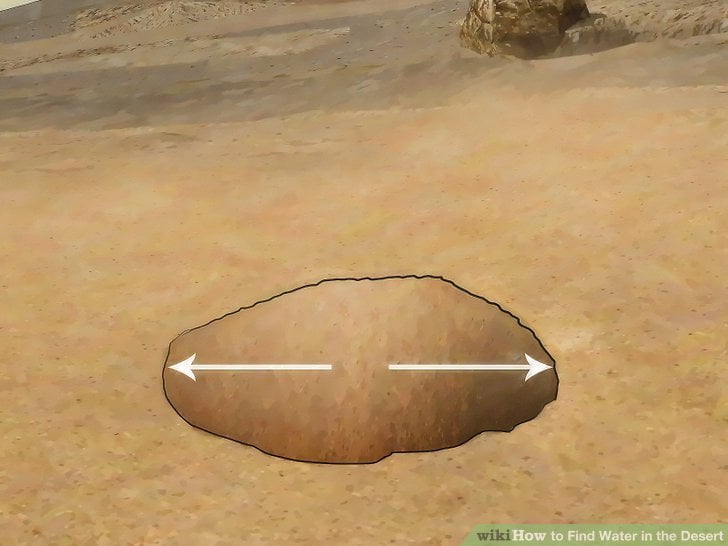
Widen the hole you have dug until it is about 30 cm across. You may see water seeping in from the sides, but finish digging even if you do not.
Wait for the water to collect
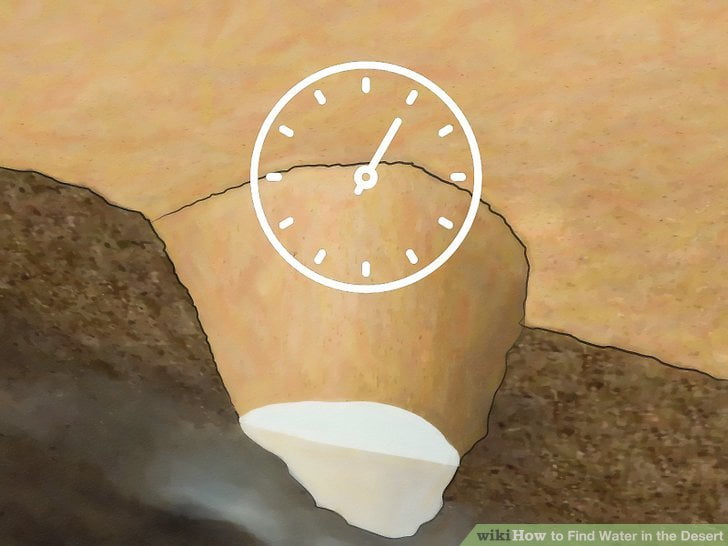
Come back to the hole after a few hours or at the end of the day. If there was water in the soil, it should be collecting at the bottom.
Collect the water
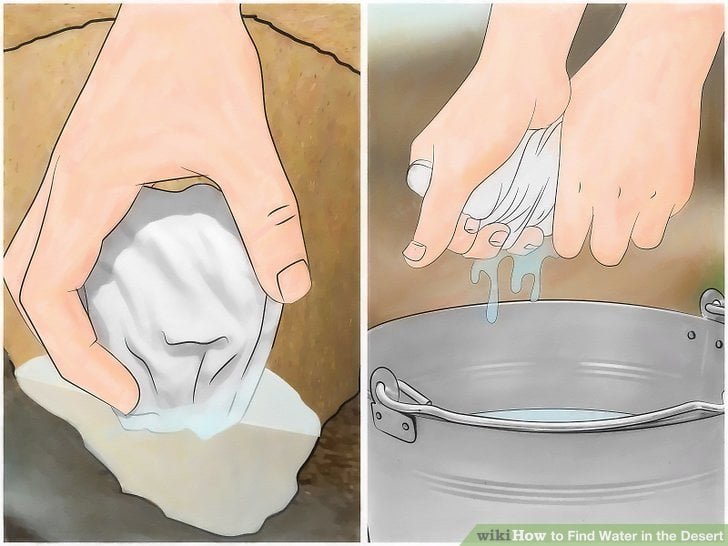
If the water is hard to scoop out, soak it up with a cloth and keep wringing it out into a container. Collect all the water in one go, using makeshift containers if you need to. In the desert, water holes can dry up quickly and for good during the day.
Disinfect / purify the water
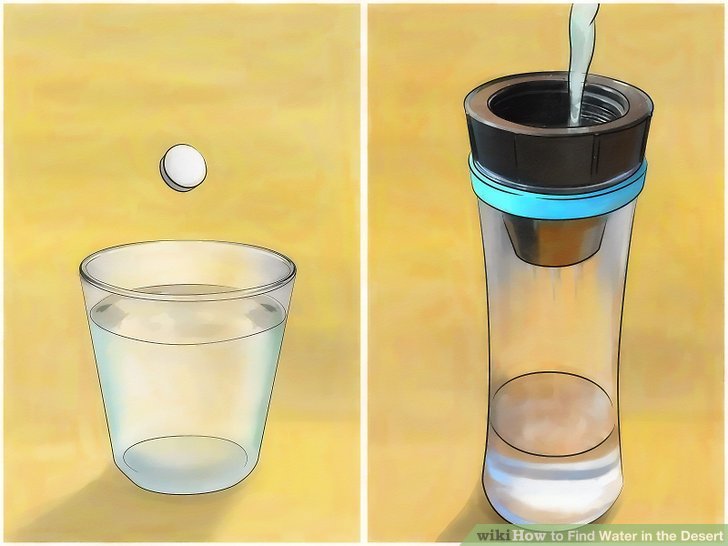
If at all possible, purify the water before you drink it. Boiling it, using iodine tablets or running it through an antibacterial filter will remove almost all biological contamination.
- Drinking contaminated water can cause vomiting or diarrhoea, which in turn dehydrate you fast. However, these symptoms often only show up days or even weeks after drinking dirty water. So if you have no other choice, drink the untreated water and see a doctor once you are back in civilisation.
Other places to find water in the desert
Collect dew
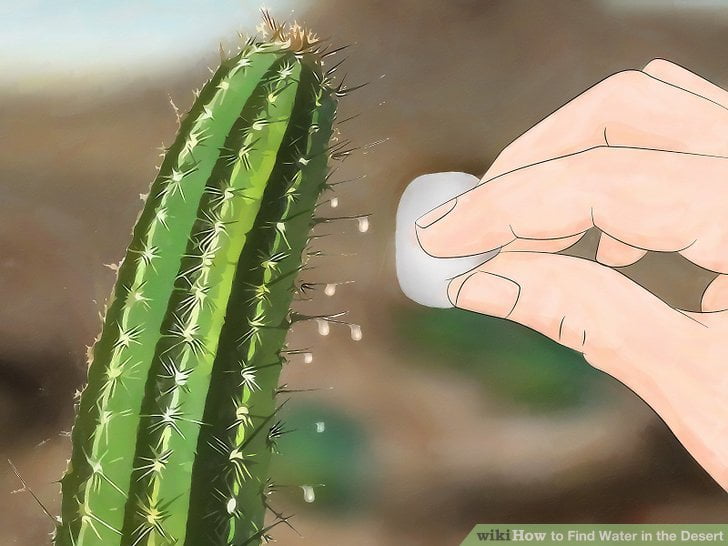
Look for dew drops on plants before dawn. To collect the dew, press a handkerchief or a piece of clothing against the wet surface, then wring it out into a container.
- If you have no absorbent cloth to hand, roll a clump of grass into a ball and use that instead.
Search tree hollows
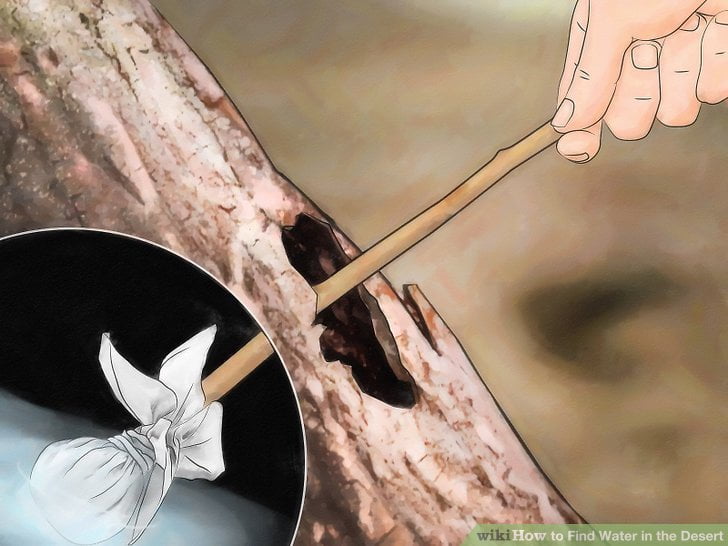
Rotting or dead trees may hold water in their trunks. To reach into small holes, tie a rag around a stick and push it through the hole to soak up the water.
- Insects going in and out of holes in a tree can be a sign of water.
Look for water around and under rocks
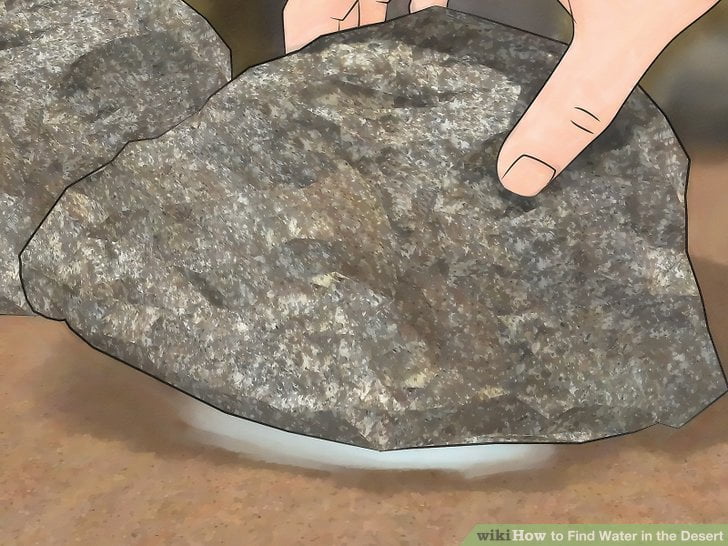
Rocks slow down evaporation, so dew or rainwater can linger there a bit longer. Turn over half-buried stones just before dawn, as there may be dew on them. (This happens because the underside of the stone is cooler than the surrounding air.)
- When lifting stones and rocks, watch out for scorpions and other dangerous creatures.
Eat cactus fruit
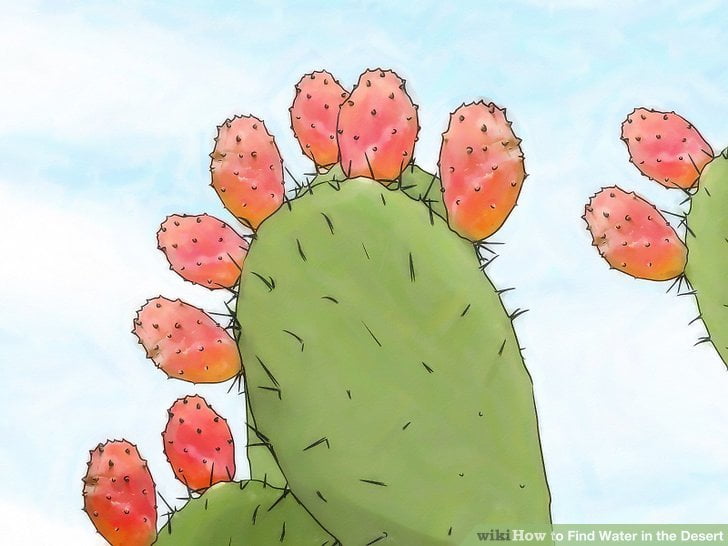
These juicy fruits are safe to eat and contain enough moisture to keep you alive. Pick them carefully so you do not get pricked or scratched, then roast them over a fire for 30 to 60 seconds to burn off the spines and hairs.
- You can also eat the pads of prickly pear cacti. They are best picked in spring and then cooked. At other times of year they can be hard to find.
Collect water from mallee roots (Australia)
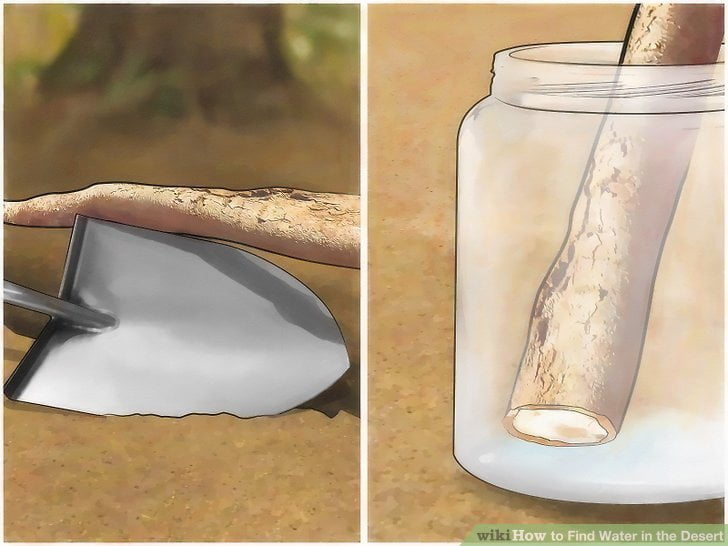
In the Australian deserts, mallee (a eucalyptus) is a traditional source of water, although getting at it can be tricky. Each mallee looks like a grove of small to medium-sized trees growing from a single underground plant. If you see a eucalyptus that fits this description, try getting water like this:
- Dig up a root you find in a bulge or crack in the ground, or look for roots about 2 to 3 metres from the tree. The most promising roots are about as thick as a man’s wrist.
- Pull the root out, cutting it off near the trunk.
- Cut the root into pieces 50 to 100 cm long.
- Stand the roots on end in a container so the water can drain freely into it.
- Also look for more roots at the surface. There are usually 4 to 8 surface roots around each mallee.
Only drink water from American cacti as a last resort
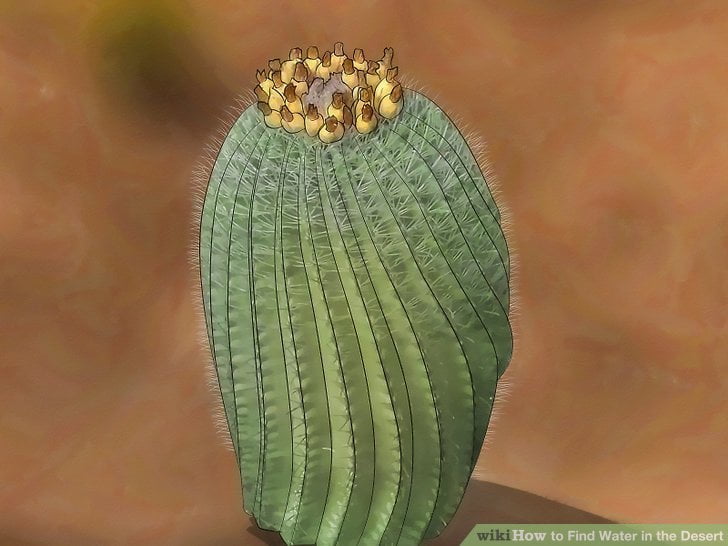
Most American cacti are poisonous. Drinking liquid taken from them can cause vomiting, stomach and bone pain, and even temporary paralysis. Only one American barrel cactus holds drinkable water, and even then it is a last resort.
- The only safe barrel cactus in America is the fishhook barrel cactus (Ferocactus wislizeni), which grows only in the south-western United States and north-western Mexico. It is usually about 0.6 m across, and its long spines end in a curve or hook. It may have red or yellow flowers on top, or yellow fruit. It grows where water flows from time to time and on gravelly slopes.
- Cut the top off the cactus with a machete, knife or other tool.
- Mash the white, watermelon-like flesh into a pulp and squeeze out the liquid.
- Keep the amount you drink to a minimum. Even this fairly safe option tastes bitter and contains oxalic acid, which can cause kidney problems or bone pain.
Tie plastic bags around plants
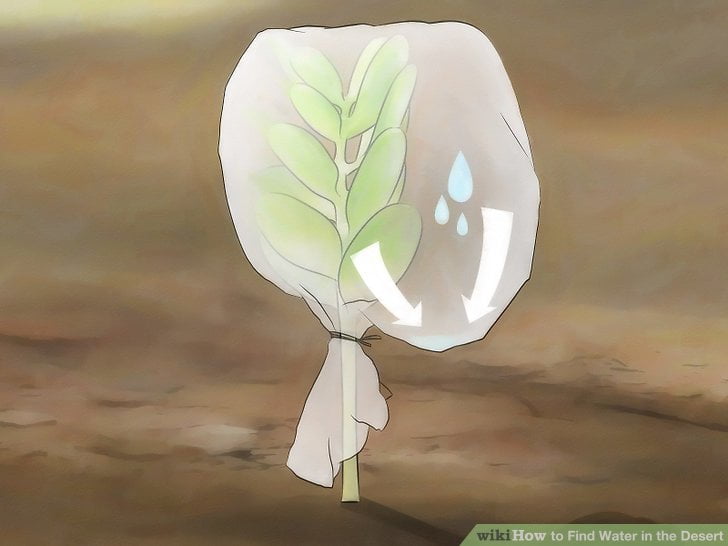
First shake the plant to reduce the risk of contamination, then tie a plastic bag around it, sealing it round the stem. Weigh down the closed end of the bag with a stone to create a point where the water collects. Come back at the end of the day to see whether any water has gathered. This works because desert plants release water vapour during the heat of the day.
Be very careful when testing plants you do not know.
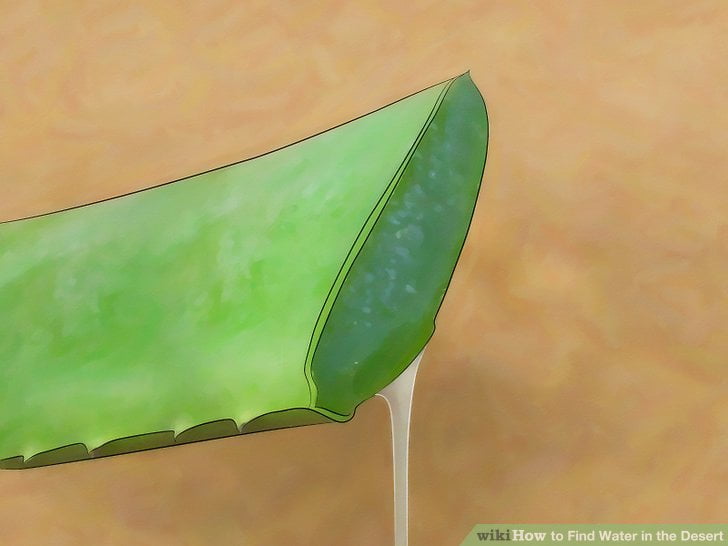
If you have run out of options, you may have to look for water in plants you cannot identify. Where possible, follow these precautions:
- Test only one part of the plant at a time. Eating the leaves, stem, root, buds and flowers can have different effects. Pick the part of the plant that releases liquid when you break it.
- Rule out plants with a strong or sour smell, as long as you have other options.
- Do not eat for eight hours before the test.
- Touch the plant to the inside of your wrist or elbow to check how your skin reacts to direct contact.
This article is adapted from an article on wikiHow
Leave a comment