
Quick picks
Lowest price with a protocol named by the maker
Affordable bottle filter
Lightest with its own container
0.076 kg
Longest life (maker's claim)
Gravity kit with a 3 l bag
The only one with a virus removal claim (EPA protocol)
maker's claim under the EPA protocol
Comparison table
Products in stock first, then by “Weight”. A name leads to the product's section. On a phone, scroll the table sideways.
| Product | Type | Viruses | Test named by the maker | Pore size | Weight | Price on Amazon.pl | Availability |
|---|---|---|---|---|---|---|---|
| Affordable | |||||||
| LifeStraw Personal | straw | no claim | maker names a protocol | 0.2 µm | 0.046 kg | under 120 zł (checked ) | in stock (checked ) |
| LifeStraw Peak Solo | squeeze (pouch or bottle) | maker: not for viruses | maker names a protocol | 0.2 µm | 0.048 kg | under 120 zł (checked ) | in stock (checked ) |
| ENONEO słomka 4 w 1 | straw | no claim | none named | 0.01 µm (seller) | no data | under 120 zł (checked ) | in stock (checked ) |
| Purewell słomka | straw | no claim | report cited, not public | 0.01 µm (seller) | no data | under 120 zł (checked ) | in stock (checked ) |
| LifeStraw Peak Personal | straw | no claim | none named | no data | no data | under 120 zł (checked ) | in stock (checked ) |
| Mid-range | |||||||
| Sawyer Mini (SP350) | squeeze (pouch or bottle) | maker: not for viruses | public test report | 0.1 µm | 0.056 kg | 120-300 zł (checked ) | in stock (checked ) |
| Katadyn BeFree AC 1,0 l | filter bottle | no claim | test organism only | 0.1 µm | 0.076 kg | 120-300 zł (checked ) | in stock (checked ) |
| Platypus QuickDraw 1 l | squeeze (pouch or bottle) | no claim | maker names a protocol | no data | 0.095 kg | 120-300 zł (checked ) | in stock (checked ) |
| LifeStraw Go 650 ml | filter bottle | no claim | none named | no data | 0.247 kg | 120-300 zł (checked ) | in stock (checked ) |
| BAYTIZ słomka z butelką | straw | no claim | none named | no data | no data | 120-300 zł (checked ) | in stock (checked ) |
| Upper range | |||||||
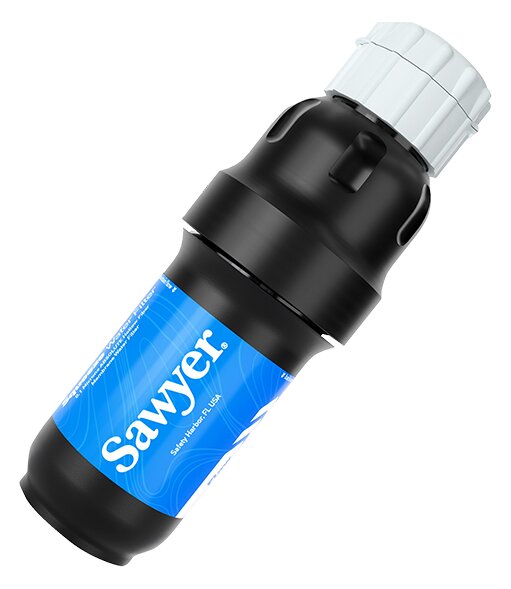
| Sawyer Squeeze (SP129) | squeeze (pouch or bottle) | no claim | report cited, not public | 0.1 µm | 0.085 kg | over 300 zł (checked ) | in stock (checked ) |
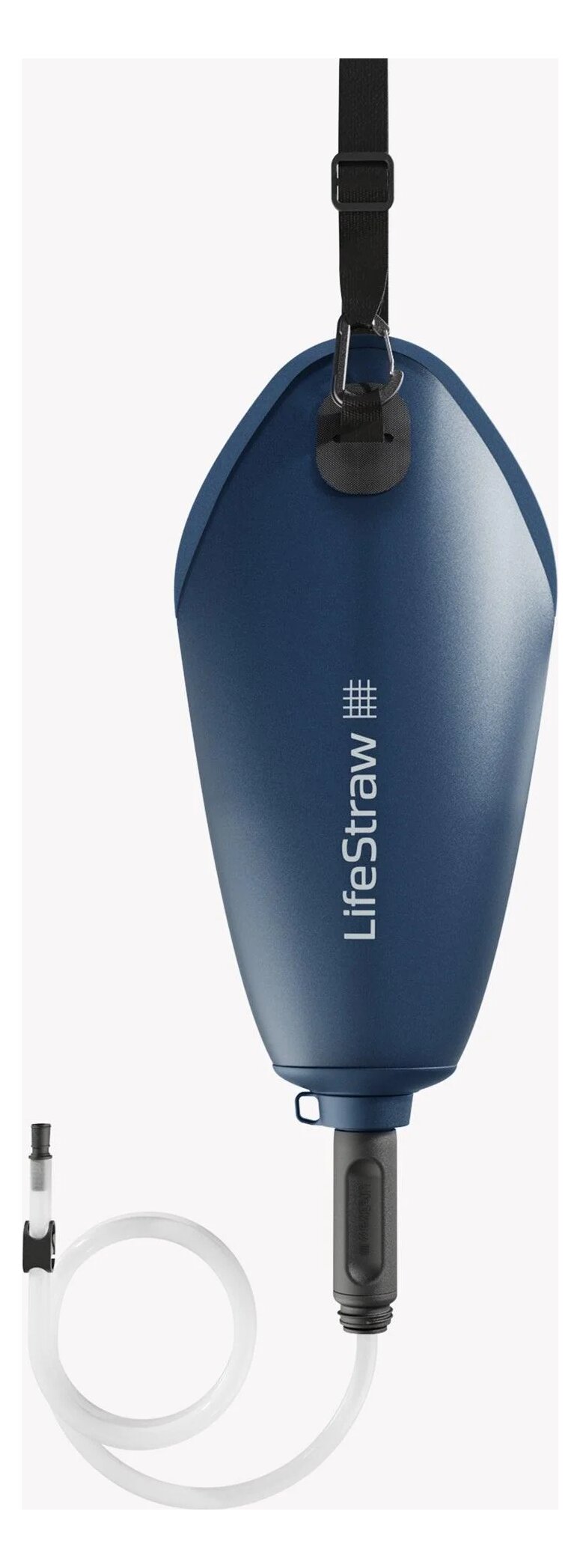
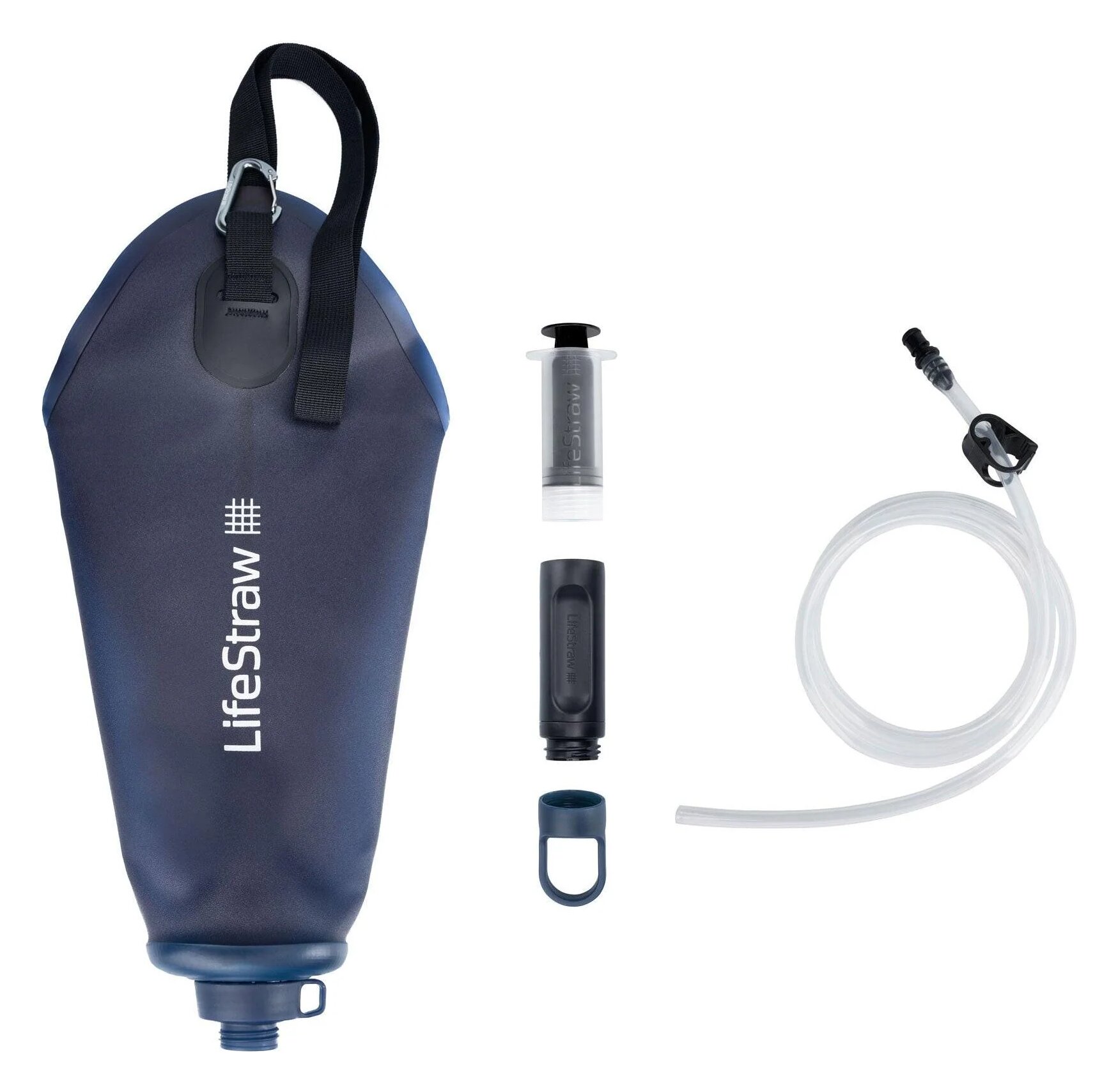
| LifeStraw Peak Gravity 3 l | gravity | no claim | maker names a protocol | 0.2 µm | 0.228 kg | over 300 zł (checked ) | in stock (checked ) |
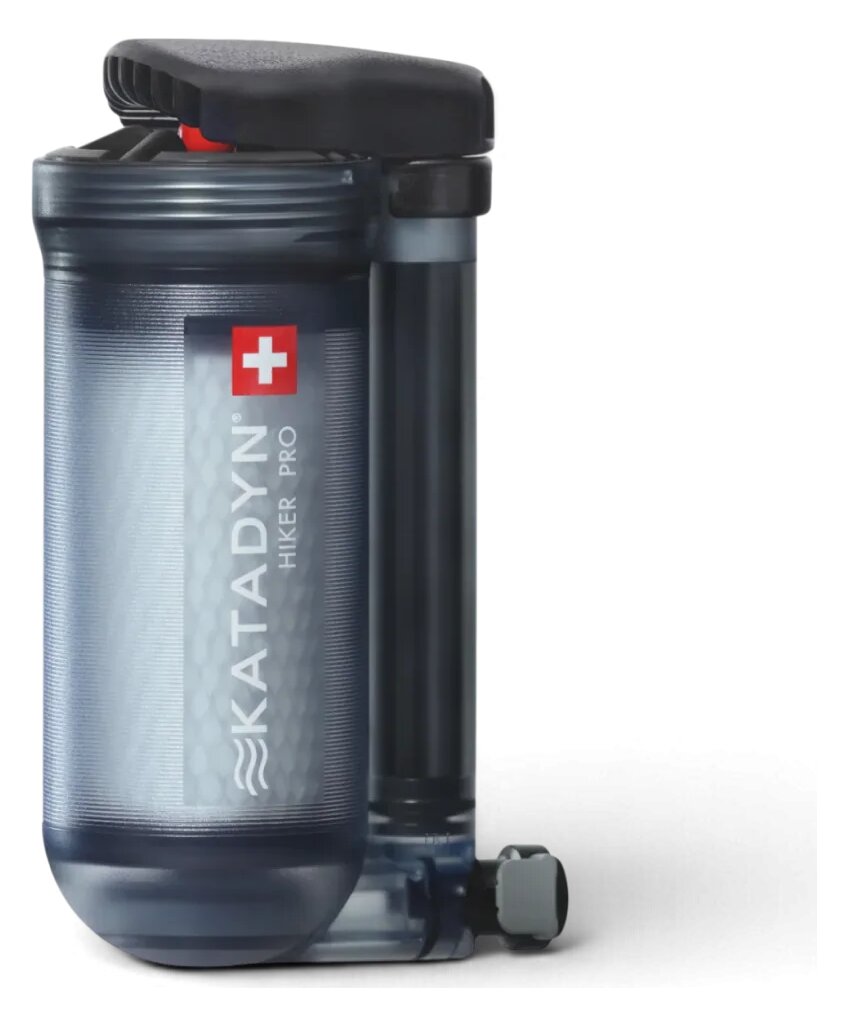
| Katadyn Hiker Pro | pump | no claim | none named | 0.2 µm | 0.233 kg | over 300 zł (checked ) | in stock (checked ) |
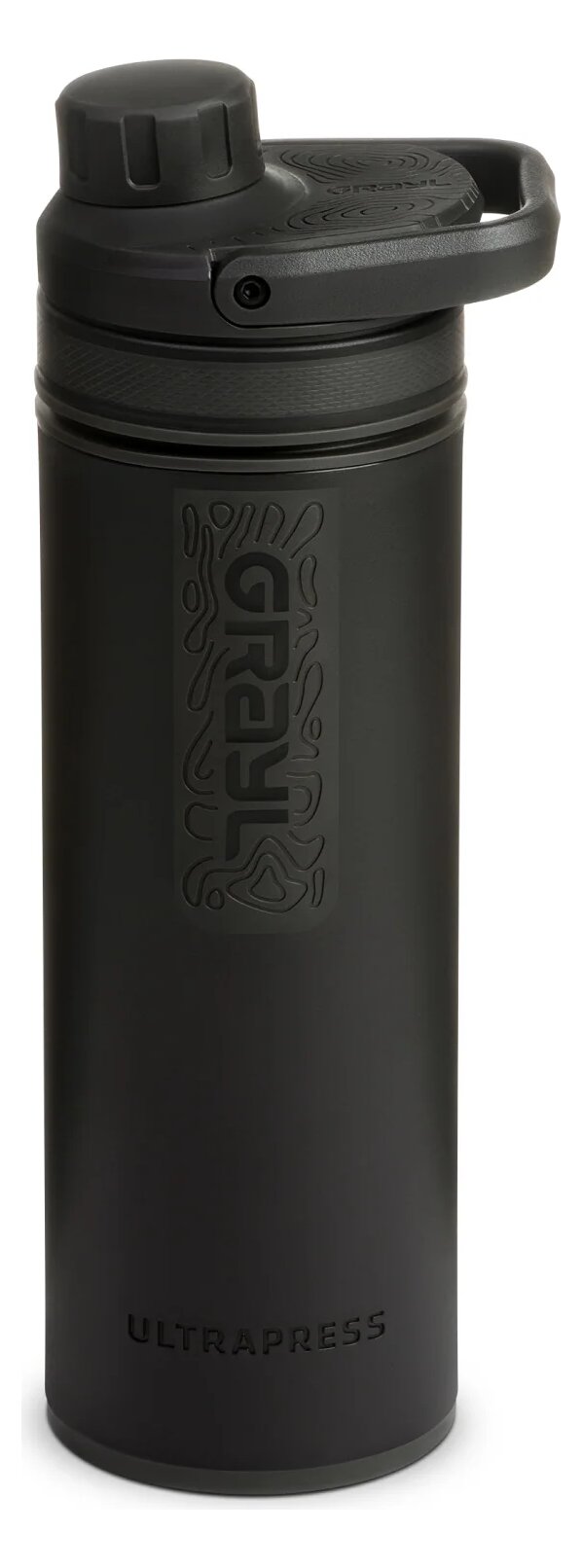
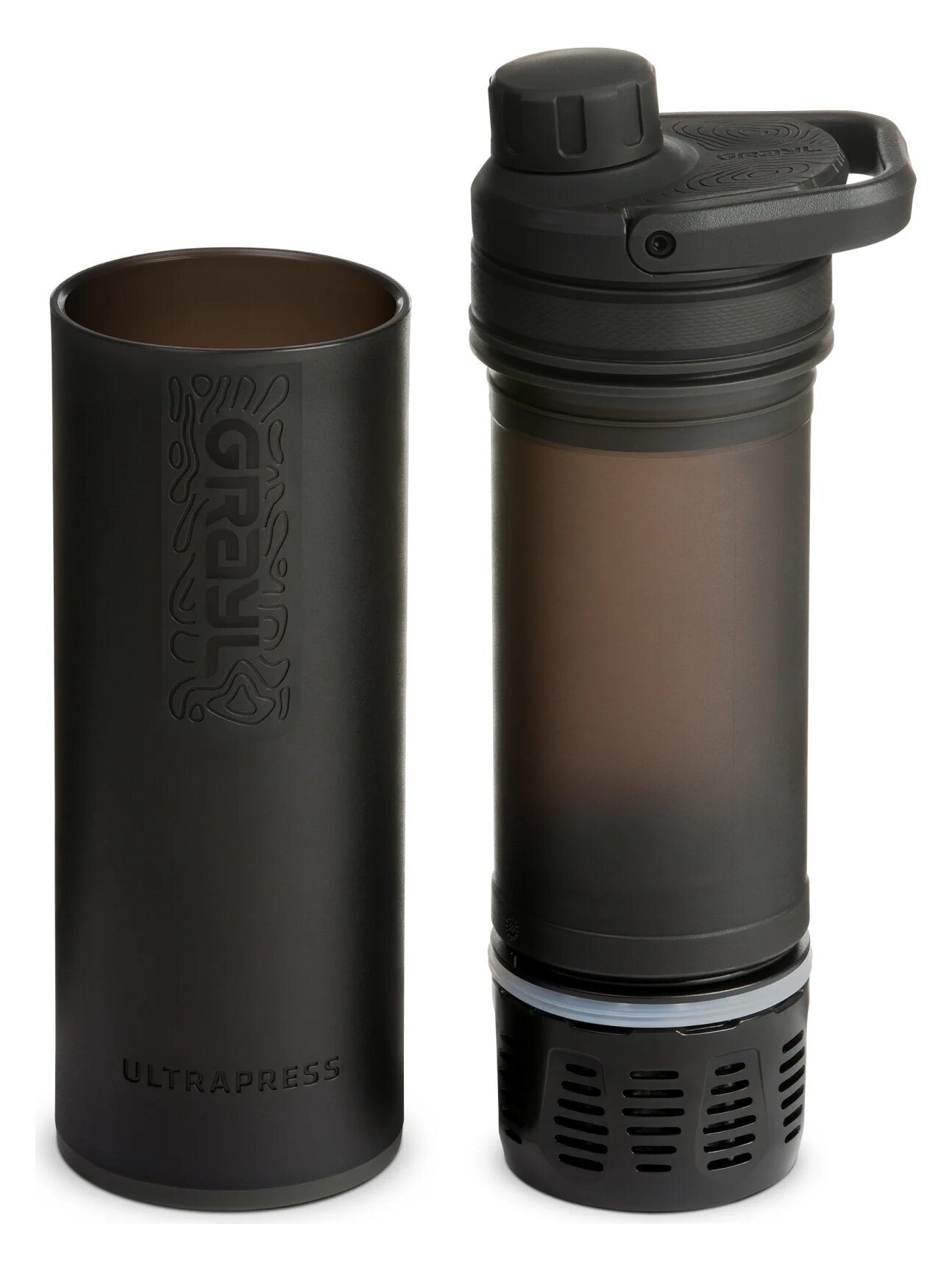
| GRAYL UltraPress 500 ml | press bottle | maker's claim under the EPA protocol | maker names a protocol | no data | 0.354 kg | over 300 zł (checked ) | in stock (checked ) |
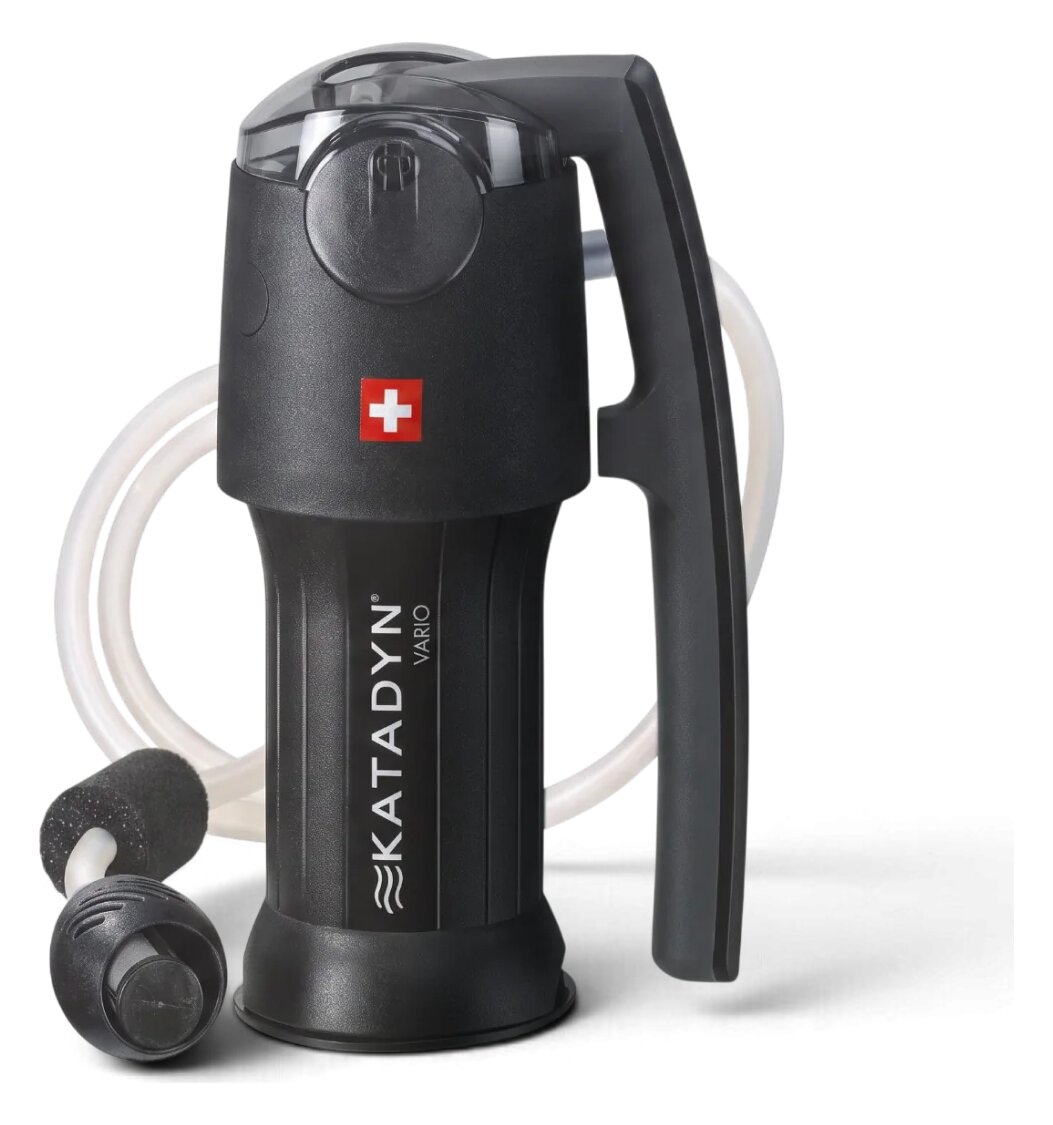
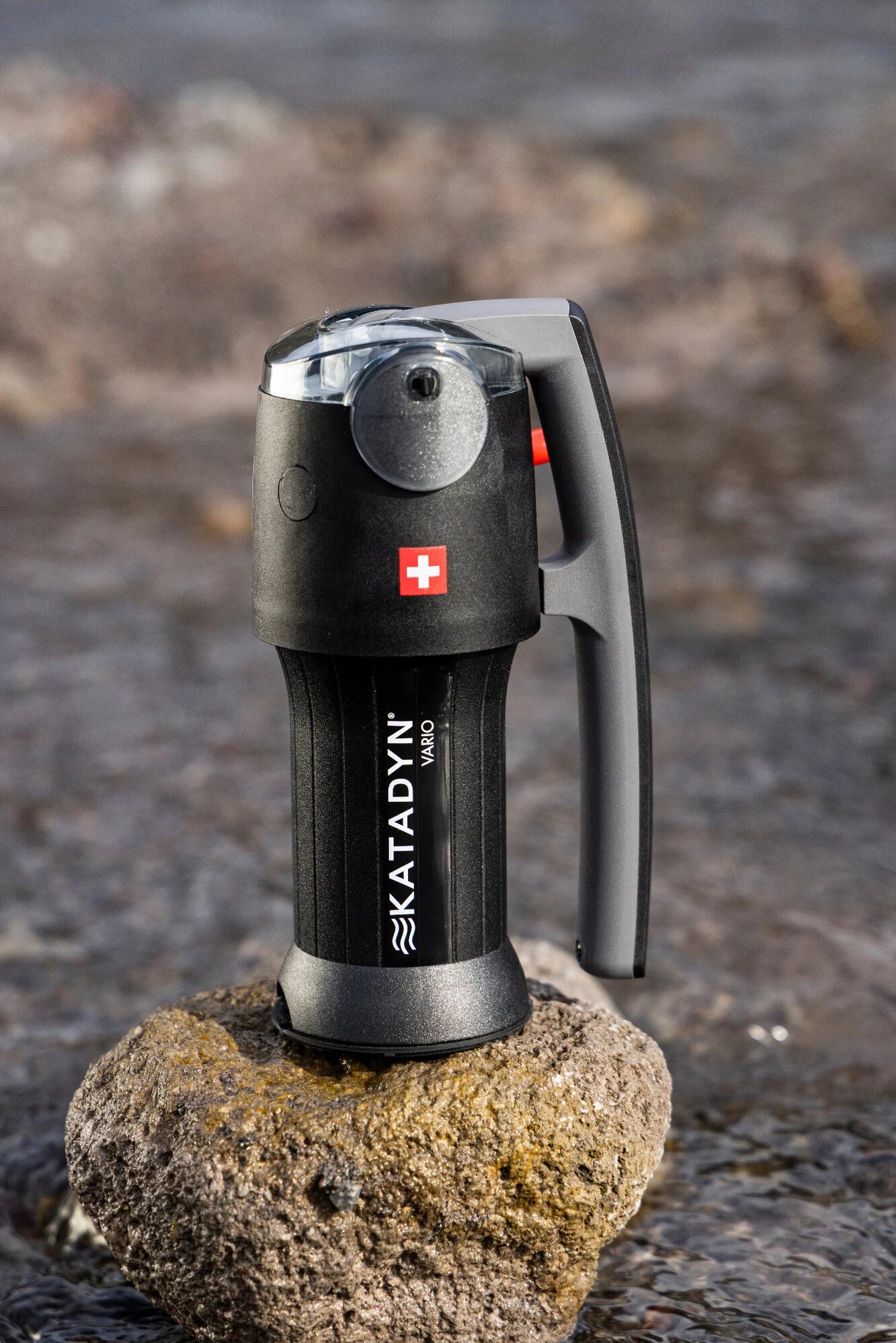
| Katadyn Vario | pump | no claim | none named | 0.2 µm | 0.425 kg | over 300 zł (checked ) | in stock (checked ) |
| Katadyn Pocket | pump | no claim | none named | 0.2 µm | 0.55 kg | over 300 zł (checked ) | in stock (checked ) |
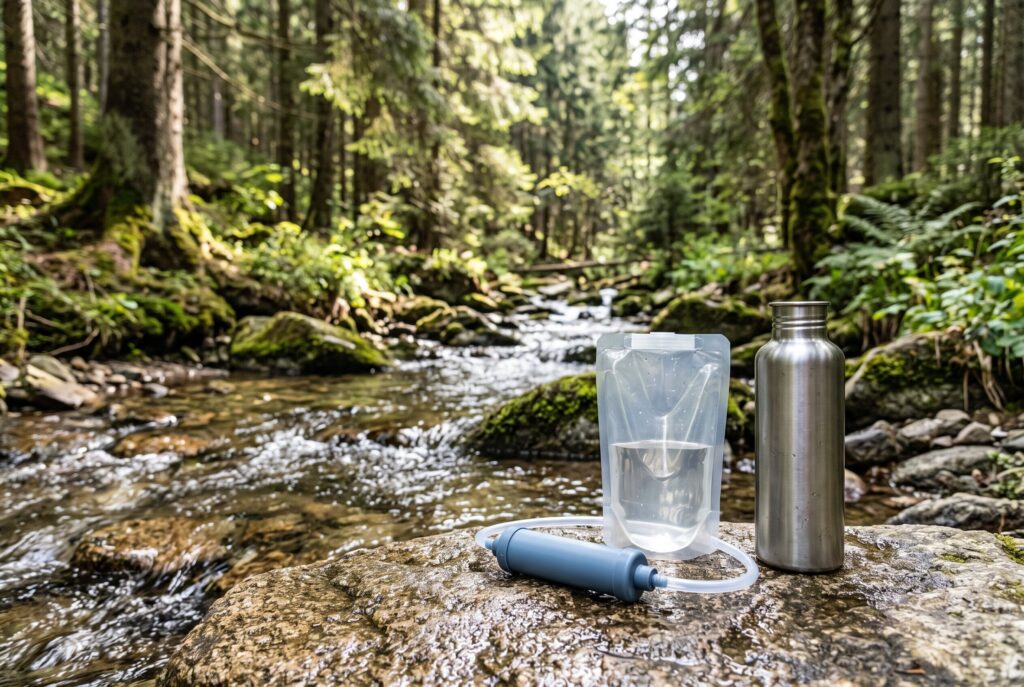
The mountain stream runs fast, the water is cold and clear, and you still do not know whether you can drink it straight from the source. Bacteria, protozoa and viruses are too small to see1, so the look of the water settles nothing. A hiking filter deals with some of them, but not all, and shop descriptions rarely say plainly which ones.
Shopping for a filter usually means wading through dozens of listings that promise the same thing in different words. I did that legwork so you do not have to. I went through more than a hundred listings on Amazon.pl, because Amazon is one of the world’s largest online stores. I read 22 product pages in full and checked the claims of most models against the makers’ websites. Sixteen models made the cut, and you should find one that suits you among them. I have not tested any of them myself, so for every claim I say where it comes from: the product listing, the maker’s website or a test report.
Packaging is full of numbers like 99.9999%, micrometres and acronyms such as EPA or NSF. Some of them rest on a public lab report, some on the name of a standard alone, and the rest on nothing. So before you get to the models, read this short guide. It explains how a filter differs from a purifier, what pore size and “log 6” mean, what no filter will remove, and when you still need to boil the water.
The comparison covers straws, bottle filters, filter bottles, gravity bags and pumps, split into three price bands. For each model I write what the maker claims, on what basis, and what the filter will not do.
Which water filter should you choose and what should you look for?
Before you compare grams and litres per minute, answer one question first: where will your water come from? A mountain stream, a lake next to a village and your tap at home when the mains water has to be boiled before drinking are three different situations, and each one calls for something different.
- Viruses. Many hiking filters are microfilters, which stop bacteria and protozoa but do not remove all viruses2. If you cannot rule viruses out, you need a purifier, or a filter plus a disinfectant3. More in the section on filters and purifiers.
- How you drink. With a straw you drink only straight from the source and cannot fill a bottle for later. A bottle filter or a filter bottle lets you carry filtered water with you. A gravity bag filters on its own while it hangs, so it helps when several people drink. A pump draws water through a hose, also from a shallow source.
- The test behind the claim. A number like 99.9999% is only as good as the test behind it. A separate column in the table shows this, and the evidence classes are explained below.
- Carbon cartridge. It can hold back some chemicals, mainly organic ones, and improves the taste of the water4. It does not replace a filter against germs, though, and it wears out much sooner. More in the section on carbon.
- Frost. If you go out in winter or early spring, check what the maker says about freezing. A wet filter that has frozen may be damaged, and you cannot see it from the outside5. More in the section on frost.
- Flow. The litres per minute on the listing apply to a clean filter. The more it clogs, the slower the water runs5, 2. More in the section on backflushing.
Pay less attention to slogans like “water from any source”. No maker in this comparison claims desalination6, and neither a mechanical filter, nor boiling, nor disinfection removes chemical contamination7.
How did I choose the filters for this comparison?
I looked for popular, well-rated models in every price band. I considered filters that had an average rating of at least 4.3 from at least 200 ratings on Amazon.pl, or a badge showing purchases in the past month (as of 15.10.2026). Two models are included despite lower numbers. LifeStraw Go averages 4.2 from 741 ratings, but it is the only branded filter bottle in its price band. Platypus QuickDraw has 166 ratings, but a high average and a gravity mode.
I left out models whose only distinctive feature was a virus removal claim with no test or laboratory named. I treat the numbers about bacteria and protozoa as makers’ and sellers’ claims, not as measurements. That is why the comparison has a separate column, “Test named by the maker”, showing whether a public test report, just a protocol name or nothing stands behind the number.
Affordable filters
This price band has three straws, a straw with a hose and a bottle filter. LifeStraw Personal is the classic straw for drinking straight from a stream. The maker cites the US EPA and NSF P231 protocols for it, for bacteria and parasites8. LifeStraw Peak Personal has a screw-off base with a 28 mm thread, and Purewell screws onto a bottle with its hose. ENONEO is a straw without a known brand, whose seller backs its claims with no test. LifeStraw Peak Solo is a small bottle filter weighing 48.2 g. According to the maker, the filter alone does not remove viruses or chemicals8.
Mid-range filters
This is where filters with their own container start. Katadyn BeFree AC is a soft 1 l bottle that weighs 76 g with the filter. LifeStraw Go is a rigid bottle with a carbon insert, BAYTIZ is a straw with a soft bottle, and Platypus QuickDraw works squeezed or by gravity. Sawyer Mini is the only model whose maker publishes a microbiological test report9. The maker rates it for 100,000 gallons, but that is the maker’s rating, not a test result.
Upper-range filters
The top price band has three Katadyn pumps, a gravity bag, Sawyer Squeeze and GRAYL UltraPress. Katadyn Pocket has a ceramic cartridge which, according to the maker, can be cleaned in the field, and a 20-year warranty. Hiker Pro and Vario are lighter pumps, and Vario has two flow modes. LifeStraw Peak Gravity is a 3 l bag that filters water with no pumping. The maker warns that freezing can damage the filter membrane8. Sawyer Squeeze is the Mini’s bigger brother, with 1 l pouches. GRAYL UltraPress is the only model whose maker claims virus removal under the EPA protocol for purifiers10. The report of that test could not be found, so this is the maker’s claim.
How is a filter different from a purifier?
A filter works like a sieve with very fine holes and stops whatever is larger than them1. Microfilters, which covers most filters with 0.1-0.2 µm pores, stop bacteria and protozoan cysts, but do not remove all viruses2. Some viruses stay in the filter because they clump together or stick to its surface, but that is not enough to remove them all2. Viruses are stopped only by filters with pores of about 0.02 µm and by reverse osmosis filters2.
A purifier must remove, kill or inactivate all types of disease-causing organisms, viruses included1. Few devices meet that, and most of those that do have a disinfectant inside1. Put simply, a filter has pores smaller than 0.3 µm and a purifier smaller than 0.03 µm3.
If a maker writes that the filter meets the requirements for bacteria and protozoa and says nothing about viruses, it is describing a filter, not a purifier1.
What do 0.1-0.2 µm pores stop, and what do they not?
A micrometre (µm) is a thousandth of a millimetre. Giardia cysts measure 8-12 µm, Cryptosporidium oocysts 4-6 µm, bacteria such as E. coli or Salmonella 0.2-4 µm, and viruses 0.004-0.1 µm1. A filter with 0.1-0.2 µm pores therefore stops protozoa and bacteria, while viruses are smaller than those pores, so the filter does not remove them all1, 2.
It also matters how the maker states pore size. An absolute rating is the largest hole in the filter, a nominal rating is the average hole, so some holes are larger1. For a filter against protozoa, look for an absolute rating1. Sawyer states 0.1 µm absolute for its filters5. If a maker does not say which rating it gives, do not assume it is absolute.
Pores are not everything. A cracked filter, or one with a channel worn through it, lets water pass unfiltered, whatever the packaging says2.
What do log 3, log 4 and log 6 mean?
Filter performance is given as a logarithmic reduction, “log” for short. It is the base-10 logarithm of the number of germs before the filter divided by their number after it11. Each extra “log” means ten times fewer germs in the filtered water.
- log 3 is 99.9%, so one in every thousand gets through,
- log 4 is 99.99%, so one in ten thousand gets through,
- log 6 is 99.9999%, so one in a million gets through.
The gap between 99.9% and 99.9999% looks cosmetic, yet it means a thousand times fewer germs. That is why the number of nines matters, but only when you know which test produced it. In the lab, very large numbers of germs are added to the water so that such large reductions can be measured9.
What do the EPA, NSF P231 and NSF/ANSI 53 protocols say?
The protocol cited most often is the “Guide Standard and Protocol for Testing Microbiological Water Purifiers” from 1987, written by the US Environmental Protection Agency (EPA). According to the Sawyer filter test report, which cites this protocol, it requires a 6 log reduction of bacteria and a 3 log reduction of protozoa9. NSF P231 is a protocol for purifiers from NSF International. The data sheet of a home unit tested under both protocols lists 6 log for bacteria and 4 log for viruses as the requirements12. The World Health Organization lists both protocols as internationally recognised testing standards and calls them rigorous and detailed11.
Both protocols describe testing a purifier, a device that also deals with viruses1. A filter whose maker cites them only for bacteria and protozoa is still a filter1. The name of a protocol on the box does not tell you who ran the test or what the result was, either. That is why the table separates a public report from a protocol name alone.
NSF/ANSI standards for water treatment devices come in two groups: one for health and one for the look and taste of water1. NSF/ANSI 53 covers contaminants that affect health, such as lead, some pesticides and protozoan cysts12, 13. NSF/ANSI 42 covers the look and taste of water, such as the taste and smell of chlorine or fine particles, so it says nothing about germs12, 13.
What does a carbon cartridge do, and what does it not?
Activation increases the surface of the carbon, and some chemicals dissolved in water get trapped on that surface4. It works well on organic compounds, chlorine and hydrogen sulphide, the rotten-egg smell4. Some carbon filters also reduce lead or pesticides1.
Carbon does not kill germs and is not designed to remove them2. Nor does it remove nitrates, iron or dissolved minerals13, 4.
The carbon’s ability to bind chemicals runs out over time, and the cartridge has to be replaced4. Regular replacement also prevents bacteria from building up in it4. That is why makers give carbon its own lifespan, much shorter than for the rest of the filter. In the LifeStraw Go bottle the maker rates the membrane at 4000 l and the carbon cartridge at 100 l. In the Katadyn Vario pump the ceramic is rated at about 2000 l and the carbon at about 400 l6.
When do you still need to boil or disinfect water after filtering?
An ordinary mechanical filter does not protect against viruses unless the maker plainly claims to remove them2. Nor does it remove chemical contamination7. If the water may contain viruses, boil or disinfect it after filtering3.
The surest way to deal with germs is boiling3. It works on bacteria, viruses and protozoa, even in cloudy water and at high altitude14. If the water may contain viruses and you cannot boil it, the next best option is a filter plus a disinfectant, or a purifier3.
A filter and chlorine complement each other, because chlorine kills most bacteria and viruses, but some protozoa, notably Cryptosporidium, resist it7, and those are what the filter stops2. Chlorine or iodine tablets work more slowly in cold water, so you need a longer contact time or a higher dose2. A UV lamp works only in clear water3.
Advice differs on how long to boil. The shortest says that bringing the water to a rolling boil is enough14. Other advice says 1 minute, or 3 minutes above roughly 1600 m3, 1. A Polish notice about tap water contaminated with coliform bacteria says at least 2 minutes15. If you want to follow the most cautious of these, boil water for 2 minutes, and for 3 high in the mountains. Then let it cool on its own, without adding ice14, 15.
Water from flooded private wells is not fit to drink, and after a flood the well has to be disinfected and the water tested16. Do not drink untreated water even if it looks clean, and carry at least two ways to treat water in case one fails3.
What happens to a filter in frost?
Sawyer writes that a filter that has never been wet is safe from frost. If a wet filter freezes, though, there is no way to tell whether it is damaged, so the maker advises replacing it and gives no warranty for it5. The damage matters because a crack in a filter lets water pass unfiltered2.
The same maker advises keeping the filter in a pocket or close to your body in freezing weather so it does not freeze5. If your filter has a membrane or a ceramic cartridge, check what the maker’s instructions say about frost.
Why does a filter slow down, and how do you backflush it?
Every filter clogs eventually, because even a clear stream carries fine particles2. Cloudy water clogs it much faster2, so let it stand first for the sediment to settle, or strain it through a tightly woven cloth7.
Do not force the water through. The more clogged the filter, the more pressure it takes, and high pressure can push germs through the filter or damage it2. Sawyer advises against attaching its filters directly to a tap, because the pressure in the plumbing can damage the fibres5.
Hollow-fibre membrane filters are cleaned by backflushing, which means pushing clean water through in the opposite direction. Sawyer recommends it when the flow starts to drop, before long storage and before using the filter again5. Other designs are cleaned as the maker’s instructions describe7. Flow also depends on altitude, and according to Sawyer the higher you go, the slower it gets5.
How many litres will it really filter?
Makers state lifespan each in their own way: in litres or in gallons, separately for the membrane and for the carbon. Sawyer gives up to 100,000 gallons for the Mini5. The public test report for that model describes three filters sampled after 100, 500 and 900 ml of water had passed through9. The report checked performance, not lifespan, so it neither confirms nor contradicts the gallon figure.
A filter whose flow does not come back after cleaning has to be replaced2. When that happens depends largely on how cloudy the water you filter is2. A carbon cartridge also has a set shelf life and is replaced regularly, as the maker’s instructions say1.
For these reasons, litres from different listings are hard to compare one to one, and the table has no column for them. You will find the maker’s lifespan in each filter’s description.
How do you know whether a claim has been checked?
Every health claim from the product listings went into one of three classes.
- Class A. The maker names the test protocol, and the report is available and was read. In this comparison that is only the Sawyer Mini report9.
- Class B. The maker names a protocol, a lab or a report number, but the report itself could not be found. The GRAYL UltraPress virus claim is one example10.
- Class C. Just a number or a slogan, with no protocol or lab named. A claim like that cannot be checked.
In this comparison 2 claims are class A, 17 class B and 14 class C. The class does not tell you whether a filter works, only how much of what the maker says can be checked. A filter with a class C claim may work well, and a class A report covers particular units in a lab, not your filter out in the field.
How do you read the comparison table?
- Type tells you how you drink or collect water: straw, squeeze (pouch or bottle), filter bottle, press bottle, pump or gravity.
- Viruses shows what the maker says about viruses. Only GRAYL UltraPress has “maker’s claim under the EPA protocol”10. “Maker: not for viruses” applies to the Sawyer Mini and the LifeStraw Peak Solo. The Amazon.pl listing of Sawyer’s SP128 version says plainly that the filter is not suitable when you suspect viruses in the water6, and LifeStraw writes that the Peak Solo filter alone does not remove viruses or chemicals8. “No claim” means the maker does not mention viruses.
- Test named by the maker matches the evidence classes. “Public test report” is class A, “maker names a protocol” and “report cited, not public” are class B, and “test organism only” and “none named” are class C.
- Pore size is the value the maker gives. Two straws show 0.01 µm marked “seller”, because only the seller states it, with no test. Where it says “no data”, the maker does not state pore size.
- Weight comes from the Amazon.pl listings or the maker pages, as of 15.10.2026 and 19.10.2026. Price on Amazon.pl is a band as of 15.10.2026, not an amount, because it changes from day to day.
Frequently asked questions
Does a hiking filter remove viruses?
A filter with 0.1-0.2 µm pores stops bacteria and protozoa, but does not remove all viruses2, 3. In this comparison only the maker of GRAYL UltraPress claims virus removal10. Sawyer says plainly that the Mini is not suitable when viruses are suspected6, and LifeStraw that the Peak Solo filter alone does not remove viruses8.
Do I still need to boil water after filtering?
Yes, if the water may contain viruses and the filter’s maker does not claim to remove them. Then boil or disinfect the water3. Neither boiling nor disinfection helps against chemical contamination7.
What is the difference between a filter and a purifier?
A filter stops bacteria and protozoa, while a purifier also deals with viruses1, 3. There is more in the section on filters and purifiers.
Where do the ratings in the table come from?
They are Amazon.pl customers’ ratings as of 15.10.2026, not mine. The numbers about bacteria and viruses are makers’ or sellers’ claims.
And how do you treat water on the trail? If you have one of these filters, let me know in the comments how it works for you.
Sources
- U.S. Environmental Protection Agency, Filtration Facts (2005), epa.gov
- Backer H. D., Derlet R. W. et al., Wilderness Medical Society Clinical Practice Guidelines on Water Treatment for Wilderness, International Travel, and Austere Situations, Wilderness & Environmental Medicine 35(1 Suppl), 2024, pmc.ncbi.nlm.nih.gov
- Alberta Health Services, Backcountry Water Treatment, myhealth.alberta.ca
- Minnesota Department of Health, Water Treatment Using Carbon Filters: GAC Filter Information, health.state.mn.us
- Sawyer, Sawyer Mini product page (specifications and questions about frost, backwashing, pressure and flow), read 15.10.2026, sawyer.com
- Amazon.pl product listings, read 15.10.2026: BAYTIZ Amazon store, affiliate link, opens in a new tab, GRAYL Amazon store, affiliate link, opens in a new tab, ENONEO Amazon store, affiliate link, opens in a new tab, Purewell Amazon store, affiliate link, opens in a new tab, Sawyer SP128 Amazon store, affiliate link, opens in a new tab, LifeStraw Go Amazon store, affiliate link, opens in a new tab, Katadyn Vario Amazon store, affiliate link, opens in a new tab
- World Health Organization, Technical notes on drinking-water, sanitation and hygiene in emergencies, no. 5: Emergency treatment of drinking-water at the point of use, cdn.who.int
- LifeStraw, product pages, read 19.10.2026: LifeStraw Personal, LifeStraw Peak Solo, LifeStraw Peak Gravity
- Sawyer, Sawyer Mini Water Filter Microbiological Testing Report (16.12.2013), cdn.prod.website-files.com
- GRAYL, UltraPress description, grayl.com
- World Health Organization, Evaluating household water treatment options: health-based targets and microbiological performance specifications (2011), iris.who.int
- California State Water Resources Control Board, Performance Data Sheet (an example home unit sheet with the NSF P231 and NSF/ANSI 42 and 53 requirements), waterboards.ca.gov
- U.S. EPA WaterSense, Home Water Treatment Guide (2024), epa.gov
- World Health Organization, Boil water, Technical brief WHO/FWC/WSH/15.02 (2015), iris.who.int
- Powiatowa Stacja Sanitarno-Epidemiologiczna w Toruniu (district sanitary inspectorate, Toruń), Notice no. 10 of 17.07.2026 on conditional fitness of water for drinking (in Polish), gov.pl
- Główny Inspektorat Sanitarny (Chief Sanitary Inspectorate of Poland), notice on access to drinking water in flooded areas (in Polish), gov.pl
The finder works only with JavaScript switched on, and the same data are in the comparison table at the top of the page.
Let me help you choose a water filter
Answer three questions and I will show straight away which filters on this list fit, and what to watch out for with each. There is no weight or capacity filter, because makers state them differently: sometimes the weight is the filter alone, sometimes the filter with its bottle or bag, and each maker counts litres its own way. Where they are given, you will find both in the model's description.
More filters
Order: best match first and, at an equal match, as in the comparison table.
No product on this list meets all of these conditions at once.
Watch out: it filters water only into your mouth, not into a bottle for later.
- Price on Amazon.pl
- under 120 zł (checked )
Description and photosCheck the price Amazon store, affiliate link
Watch out: the maker says the filter alone does not remove viruses or chemicals.
- Price on Amazon.pl
- under 120 zł (checked )
Description and photosCheck the price Amazon store, affiliate link
- Price on Amazon.pl
- under 120 zł (checked )
Description and photosCheck the price Amazon store, affiliate link
- Price on Amazon.pl
- under 120 zł (checked )
Description and photosCheck the price Amazon store, affiliate link
- Price on Amazon.pl
- under 120 zł (checked )
Description and photosCheck the price Amazon store, affiliate link
Watch out: frost can damage a wet filter, and the maker says it is not suitable when viruses are suspected.
- Price on Amazon.pl
- 120-300 zł (checked )
Description and photosCheck the price Amazon store, affiliate link
Watch out: the maker does not name the test protocol, and the carbon lasts only up to 200 l.
- Price on Amazon.pl
- 120-300 zł (checked )
Description and photosCheck the price Amazon store, affiliate link
- Price on Amazon.pl
- 120-300 zł (checked )
Description and photosCheck the price Amazon store, affiliate link
- Price on Amazon.pl
- 120-300 zł (checked )
Description and photosCheck the price Amazon store, affiliate link
- Price on Amazon.pl
- 120-300 zł (checked )
Description and photosCheck the price Amazon store, affiliate link
- Price on Amazon.pl
- over 300 zł (checked )
Description and photosCheck the price Amazon store, affiliate link
Watch out: water freezing in the filter can damage the membrane, and the maker makes no claim for viruses.
- Price on Amazon.pl
- over 300 zł (checked )
Description and photosCheck the price Amazon store, affiliate link
- Price on Amazon.pl
- over 300 zł (checked )
Description and photosCheck the price Amazon store, affiliate link
Watch out: the cartridge lasts only 150 l, and the laboratory report is not public.
- Price on Amazon.pl
- over 300 zł (checked )
Description and photosCheck the price Amazon store, affiliate link
- Price on Amazon.pl
- over 300 zł (checked )
Description and photosCheck the price Amazon store, affiliate link
Watch out: it weighs 550 g and gives 1 l/min, so it is gear for a base camp, not a light outing.
- Price on Amazon.pl
- over 300 zł (checked )
Description and photosCheck the price Amazon store, affiliate link
Not a full match for your answers, but worth considering
You can find more options on Amazon.pl: search results for “hiking water filter” Amazon store, affiliate link
All models
Affordable
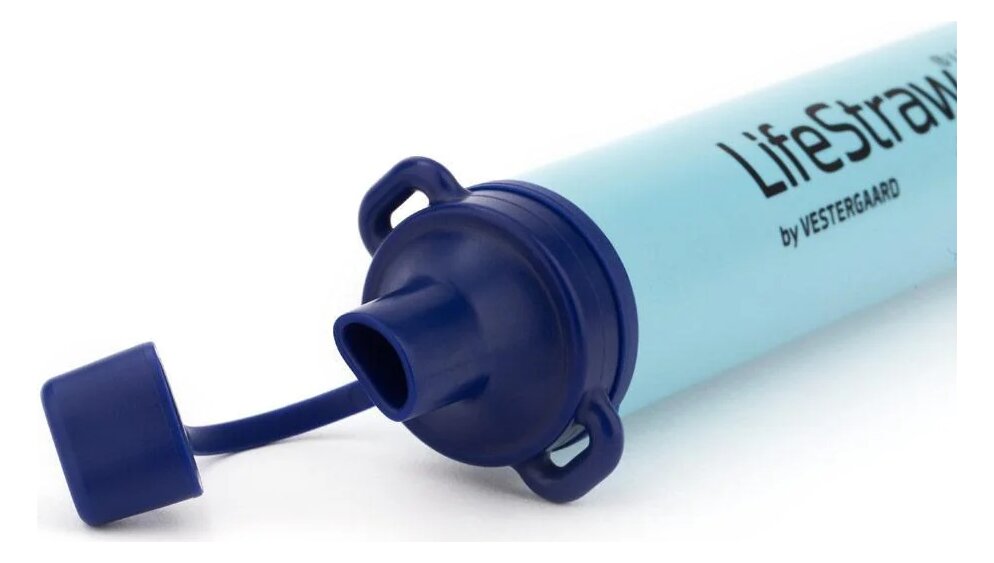
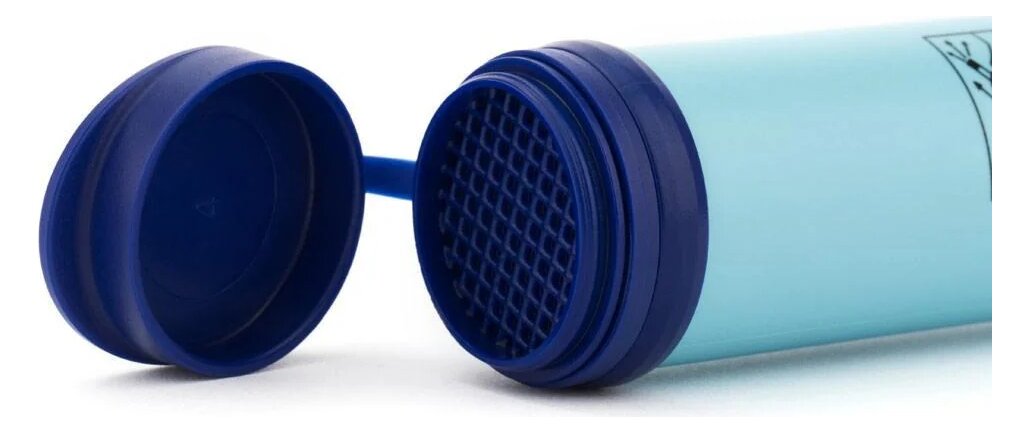
LifeStraw Personal
- Type
- straw
- Viruses
- no claim
- Test named by the maker
- maker names a protocol
- Pore size
- 0.2 µm
- Weight
- 0.046 kg
Price on Amazon.pl: under 120 zł (checked )
Availability: in stock (checked )
Check the price Amazon store, affiliate linkThe best-known filter straw. You drink through it straight from a stream or a cup.
The maker states that the straw removes 99.9999% of bacteria and 99.9% of protozoan parasites, and that its pores are 0.2 µm. According to the maker it meets the US EPA and NSF P231 protocols for bacteria and parasites. The maker makes no claim for viruses, and says the straw is designed for biological contaminants, not chemicals.
According to the maker it lasts 4000 l and weighs 46 g. The maker gives no flow rate. You can only drink through this straw directly; it will not filter water into a bottle for later.
Pros
- 0.2 µm pores according to the maker
- Weighs 46 g according to the maker
- Drink straight from a stream or a cup
- Sold by Amazon
Cons
- Direct drinking only, it does not fill a bottle
- No claim for viruses
- The maker gives no flow rate
All technical details
| Type | straw (drink straight from the source) |
|---|---|
| Pore size | 0.2 µm |
| Removes (claim) | bacteria 99.9999%, protozoan parasites 99.9% (maker) |
| Viruses | no claim |
| Test named by the maker | US EPA and NSF P231 for bacteria and parasites (maker) |
| Capacity | 4000 l |
| Weight | 46 g |
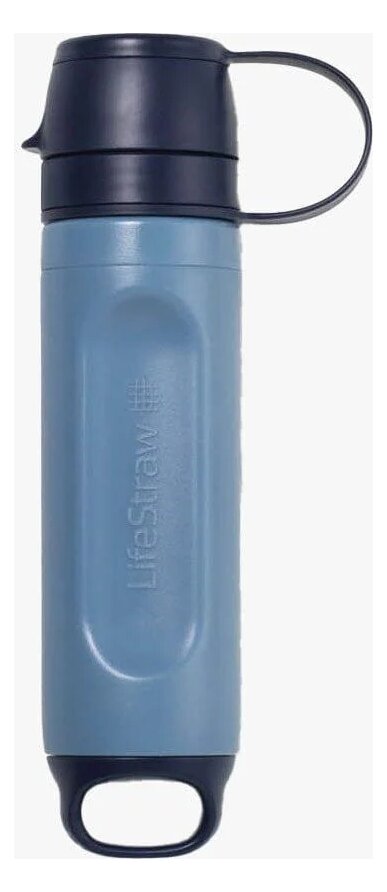
LifeStraw Peak Solo
- Type
- squeeze (pouch or bottle)
- Viruses
- maker: not for viruses
- Test named by the maker
- maker names a protocol
- Pore size
- 0.2 µm
- Weight
- 0.048 kg
Price on Amazon.pl: under 120 zł (checked )
Availability: in stock (checked )
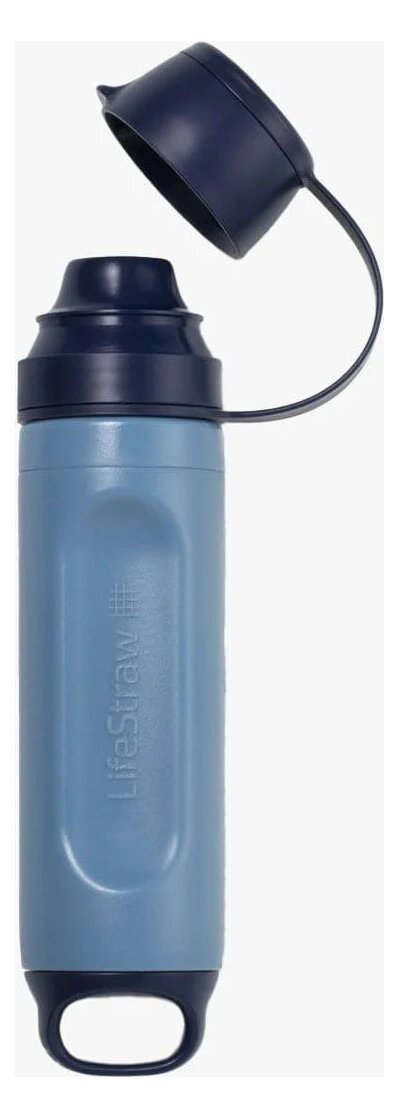
Check the price Amazon store, affiliate linkA small filter that you screw onto a bottle with a 28 mm thread and drink from by squeezing the bottle. It weighs 48.2 g, so it fits in any pack pocket. It is sold directly by Amazon.
The maker states that it removes 99.99999% of bacteria and 99.999% of parasites, with 0.2 µm pores, a flow of 3 l/min and a capacity of 2000 l. The maker also says the filter meets the US EPA and NSF P231 protocols for bacteria and parasites. On its own page the maker says plainly that the filter alone does not remove viruses or chemicals and cannot be used with salt water.
Pros
- Weighs 48.2 g
- 3 l/min flow according to the maker
- The 28 mm thread fits many bottles
- Sold by Amazon
Cons
- The maker: the filter alone does not remove viruses or chemicals
- Not for salt water (maker)
All technical details
| Type | bottle filter (squeeze) |
|---|---|
| Pore size | 0.2 µm |
| Removes (claim) | bacteria 99.99999%, parasites 99.999% (maker) |
| Viruses | maker: the filter alone does not remove viruses |
| Test named by the maker | US EPA and NSF P231 for bacteria and parasites (maker) |
| Capacity | 2000 l |
| Flow rate | 3 l/min |
| Weight | 48.2 g |
| Connection | 28 mm thread |
ENONEO słomka 4 w 1
- Type
- straw
- Viruses
- no claim
- Test named by the maker
- none named
- Pore size
- 0.01 µm (seller)
- Weight
- no data
Price on Amazon.pl: under 120 zł (checked )
Availability: in stock (checked )
Check the price Amazon store, affiliate linkA straw without a known brand, sold by a company called ENONEO. The seller states 0.01 µm pores, a capacity of 1500 l and a flow of 550 ml/min.
According to the seller the straw removes 99.99% of bacteria and protozoa. It names no test, standard or laboratory, so this is only the seller’s claim. The seller says nothing about viruses.
The seller also names two limits: the straw is not meant for chemically contaminated water, and the water should be at 0-32°C. The seller gives no exact weight, only that it is under 90 g.
Pros
- Rated for 1500 l by the seller
- Under 90 g according to the listing
- In the lowest price band of this comparison
Cons
- The seller names no test or standard for the bacteria claim
- Not for chemically contaminated water (per the listing)
- No claim for viruses
All technical details
| Type | filter straw |
|---|---|
| Pore size | 0.01 µm (seller’s claim) |
| Removes (claim) | bacteria and protozoa 99.99% (seller, no test named) |
| Viruses | no claim |
| Test named by the maker | none named |
| Capacity | 1500 l |
| Flow rate | 550 ml/min |
Purewell słomka
- Type
- straw
- Viruses
- no claim
- Test named by the maker
- report cited, not public
- Pore size
- 0.01 µm (seller)
- Weight
- no data
Price on Amazon.pl: under 120 zł (checked )
Availability: in stock (checked )
Check the price Amazon store, affiliate linkA straw with a hose that screws onto a bottle with a 28 mm thread, so you do not have to drink straight from the stream. The seller states 0.01 µm pores, a capacity of 1500 l and a flow of 550 ml/min.
According to the seller it removes up to 99.9999% of bacteria and parasites. It gives an SGS and TÜV report number, but the report itself could not be found anywhere, so this is the seller’s claim. The seller says nothing about viruses.
The weight is unclear: the seller says under 100 g in the description and 150 g in the table. The seller does say plainly that the straw does not lower TDS, so it does not remove substances dissolved in the water.
Pros
- Screws onto a bottle with a 28 mm thread
- Rated for 1500 l by the seller
- The seller gives a test report number
Cons
- The test report could not be found
- The seller gives two different weights: under 100 g in the text, 150 g in the table
- Does not lower TDS
- No claim for viruses
All technical details
| Type | filter straw with a hose |
|---|---|
| Pore size | 0.01 µm (seller’s claim) |
| Removes (claim) | bacteria and parasites up to 99.9999% (seller) |
| Viruses | no claim |
| Test named by the maker | SGS and TÜV report number, report not found |
| Capacity | 1500 l |
| Flow rate | 550 ml/min |
| Connection | 28 mm thread |
LifeStraw Peak Personal
- Type
- straw
- Viruses
- no claim
- Test named by the maker
- none named
- Pore size
- no data
- Weight
- no data
Price on Amazon.pl: under 120 zł (checked )
Availability: in stock (checked )
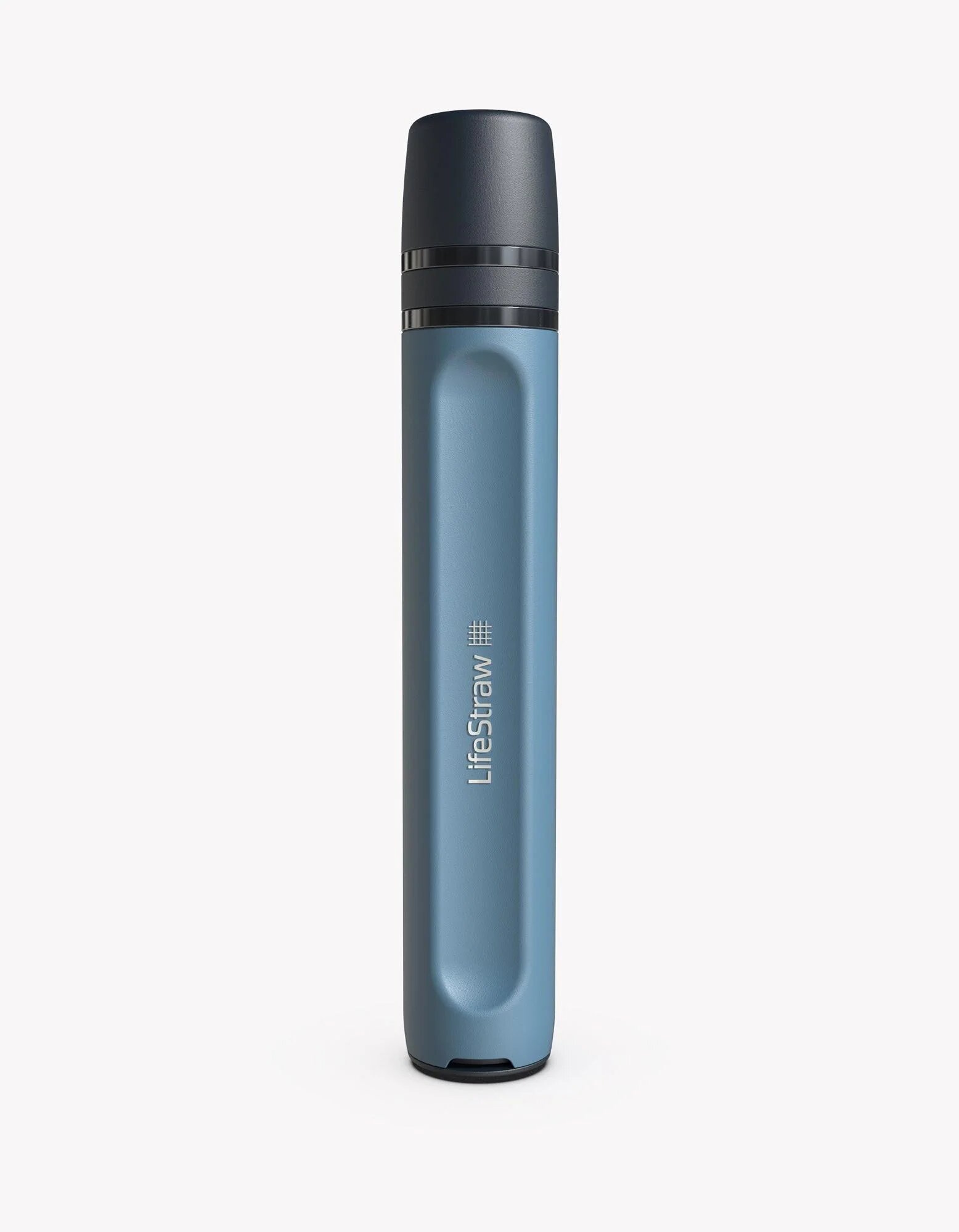
Check the price Amazon store, affiliate linkA straw from the newer Peak series. Unlike the classic LifeStraw it has a screw-off base with a 28 mm thread, so it fits some disposable bottles and, according to the maker, the hose of a gravity kit.
The maker lists bacteria, parasites and microplastics, but gives no percentages and names no test. It makes no claim for viruses. The capacity is 4000 l according to the maker.
The seller gives no weight or flow rate. It is sold by a third-party shop, not Amazon.
Pros
- The 28 mm thread fits some disposable bottles
- Rated for 4000 l by the maker
- According to the maker it also fits the hose of a gravity kit
Cons
- The maker gives no percentages and no test
- The seller gives no weight or flow rate
- No claim for viruses
All technical details
| Type | straw with a screw-off base (Peak series) |
|---|---|
| Removes (claim) | bacteria, parasites, microplastics, no percentages (maker) |
| Viruses | no claim |
| Test named by the maker | none named |
| Capacity | 4000 l |
| Connection | 28 mm thread (some disposable bottles) and gravity hose |
Mid-range
Sawyer Mini (SP350)
- Type
- squeeze (pouch or bottle)
- Viruses
- maker: not for viruses
- Test named by the maker
- public test report
- Pore size
- 0.1 µm
- Weight
- 0.056 kg
Price on Amazon.pl: 120-300 zł (checked )
Availability: in stock (checked )
Check the price Amazon store, affiliate linkA small filter that screws onto a bottle with a 28 mm thread, connects to a pouch or a hydration bladder, or works as a straw. The maker states 0.1 µm pores. The link goes to the SP350 version from a third-party shop.
It is the only model in this comparison whose maker publishes a microbiological test report. The report of 16.12.2013 describes a test to the 1987 USEPA protocol on 3 filters. The maker claims removal of 99.99999% of bacteria and 99.9999% of protozoa; the report assesses protozoa through surrogate organisms. The report does not name the laboratory.
The maker rates it for up to 100,000 gallons (about 378,000 l), but that is the maker’s rating, not a test result: in the report each filter passed 0.9 l. On the SP128 listing the maker writes that the filter is not suitable for salt water or when viruses in the water are suspected. A frozen filter has no warranty, and it cannot go on a tap, as it handles up to 20 psi.
Pros
- A public microbiological test report
- 0.1 µm pores according to the maker
- 28 mm thread, pouch, bladder or straw
- Weighs 56 g
Cons
- Maker: not when viruses are suspected
- No warranty for a frozen filter
- The capacity is the maker's rating, not a test result
All technical details
| Type | mini filter: 28 mm bottle, pouch, bladder or straw |
|---|---|
| Pore size | 0.1 µm |
| Removes (claim) | bacteria 99.99999%, protozoa 99.9999% (maker, report of 16.12.2013) |
| Viruses | maker: not when viruses are suspected (SP128 listing) |
| Test named by the maker | maker’s microbiological report of 16.12.2013, 1987 USEPA protocol |
| Capacity | up to 100,000 gallons (about 378,000 l), maker’s rating |
| Weight | 56 g |
| Connection | 28 mm thread |
Katadyn BeFree AC 1,0 l
- Type
- filter bottle
- Viruses
- no claim
- Test named by the maker
- test organism only
- Pore size
- 0.1 µm
- Weight
- 0.076 kg
Price on Amazon.pl: 120-300 zł (checked )
Availability: in stock (checked )
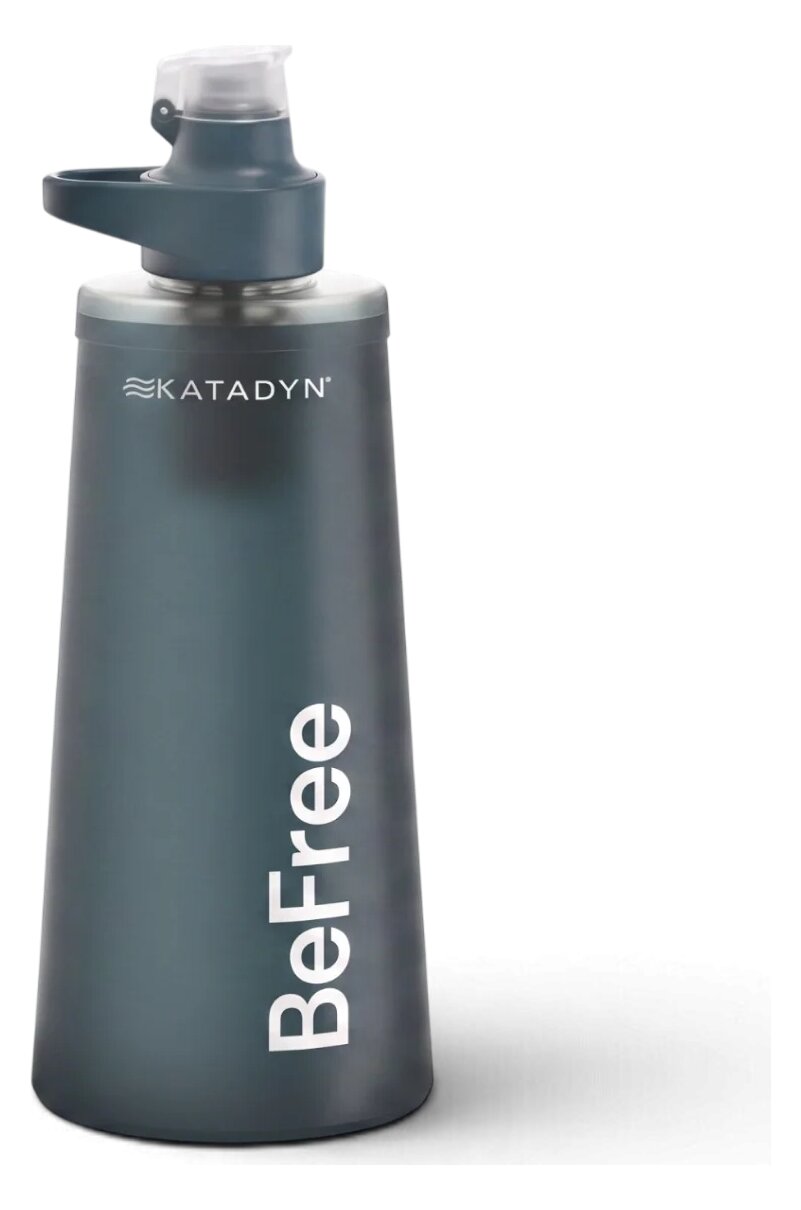
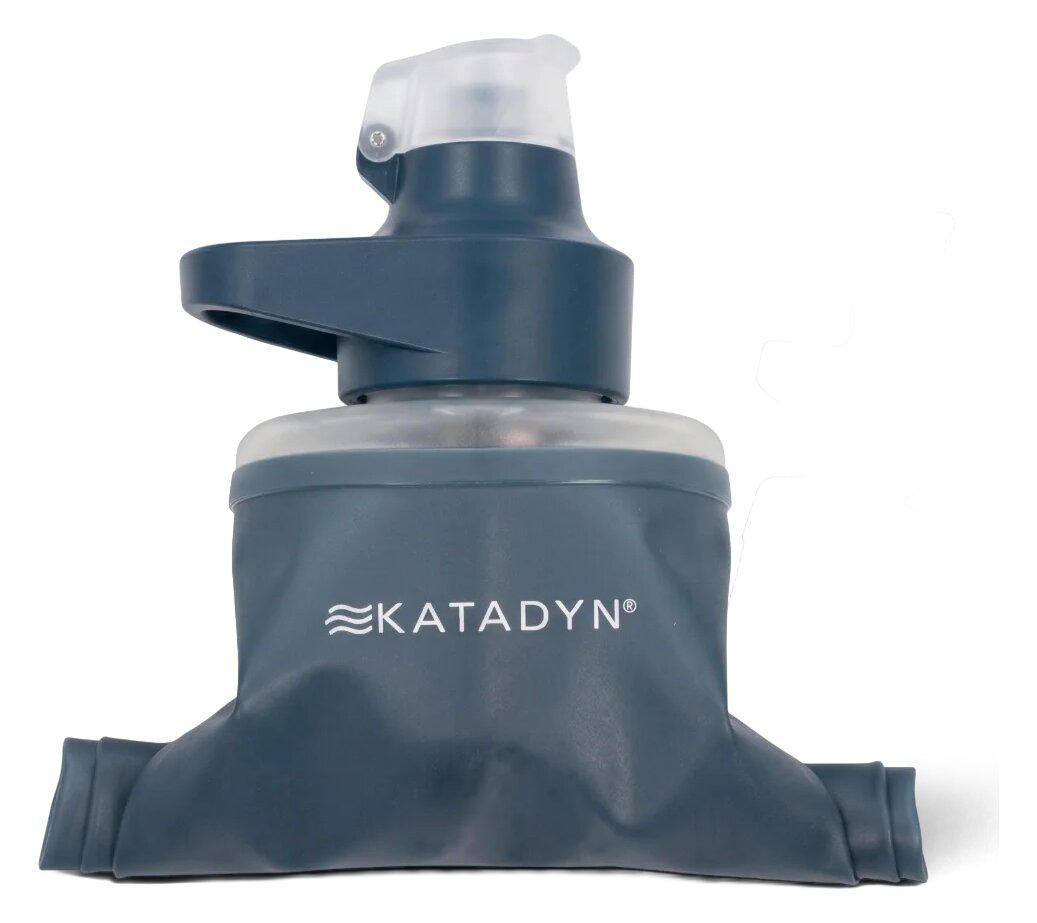
Check the price Amazon store, affiliate linkA soft 1 l bottle with a filter in the cap, which you fill in a stream and squeeze. Empty, it weighs 76 g and rolls up, so it is the lightest filter in this comparison that comes with its own container. The Sawyer Mini and LifeStraw Peak Solo filters alone weigh less, but you need a bottle for them.
According to the listing the pores are 0.1 µm, the flow is up to 2 l/min and the membrane lasts up to 1000 l. The AC version adds activated carbon, which according to the listing improves the taste and reduces chlorine. According to the maker the carbon lasts up to 200 l depending on water quality, a fifth of the membrane’s life.
The maker claims 99.9999% of bacteria and 99.9% of protozoan cysts and names the test organism, but not the protocol. It makes no claim for viruses. Sold by Amazon.
Pros
- Weighs 76 g including the bottle
- Up to 2 l/min flow per the listing
- 0.1 µm pores
- Sold by Amazon
Cons
- The maker does not name the test protocol
- The carbon lasts only up to 200 l
- No claim for viruses
All technical details
| Type | soft 1 l bottle with a filter (membrane and carbon) |
|---|---|
| Pore size | 0.1 µm |
| Removes (claim) | bacteria 99.9999%, protozoan cysts 99.9% (maker) |
| Viruses | no claim |
| Test named by the maker | test organism Klebsiella terrigena, no protocol named |
| Capacity | 1000 l (membrane), 200 l (carbon) |
| Flow rate | up to 2 l/min |
| Weight | 76 g |
Platypus QuickDraw 1 l
- Type
- squeeze (pouch or bottle)
- Viruses
- no claim
- Test named by the maker
- maker names a protocol
- Pore size
- no data
- Weight
- 0.095 kg
Price on Amazon.pl: 120-300 zł (checked )
Availability: in stock (checked )
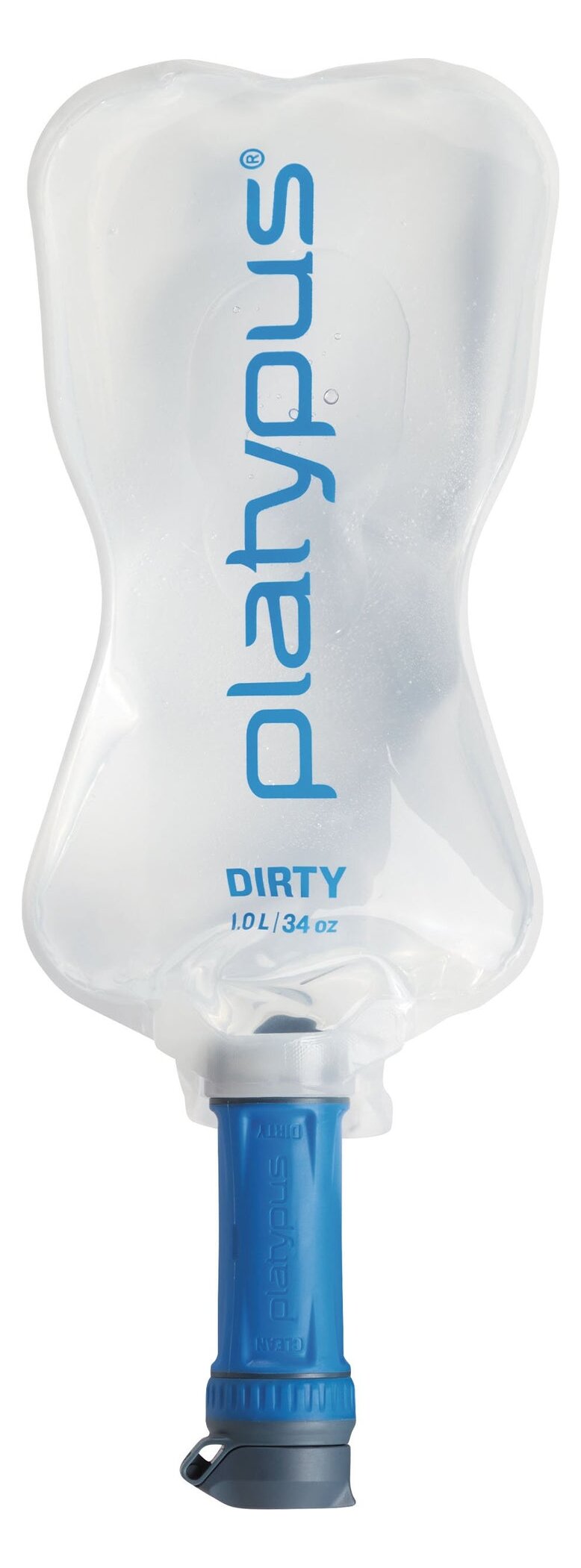
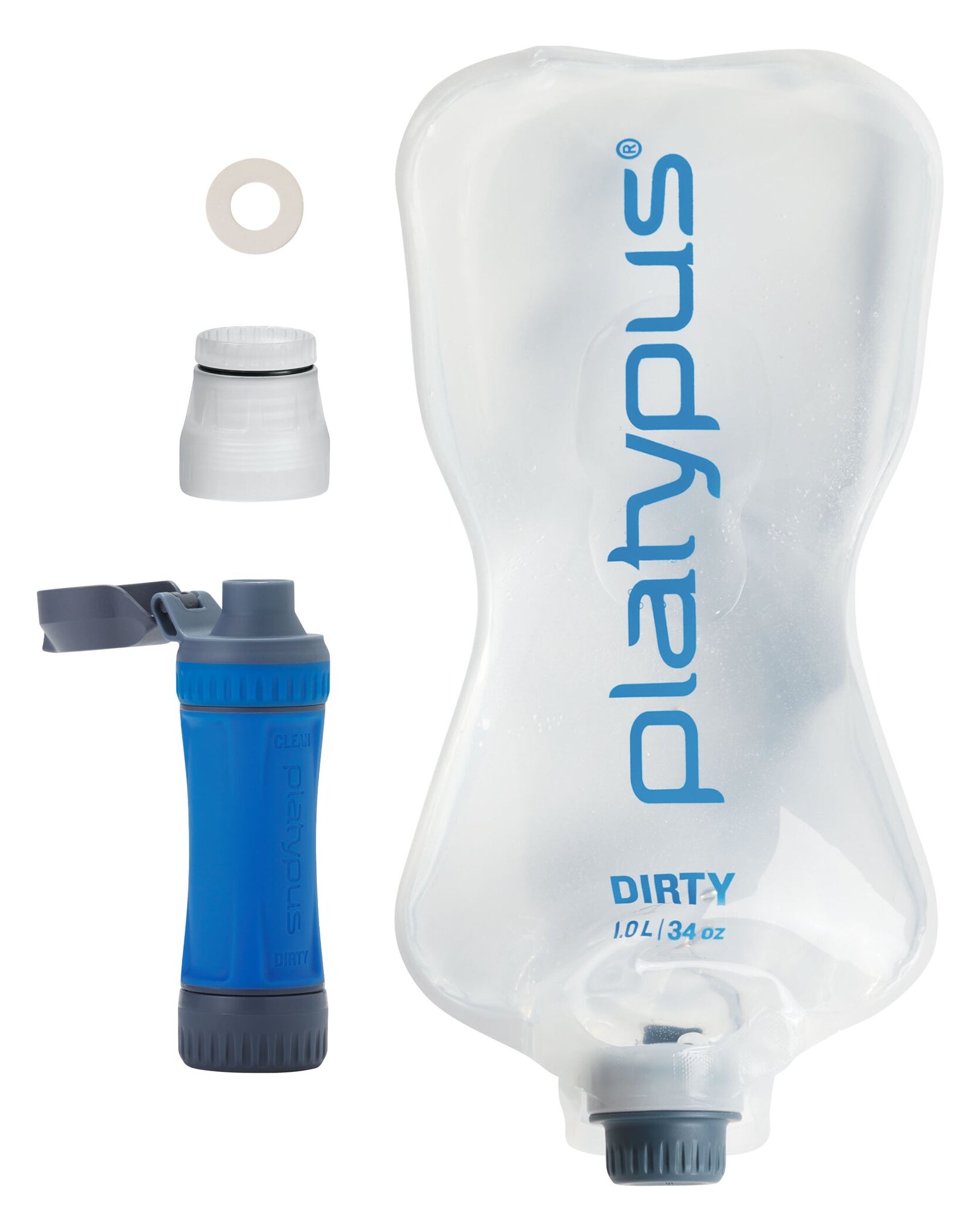
Check the price Amazon store, affiliate linkA filter with a soft 1 l pouch that you squeeze or hang so the water runs through by itself. According to the listing the flow is 3 l/min squeezed and 1.75 l/min by gravity. The filter weighs 95 g and the ConnectCap fits a 28 mm thread.
According to the listing the filter meets the NSF P231 protocol and removes 99.9999% of bacteria and 99.9% of protozoa. No report or NSF register entry could be found, so this is the maker’s claim. It makes no claim for viruses.
Pros
- Works squeezed or by gravity
- 3 l/min squeezed per the listing
- Weighs 95 g
- 28 mm thread
Cons
- No test report found
- The seller gives no capacity
- No claim for viruses
All technical details
| Type | squeeze filter with a 1 l pouch, also gravity |
|---|---|
| Removes (claim) | bacteria 99.9999%, protozoa 99.9% (maker) |
| Viruses | no claim |
| Test named by the maker | NSF P231 protocol per the listing, no report found |
| Flow rate | 3 l/min squeezed, 1.75 l/min by gravity |
| Weight | 95 g |
| Connection | 28 mm thread (ConnectCap) |
LifeStraw Go 650 ml
- Type
- filter bottle
- Viruses
- no claim
- Test named by the maker
- none named
- Pore size
- no data
- Weight
- 0.247 kg
Price on Amazon.pl: 120-300 zł (checked )
Availability: in stock (checked )
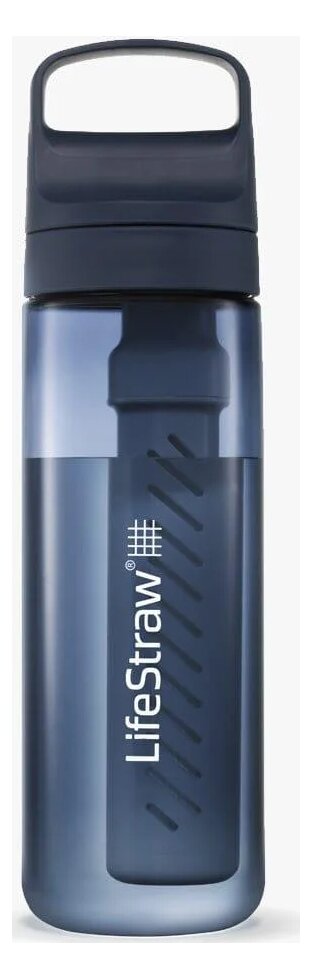
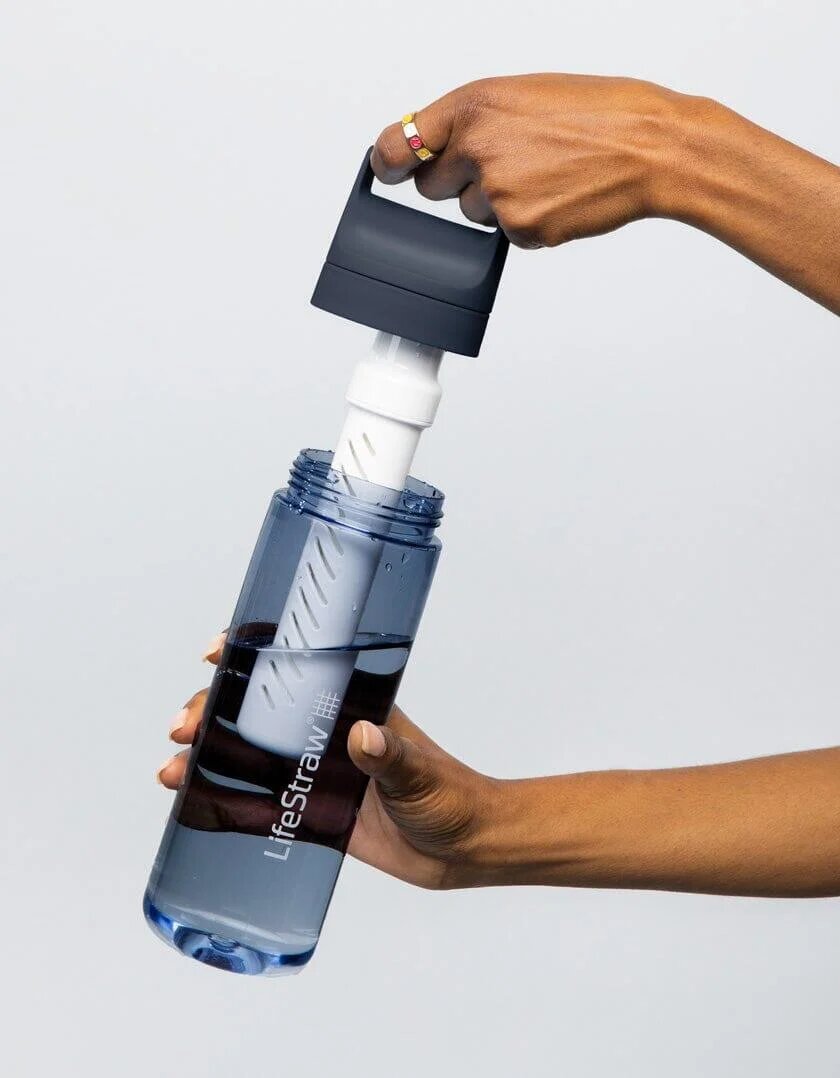
Check the price Amazon store, affiliate linkA 650 ml bottle with a filter inside: you fill it in a stream and drink through the mouthpiece. It weighs 247 g, clearly more than a straw, but you get a water container straight away.
The listing gives high numbers, 99.999999% of bacteria and 99.999% of parasites, but names no test, so treat them as a claim. According to the listing the carbon insert reduces chlorine and odours. The maker makes no claim for viruses.
According to the listing the membrane lasts 4000 l, but the carbon insert only 100 l, so you will replace the carbon much sooner.
Pros
- Bottle and filter in one
- Membrane rated for 4000 l per the listing
- Sold by Amazon
Cons
- The carbon insert lasts only 100 l
- Weighs 247 g
- The maker names no test for the bacteria claim
- No claim for viruses
All technical details
| Type | 650 ml bottle with a filter (membrane and carbon) |
|---|---|
| Removes (claim) | bacteria 99.999999%, parasites 99.999% (listing, no test named) |
| Viruses | no claim |
| Test named by the maker | none named |
| Capacity | 4000 l (membrane), 100 l (carbon insert) |
| Weight | 247 g |
BAYTIZ słomka z butelką
- Type
- straw
- Viruses
- no claim
- Test named by the maker
- none named
- Pore size
- no data
- Weight
- no data
Price on Amazon.pl: 120-300 zł (checked )
Availability: in stock (checked )
Check the price Amazon store, affiliate linkA filter straw that comes with a soft bottle, which you fill in a stream and squeeze through the filter. Its price sits just above the limit of the “Affordable” band.
The seller claims it removes 99.9999% of bacteria and 99.9% of protozoa, but names no test or standard, so this is only the seller’s claim. According to the seller the capacity is 5000 l. The seller says plainly that the kit does not filter sea water.
The seller gives no pore size, weight or flow rate.
Pros
- Soft bottle included
- Rated for 5000 l by the seller
Cons
- The seller names no test or standard
- The seller gives no pore size, weight or flow rate
- Does not filter sea water (per the listing)
- No claim for viruses
All technical details
| Type | straw with a soft squeeze bottle |
|---|---|
| Removes (claim) | bacteria 99.9999%, protozoa 99.9% (seller, no test named) |
| Viruses | no claim |
| Test named by the maker | none named |
| Capacity | 5000 l |
Upper range
Sawyer Squeeze (SP129)
- Type
- squeeze (pouch or bottle)
- Viruses
- no claim
- Test named by the maker
- report cited, not public
- Pore size
- 0.1 µm
- Weight
- 0.085 kg
Price on Amazon.pl: over 300 zł (checked )
Availability: in stock (checked )
Check the price Amazon store, affiliate linkA squeeze filter with 1 l pouches, which also screws onto a bottle with a 28 mm thread. The filter alone weighs about 85 g according to the maker; the listing says 71 g.
The maker claims 0.1 µm pores and removal of 99.99999% of bacteria and 99.9999% of protozoa, citing report S05-03. The report is not public, and the laboratory’s name is spelled two ways on the maker’s page. The seller on Amazon.pl gives lower protozoa numbers and contradicts itself, so the table shows the maker’s number. Sawyer makes no virus claim for this model.
Neither the seller nor the maker gives a capacity. It is sold by a third-party shop, not Amazon.
Pros
- 0.1 µm pores according to the maker
- 1 l pouches or a 28 mm bottle
- About 85 g according to the maker
Cons
- The test report is not public
- The seller gives different numbers from the maker
- No stated capacity
- No claim for viruses
All technical details
| Type | squeeze filter with 1 l pouches, screws onto a bottle |
|---|---|
| Pore size | 0.1 µm |
| Removes (claim) | bacteria 99.99999%, protozoa 99.9999% (maker) |
| Viruses | no claim |
| Test named by the maker | report S05-03 cited by the maker, not public |
| Flow rate | 1.7 l/min |
| Weight | 85 g |
| Connection | 28 mm thread |
LifeStraw Peak Gravity 3 l
- Type
- gravity
- Viruses
- no claim
- Test named by the maker
- maker names a protocol
- Pore size
- 0.2 µm
- Weight
- 0.228 kg
Price on Amazon.pl: over 300 zł (checked )
Availability: in stock (checked )
Check the price Amazon store, affiliate linkA 3 l bag with a hose and a filter: you fill it, hang it from a branch and the water runs into a bottle with no pumping or squeezing. It is the only gravity kit with a 3 l bag in this comparison, so it suits filtering for a few people or a whole camp.
The maker claims removal of 99.999999% of bacteria and 99.999% of parasites and says the filter meets the US EPA and NSF P231 protocols for bacteria and parasites. It gives 0.2 µm pores, a flow of 1.7 l/min and a capacity of 2000 l. The kit weighs 228 g. The maker makes no claim for viruses and says the filter does not remove fuel or other chemicals.
The maker warns that water freezing inside the filter can damage the membrane, so keep it warm in frost. It is sold by a third-party shop, not Amazon.
Pros
- Filters without pumping or squeezing
- A 3 l bag for several people
- Rated for 2000 l by the maker
- The maker names the US EPA and NSF P231 protocols
Cons
- Freezing can damage the membrane (maker)
- No claim for viruses
All technical details
| Type | gravity, 3 l bag with a hose |
|---|---|
| Pore size | 0.2 µm |
| Removes (claim) | bacteria 99.999999%, parasites 99.999% (maker) |
| Viruses | no claim |
| Test named by the maker | US EPA and NSF P231 for bacteria and parasites (maker) |
| Capacity | 2000 l |
| Flow rate | 1.7 l/min |
| Weight | 228 g |
Katadyn Hiker Pro
- Type
- pump
- Viruses
- no claim
- Test named by the maker
- none named
- Pore size
- 0.2 µm
- Weight
- 0.233 kg
Price on Amazon.pl: over 300 zł (checked )
Availability: in stock (checked )
Check the price Amazon store, affiliate linkA hand pump with a hose: one end goes into the stream, the other clips onto a bottle or a bladder with a quick connector, and you pump. According to the listing it gives 1 l/min and weighs 233 g, and the maker rates it for 1150 l.
The glass fibre filter has 0.2 µm pores according to the listing. The maker lists bacteria, Giardia and Cryptosporidium, but gives no percentages and names no test, and says the activated carbon only improves the taste. It makes no claim for viruses. Sold by Amazon.
Pros
- Fills a bottle or bladder without squeezing
- Quick connectors for most bottles and hydration systems
- Rated for 1150 l by the maker
- Sold by Amazon
Cons
- The maker names no test and no percentages
- 1 l/min flow
- No claim for viruses
All technical details
| Type | hand pump with a hose |
|---|---|
| Pore size | 0.2 µm (glass fibre) |
| Removes (claim) | bacteria, Giardia, Cryptosporidium, no percentages (maker) |
| Viruses | no claim |
| Test named by the maker | none named |
| Capacity | 1150 l |
| Flow rate | 1 l/min |
| Weight | 233 g |
| Connection | quick connectors: most bottles and hydration systems |
GRAYL UltraPress 500 ml
- Type
- press bottle
- Viruses
- maker's claim under the EPA protocol
- Test named by the maker
- maker names a protocol
- Pore size
- no data
- Weight
- 0.354 kg
Price on Amazon.pl: over 300 zł (checked )
Availability: in stock (checked )
Check the price Amazon store, affiliate linkA 500 ml bottle that works like a coffee press: you fill the outer cup, push the cartridge into it and after about 10 seconds you have half a litre of water. The maker gives a flow of 3 l/min, and the whole bottle weighs 354 g.
It is the only model in this comparison whose maker claims virus removal under the EPA protocol for purifiers: 99.99% of viruses, 99.9999% of bacteria and 99.9% of protozoan cysts. The maker also claims a reduction of some chemicals and heavy metals to NSF/ANSI 42 and 53. It does not name the laboratory and no report could be found, so this is the maker’s claim, not a measurement.
According to the maker the cartridge lasts 150 l (300 cycles) or 3 years from first use, whichever comes first. That is little compared with membrane filters. According to the listing it works with fresh water. It is sold by a third-party shop, not Amazon.
Pros
- The only one with a maker's virus claim under the EPA protocol
- Half a litre in about 10 seconds
- Bottle and filter in one
Cons
- The cartridge lasts only 150 l or 3 years
- Weighs 354 g
- The laboratory report is not public
- Fresh water only
All technical details
| Type | 500 ml press bottle with a cartridge |
|---|---|
| Removes (claim) | viruses 99.99%, bacteria 99.9999%, protozoan cysts 99.9% (maker) |
| Viruses | maker’s claim under the EPA protocol |
| Test named by the maker | EPA Guide Standard and Protocol, NSF/ANSI 42 and 53 (maker), no report found |
| Capacity | 150 l (300 cycles) or 3 years from first use |
| Flow rate | 3 l/min (500 ml in about 10 s) |
| Weight | 354 g |
Katadyn Vario
- Type
- pump
- Viruses
- no claim
- Test named by the maker
- none named
- Pore size
- 0.2 µm
- Weight
- 0.425 kg
Price on Amazon.pl: over 300 zł (checked )
Availability: in stock (checked )
Check the price Amazon store, affiliate linkA hand pump with three layers: a ceramic pre-filter, glass fibre and activated carbon. According to the maker it has two modes, about 1 l/min when you want to spare the filter and up to 2 l/min when time matters. It screws onto a bottle with a Nalgene thread.
The listing gives 0.2 µm pores. The maker lists bacteria, protozoa, cysts, algae and spores, but gives no percentages and names no test. It makes no claim for viruses.
According to the listing the ceramic lasts about 2000 l and the carbon about 400 l. The pump weighs 425 g. Sold by Amazon.
Pros
- Two flow modes, up to 2 l/min
- Ceramic rated for about 2000 l per the listing
- Nalgene thread
- Sold by Amazon
Cons
- Weighs 425 g
- Carbon lasts only about 400 l
- The maker names no test and no percentages
- No claim for viruses
All technical details
| Type | hand pump: ceramic, glass fibre and carbon |
|---|---|
| Pore size | 0.2 µm |
| Removes (claim) | bacteria, protozoa, cysts, algae, spores, no percentages (maker) |
| Viruses | no claim |
| Test named by the maker | none named |
| Capacity | about 2000 l (ceramic), about 400 l (carbon) |
| Flow rate | about 1 l/min, up to 2 l/min in the faster mode |
| Weight | 425 g |
| Connection | Nalgene bottle thread |
Katadyn Pocket
- Type
- pump
- Viruses
- no claim
- Test named by the maker
- none named
- Pore size
- 0.2 µm
- Weight
- 0.55 kg
Price on Amazon.pl: over 300 zł (checked )
Availability: in stock (checked )
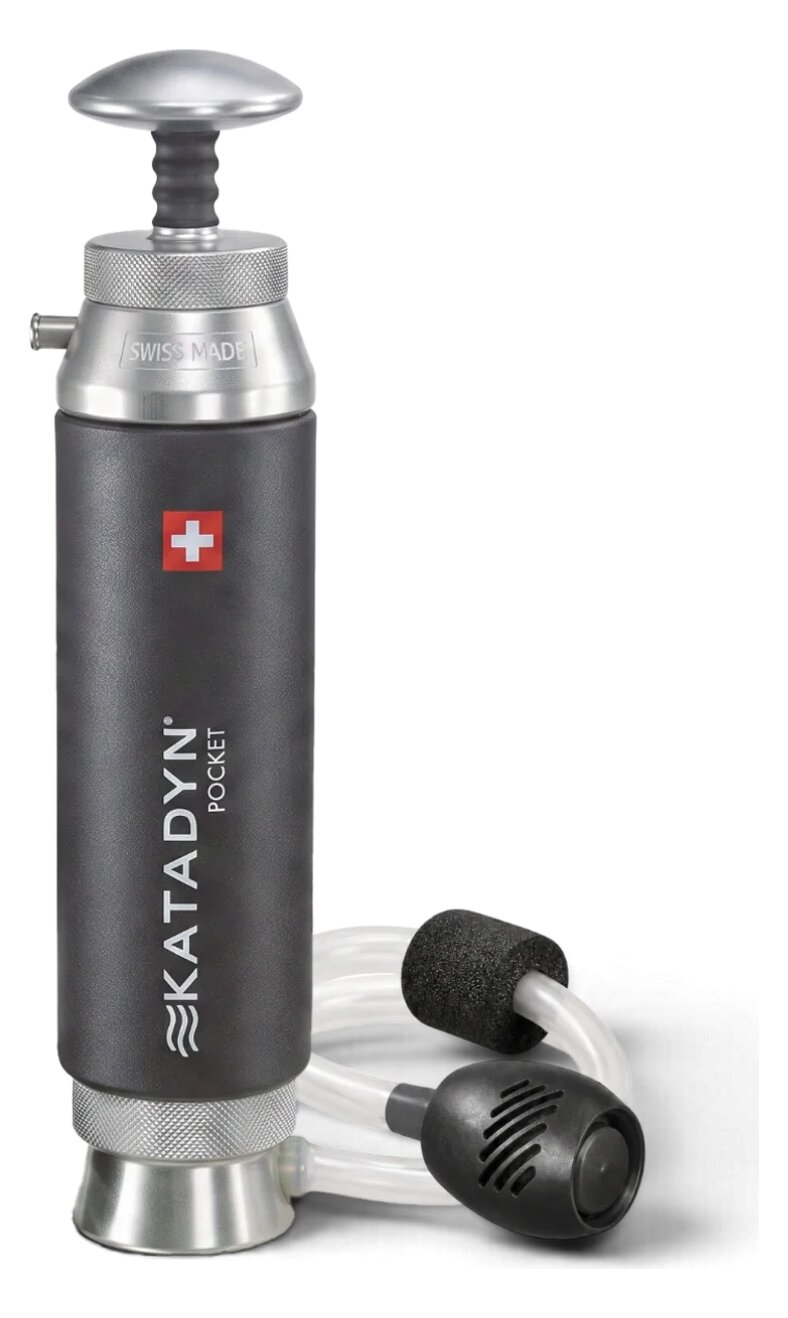
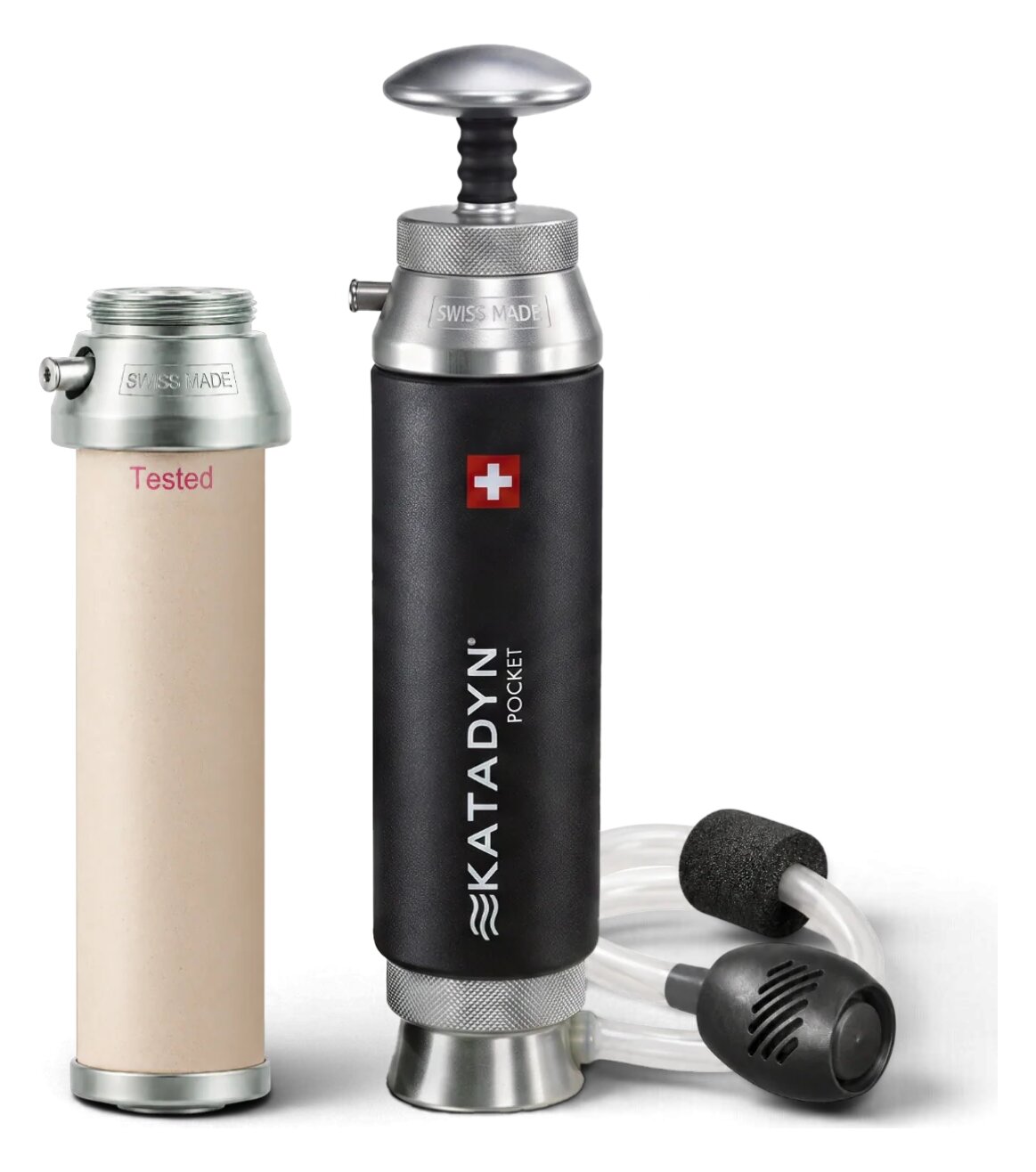
Check the price Amazon store, affiliate linkA hand pump with a silver-impregnated ceramic cartridge which, according to the maker, can be cleaned several times, even in the field. According to the listing it lasts up to 50,000 l, and the maker gives a 20-year warranty.
The maker states 0.2 µm pores. It lists bacteria and protozoa, but gives no percentages and names no test. It makes no claim for viruses.
The pump weighs 550 g and gives 1 l/min, so it is gear for long trips or a base camp, not a light outing. Sold by Amazon.
Pros
- Rated for up to 50,000 l per the listing
- The ceramic can be cleaned in the field (maker)
- 20-year maker's warranty
- Sold by Amazon
Cons
- Weighs 550 g
- 1 l/min flow
- The maker names no test and no percentages
- No claim for viruses
All technical details
| Type | hand pump with a ceramic cartridge |
|---|---|
| Pore size | 0.2 µm (silver ceramic) |
| Removes (claim) | bacteria, protozoa, no percentages (maker) |
| Viruses | no claim |
| Test named by the maker | none named |
| Capacity | up to 50,000 l |
| Flow rate | 1 l/min |
| Weight | 550 g |
Which one to choose
There is no single best filter, only the one that matches how you drink water outdoors.
If you want the simplest way to drink straight from a stream, choose LifeStraw Personal
Watch out: it filters water only into your mouth, not into a bottle for later.
If you want a small filter for a bottle with a 28 mm thread, choose LifeStraw Peak Solo
Watch out: the maker says the filter alone does not remove viruses or chemicals.
If every gram counts but you also want a water container, choose Katadyn BeFree AC 1,0 l
Watch out: the maker does not name the test protocol, and the carbon lasts only up to 200 l.
If you want a filter with a public test report and a large capacity, choose Sawyer Mini (SP350)
Watch out: frost can damage a wet filter, and the maker says it is not suitable when viruses are suspected.
If you filter water for several people at camp, choose LifeStraw Peak Gravity 3 l
Watch out: water freezing in the filter can damage the membrane, and the maker makes no claim for viruses.
If you need a maker's claim that covers viruses too, choose GRAYL UltraPress 500 ml
Watch out: the cartridge lasts only 150 l, and the laboratory report is not public.
If the filter should last you years on long trips, choose Katadyn Pocket
Watch out: it weighs 550 g and gives 1 l/min, so it is gear for a base camp, not a light outing.
Leave a comment